Sundarban Tour Offers a Rare Mix of Peace and Adventure
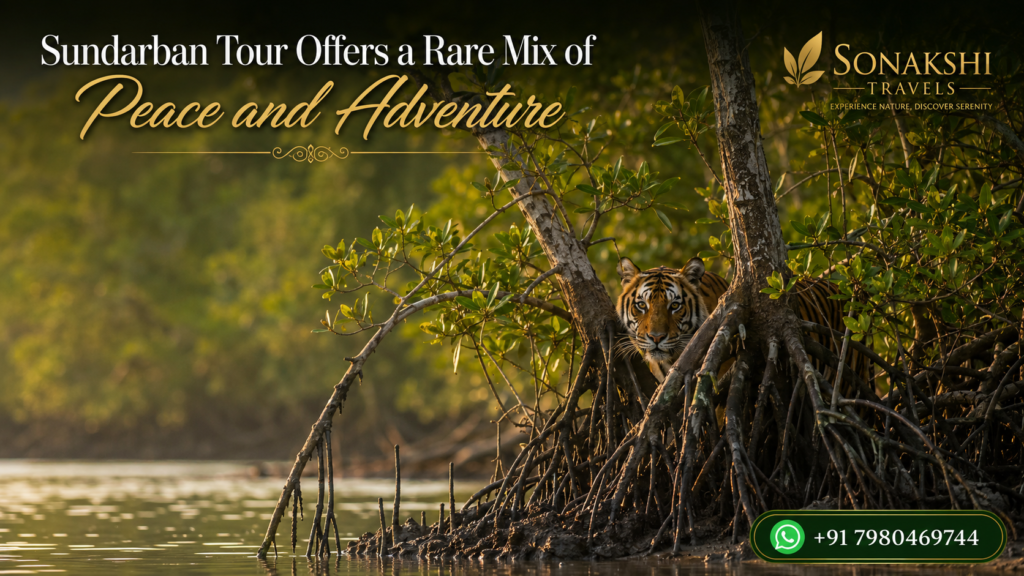
A Sundarban tour offers an unusual travel experience where quiet river journeys and a sense of natural adventure exist together. The destination does not depend on crowded sightseeing points, fast-moving activities, or artificial entertainment. Its appeal comes from tidal rivers, mangrove forests, changing landscapes, wildlife habitats, village life, and the slow rhythm of boat travel.
The peaceful side of the journey becomes visible when the boat moves through wide rivers and narrow forest channels. Travellers can sit quietly, observe the water, listen to bird calls, and watch the mangrove banks pass slowly. The adventurous side comes from entering a protected river-based landscape where every movement depends on tides, forest regulations, navigation, local knowledge, and careful coordination.
This balance makes the Sundarban different from an ordinary city break or hill holiday. Visitors are not simply travelling from one attraction to another. They are entering a sensitive delta where land and water constantly interact. A properly managed journey therefore requires realistic expectations, responsible behaviour, dependable services, and an understanding of how the region functions.
The value of a Sundarban tour is not measured only by the number of places covered. It is measured by the quality of the boat journey, the reliability of the arrangements, the comfort of the group, the knowledge of the guide, the safety practices followed, and the traveller’s ability to appreciate the forest without disturbing it.
Why a Sundarban Tour Feels Peaceful and Adventurous
Peace and adventure may appear to be opposite ideas, but they naturally come together in the Sundarban. The landscape is calm, yet it is never completely predictable. Rivers change with the tide, forest routes are regulated, wildlife remains free, and every journey depends on natural conditions rather than a fixed urban system.
The peaceful feeling begins with the absence of city noise. Once the boat enters the river network, the soundscape changes. Engines become softer in the background, while water, wind, birds, insects, and distant village sounds become more noticeable. Travellers often realise that the silence of the Sundarban is not empty. It is filled with natural movement.
Adventure develops through observation rather than extreme activity. A sudden movement near the muddy bank, the flight of a kingfisher, the appearance of a crocodile at a distance, or fresh animal signs can create genuine excitement. However, responsible operators never promise a particular wildlife sighting. The forest is not a controlled display area, and animals appear according to their own behaviour.
This realistic understanding is essential when judging the best Sundarban tour. A good experience does not depend on dramatic claims. It depends on safe navigation, patient observation, informed interpretation, comfortable arrangements, and respect for the protected environment.
Readers who wish to understand the ecological character of the destination in greater depth may also read Sundarban Tour Is a Journey into India’s Unique Mangrove Zone. It explains why the mangrove setting is central to the journey rather than merely a background for sightseeing.
Careful Planning Protects the Quality of the Journey
A successful Sundarban tour requires more coordination than many travellers initially expect. The region is river-based, permit-sensitive, service-dependent, and geographically different from destinations connected by regular roads. Accommodation, meals, boats, guides, forest permissions, group movement, and local assistance must work together.
Small failures in coordination can affect the entire experience. A late boat arrangement may reduce comfortable travel time. Poor meal planning may create difficulty for children, senior citizens, or travellers with dietary needs. Unclear communication about rooms may lead to confusion at the property. An inexperienced guide may fail to explain the importance of the landscape, wildlife signs, local customs, and conservation rules.
For this reason, travellers should not select a trip only by looking at an attractive description. They should examine how the journey will be managed. A dependable plan should clearly explain the type of boat, room arrangement, meal service, guiding support, permit handling, group size, and level of privacy.
A well-designed Sundarban tour package should create a smooth connection between all these services. The purpose is not to make the forest journey feel artificial. The purpose is to remove avoidable confusion so that travellers can concentrate on the rivers, mangroves, wildlife, culture, and peaceful atmosphere.
Proper planning also helps maintain realistic pacing. The Sundarban should not be treated as a checklist destination where every hour is filled with rushed movement. Long periods on the river are an essential part of the experience. A thoughtful plan gives travellers enough time to observe the surroundings without feeling that they are constantly being moved from one point to another.
The Role of a Reliable Travel Agency and Tour Operator
A reliable Sundarban travel agency acts as the main coordination point between the traveller and the destination’s local service network. Its role is not limited to taking a booking. It should help the traveller understand the nature of the journey, choose a suitable arrangement, communicate practical limitations, and confirm essential services before arrival.
An experienced Sundarban tour operator should understand that different groups have different requirements. A family travelling with children may need simple food, clean rooms, patient service, and safer movement. Senior citizens may need slower boarding arrangements and fewer unnecessary changes. Couples may prefer privacy and a quieter stay. A photography group may value observation time and informed guiding.
Clear communication is one of the strongest signs of professional service. Travellers should receive direct information about what is included, what is not included, how the group will travel, what kind of accommodation is arranged, and how special requests will be handled. Vague promises may create expectations that local teams cannot fulfil.
A responsible agency should also avoid presenting wildlife sightings as guaranteed. It should explain that the Sundarban is a natural habitat. Tigers, deer, crocodiles, dolphins, wild boars, monitor lizards, and birds may be seen, but their appearance depends on natural behaviour, tides, visibility, movement, and chance.
The broader idea of Sundarban travel should therefore include education as well as service. Visitors need to know why noise must be controlled, why waste should not be thrown into the river, why animals should never be fed, and why forest instructions must be followed without argument.
Boat Quality Shapes the Main Experience
The boat is not simply a transport vehicle during a Sundarban journey. It is the main viewing platform, dining space, resting area, and connection between the traveller and the forest. The condition and management of the boat therefore have a major influence on comfort and satisfaction.
A suitable tourist boat should have stable seating, a shaded area, an open viewing section, proper railings, life-saving equipment, drinking-water arrangements, a clean toilet, and enough space for the confirmed group. The crew should understand river navigation and follow the instructions of the forest authorities.
Overcrowding reduces both comfort and observation quality. Travellers may struggle to find a clear view, move safely, or enjoy quiet moments. This is particularly important for families, elderly guests, photographers, and visitors who prefer a peaceful experience.
A private Sundarban tour can provide greater control over seating, meal timing, group movement, and conversation. It may also allow travellers to maintain a quieter atmosphere, although all movement must still follow authorised routes, permit rules, and forest timings.
The real adventure of the boat journey comes from moving through a living tidal system. Mudbanks appear and disappear, creeks become narrower, bird activity changes, and the colour of the water shifts with light and sediment. These details become easier to appreciate when the boat is comfortable and the group is not rushed.
For another perspective on how river movement shapes the emotional value of the journey, readers may explore Sundarban Tour Creates Memories Through Rivers and Forest Trails. The river is not merely a route; it is one of the main elements that creates lasting memories.
Food, Stay and Service Must Work Together
Comfort in the Sundarban depends on many small services working correctly. Food, accommodation, boat arrangements, local transfers, guiding, and staff support should not be treated as separate parts. A weakness in one area can affect the traveller’s overall impression.
Food Planning
Meals should be fresh, hygienic, balanced, and served at sensible times. The menu does not need to be unnecessarily elaborate. Simple Bengali food, vegetables, rice, dal, fish, eggs, or suitable alternatives can be highly satisfying when properly prepared and served warm.
Dietary requirements should be discussed before the journey. Vegetarian food, Jain food, low-spice meals, food for children, and basic medical dietary restrictions require advance coordination. Last-minute requests can be difficult in remote river-based locations where supplies are not always immediately available.
Accommodation Quality
A comfortable stay should offer cleanliness, working washrooms, suitable bedding, safe access, and responsive staff. Travellers should judge accommodation according to the local setting rather than comparing every facility with a major city hotel.
At the same time, remoteness should not be used as an excuse for poor hygiene or misleading room descriptions. The confirmed room category, occupancy arrangement, and essential facilities should be communicated clearly.
Service Coordination
Good service often becomes visible through small actions. Staff members should assist senior travellers while boarding, explain meal timings, answer questions patiently, and respond quickly when a genuine problem arises. These actions create trust and allow guests to relax.
A well-managed journey should feel organised without feeling rigid. Travellers should know what is happening, but they should also have enough freedom to sit quietly, observe the rivers, talk with family members, or simply enjoy the changing landscape.
Suitability for Families, Couples and Senior Travellers
A family Sundarban tour can be enjoyable when the arrangements match the needs of the group. Children often find boat travel, birds, village scenes, and wildlife observation interesting. However, adults should supervise them carefully because boats, jetties, riverbanks, and forest areas require disciplined movement.
Families should prefer adequate boat space, hygienic food, suitable rooms, drinking water, and a schedule that does not create unnecessary physical strain. Children should be encouraged to observe nature quietly instead of expecting constant entertainment.
Senior citizens can also enjoy the journey when boarding assistance, seating comfort, food timing, and room access are properly considered. The peaceful river atmosphere may be especially appealing to travellers who prefer slow observation over physically demanding activities.
Couples often value the privacy and calm of the destination. A Sundarban private tour may provide a more personal environment by reducing unnecessary crowding and allowing better control over group interactions. However, privacy should never be confused with unrestricted access to the forest. All boats must remain within authorised systems.
Small groups of friends may enjoy a balance of conversation, photography, natural observation, and local food. They should still avoid loud music, shouting, or behaviour that disturbs wildlife and other visitors.
Private and Luxury Options Should Improve Comfort, Not Create False Expectations
The terms private and luxury are sometimes used without clear meaning. In the Sundarban, these options should be understood in practical terms. Privacy may refer to an exclusive boat, a dedicated vehicle, customised meals, selected accommodation, or personal service coordination.
A Sundarban private tour package can be suitable for families, couples, senior citizens, small groups, and travellers who do not wish to share every service with strangers. It may offer more control over comfort, communication, and meal preferences.
A Sundarban luxury tour package should focus on better accommodation, cleaner and more spacious arrangements, attentive staff, dependable food service, and smoother coordination. Luxury cannot change the natural character of the forest, guarantee wildlife, or remove the region’s tidal and ecological limitations.
The same principle applies to a Sundarban luxury tour. Higher comfort should support the experience rather than separate travellers from the destination. Guests should still be encouraged to understand the mangrove ecosystem, local communities, conservation rules, and river-based way of life.
Travellers considering a premium arrangement should ask what the term luxury actually includes. A clear answer is more useful than decorative language. Room category, boat exclusivity, meal service, guiding support, group size, and assistance should be confirmed in simple terms.
Realistic Wildlife Expectations Create a Better Experience
Wildlife is an important reason for visiting the Sundarban, but the forest should not be reduced to a search for one animal. The Royal Bengal Tiger is highly respected, yet it is naturally secretive and moves across a large, difficult habitat. No ethical operator can guarantee a sighting.
Travellers who focus only on seeing a tiger may overlook much of the region’s value. Spotted deer, crocodiles, wild boars, monkeys, monitor lizards, mudskippers, crabs, dolphins, raptors, kingfishers, herons, egrets, and many other species contribute to the ecosystem.
Mangrove plants are equally important. Their roots help stabilise soft soil, support aquatic life, and create shelter for numerous organisms. The forest’s ecological strength comes from relationships between water, mud, salinity, plants, animals, and tides.
Patient observation usually creates a richer journey. Travellers may notice bird behaviour, animal footprints, movement near a creek, changing water levels, or the difference between mangrove species. A knowledgeable guide can help explain these details without making unrealistic claims.
The importance of close and respectful observation is further discussed in Sundarban Tour Is the Best Way to See Mangroves Closely. Viewing the mangroves from the river allows visitors to understand the forest as an interconnected habitat rather than a collection of isolated attractions.
Responsible Tourism Protects Peace and Adventure
The qualities that make the Sundarban attractive are also vulnerable. Noise, plastic waste, careless behaviour, overcrowding, and disrespect for local rules can damage the atmosphere and place pressure on the ecosystem.
Responsible travellers should avoid throwing any waste into the river. Plastic bottles, food packets, tissues, and disposable items should be collected and removed through proper waste-handling systems. Feeding wildlife must be strictly avoided because it can change natural behaviour and create health risks.
Noise control is equally important. Loud music and shouting disturb wildlife, reduce the quality of observation, and affect other travellers. The natural sound of the forest is one of the main reasons people value the journey.
Visitors should follow guide and crew instructions while boarding, moving on the boat, or entering regulated areas. These instructions are related to safety, navigation, forest law, and local conditions. Ignoring them can create unnecessary danger.
Respect for local communities is another part of responsible tourism. Villages are living spaces, not displays created for visitors. Photography should be polite, permission should be taken when appropriate, and residents should not be treated as tourist objects.
A responsible Sundarban tour from Kolkata should connect urban travellers with the delta in a respectful way. The journey should increase understanding of the region rather than encourage careless consumption of its natural and cultural resources.
How to Choose the Right Sundarban Tour Package
Choosing the right trip requires more than searching for the lowest price or the most attractive advertisement. Travellers should first consider their group size, comfort needs, food preferences, privacy expectations, physical limitations, and interest in nature.
An affordable Sundarban tour should offer fair value without removing essential safety, cleanliness, guiding, or service quality. A lower cost may be achieved through shared arrangements, simpler accommodation, or standard meals, but the basic journey should still be properly managed.
Travellers should ask for clear information about the boat, accommodation, meal plan, guide support, permits, group size, and service responsibility. They should also understand the cancellation terms and the process for handling genuine changes.
It is wise to be careful when a provider makes dramatic claims, guarantees wildlife, or avoids giving written details. Professional travel communication should be simple, transparent, and realistic.
People planning to book Sundarban travel should choose an arrangement according to actual needs. A shared group may suit social travellers and smaller budgets. A private arrangement may suit families, couples, senior citizens, or guests seeking quieter service. A luxury option may suit travellers who place greater importance on accommodation and personal assistance.
The right choice is not always the most expensive package. It is the package that honestly matches the group’s expectations and provides dependable coordination throughout the journey.
Peace Comes from Space, Silence and Slow Observation
The peaceful character of the Sundarban does not come from complete stillness. Rivers continue to move, boats cross distant channels, birds call from the forest edge, and village activity appears along inhabited islands. Peace comes from the absence of unnecessary urgency.
Travellers have time to observe rather than rush. They may watch sunlight change across the water, notice fishing boats in the distance, study mangrove roots, or sit quietly while the boat follows a creek. These moments may appear simple, but they often become the most meaningful part of the journey.
A well-managed tour protects this sense of space. It avoids unnecessary crowding, repeated confusion, loud entertainment, and rushed instructions. Good coordination remains in the background while travellers remain connected to the landscape.
This is why comfort and organisation matter so much. When meals arrive properly, the boat is suitable, rooms are ready, and staff communicate clearly, travellers do not need to spend their time solving avoidable problems. They can experience the destination with greater attention.
Adventure Comes from Entering a Living Delta
The adventure of the Sundarban is quiet but real. It comes from travelling through a landscape shaped by tides, sediment, salt water, freshwater flow, mangrove growth, and wildlife movement. The environment constantly changes, even when the surface appears calm.
Travellers may enter a narrow channel and suddenly notice how close the forest feels. They may see marks on a muddy bank or observe a bird diving for fish. A guide may explain how local people understand tides, river depth, animal behaviour, and changing weather signals.
This kind of adventure does not require risky actions. It requires awareness. The more carefully a visitor watches, the more the landscape reveals. Responsible adventure respects distance, follows rules, and accepts that nature does not perform according to a fixed programme.
The strongest experiences often come from uncertainty handled safely. Travellers do not know exactly what they will see, but they know that the boat crew, guide, and organiser are managing the journey responsibly. This combination of uncertainty and professional support creates excitement without unnecessary risk.
A Sundarban tour offers a rare mix of peace and adventure because it allows travellers to enter a powerful natural environment without depending on artificial excitement. The peace comes from rivers, open space, mangrove silence, slow movement, and freedom from urban pressure. The adventure comes from tides, wildlife habitats, regulated forest routes, changing channels, and the uncertainty of natural observation.
The quality of the journey depends on thoughtful planning. Boat condition, food hygiene, accommodation, guiding, permits, communication, group size, safety practices, and service coordination all influence the final experience. A responsible organiser helps these elements work together while keeping expectations realistic.
Travellers should choose a journey that matches their comfort, privacy, and group requirements. They should value responsible tourism, control noise, avoid waste, respect local communities, and understand that wildlife sightings can never be guaranteed.
When properly organised, a Sundarban tour does more than offer sightseeing. It creates time to observe, think, listen, and understand a living delta. That balance of calmness, curiosity, comfort, and responsible exploration is what gives the journey its lasting value.