Updated: March 12, 2026
Sundarban Honeymoon Tour: Romantic Getaway in the Heart of Nature
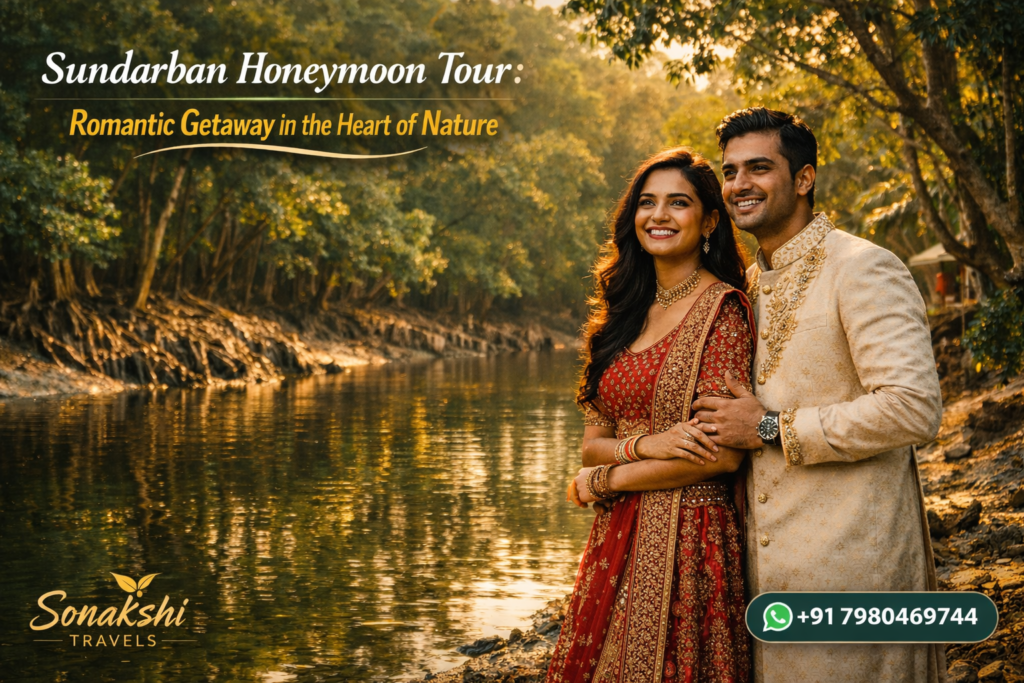
A honeymoon is remembered not only for where a couple goes, but for the quality of attention a place allows them to share. Some destinations impress through noise, spectacle, and constant activity. Others create intimacy by slowing the mind and softening the pace of perception. A Sundarban honeymoon tour belongs to the second kind. It offers romance not through artificial display, but through water, silence, filtered light, distance, and the feeling of entering a landscape that still resists hurry.
In that sense, the Sundarban is especially suited to newly married couples who want more than decorative comfort. The emotional character of the place matters. The rivers do not move in a straight line. The forest does not reveal itself all at once. Sound travels differently over open water. Evening descends with a softness that seems to gather the entire horizon into one continuous atmosphere. Within such a setting, conversation changes. Attention becomes gentler. Presence deepens. That is why a thoughtfully arranged Sundarban private tour can become a deeply romantic experience rather than a routine holiday.
Why romance feels different in the Sundarban
Romance in the Sundarban does not depend on theatrical luxury. It emerges from the meeting of privacy and wilderness. The delta creates a rare emotional balance. On one side there is tenderness: wide skies, quiet creeks, bird calls carried by wind, and the steady rhythm of river movement. On the other side there is mystery: dense mangrove edges, tidal shifts, changing light, and the sense that life is unfolding just beyond immediate sight. This combination gives a honeymoon here unusual depth. The place feels calm, yet never empty. It feels intimate, yet never small.
For couples, such an environment creates a special form of shared memory. In many destinations, the surrounding world keeps demanding attention. In the Sundarban, attention returns to the couple. The landscape does not compete with intimacy; it amplifies it. Long stretches of water encourage quiet companionship. The absence of urban distraction makes simple acts feel meaningful: standing together on a deck, listening to the ripple against the hull, watching the changing line of mangrove roots, or sitting in the evening after sunset while the air cools and the river darkens.
This is one reason why some couples choose a Sundarban luxury tour for their honeymoon instead of a busier conventional destination. The appeal is not only comfort. It is the possibility of moving through an ecologically rich region without losing privacy, stillness, and emotional continuity.
The emotional power of water, silence, and distance
Much of the romance of the Sundarban comes from the psychological effect of water. Rivers in the delta are not merely scenic elements. They structure experience. They open visual space, slow movement, and create intervals between one perception and the next. For a honeymoon couple, that matters. Water changes the tempo of thought. It softens conversation. It turns silence into something shared rather than awkward. The journey feels less like passing through tourist points and more like drifting through a living atmosphere.
Silence also behaves differently here. It is never fully empty. It contains small sounds: the slap of water against wood, the movement of wind through leaves, the cry of distant birds, the rustle of mangrove branches, the low murmur of current at the river’s edge. These details do not break the quiet; they shape it. Couples often remember not a single dramatic moment, but the total texture of these quiet hours. Romance is strengthened when perception becomes this fine and patient.
Distance is equally important. The horizon in the Sundarban often appears open and low, while the forest remains partially concealed. This creates a feeling of suspended discovery. Nothing is aggressively revealed. The landscape invites observation rather than immediate consumption. That makes it ideal for a honeymoon built around presence. A meaningful Sundarban travel experience for couples is not created by rush. It is created by the gradual accumulation of shared perception.
Privacy as an essential part of the honeymoon experience
Privacy is not a luxury detail during a honeymoon. It is central to the emotional success of the journey. Couples need space in which they can experience the landscape on their own terms. In the Sundarban, this becomes especially valuable because the setting is subtle. The romance of the place depends on listening, pausing, and remaining inwardly available to what the environment is doing.
That is why many couples are drawn to a carefully arranged Sundarban private tour package. A private arrangement allows the journey to keep its emotional unity. There is no pressure to adjust every moment to the rhythm of strangers. A couple may spend longer in silence, linger over a meal, remain on deck without interruption, or let the river itself determine the emotional tone of the day. Privacy in this context is not isolation. It is the freedom to inhabit a fragile and beautiful landscape together without distraction.
When privacy is combined with thoughtful hospitality, the honeymoon becomes more than scenic travel. It becomes a form of shared retreat. The forest, the waterways, and the changing light begin to feel personally encountered rather than publicly consumed. This is where a refined Sundarban luxury private tour can feel especially appropriate for couples who value both comfort and emotional subtlety.
The sensual landscape of the mangrove world
The Sundarban is one of the few places where romance may arise from ecological texture itself. Mangrove forests do not offer the obvious visual grammar of mountain peaks or ornamental gardens. Their beauty is more complex. It lies in root systems exposed by tide, in reflections broken by current, in the changing density of foliage, and in the contrast between openness and concealment. This complexity can make the landscape feel unusually alive to a honeymoon couple.
At sunrise and late afternoon, the light often settles across the river in long bands, touching the mudbanks, trunks, and leaves in a way that feels delicate rather than dramatic. The green of the mangrove is not uniform. It shifts from deep shade to luminous edge. Water carries these tonal changes outward, turning the whole scene into a moving mirror. Such details matter in a romantic journey because they keep perception active without making it restless. The environment remains gentle, yet never dull.
This ecological richness is also why the region holds such importance within broader conversations about Sundarban eco tourism. For honeymooners, this is not merely an abstract principle. It shapes the quality of the experience. A place with ecological integrity feels emotionally different from a place reduced to entertainment. The romance of the Sundarban depends partly on the fact that the landscape still possesses its own authority.
Wildlife presence and the feeling of shared wonder
A honeymoon in the Sundarban is not only about privacy and beauty. It is also about shared alertness. Wildlife presence creates a special form of intimacy between two people because it sharpens attention at the same moment. A distant movement at the waterline, a sudden flight of birds, deer appearing near the forest edge, the quiet presence of a reptile warming near a muddy bank, or the echo of unseen life within dense foliage—such moments are experienced together, and that shared recognition becomes memorable.
The important point is that wildlife here should not be treated as a checklist. Romance is damaged when nature is reduced to impatient expectation. The better approach is receptive rather than possessive. Couples who enter the delta with patience often discover that the greatest emotional reward comes from the atmosphere of life itself. The place feels inhabited, watched, and continuously active, even when no dramatic sighting occurs. This sense of living presence gives a Sundarban wildlife safari a more contemplative emotional quality than many couples expect.
For honeymooners, shared wonder matters deeply. It creates a memory structure stronger than routine sightseeing. To notice the same bird call, the same ripple, the same flash of movement across a distant bank is to build intimacy through attention. In that respect, the Sundarban offers a rare kind of romance: one grounded not in fantasy, but in mutual perception.
How the forest changes conversation between two people
One of the least discussed qualities of a honeymoon in the Sundarban is how the environment changes speech itself. In cities and crowded holiday destinations, conversation is often fragmented by noise, scheduling, interruption, and fatigue. In the Sundarban, speech tends to become slower and more deliberate. The rivers lengthen pauses. The visual openness reduces inner pressure. Silence becomes companionable. This has a profound effect on emotional connection.
Newly married couples often carry both joy and transition. Marriage is not only celebration; it is also a movement into a new shared identity. A place that permits reflection without heaviness can therefore be deeply valuable. The Sundarban does this well. The forest does not force sentiment, yet it supports sincerity. People speak more honestly when the surrounding world is not demanding performance.
This is another reason why a honeymoon here differs from a generic Sundarban tour package. The destination may be the same, but the inward quality of travel changes when the purpose is romantic retreat. The landscape becomes part of the couple’s emotional conversation, not just a backdrop to photographs.
Refined comfort without breaking the natural mood
Comfort matters on a honeymoon, but in the Sundarban it should never overpower the landscape. The most successful romantic journeys are those in which hospitality supports the experience of nature rather than replacing it. Good food, clean and restful space, attentive service, and a peaceful setting all contribute to emotional ease. Yet the higher purpose of such comfort is to keep the couple open to the atmosphere of the delta.
That is why the idea of a Sundarban luxury honeymoon package becomes meaningful only when luxury is interpreted carefully. In this landscape, luxury does not need to be loud. It is found in privacy, thoughtful pacing, clean design, quiet service, and the ability to witness the river in comfort. It is found in the ease with which a couple can remain present to the forest without practical strain. A well-conceived Sundarban luxury travel experience should feel seamless rather than ornamental.
For many couples, the ideal form of refinement is one that preserves emotional stillness. Comfortable seating, a peaceful deck, well-prepared meals, soft lighting in the evening, and a sense of orderly care can all deepen romance because they remove friction. But none of these should pull attention away from the primary truth of the honeymoon: two people sharing one of the most distinctive tidal landscapes in India.
Why the Sundarban suits couples seeking meaningful rather than performative travel
Many modern holidays are designed to be displayed. They are visually immediate, socially recognizable, and often structured around rapid consumption. A honeymoon in the Sundarban offers something different. It is not built for loud performance. It is built for inward richness. This makes it especially valuable for couples who want memory to deepen over time rather than disappear after the first burst of excitement.
The region rewards people who can observe carefully. It asks for emotional patience. It offers beauty that grows stronger through duration. For couples beginning married life, this can be quietly symbolic. The landscape teaches that not all depth is immediate, not all beauty is obvious, and not all intimacy needs public display. A meaningful Sundarban travel experience can therefore feel almost philosophical. It reminds the couple that closeness is often strengthened by shared stillness, shared attention, and respect for what cannot be rushed.
Within the larger field of Sundarban tourism, this is what makes the honeymoon version of the journey distinctive. It is not simply a romantic label placed over ordinary travel. It is a way of approaching the delta through tenderness, privacy, and deeper responsiveness.
The role of memory, mood, and atmosphere
Some honeymoons are remembered through isolated highlights. Others remain alive in memory as an atmosphere. The Sundarban belongs to the second category. Couples often leave with a continuous emotional impression rather than a single dominant image. They remember the soft vibration of the boat, the widening river at dusk, the layered smell of water and vegetation, the quiet meals, the call of birds across distance, the changing sky, and the strange calm produced by mangrove space. These impressions remain because they were felt bodily, not just seen.
Atmosphere matters in romantic memory because it enters the mind gradually and stays there. Long after details fade, couples still remember how the place made them feel. The Sundarban often leaves an impression of tenderness joined with wonder. It feels protective without being enclosed, expansive without being empty, and intimate without being artificial. That emotional complexity is rare.
It is also why a couple seeking a romantic retreat may find greater satisfaction here than in more predictable destinations. The Sundarban does not hand over its meaning immediately. It unfolds. That unfolding becomes part of the honeymoon itself. Two people learn the place together, and in doing so they also learn a new form of shared attention.
A romantic journey shaped by nature’s own intelligence
The deepest value of a Sundarban honeymoon tour lies in the fact that romance here is shaped by nature’s intelligence rather than by decoration alone. The tides teach rhythm. The forest teaches restraint. The river teaches patience. Light teaches change. Wildlife teaches attentiveness. Silence teaches trust. Together these qualities create an experience that can feel unusually complete for a newly married couple.
This is not merely a retreat into scenery. It is a meeting between emotion and environment. The mangrove world offers both softness and depth. It allows couples to step outside urban pressure and enter a space where companionship can become more conscious. When supported by thoughtful privacy, ecological sensitivity, and refined comfort, the journey becomes more than travel. It becomes a memory of beginning married life within a landscape that is alive, mysterious, and quietly generous.
For that reason, a honeymoon here should be understood not as a secondary alternative to more famous romantic destinations, but as a distinctive category of romance in its own right. Whether approached through a gentle Sundarban nature tour, an intimate river-based retreat, or a carefully designed private arrangement, the emotional essence remains the same: two people moving through one of the world’s great mangrove landscapes and discovering that love sometimes grows strongest in places where the world becomes quieter.