Want to Avoid Crowded Boats? Here Is Why Travellers Choose a Private Sundarban Tour
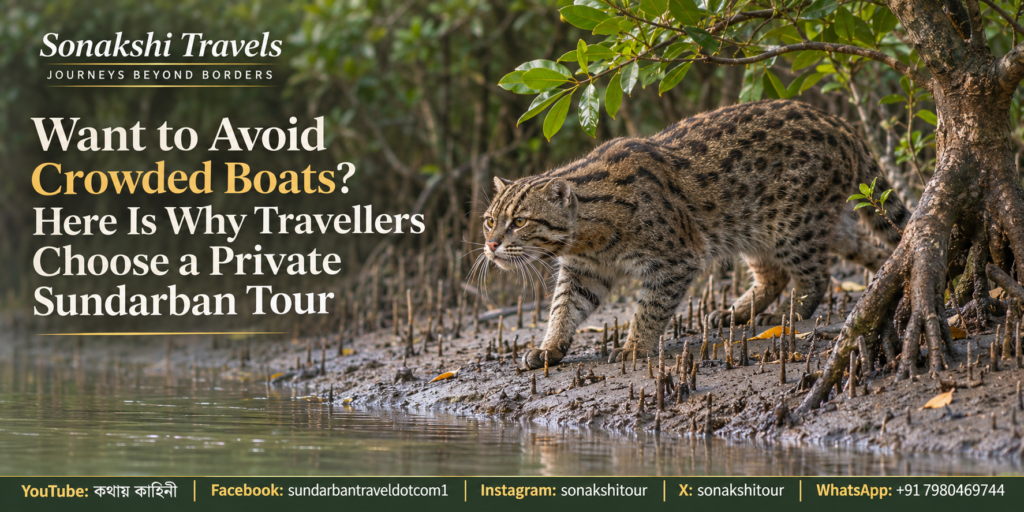
Imagine travelling through a quiet mangrove river, watching the sunlight settle across the water while a kingfisher rests on an exposed branch. Suddenly, someone calls loudly from the other side of the boat, several passengers rush towards the railing, and the peaceful moment disappears. This is one reason travellers consider a Sundarban private tour instead of joining a large sightseeing group. The appeal is not simply luxury or exclusivity. It is having sufficient space, a calmer atmosphere and an experience organised around the needs of a single travelling party. In the Sundarbans, where much of the wildlife experience unfolds from a moving boat, these differences can shape an entire holiday.
The Indian Sundarbans are unlike conventional wildlife destinations. There are no ordinary tourist jeep safaris through the mangrove forest. Authorised sightseeing is primarily conducted from boats navigating tidal rivers and waterways. Travellers spend considerable time onboard, observing the forest from a distance and visiting designated tourism facilities where permitted.
For families, couples, photographers and visitors who dislike crowded environments, choosing the right boat arrangement is therefore especially important. But does a private boat always deliver better value? What exactly becomes more comfortable, and what restrictions remain unchanged? This guide examines the practical differences between shared and private Sundarban travel so visitors can make an informed decision.
1. Why Crowded Boats Can Change the Sundarban Experience
A Sundarban journey is fundamentally different from sightseeing in a city. Visitors cannot simply leave a crowded attraction and walk to another location. Once a boat begins its authorised river journey, passengers generally remain aboard until reaching an approved stopping point or returning to the jetty.
This means the atmosphere onboard matters throughout the excursion.
Shared boat tours can be enjoyable, sociable and economical. However, their comfort depends on passenger numbers, vessel design, group behaviour and how effectively the operator manages the experience.
Limited Space at Popular Viewing Areas
When wildlife appears along a riverbank, passengers naturally want a clear view. On a busy boat, several people may move towards the same side at once. Those seated behind others can struggle to see the animal or take a photograph without someone’s shoulder appearing in the frame.
This does not mean every shared boat is overcrowded. A properly operated vessel should follow its approved passenger capacity. Nevertheless, a boat operating within its permitted limit may still feel busy to travellers who prefer generous personal space.
For photographers using long lenses, people shifting around the deck may also create unwanted vibration or obstruct a carefully composed image.
Different Travellers Have Different Priorities
A shared tour might bring together serious birdwatchers, families with children, first-time tourists and visitors who mainly want photographs of themselves against a forest backdrop.
These interests are all legitimate, but they do not always fit comfortably into the same sightseeing rhythm.
One passenger may want to watch a heron hunting quietly near the mudflats. Another may prefer continuing towards the next watchtower. A third may want a longer lunch break.
Although the guide and boat crew must maintain the approved schedule, managing several unrelated expectations can create compromises.
Noise Can Reduce the Sense of Wilderness
The sounds of the Sundarbans are part of the attraction: birds calling above the forest, water moving around the hull and occasional movement along muddy banks.
Ordinary conversation is natural, but repeated shouting or disruptive behaviour can disturb the atmosphere. Importantly, the Sundarban Tiger Reserve’s official regulations require silence inside forest areas and prohibit loud music aboard tourist boats.
A private booking offers an opportunity to agree on a quieter onboard atmosphere with companions before the journey begins. It cannot eliminate engine noise, neighbouring vessels or other unavoidable sounds, but it can reduce interruptions originating within one’s own travelling group.
2. What Does a Private Sundarban Tour Actually Mean?
The word “private” should describe a specific arrangement rather than merely an attractive package name.
In a properly organised private boat tour, the sightseeing vessel is reserved for the booked family, couple or travelling group. Other unrelated paying tourists do not normally join the same safari.
The boat is not completely empty apart from the guests. The driver, operating crew, authorised guide and any agreed cook or tour manager may still be present. These people are essential to the safe and organised operation of the journey.
Visitors should also distinguish between a private boat, private road transport and private accommodation. A package may include one without automatically including the others.
Private Boat Versus Private Hotel Room
A family may reserve two hotel rooms exclusively for its members while travelling to the forest on a shared sightseeing vessel. In this case, the accommodation is private, but the safari is not.
Conversely, guests might book a dedicated boat while staying at a resort that accommodates other tourists. This can still be a genuinely private boat experience.
For travellers whose primary concern is avoiding crowded safari boats, the most important question is straightforward: “Will our group have an exclusively reserved sightseeing boat throughout the agreed safari programme?”
The answer should appear clearly in the written booking confirmation.
Travellers interested in comparing dedicated arrangements can examine a Sundarban private tour as one possible starting point. The exact vessel, services and itinerary should always be confirmed before payment.
3. Private Versus Shared Sundarban Boat Tours: A Practical Comparison
Private arrangements are not automatically superior for every visitor. Some travellers enjoy meeting new people and prefer reducing their holiday expenditure. Others prioritise quiet surroundings, coordinated family time and additional comfort.
The following comparison highlights the differences travellers should evaluate before choosing a tour.
| Travel Consideration | Shared Boat Tour | Private Boat Tour |
|---|---|---|
| Passenger arrangements | Different bookings travel together. | Boat reserved for one booked party, alongside required personnel. |
| Personal space | Depends on passenger numbers and vessel capacity. | Generally offers more space when the booked party is small relative to boat size. |
| Noise and atmosphere | Depends on the behaviour of several groups. | Easier to establish a quiet atmosphere among companions. |
| Wildlife photography | Viewing positions may need to be shared. | Greater opportunity to coordinate viewing positions. |
| Meal preferences | Usually follows a fixed group menu. | May allow advance menu customisation. |
| Departure arrangements | Generally based on scheduled group timings. | May offer limited flexibility within operational and forest rules. |
| Guide attention | Guide supports multiple unrelated parties. | Guide can focus on the interests of one travelling party. |
| Overall cost | Usually lower per person. | Usually higher, particularly for couples or small groups. |
| Forest access | Restricted to authorised tourism routes. | Subject to the same permissions and authorised routes. |
| Wildlife sightings | Never guaranteed. | Never guaranteed. |
The central advantage of private travel is control over the experience within legitimate operating limits. It does not provide permission to enter prohibited waterways or conduct activities that other tourists cannot legally undertake.
4. Seven Reasons Travellers Prefer a Private Sundarban Boat
Reason 1: More Personal Space and Comfortable Movement
One of the most immediate benefits of a dedicated boat is the potential for greater personal space.
Guests can spread out between suitable seating areas, keep small personal belongings nearby and move to an available viewing position without competing with numerous unrelated passengers.
This is particularly valuable during longer excursions, when remaining in one place for several hours may become uncomfortable.
However, travellers should not assume that every private vessel is spacious. Boat length, deck layout, seating arrangements, shade and the number of booked passengers all influence comfort. Reviewing current photographs and confirming the capacity of the assigned vessel is more useful than relying on promotional descriptions alone.
Reason 2: A More Peaceful Wildlife-Watching Atmosphere
Wildlife observation often requires patience rather than constant movement.
A spotted deer may remain partly concealed behind vegetation, while a crocodile may rest motionless beside a muddy bank. Birdwatchers may need several quiet moments to identify a species correctly.
With a private group, companions can agree to keep conversations low, avoid unnecessary movement and respect the guide’s instructions when something interesting appears.
Such arrangements cannot guarantee additional sightings, but they may make wildlife encounters more satisfying by reducing distractions.
Reason 3: Better Coordination for Photography
Photographers often prefer an environment where they can prepare equipment without obstructing other travellers.
On a private boat, it may be easier to organise camera bags, identify suitable seating positions and communicate with the naturalist about birds, habitat features and opportunities for observation.
The crew may be able to make permitted adjustments to the vessel’s movement when conditions allow. However, boat positioning must remain subject to safety requirements, water conditions and instructions from forest authorities.
Travellers should never expect a boat driver to approach an animal dangerously, disturb wildlife or enter restricted channels to secure a photograph.
Reason 4: Meals Planned Around the Travelling Group
Food is an important part of an extended river excursion. Shared packages commonly serve a prearranged menu suitable for a wider group. Private arrangements may offer greater flexibility when preferences are communicated early.
Depending on the operator, guests may be able to request vegetarian meals, specific regional preparations or adjustments for children and older travellers.
Dietary restrictions, allergies and requirements concerning cooking ingredients should be confirmed in writing. A private booking does not automatically guarantee a separate kitchen or protection against allergen cross-contact.
Travellers should also confirm drinking-water arrangements and how the operator complies with current restrictions concerning single-use plastic inside the reserve.
Reason 5: A More Comfortable Experience for Families
Parents travelling with children often appreciate having familiar companions together rather than managing different groups in a confined setting.
A private boat may make it easier to coordinate children’s meals, rest periods and educational conversations with the guide.
Children can observe mangroves, birds and river wildlife while asking questions without competing for attention from a large group.
Nevertheless, adult supervision remains essential. Children must follow instructions concerning railings, life jackets, movement around the vessel and prohibited activities. Privacy does not remove the risks associated with travelling on tidal waterways.
Reason 6: More Individual Attention from the Naturalist
A knowledgeable guide can transform a journey from passive sightseeing into an opportunity to understand mangrove ecology.
Visitors may learn how salt-tolerant plants survive tidal conditions, why mudflats attract certain birds and how different animals use the forest environment.
During a private safari, the guide can often devote more conversation to the specific interests of the travelling party.
For example, birdwatchers may want help distinguishing similar-looking species, while families may prefer accessible explanations about the relationships between tides, mangroves and wildlife.
The actual depth of interpretation depends on the guide’s expertise. Travellers seeking specialist wildlife knowledge should request a suitable naturalist rather than assuming every standard guide provides the same service.
Reason 7: A More Personally Organised Holiday
Travelling privately can also simplify coordination outside the forest.
One family may prefer a relaxed breakfast and straightforward road transfers. Another may prioritise additional authorised forest time. Older travellers may need extra assistance at jetties or a comfortable arrangement for boarding and disembarking.
These preferences are easier to discuss when a single booking party is involved.
Private arrangements may allow adjustments before the journey, but those adjustments remain dependent on the agreed package, boat availability, tidal conditions, permit restrictions and practical operating schedules.
5. Why Private Tours Appeal to Families, Couples, Seniors and Nature Lovers
The appeal of a private boat varies according to the people travelling.
For couples, the principal attraction may be quiet time together while observing the mangrove landscape. A dedicated boat offers greater privacy without requiring the trip to become an elaborate luxury holiday.
Families may value having everyone together, with arrangements suited to different ages. Larger family groups can sometimes distribute the fixed boat cost across several adults, making private travel more financially attractive than it first appears.
Senior citizens may benefit from reduced crowding and carefully planned boarding arrangements. However, not every vessel has step-free access, supportive seating or suitable toilet facilities. Accessibility must be assessed individually before booking.
For naturalists and wildlife photographers, the advantages are often practical: fewer competing interests, easier communication and a quieter observation environment.
International visitors may appreciate a private transfer, assistance with travel coordination and English-speaking interpretation where requested and available. Foreign travellers should confirm applicable documentation and forest-permit procedures with their operator and the relevant authorities.
These distinctions explain why private travel is increasingly considered across different travel styles, although no single arrangement is suitable for everyone.
6. Does a Private Sundarban Tour Mean a Luxury Tour?
Not necessarily. Private travel and luxury travel describe different characteristics.
A private tour concerns the exclusivity of certain services, particularly the sightseeing boat. Luxury generally concerns the level of accommodation, onboard facilities, transport quality, personal service and overall comfort.
It is possible to arrange a modest private safari with standard accommodation. Equally, travellers may stay at a premium resort while participating in a shared boat excursion.
A thoughtfully organised Sundarban luxury tour may combine private boat arrangements with upgraded accommodation, dedicated transport and additional service options. The facilities should be checked against the actual booking rather than inferred from the word “luxury”.
What Makes a Private Boat Comfortable?
Before choosing a vessel, travellers should examine practical features instead of relying exclusively on its appearance.
- Suitable seating and sufficient shaded space.
- Life jackets and other essential safety equipment.
- A clean, functional onboard toilet, where advertised.
- Clear viewing areas without unsafe obstructions.
- Drinking-water arrangements consistent with local rules.
- Appropriate first-aid and fire-safety provisions.
- A trained crew familiar with local waterways.
- Practical arrangements for meals and refreshments.
The Sundarban Tiger Reserve publishes official requirements concerning boat equipment and operations. Travellers should confirm that their selected vessel meets current applicable standards.
Even a premium boat remains a working river vessel operating within a sensitive natural environment. It should not be compared uncritically with a seagoing luxury yacht or a fully serviced urban hotel.
7. How Much More Does a Private Sundarban Tour Cost?
Private tours generally cost more than shared arrangements because the travelling party covers services that would otherwise be divided among unrelated passengers.
A boat requires operating personnel, fuel, maintenance and applicable permissions regardless of whether it carries a small couple or a larger family group.
The total price can also include road transfers, accommodation, food, guide services and coordination. Consequently, comparing only the advertised per-person rate may produce a misleading impression.
Factors That Influence Private Tour Pricing
The most important variables include the number of travellers, travel dates, duration, accommodation category, road-transport arrangements, boat size, meal choices and the level of guiding requested.
A couple booking an entire vessel may face a relatively high per-person price. A group of six adults sharing the fixed costs may find the difference from a group package less substantial.
Weekend and holiday demand can also influence availability and quotations. Travellers should request current written prices rather than rely on old online examples.
Compare the Total Value, Not Only the Price
Suppose one quotation offers a lower price but includes a shared boat, fixed meals and a separately charged road transfer. Another may offer a higher total covering a reserved boat and agreed transport and meals.
The correct comparison depends on which services matter to the traveller.
Before paying an advance, request an itemised Sundarban private tour package quotation explaining the precise inclusions, exclusions, accommodation arrangements and sightseeing duration.
There is no need to pay for premium services that will not improve the intended experience. Travellers mainly concerned about crowding may find a standard private boat package entirely sufficient.
8. Choosing the Right Duration for a Less-Crowded Sundarban Holiday
The amount of time available influences how much visitors can enjoy their private arrangements.
One-Day Private Tour
A private day tour can suit travellers with limited time who want an introduction to the region’s waterways and mangrove scenery.
However, road transfers and boat logistics can occupy a considerable part of the day. Visitors should confirm how much actual sightseeing time the arrangement provides.
One Night and Two Days
This option offers a more relaxed introduction, combining an overnight stay with planned boat sightseeing.
It may suit couples and families taking a short break from Kolkata, although the available forest programme will depend on the actual arrival and departure schedule.
Two Nights and Three Days
For first-time visitors seeking a deeper experience, two nights and three days often provide a useful balance between travel, rest and guided exploration.
Depending on the package, it may be possible to devote substantial time to authorised forest excursions while avoiding an excessively rushed programme.
The detailed planning considerations are explained in 2 Nights 3 Days Sundarban Private Tour: The Ideal Itinerary for a First-Time Visitor.
Additional days should offer genuine sightseeing or relaxation value rather than simply increasing the package price. Visitors should ask how each day will be used and distinguish actual forest-exploration time from road transfers, hotel stays and other activities.
9. Planning a Private Sundarban Tour from Kolkata
Kolkata is a convenient starting point for many visitors travelling to the Indian Sundarbans.
Depending on the operator’s route, tourists may travel by road towards boat-boarding points such as Godkhali or Dhamakhali. Others may use rail transport towards Canning and continue by local road transport.
The Sundarban Tiger Reserve’s official travel guidance confirms that boats and launches are the means of movement within the reserve.
A Sundarban travel plan should therefore consider both road and water transport rather than treating the boat excursion as an isolated activity.
Travellers considering a Sundarban private tour from Kolkata should confirm their pickup location, departure arrangements, assigned vehicle, boarding jetty and expected return schedule.
Travel times depend on road conditions, vessel arrangements, tides and the itinerary. Operators should distinguish estimated timings from guaranteed commitments.
Forest Permissions and Safari Restrictions
Private travel does not create unrestricted access to the protected forest.
Authorised tourist boats must follow applicable rules, approved routes and instructions issued by forest authorities.
Visitors may disembark only at tourism locations where landing is permitted. Swimming, fishing and unauthorised movement are prohibited inside the reserve.
The reserve’s published regulations also prohibit loud music, littering, smoking and drone use within the specified forest areas.
Travellers should review current guidance from the Sundarban Tiger Reserve and confirm relevant permits before departure.
Some arrangements may require additional procedures for foreign nationals. Current requirements should be confirmed before committing to travel.
10. Advantages and Disadvantages of Choosing a Private Boat
A balanced decision requires acknowledging both the benefits and the limitations.
Advantages
- Greater privacy for the booked travelling group.
- Potentially more comfortable seating and viewing space.
- Easier coordination of meals and personal preferences.
- A quieter atmosphere when companions cooperate.
- More focused communication with the guide.
- Improved coordination for photography and birdwatching.
- Greater convenience for families travelling together.
- Potentially more personalised transfer and accommodation arrangements.
Disadvantages and Limitations
- Higher per-person cost for very small groups.
- Limited flexibility during forest activities governed by regulations.
- No guarantee of tigers or other wildlife sightings.
- Variable comfort standards across different boats.
- Possible additional charges for specialised guides or upgraded facilities.
- Advance booking may be advisable during popular travel periods.
- Privacy cannot eliminate crowds at public jetties or shared watchtower facilities.
For solo travellers and those prioritising affordability, a reputable shared tour may offer better value. For visitors whose holiday satisfaction depends heavily on comfort, quiet and travelling exclusively with companions, a private boat may justify its additional cost.
11. Practical Checklist Before Booking a Private Sundarban Tour
The most reliable way to avoid disappointment is to confirm what the operator actually promises.
Use the following checklist before making a payment.
- Boat exclusivity: Confirm that no unrelated paying tourists will join the sightseeing vessel.
- Vessel details: Request current photographs, approximate seating arrangements and information about facilities.
- Safety: Confirm available life jackets, first-aid provisions, fire equipment and appropriate operating permissions.
- Toilet facilities: Ask whether the vessel has an onboard toilet and who may use it.
- Forest programme: Request the proposed route and realistic sightseeing duration, subject to permissions and conditions.
- Guide: Confirm whether an authorised guide is included and whether specialist interpretation costs extra.
- Meals: Discuss vegetarian requirements, allergies, refreshments and drinking-water arrangements.
- Accommodation: Verify the actual property, room category and number of rooms.
- Transport: Confirm whether pickup and drop-off are private, shared or excluded.
- Final cost: Request an itemised quotation with exclusions and any applicable extra charges.
- Payment conditions: Review deposit requirements, cancellation terms and refund rules.
- Written confirmation: Retain the itinerary, service details and booking correspondence.
It is equally useful to understand common mistakes before choosing an operator. The resource Planning a Sundarban Private Tour? These 12 Booking Mistakes Can Ruin the Experience examines booking misunderstandings that can affect the quality of a private holiday.
Travellers should compare at least the services most important to them, not merely choose whichever operator presents the most attractive promotional photographs.
12. Responsible Wildlife Tourism Matters More Than Exclusivity
The Sundarbans are internationally recognised for their ecological importance. UNESCO identifies the Indian Sundarbans National Park as a World Heritage property supporting remarkable mangrove habitats and wildlife.
Responsible sightseeing is therefore more important than securing the most exclusive travel experience.
A private boat should not cause unnecessary disturbance, approach wildlife irresponsibly or disregard the restrictions protecting the habitat.
Visitors can support responsible tourism by maintaining a quiet atmosphere, following guide instructions, avoiding litter and respecting authorised routes.
Wildlife observation should remain patient and realistic. Royal Bengal tigers inhabit the region, but sightings are unpredictable. Spotted deer, crocodiles, birds and other wildlife also depend on habitat, tide, season and chance.
Those interested in the landscape’s conservation significance can consult the UNESCO World Heritage Centre’s Sundarbans National Park information.
The objective of a responsible private safari is not to gain privileged access to wildlife. It is to experience the environment carefully while respecting the protections that allow it to survive.
13. Frequently Asked Questions About Private Sundarban Boat Tours
Is a private Sundarban boat completely exclusive to my family?
Under a genuine exclusive sightseeing-boat arrangement, unrelated paying tourists should not join the booked party. However, the operating crew, guide and agreed support personnel remain onboard. Confirm the arrangement in writing because some packages advertise private accommodation without providing a private safari vessel.
Are private Sundarban boats always less crowded?
A private boat generally offers more control over passenger numbers, but actual comfort depends on the vessel’s size and the number of guests in the party. A large family can still feel cramped on an unsuitable boat. Ask for vessel details before booking.
Can private boat tours visit areas that shared boats cannot?
No. Private bookings remain subject to the same applicable forest permissions, designated tourism routes and restrictions. Exclusivity does not authorise entry into prohibited forest areas or permit unapproved activities.
Is a private Sundarban tour worth the additional money?
It can be worthwhile for travellers who prioritise personal space, quieter wildlife observation, coordinated family arrangements or specialised interests. The value depends on group size, boat quality, total inclusions and personal preferences. Budget-conscious travellers may prefer a well-managed shared tour.
Can I customise meals and safari timings?
Meal preferences can often be discussed with private operators before booking. Some timings may also be coordinated within the permitted operating schedule. However, forest entry restrictions, tides, weather, route approvals and crew requirements limit how much a safari can be changed.
Will booking a private boat improve my chances of seeing a tiger?
A private booking does not guarantee a tiger sighting or any specific wildlife encounter. Quieter observation and better coordination may improve the visitor’s experience, but animal movements and visibility remain unpredictable. Ethical operators should never promise sightings.
14. A Private Tour Is About Quality, Not Simply Luxury
The strongest reason to choose a Sundarban private tour is not the opportunity to travel more extravagantly. It is the possibility of enjoying the mangrove environment with fewer distractions, sufficient personal space and arrangements that reflect the needs of one’s own companions.
For travellers uncomfortable with busy boats, a reserved vessel can make long periods of river sightseeing more relaxing. Families may appreciate convenient coordination, photographers may value clearer viewing opportunities, and nature lovers may enjoy a quieter atmosphere for observing the forest.
Nevertheless, privacy should never be confused with unrestricted access, guaranteed wildlife sightings or automatic luxury. The quality of the boat, competence of the crew, suitability of the itinerary and observance of forest regulations matter just as much.
Before choosing between shared and private travel, decide what will genuinely improve your holiday. If peaceful observation, family convenience and thoughtful organisation are important priorities, a carefully selected private Sundarban tour may be a worthwhile investment in the overall experience.