Sundarban Tour Shows How Mangroves Protect Coastal Communities
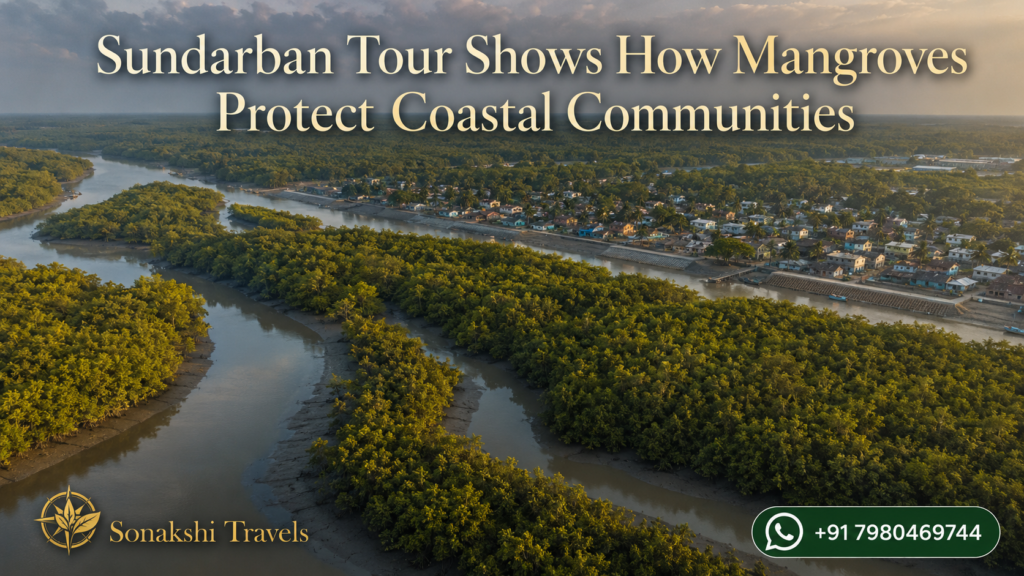
A carefully planned Sundarban tour does more than take visitors through rivers, creeks and forested islands. It helps them understand how mangroves protect coastal communities from strong waves, tidal pressure, soil erosion and saline water. The relationship becomes clear while travelling past forest edges and inhabited islands. Dense mangrove belts stand between open waterways and villages, reducing the direct force of moving water before it reaches homes, agricultural land and embankments.
This protective role is especially important in a low-lying delta where land and water are closely connected. People live beside tidal rivers, depend on natural resources and adjust their daily work to changing water levels. Mangroves support this difficult balance. Their roots hold soft sediment, their branches reduce wind pressure near the surface, and their vegetation provides shelter for many forms of life. A responsible tour presents these facts without turning the forest into a dramatic attraction or making unrealistic wildlife promises.
Visitors who understand this relationship usually observe the landscape more carefully. A muddy bank is no longer seen as an empty stretch of land. It becomes part of a living coastal defence system. A narrow strip of mangroves is recognised as protection for an island settlement. This wider understanding gives a Sundarban tour educational value while encouraging greater respect for the forest and the people who live beside it.
How a Sundarban Tour Reveals the Protective Role of Mangroves
The protective value of mangroves can be difficult to understand through photographs alone. It becomes clearer from a boat, where visitors can see exposed riverbanks, rooted forest edges, embankments and settlements within the same landscape. The view shows that mangroves are not separate from human life. They are part of the natural structure that helps coastal communities continue living in a region shaped by tides.
Mangrove trees and shrubs grow in waterlogged, salty and unstable ground where many ordinary plants cannot survive. Their specialised root systems rise above or spread across the mud, helping them obtain oxygen and remain stable. These roots also slow flowing water and trap suspended sediment. Over time, this process can help maintain the surface of the riverbank and reduce the speed at which loose soil is carried away.
The forest does not create complete protection against every severe natural event. It should therefore not be described as an unbreakable wall. Its value lies in reducing exposure and absorbing part of the physical energy moving towards the coast. The level of protection varies according to forest width, vegetation density, tidal conditions, river shape and the strength of the event. A knowledgeable guide or Sundarban tour operator should explain this role accurately rather than making exaggerated claims.
Such careful explanation is part of meaningful Sundarban travel. Visitors learn to see mangroves as working ecosystems rather than decorative greenery. This approach also supports the wider idea discussed in Sundarban Tour Offers Excellent Scope for Eco-Friendly Travel, where observation and environmental responsibility are treated as essential parts of the journey.
Mangrove Roots Help Hold a Fragile Coast Together
Riverbanks in the delta contain fine sediment that can be easily disturbed by currents, tides, waves and repeated human activity. Mangrove root networks create resistance close to the ground. They reduce the movement of water around the bank and help collect mud, leaves and organic material. This does not stop all erosion, but it can improve the stability of protected shorelines and slow the loss of soil.
Visitors often notice different root forms along the waterways. Some roots rise vertically from the mud, while others curve, spread or support the trunk from several directions. These structures allow mangrove species to live in difficult soil while giving the river edge a complex physical framework. Small aquatic animals find shelter among the roots, and deposited material contributes to the wider food system of the estuary.
For coastal residents, stronger river edges have practical importance. Land supports homes, ponds, paths, small farms and community facilities. When a bank retreats, the effect is not limited to a line on a map. Families may lose usable land, access routes may become uncertain, and embankments may face greater pressure. Mangrove conservation is therefore connected with local security as well as wildlife protection.
A well-guided boat journey can make these connections visible without disturbing the forest. Travellers can observe from a suitable distance, listen to explanations and compare densely vegetated banks with more exposed areas. The purpose is not to draw a simple conclusion from one view, because erosion depends on several factors. The purpose is to understand why healthy coastal vegetation remains an important part of risk reduction.
Reducing the Force of Waves, Wind and Tidal Water
Mangrove vegetation creates friction. When waves and tidal water pass through roots, trunks and branches, part of their energy is reduced. A broad, healthy forest belt can provide more resistance than a thin or damaged strip. This is one reason why the width, continuity and condition of mangrove cover matter to nearby settlements.
The same principle applies to wind close to the surface. Dense vegetation can interrupt direct airflow and reduce some of its force before it reaches the land behind the forest. However, responsible interpretation must remain realistic. Mangroves cannot remove every danger, and communities still require maintained embankments, reliable warnings, safe shelters, planned evacuation systems and strong public infrastructure.
The most useful lesson from a Sundarban tour is that coastal protection works through several connected measures. Natural ecosystems and human planning should support each other. Mangrove belts help reduce physical exposure, while embankments and emergency systems address risks that vegetation alone cannot manage. Treating one measure as a complete solution would give visitors an inaccurate understanding of the region.
This balanced view also helps travellers appreciate the discipline of local life. Boats, fishing activity, river crossings, farming and household routines are influenced by water. The cultural connection between people and the delta is explored further in Sundarban Tour Helps You Experience Bengal’s Coastal Soul. In the present context, that connection shows why ecological protection and community well-being cannot be separated.
Why Healthy Mangroves Support Coastal Livelihoods
The importance of mangroves is not limited to protection from erosion and water pressure. The ecosystem also supports fish, crabs, prawns, molluscs, birds and many smaller organisms. Mangrove roots provide feeding, breeding or nursery areas for several aquatic species. This ecological productivity supports the wider river system on which many local livelihoods depend.
Fishing and crab collection may be influenced by the health of creeks, tidal channels and mangrove edges. When habitats are damaged, changes can move through the food chain and affect the resources available to people. Responsible conservation therefore supports both biodiversity and economic stability. Visitors should understand this connection without romanticising difficult or risky forms of work.
Mangrove forests also contribute organic matter to surrounding water. Fallen leaves break down and become part of the estuarine nutrient cycle. Tiny organisms process this material, and it supports other species at different levels of the food web. A landscape that may appear quiet from a boat is continuously carrying out complex ecological work.
An experienced guide can explain these functions in simple language. This is one reason why travellers should evaluate the knowledge standards of a Sundarban travel agency, not merely the visible facilities included in a trip. Accurate interpretation helps guests connect forest health with food security, livelihoods and the long-term stability of inhabited islands.
Coastal Communities Are Partners in Mangrove Protection
Conservation is sometimes discussed as if the forest exists without people. In reality, many settlements are located close to mangrove landscapes, and residents understand tidal behaviour through long experience. Their daily observations can include changes in riverbanks, creek depth, fish availability, salinity and vegetation. This local knowledge is valuable when conservation programmes are planned with community participation.
People living near vulnerable banks may take part in planting, monitoring or protecting young mangroves. Such work requires more than placing seedlings in mud. The selected species must suit local salinity, elevation, tidal flow and soil conditions. Young plants also need protection from erosion, grazing and physical disturbance. Poorly planned planting may fail even when the intention is good.
Natural regeneration can be equally important where tidal and soil conditions allow it. Protecting an area from repeated disturbance may give seeds and young plants the opportunity to establish themselves. Conservation decisions should therefore be based on site conditions and scientific guidance rather than a simple belief that the same planting method will work everywhere.
Tourism can support public understanding when it respects the dignity of local communities. Villages should not be treated as display areas, and residents should not be photographed closely without permission. Visitors should recognise that the people they see are managing homes, work and family responsibilities in a demanding coastal environment. Respectful behaviour strengthens the ethical quality of a Sundarban tour.
Why Careful Planning Matters in a River-Based Region
The Sundarban is different from a conventional city or hill destination. Movement depends largely on waterways, and the quality of the experience is affected by boat management, forest permissions, local coordination, food preparation, accommodation and guide availability. These services need to work together. A small delay or communication failure can affect several parts of the visit because alternatives may not be immediately available on an island.
A reliable Sundarban tour package should therefore be judged by its organisation, not by exaggerated descriptions. Travellers should receive clear information about the nature of boat travel, the areas permitted for visits, the standard of the stay, meal arrangements, safety equipment and the role of the guide. Honest communication helps guests prepare mentally for a quiet, observation-based journey.
Those arranging a Sundarban tour from Kolkata should also understand that the river experience cannot be managed like an ordinary road excursion. Transfer timing, boat readiness and local service teams must be coordinated in advance. However, the value of this planning is not speed. It is the creation of a calm schedule in which visitors can observe the relationship between mangroves, rivers and inhabited islands without unnecessary confusion.
Good planning also protects the destination. Overcrowding, loud behaviour, unmanaged waste and careless movement near fragile banks can weaken the quality of the environment. A responsible operator sets clear expectations before the journey and ensures that boat staff, guides and guests follow consistent practices.
How Boat Conduct Affects Mangrove Edges and Communities
The boat is the main viewing platform during much of the journey. Its operation directly affects comfort, safety and environmental responsibility. The crew should follow permitted routes, maintain a suitable speed and avoid approaching sensitive banks without a valid reason. Fast movement close to soft shorelines can create additional wake, while repeated disturbance may affect narrow creeks and exposed edges.
Noise control is equally important. Loud music, shouting and unnecessary engine use reduce the calm character of the landscape and may disturb wildlife as well as nearby residents. Quiet observation allows travellers to hear birds, water movement and ordinary river activity. It also creates space for guides to explain how changes in vegetation influence the protection available to different islands.
Waste must remain securely on the boat until it can be handled properly. Plastic cups, packets, bottles and food waste should never be thrown into rivers or left near mangrove roots. Tidal water can carry discarded material through creeks, where it may become trapped in vegetation or harm aquatic life. Small acts of care are essential because the same waterways support both ecosystems and communities.
These practices are also useful for travellers seeking a refreshing break from crowded urban routines. The article Sundarban Tour Is a Refreshing Break for City Travelers explains the value of a slower setting. In a mangrove landscape, that slower pace also encourages more responsible observation.
Comfort and Safety Should Support Environmental Understanding
Comfort is not separate from responsible tourism. A clean boat, shaded seating, safe movement areas, life jackets, drinking water and organised meals allow visitors to concentrate on the landscape. When basic services are poorly managed, guests may become tired or distracted and fail to understand the ecological importance of what they are seeing.
Food coordination requires particular care because meals are often prepared or served within a river-based service system. Clean preparation, covered storage, safe drinking water and timely service are more important than an excessive menu. Avoiding unnecessary disposable items also reduces the amount of waste produced during the trip.
Accommodation should provide hygiene, security and dependable service without separating visitors completely from the character of the region. The purpose of a comfortable stay is to support rest between periods of observation. It should not turn the journey into a hotel-centred experience or encourage the belief that higher room categories create better access to nature.
A Sundarban private tour may suit families, senior citizens or small groups who prefer controlled seating, flexible meal coordination and a quieter boat environment. The value of privacy in this context is practical. It can help the group maintain a suitable pace and listen carefully to ecological explanations.
Similarly, a Sundarban luxury tour package should be assessed through service reliability, hygiene, safety and responsible operation. Luxury should never mean louder entertainment, careless consumption or closer intrusion into restricted natural areas. Environmental limits remain the same for every visitor.
Suitability for Families, Couples and Senior Travellers
A family Sundarban tour can help children understand coastal ecology through direct observation. They can learn why mangrove roots look different, how tides influence the land and why forest protection matters to villages. Adults should supervise children carefully on boats and explain that the forest is a living habitat, not an amusement setting.
Couples and small private groups may value the quiet pace and the opportunity for thoughtful discussion. The strongest part of the experience often comes from watching gradual changes along the riverbank rather than searching constantly for a dramatic event. This patient form of travel suits people who appreciate landscapes, community life and ecological learning.
Senior citizens may require comfortable seating, hand support, safe boarding assistance, nearby washroom access and regular meal timing. These needs should be discussed before confirming a Sundarban private tour package. Clear planning allows senior guests to participate without avoidable physical pressure.
No category of tour changes the basic nature of the destination. A private Sundarban tour or luxury Sundarban tour can improve personal comfort and coordination, but it cannot control tides, wildlife movement or forest regulations. Guests should choose service levels according to their needs while keeping expectations realistic.
Responsible Expectations Improve the Quality of a Sundarban Tour
The Sundarban is not a controlled wildlife park where sightings can be scheduled. Animals move according to natural behaviour, tidal conditions, food availability and disturbance levels. No ethical operator should guarantee a tiger sighting or present wildlife as the only measure of a successful visit.
Mangrove observation provides a more dependable and meaningful focus. Visitors can study root structures, sediment patterns, exposed banks, creek systems and the position of settlements behind vegetation. They may also observe birds and aquatic life, but these encounters should be treated as natural possibilities rather than promised events.
Realistic expectations encourage patience. They allow guests to value the continuous ecological functions taking place around them. Even when large animals remain unseen, the forest is still stabilising sediment, supporting food chains, storing carbon and reducing some coastal exposure. These processes are central to the importance of the region.
A responsible guide should also avoid presenting every damaged bank as proof of one simple cause. River erosion can result from channel movement, currents, tides, waves, soil conditions and human activity. Mangroves can reduce certain pressures, but each location has its own physical conditions. Accurate explanations build trust and protect the educational value of the journey.
Choosing a Tour That Respects Mangroves and Local Life
Before selecting an affordable Sundarban tour, travellers should look beyond the lowest quoted amount. A service that reduces essential safety, guide quality, hygiene or waste management may not provide good value. Affordability should mean sensible organisation and clear inclusions, not the removal of responsibilities.
Travellers can ask how the boat handles waste, whether life jackets are available, how guides explain mangrove ecology and whether the programme follows forest permissions. They should also confirm the stay category, meal arrangement, group size and assistance available during boarding. Direct answers are a useful sign of professional preparation.
The best Sundarban tour is not necessarily the one with the longest list of attractions. For a traveller interested in mangrove protection, the better choice is a tour that allows quiet observation, uses informed guides and treats coastal communities respectfully. The organisation should make the relationship between forest health and human security easier to understand.
Those considering a premium Sundarban private tour package should apply the same standards. Higher comfort can be useful for families and senior travellers, but responsible boat conduct and ecological accuracy remain essential. No service category should claim special freedom from forest rules or closer access to sensitive habitats.
Useful Questions to Ask Before Booking
- Will the guide explain mangrove ecology and its connection with coastal communities?
- Does the boat carry suitable safety equipment and provide secure seating?
- How are plastic, food waste and other discarded materials managed?
- Are forest permissions and local operational requirements properly coordinated?
- Will the group be encouraged to maintain low noise near forests and settlements?
- Are meal, stay and boarding arrangements suitable for children or senior citizens?
- Does the operator communicate honestly about wildlife sightings and natural uncertainty?
These questions help travellers identify whether environmental responsibility is part of actual tour management or merely a phrase used in advertising. A dependable answer should include practical methods rather than broad promises.
Tourism Can Encourage Better Understanding of Coastal Protection
Well-managed tourism cannot replace scientific conservation, community programmes or public infrastructure. It can, however, improve awareness. A visitor who understands the role of mangroves is more likely to respect forest restrictions, reduce waste and support responsible travel practices.
This awareness is valuable because coastal protection is often discussed only after a damaging event. A thoughtful journey shows that protection is an ongoing process. Mangroves grow, trap sediment, support aquatic life and reduce physical pressure every day. Their condition depends on water flow, soil, salinity, regeneration and freedom from repeated disturbance.
Tourism should communicate these facts without using the struggles of coastal residents as entertainment. Local challenges deserve accuracy and dignity. Visitors should leave with respect for the knowledge, labour and adaptation of communities rather than with simplified ideas about life in the delta.
A carefully organised Sundarban tour can create that understanding. It reveals that the mangrove forest is not only a wildlife habitat or a scenic background. It is part of the natural support system of the coast, closely linked with riverbanks, livelihoods, settlements and public safety.
A Sundarban Tour Makes Coastal Protection Visible
The deepest value of a Sundarban tour lies in seeing how nature and human life depend on each other. Mangrove roots hold sediment, vegetation reduces part of the energy carried by water and wind, and the wider ecosystem supports aquatic life and local livelihoods. These functions do not remove every coastal risk, but they provide an important layer of protection.
Visitors understand this role best when the journey is quiet, properly guided and responsibly managed. Safe boat operation, clear ecological interpretation, organised food and stay services, respectful community interaction and careful waste control all improve the experience. They also show that tourism must work within the limits of a sensitive delta.
Choosing the right tour is therefore not simply a question of comfort or the number of places mentioned in a programme. It is a decision about service quality, honest guidance and environmental conduct. When these elements are coordinated well, a Sundarban tour helps travellers recognise mangroves as living coastal infrastructure and understand why their protection matters to communities across the delta.