Sundarban Tour Brings You Face-to-Face with Riverine Wilderness
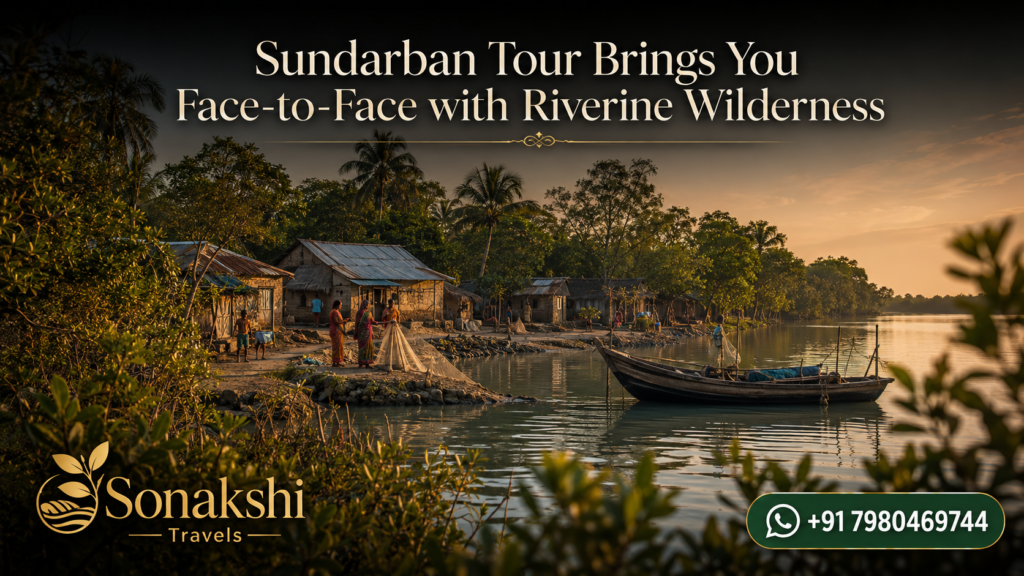
A well-planned Sundarban tour brings travellers close to a form of wilderness shaped by rivers, tides, mangrove islands and narrow forest creeks. Unlike a conventional holiday where most attractions are reached by road, the Sundarban experience unfolds mainly from a boat. The changing water, exposed mudflats, dense mangrove edges and distant animal calls gradually reveal the character of this riverine landscape.
Being face-to-face with riverine wilderness does not mean entering an uncontrolled or extreme environment. It means observing nature from a responsible distance while travelling through authorised waterways under suitable guidance. The value of the journey lies in watching the landscape carefully, understanding its natural rhythm and respecting the rules that protect both visitors and wildlife.
The region requires more coordination than an ordinary sightseeing destination. Boat movement, forest permissions, meals, accommodation, trained assistance and local conditions must work together. When these elements are managed properly, travellers can concentrate on the forest instead of worrying about avoidable service problems. This is why thoughtful planning has a direct influence on the quality of the experience.
How a Sundarban Tour Reveals Riverine Wilderness
The Sundarban is a landscape where land and water are closely connected. Rivers separate inhabited islands from protected forest areas, while tidal creeks carry water deep into the mangrove system. The appearance of the banks changes with the tide. Roots that remain partly hidden during high water may become clearly visible when the water recedes.
A boat offers a moving observation point from which travellers can study this relationship. Wide rivers create a feeling of openness, while narrow creeks bring the forest edge closer. Sunlight, shadows, sediment, water movement and vegetation produce different views during the same journey. The experience is therefore not limited to reaching fixed attractions. Much of its meaning comes from observing the landscape between recognised forest points.
Mangroves are specially adapted to saline, waterlogged and unstable ground. Their roots help them survive in difficult conditions and also provide shelter for small aquatic organisms. Birds use branches and exposed banks for resting or feeding. Reptiles may remain almost motionless near the water, while spotted deer can occasionally be seen close to the forest edge. Every sighting depends on natural movement, distance, tide and chance.
Travellers who understand this are generally more satisfied than those expecting wildlife to appear on demand. A responsible journey does not promise a Royal Bengal Tiger sighting. Instead, it develops an appreciation of the complete habitat in which the tiger and many other species live.
The Forest Is Experienced Through Patience
Riverine wilderness does not always announce itself through dramatic encounters. It often becomes visible through smaller signs: a kingfisher moving between branches, a crocodile-shaped form near a muddy bank, a sudden group of deer, fresh movement in the reeds or alarm calls from within the forest. A knowledgeable guide can help visitors notice such details without presenting uncertain signs as confirmed sightings.
Quiet observation is especially important inside narrow waterways. Loud conversation, music and repeated shouting disturb the atmosphere and reduce the ability to hear natural sounds. The forest becomes more understandable when passengers remain patient and allow the guide or boat crew to point out relevant features.
This slower method of observation is central to the experience. It encourages travellers to look beyond a checklist of animals and recognise how the river, mud, roots, vegetation and wildlife function together.
Why Careful Planning Is Essential in a River-Based Region
A journey through the Sundarban depends on several connected services. The boat must be suitable for the group, forest formalities must be handled correctly, food must be prepared at the appropriate time, and accommodation arrangements must match the confirmed booking. If one element is poorly coordinated, it can affect the entire experience.
Waterways are not managed in the same way as urban roads. Boat routes may be influenced by permissions, tides, navigation conditions and forest regulations. Visitors cannot simply leave the vessel at any convenient location or enter protected areas without authorisation. A capable Sundarban tour operator should explain these limitations before the journey begins.
Planning also involves setting realistic expectations. Travellers should know that the boat is the principal viewing platform and that wildlife observation may require long periods of quiet movement. They should understand what services are included, whether the boat is shared or private, what type of room has been arranged and who will assist the group during the journey.
The article Sundarban Tour Makes Mangrove Tourism Simple and Meaningful further explains how coordination can make this complex mangrove destination easier for visitors to understand. Simplicity in this context comes from proper organisation, not from treating the region like an ordinary tourist centre.
Comfort Supports Better Wilderness Observation
Comfort and wilderness are not opposing ideas. Basic comfort helps travellers remain attentive during several hours on the water. A clean boat, shaded seating, access to drinking water, hygienic meals and a functional washroom can make a significant difference, particularly for families and senior citizens.
The boat should provide enough room for passengers to sit safely without blocking movement. Seating must allow visitors to observe both sides of the river when conditions permit. Life jackets should be available and passengers should receive clear safety instructions. Children must remain under adult supervision and should not lean over the railing or move carelessly while the vessel is operating.
Comfort also depends on sensible group size. When too many passengers occupy a limited space, noise increases and viewing becomes difficult. A smaller group can usually communicate with the guide more easily and maintain a calmer environment. This is one reason some travellers prefer a private Sundarban tour when they want greater control over pace, meals and group interaction.
Premium arrangements may improve room quality, privacy or personal service, but they do not change the natural rules of the forest. A Sundarban luxury tour package should therefore be evaluated by the standard of coordination and comfort it provides, not by exaggerated claims about wildlife encounters.
The Importance of an Appropriate Boat
The boat is more than a means of movement. It functions as the main observation space, meal area and resting point during forest navigation. Its condition has a direct effect on safety and travel quality. Cleanliness, stable seating, overhead protection and responsible operation are more important than decorative features.
The crew must understand local waterways and follow instructions issued by the relevant authorities. Passengers should not pressure the boatman to enter prohibited creeks, approach wildlife too closely or operate in an unsafe manner. Responsible navigation protects the group and prevents unnecessary disturbance within sensitive habitats.
Engine noise cannot always be avoided, but unnecessary music and loud entertainment can be controlled. A properly managed vessel maintains a calm atmosphere so that travellers can listen to bird calls, observe the banks and communicate with the guide.
The Role of a Reliable Sundarban Travel Agency
A dependable Sundarban travel agency acts as the link between the traveller and multiple local services. Its work may include coordinating the boat, accommodation, food, permissions, guides, local staff and transfers associated with the confirmed arrangement. Clear communication is therefore one of the most important signs of reliability.
Before accepting a booking, the organiser should explain the nature of river-based sightseeing, the approximate level of comfort and any practical limitations. Inclusion details should be written clearly. Travellers should know whether meals are included, what category of room has been selected, whether the boat is exclusive to their group and whether a forest guide or tour manager will be available.
A responsible agency does not create pressure through unrealistic wildlife promises. It explains that sightings are unpredictable and that the forest experience includes vegetation, birds, reptiles, mammals, waterways and local ecological knowledge. This honest approach helps visitors arrive with suitable expectations.
Good Sundarban travel management continues after the booking is confirmed. The organiser should remain accessible for necessary communication and ensure that service partners understand the group’s requirements. For families, senior travellers or guests with dietary needs, advance coordination is especially important.
Local Knowledge Improves Interpretation
Local guides and experienced boat crews understand the practical language of the rivers. They recognise channels, forest boundaries, common bird habitats and signs that may not be obvious to a first-time visitor. Their knowledge can turn a silent stretch of water into an informative part of the journey.
Interpretation should remain accurate and restrained. A distant object should not be presented as a confirmed animal unless it can be identified properly. Similarly, stories about the forest should be separated from verified ecological information. Honest guidance builds trust and encourages visitors to observe carefully.
Local involvement also connects tourism with communities living beside the mangrove landscape. Readers interested in this human dimension may find Sundarban Tour Offers a Close View of Traditional Island Life useful for understanding how river conditions influence everyday work, movement and settlement.
Coordinating Food, Stay, Boat and Guide Services
A successful forest journey depends on smooth coordination between services that may be provided at different locations. Meals may be served on the boat, while overnight accommodation is arranged on an inhabited island. Guides may join the group near an authorised entry point. Each movement needs to be timed sensibly so that the day does not become confused or rushed.
Food should be fresh, hygienic and appropriate for the group. Travellers with vegetarian preferences, allergies or other dietary restrictions should communicate them before the booking is finalised. Last-minute changes can be difficult in remote island areas where ingredients and kitchen facilities may be limited.
Accommodation should provide the level of cleanliness and privacy promised during booking. A stay near the forest may improve the feeling of being close to the landscape, but visitors should still assess rooms according to realistic regional standards. Those selecting a luxury Sundarban tour should confirm what the term “luxury” actually covers, such as room category, private services, meal arrangements or personalised assistance.
The guide, boat crew, cook, accommodation staff and tour manager should not operate as disconnected service providers. Their schedules must support one another. A delayed meal, unclear boat reporting time or unconfirmed room can reduce the time and attention available for meaningful forest observation.
Suitability for Families, Couples and Senior Travellers
A family Sundarban tour can be suitable when the programme respects the needs of different age groups. Children often find boat movement, birds, mudflats and mangrove roots interesting, but adults must supervise them continuously. The organiser should explain safety rules in simple language and ensure that life jackets of suitable sizes are available.
Senior travellers generally benefit from comfortable seating, manageable boarding arrangements, regular meals and sufficient rest. Their ability to walk, climb steps or remain on a boat for extended periods should be discussed beforehand. A suitable plan should support participation without making them feel hurried.
Couples may prefer a quieter journey with greater privacy. However, privacy should not be confused with unrestricted access to the forest. All visitors remain subject to the same navigation, permission and wildlife-protection rules. A private arrangement changes the service format, not the environmental regulations.
A Sundarban private tour package can be useful for a family or small group that wants an exclusive boat, flexible meal coordination and more direct communication with the guide. Travellers should still verify inclusions carefully because the meaning of “private” can vary between providers.
Why Group Behaviour Matters
The behaviour of passengers influences both safety and observation quality. A disciplined group is easier to guide, creates less disturbance and has a better chance of noticing subtle wildlife activity. Visitors should follow instructions about seating, boarding, photography and movement on the vessel.
Photography should be conducted without blocking other passengers or creating unsafe positions. Flash should not be used to disturb wildlife. Travellers must never throw food towards animals, attempt to attract them with sound or demand that the vessel move dangerously close to the bank.
Respectful behaviour creates a better experience for everyone. Riverine wilderness is most clearly felt when the boat remains orderly and attention stays on the surrounding habitat.
Responsible Travel Protects the Riverine Experience
The Sundarban is an ecologically sensitive mangrove environment. Tourism must therefore minimise avoidable waste, noise and disturbance. Plastic wrappers, bottles and food remains should never be thrown into rivers or left near forest areas. Waste created during the journey should be stored and disposed of through an appropriate system.
Mangrove plants should not be cut, collected or damaged. Visitors must remain within authorised areas and should not request entry into restricted forest channels. Even when wildlife appears close to the water, a safe viewing distance must be maintained.
The connection between ecological responsibility and travel quality is direct. Cleaner waterways, quieter boats and disciplined observation preserve the natural character that visitors have come to experience. The discussion in Sundarban Tour Offers Excellent Scope for Eco-Friendly Travel provides further context on reducing tourism pressure while supporting meaningful engagement with the mangrove environment.
Responsible tourism also involves treating local residents and workers with dignity. Boat crews, cooks, guides and accommodation staff contribute practical knowledge and labour to the journey. Fair communication and respectful conduct help create a healthier relationship between visitors and host communities.
Setting Realistic Wildlife Expectations
The Royal Bengal Tiger is an important part of the Sundarban ecosystem, but no ethical operator can guarantee that a traveller will see one. Tigers move through a large, complex habitat and may remain completely hidden from boats. Claims of assured sightings should therefore be treated with caution.
A realistic journey values the wider ecosystem. Spotted deer, wild boar, crocodiles, monitor lizards, monkeys, birds and other species may be observed, but none should be considered certain. Tide, distance, natural movement, human noise and simple chance all influence what becomes visible.
Travellers can improve their experience by observing the complete environment rather than waiting only for one animal. Mangrove roots, exposed banks, bird behaviour, water channels and changes in forest density all provide evidence of how the ecosystem works. The absence of a tiger sighting does not make the journey unsuccessful.
A responsible guide helps visitors recognise possibilities without creating false excitement. This balanced interpretation is an important difference between meaningful wildlife tourism and entertainment based on exaggerated claims.
Choosing the Right Sundarban Tour Package
The right Sundarban tour package should match the group’s comfort needs, privacy preference and interest in nature. Travellers should examine the complete arrangement instead of choosing solely on the basis of a low price or a premium label.
Important points include the boat type, approximate group size, room category, meal coverage, forest permission arrangements, guide support and the availability of an accountable coordinator. Written inclusions reduce misunderstanding and make it easier to compare services fairly.
An affordable Sundarban tour can offer a meaningful experience when essential services are organised responsibly. Affordability should not result in unsafe crowding, unclear accommodation, poor hygiene or missing permission support. Similarly, a premium arrangement should provide genuine improvements in privacy, service and comfort rather than decorative descriptions.
Travellers considering a Sundarban tour from Kolkata should confirm how the complete service connects with the river-based portion of the journey. The emphasis should remain on dependable coordination from the starting point to the boat, accommodation and forest services, rather than on an unnecessarily detailed list of transport claims.
Questions to Ask Before Booking
Clear questions help travellers judge whether an organiser understands the region. Before confirming, it is reasonable to ask:
- Is the boat private or shared, and how many passengers will use it?
- What safety equipment and washroom facilities are available on the boat?
- Who will arrange forest permissions and guide services?
- Which meals and room categories are included?
- Who will coordinate the group during the river journey?
- Can dietary, mobility or senior-citizen requirements be managed?
- What happens if navigation or forest instructions require a change?
- Are wildlife sightings described honestly without guarantees?
The answers should be specific and easy to understand. Vague replies, missing written details or repeated wildlife promises may indicate weak planning. A reliable organiser should be able to explain both what is included and what cannot be controlled.
The Real Value of Meeting Riverine Wilderness
The deepest value of this journey comes from recognising that the Sundarban is not a staged wildlife setting. It is a living, tide-driven environment where rivers determine movement and mangroves create shelter, protection and feeding grounds. Visitors enter this landscape temporarily and must behave accordingly.
Face-to-face contact with riverine wilderness develops gradually. It begins with the scale of the waterways, grows through close observation of mangrove edges and becomes meaningful through an understanding of ecological relationships. A quiet creek can be as informative as a wildlife sighting when travellers know what to observe.
Good organisation supports this understanding. Suitable boats, accurate guidance, hygienic food, dependable accommodation, proper permissions and disciplined service allow visitors to engage with the landscape safely. None of these elements should distract from the forest; together, they create the conditions needed to appreciate it.
A thoughtfully managed Sundarban tour therefore offers more than routine sightseeing. It places travellers within a river-based environment while maintaining the distance and discipline required for responsible tourism. With realistic expectations, careful planning and respect for local rules, the journey can reveal the true character of the mangrove wilderness in a clear, comfortable and meaningful way.