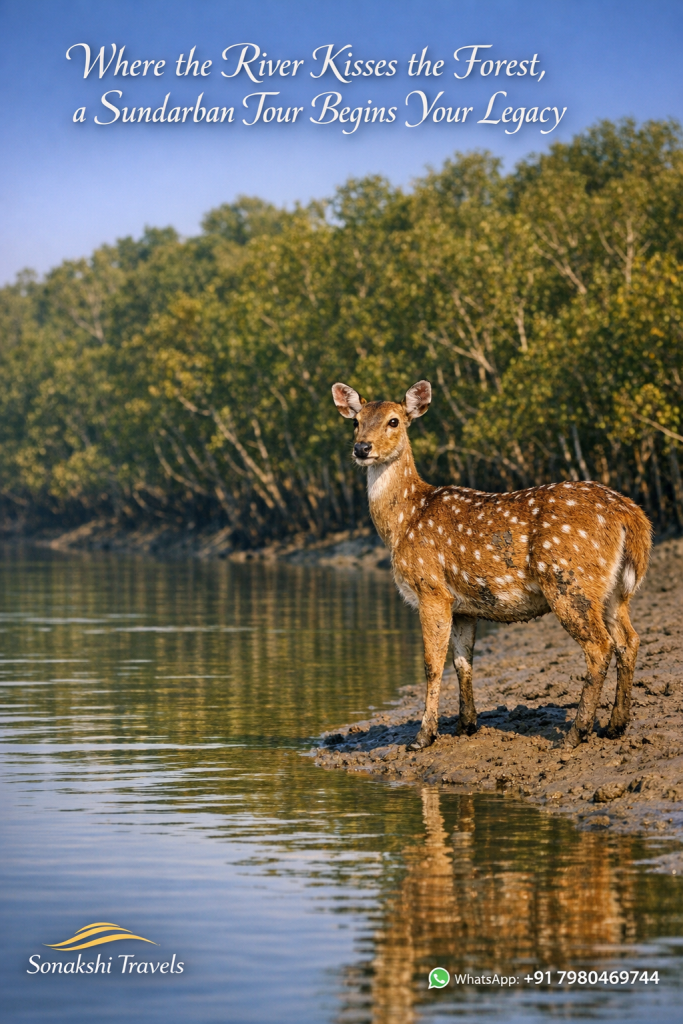
Where the River Kisses the Forest, a Sundarban Tour Begins Your Legacy
There are places on earth where travel becomes more than movement from one destination to another. In such places, every step feels meaningful, every sound feels ancient, and every moment seems to carry a story older than memory itself. The Sundarbans is one such landscape. Where rivers wind like silver ribbons through endless mangrove forests, a quiet world unfolds—one that does not rush, does not shout, and does not compete for attention. Instead, it reveals itself slowly to those willing to listen.
A Sundarban tour begins not merely with the start of a journey but with the opening of a deeper awareness. As the river gently touches the forest edge and the tide breathes life into the mangrove roots, visitors discover a landscape that has existed for centuries in perfect balance. The delta is not only a destination; it is an experience that leaves an imprint on the heart. Many travelers arrive seeking wildlife, scenic beauty, or adventure, yet they often leave with something far more enduring—a sense that they have become part of a living legacy.
The Landscape Where Rivers Shape Life
The Sundarbans is the largest mangrove forest on Earth, stretching across the southern edge of West Bengal and Bangladesh. Formed by the powerful meeting of the Ganges, Brahmaputra, and Meghna rivers, this immense delta is constantly shaped by tides, currents, and seasonal changes. The land here is never truly still. Islands appear and disappear, riverbanks shift gradually, and channels carve new paths through the forest.
Unlike mountains or deserts that remain visually fixed for centuries, the Sundarbans lives in motion. Twice every day the tides rise and fall, bringing nutrient-rich water deep into the mangrove creeks. This rhythm supports a remarkable ecosystem where countless species thrive. The trees themselves grow with unusual adaptations—arched roots, breathing stems, and salt-resistant leaves—allowing them to survive in a landscape where land and water constantly compete for space.
For travelers on a Sundarban tour package, witnessing this environment firsthand offers a rare understanding of how nature shapes life at every level. The forest is not simply scenery; it is a dynamic system that continues to evolve with each passing tide.
The Silent Power of the Mangrove Forest
Walking through a mangrove forest feels very different from exploring a typical woodland. The ground is soft and uneven, the air carries a slight trace of salt, and the branches twist upward in unusual patterns. Sunlight filters through layers of leaves, creating shifting patches of light that dance on the muddy earth.
What makes the Sundarbans truly extraordinary is the quiet strength of its ecosystem. The mangroves protect coastal regions from storms and tidal surges, absorb carbon from the atmosphere, and provide shelter for countless birds, fish, reptiles, and mammals. In a time when many natural habitats struggle to survive, this forest continues to stand as a powerful example of resilience.
Visitors who travel here often begin to appreciate how delicate and interconnected the environment really is. Each tree root, each creek, and each tidal channel plays a role in maintaining balance. Understanding this harmony becomes one of the most valuable lessons a Sundarban luxury tour can offer.
Wildlife Encounters That Stay in Memory
For many travelers, the possibility of encountering rare wildlife becomes one of the most exciting parts of the journey. The Sundarbans is home to an astonishing range of species, many of which are rarely seen elsewhere in the world. The most famous resident, of course, is the Royal Bengal tiger. Adapted to the mangrove terrain, these tigers are strong swimmers and skilled hunters who move silently through the forest.
While tiger sightings remain rare and unpredictable, the thrill of knowing they inhabit the same forest adds a powerful sense of mystery to the experience. Beyond the tiger, the delta hosts spotted deer, wild boars, fishing cats, crocodiles, river dolphins, and hundreds of bird species that glide gracefully over the waterways.
Boat safaris along the tidal rivers often reveal scenes that feel almost cinematic—herons standing motionless on muddy banks, kingfishers flashing brilliant colors across the water, and deer grazing cautiously at the forest edge. These encounters remind travelers that they are visitors in a world where wildlife remains the true owner of the land.
The Journey by Boat Through Tidal Rivers
Travel within the Sundarbans happens primarily by boat. The waterways function as the main roads connecting different islands, watchtowers, and forest channels. As boats move slowly through the wide rivers and narrow creeks, travelers gain a unique perspective on the landscape.
Morning boat rides often begin with soft mist rising from the river surface. The sun gradually lifts above the mangrove canopy, casting golden reflections across the water. Fishermen guide their wooden boats through quiet channels, while birds circle overhead searching for their first meal of the day.
This slow pace allows visitors to absorb the surroundings fully. Unlike crowded tourist destinations where movement feels rushed, the Sundarbans encourages patience. Every bend in the river may reveal something unexpected—a crocodile resting along the bank, a flock of birds taking flight, or the distant outline of mangrove trees standing like guardians of the delta.
Communities Living With the Forest
Beyond the wildlife and forests, the Sundarbans is also home to thousands of people who live in villages scattered across the delta’s islands. Their lives remain deeply connected to the environment. Fishing, honey collection, small-scale farming, and traditional crafts form the backbone of local livelihoods.
Life here requires resilience and cooperation with nature. Tides influence daily routines, storms sometimes reshape villages, and the forest provides both opportunity and challenge. Yet the cultural richness of these communities adds another dimension to the travel experience.
Visitors often discover warm hospitality in local villages. Simple conversations with residents reveal stories of courage, tradition, and deep respect for the forest. These human connections help travelers understand that the Sundarbans is not only a wildlife sanctuary but also a living cultural landscape.
Moments of Stillness That Change Perspective
One of the most remarkable aspects of a Sundarban private tour is the sense of stillness that emerges naturally in the environment. Modern life often surrounds people with constant movement and noise. In contrast, the delta encourages quiet observation.
Standing on a watchtower overlooking endless mangrove forests, travelers may notice how the wind moves gently through the leaves. The tide slowly rises against the roots. Birds call across the water. Nothing appears dramatic, yet everything feels meaningful.
These moments often leave a lasting impression because they invite reflection. Many travelers realize that nature does not need grand spectacles to create wonder. Sometimes the quiet rhythm of a river touching the forest edge is enough to remind us how small we are within the greater world.
The Mangrove Delta
Where rivers wander without a map,
Where mangrove roots in silence wrap,
Where golden tides embrace the shore,
And forest winds begin to roar.
Where deer step softly through the shade,
Where ancient tides their pathways made,
Where sky and water blend as one,
And dusk arrives with setting sun.
Here every journey quietly grows,
Into a story the traveler knows.
Planning a Meaningful Sundarban Tour
A thoughtful journey through the Sundarbans requires careful planning. The region’s tidal nature means that travel schedules depend on river conditions and weather patterns. Most visitors begin their journey from Kolkata, traveling by road to river gateways such as Godkhali or Sonakhali before boarding boats that enter the forest area.
Guided boat safaris, watchtower visits, and nature walks form the core activities of most itineraries. Early mornings and late afternoons are usually the best times to observe wildlife because animals tend to move more actively during cooler hours.
Responsible travel practices also play an important role in protecting this fragile ecosystem. Visitors are encouraged to respect forest rules, avoid disturbing wildlife, and support local communities by choosing ethical tourism operators. When tourism is practiced carefully, it contributes to conservation while providing economic opportunities for local residents.
When the Journey Becomes a Legacy
Some journeys remain pleasant memories that gradually fade with time. Others transform the way we see the world. A Sundarban trip often belongs to the second kind. The experience of witnessing a living mangrove forest, observing wildlife in its natural habitat, and understanding the resilience of coastal communities leaves a lasting impression on travelers.
The phrase “where the river kisses the forest” beautifully captures the spirit of this place. It describes the moment where two powerful natural forces meet—water and land, tide and tree, movement and stillness. Standing in that meeting point, visitors often feel a sense of continuity that stretches far beyond their own lifetime.
That is why many travelers describe their visit to the Sundarbans not simply as a holiday but as the beginning of a legacy. It becomes a story they share with friends and family, a memory they revisit through photographs and reflections, and a reminder that nature still holds places where its ancient rhythms continue undisturbed.
When the boat slowly returns toward the mainland and the mangrove horizon begins to fade, travelers often realize that the journey has quietly changed something within them. The rivers continue their endless flow, the forest continues to breathe with the tide, and somewhere deep inside, the traveler carries forward a piece of that timeless landscape.