Updated: March 8, 2026
Step into an Aromatic Paradise with Sundarban Hilsa Festival 2026
— Where Cuisine Meets Culture
When the Air Smells Like Heritage
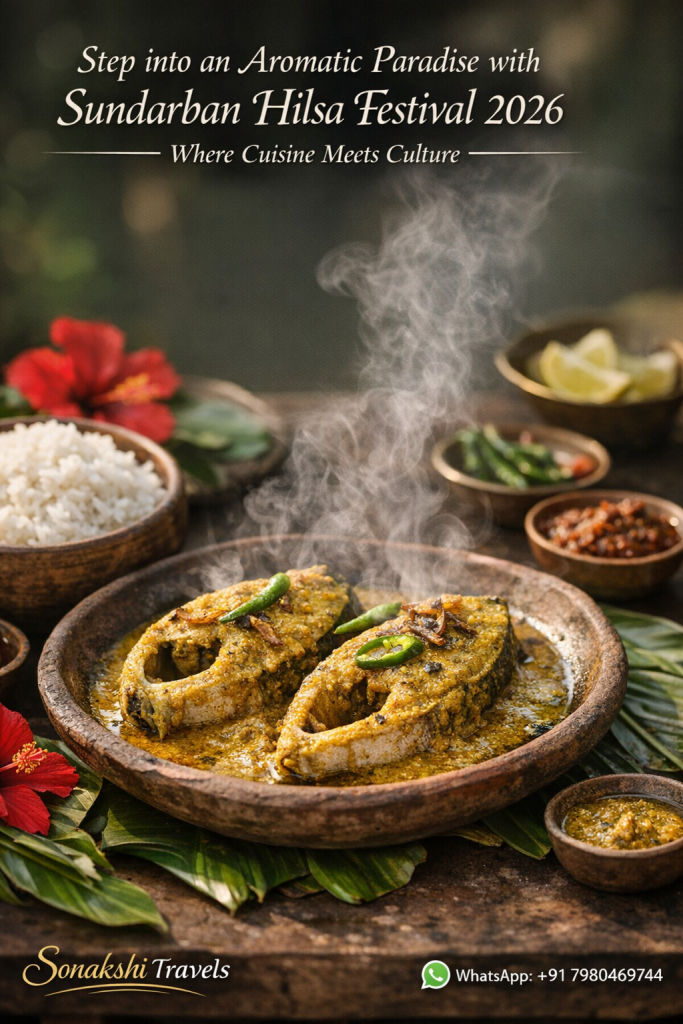
The monsoon season in Bengal carries a sensory character that is immediately recognizable to those familiar with its cultural rhythms. The sound of rain on rooftops, the smell of wet soil, and the arrival of fresh hilsa fish together form a seasonal identity that has shaped Bengali culinary memory for generations. Within the wider cultural landscape documented across the Sundarban region, the Sundarban Hilsa Festival 2026 stands out as a rare experience where food, river life, and local expression meet in a deeply rooted and highly atmospheric setting.
This festival is not merely a culinary gathering centered on a famous fish. It represents a living cultural practice in which seasonal abundance, traditional cooking methods, and shared community memory come together in one concentrated experience. In the mangrove delta, hilsa is not treated as an ordinary ingredient placed on a menu for convenience. It is regarded as a seasonal treasure from the river, celebrated through rituals of preparation, serving, and storytelling.
When visitors participate in this festival, they step into a world where culinary heritage is actively practiced rather than staged for display. The aroma of mustard oil drifting across a boat deck, the quiet rhythm of rain over tidal water, and the careful preparation of hilsa recipes create an environment in which food becomes a bridge between generations.
For many participants, the experience awakens memories tied to family kitchens, monsoon afternoons, and ancestral recipes passed from one household to another. In that sense, the festival does not only satisfy appetite. It reconnects people with the emotional and cultural landscape of Bengali food tradition.
From City Streets to a River Kitchen
The Culinary Journey Begins
The transition from urban life to the riverine environment of the delta often marks the beginning of a distinct sensory change. City noise slowly recedes, replaced by quieter natural rhythms. As the river journey begins, the atmosphere moves away from the pressure of everyday routine and settles into the slower tempo of a floating kitchen.
The boats used during the festival are not simply vessels for movement. They become working culinary spaces where cooks prepare hilsa dishes while guests observe the process at close range. This is one reason the experience feels different from an ordinary river-based Sundarban tour. Cooking on water creates an unusual intimacy between ingredients, landscape, and the people sharing the meal.
The freshness of the ingredients adds greatly to that sense of authenticity. Rather than being separated from their source by long storage or distant transport, the fish and supporting ingredients are prepared in the same living environment from which the meal draws its identity. The river breeze carries the scent of mustard paste and green chilies, and the sound of simmering curry blends naturally with the surrounding silence.
That immediacy changes the nature of dining. What might otherwise remain a meal service becomes a participatory cultural act, shaped as much by setting and atmosphere as by the dish itself.
The Cultural Importance of Hilsa in Bengali Life
A Fish That Symbolizes Identity
Hilsa, known locally as ilish, occupies a unique place in Bengali food culture. Unlike many fish that are consumed as part of ordinary daily routine, hilsa carries emotional, seasonal, and symbolic value. It appears in poetry, proverbs, family conversations, festive meals, and regional memory. Its presence in the kitchen often signals more than taste alone; it suggests occasion, affection, and continuity.
Researchers of Bengali food traditions often observe that hilsa serves as a seasonal marker. Its arrival during the monsoon is associated not only with the availability of a prized fish but also with a wider culinary cycle of gathering, cooking, and remembrance. For those who study regional food systems, this is why the fish holds importance beyond simple consumption and fits naturally within a carefully shaped curated regional food experience centered on local tradition.
The Sundarban Hilsa Festival 2026 draws directly from that cultural meaning. Instead of presenting hilsa as an expensive seafood item detached from context, the event highlights its role as a communal symbol. Meals are served in a way that encourages reflection, conversation, and collective appreciation rather than formal distance.
Participants often discover that the real significance of hilsa lies not only in flavor but also in the practices that surround it. The gestures of serving, the order of dishes, the pace of eating, and the stories that accompany the meal all shape the meaning of the experience.
A Culinary Symphony on the Water
Shorshe Ilish — The Classic Expression
The most recognizable hilsa preparation in Bengal is shorshe ilish, a dish that combines hilsa with mustard paste, green chilies, turmeric, and mustard oil. At the festival, this dish often becomes the emotional center of the meal because it expresses the essential flavor grammar of Bengali cuisine with remarkable clarity.
The preparation demands precision. The pungency of mustard must support the richness of hilsa without overpowering it. Experienced cooks know that the dish depends less on excess spice and more on proportion, freshness, and timing. Mustard seeds are ground to a smooth paste, the seasoning is balanced carefully, and the fish is simmered with restraint so that its natural oils enrich the sauce rather than disappear into it.
When served with hot steamed rice, the dish reveals why it has remained central to Bengali culinary identity for so long. The taste is sharp yet comforting, rich yet clean, and powerful without being heavy. Even visitors familiar with hilsa often notice that this version feels more vivid because the preparation is shaped by the season, the setting, and the freshness of the ingredients. That layered refinement is one reason such cuisine is increasingly discussed alongside the appeal of a more exclusive Sundarban private tour in the delta.
The difference lies not in ornament but in integrity. The ingredients reach the kitchen with very little delay, and the surrounding environment heightens every sensory detail of the meal.
Exploring the Diversity of Hilsa Recipes
The culinary program of the festival presents multiple hilsa preparations, each reflecting a distinct regional technique and household logic. Together, these dishes show how a single ingredient can support remarkably different expressions without losing its identity.
- Doi Ilish combines hilsa with a yogurt-based gravy that produces a gentle, creamy, and slightly tangy taste.
- Ilish Bhuna is cooked slowly with aromatic spices to create a concentrated and more intense flavor profile.
- Ilish Polao pairs fragrant rice with hilsa in a dish associated with festivity, abundance, and careful balance.
- Ilish Paturi wraps the fish in banana leaf with mustard paste before steaming, preserving delicacy and aroma.
Each preparation reflects a separate culinary philosophy. Some methods allow the fish to remain the unquestioned center of the dish, while others build a broader flavor structure around it through dairy, spice, or slow steaming. The result is not repetition but variation.
Together, these dishes reveal the remarkable adaptability of hilsa within Bengali gastronomy. They also show that culinary heritage survives not through a single fixed recipe but through a disciplined range of interpretations shaped by region, household practice, and seasonal memory.
Evenings of Music, Storytelling, and Shared Meals
Folk Culture and Culinary Memory
Evening gatherings during the festival extend the experience beyond dining. Local performers present folk music, oral narratives, and expressive traditions linked to river life, fishing communities, and seasonal change. These performances are not decorative additions placed around the meal. They deepen the meaning of what is being served and why it matters.
Music plays an important role in strengthening the connection between food and memory. Traditional songs often refer to longing, abundance, rivers, boats, and household rituals, all of which resonate strongly in a hilsa-centered celebration. When heard alongside the aroma of freshly prepared dishes, these performances create a layered cultural atmosphere that is difficult to reproduce elsewhere.
Participants gradually realize that the festival functions as a living cultural archive. Recipes, songs, speech patterns, and community histories circulate within the same shared setting, preserving knowledge that might otherwise become fragmented in urban life. This is one reason many travelers who explore the culinary side of the delta eventually look more closely at the broader cultural framework behind the official 2026 hilsa festival program.
The integration of cuisine and performance turns the evening into a communal act of remembrance rather than a staged entertainment session. The meal acquires voice, history, and emotional depth.
Village Kitchens and the Preservation of Tradition
Learning from Local Culinary Knowledge
One of the most meaningful dimensions of the festival lies in its connection to village kitchens, where local women demonstrate cooking methods shaped by long practice rather than written instruction. Their work reveals how culinary knowledge is preserved through repetition, observation, and inherited skill.
These demonstrations show the depth of understanding contained in everyday practice. Measurements are rarely formalized. Instead, cooks rely on smell, texture, color, and instinct developed through years of preparing hilsa in changing household conditions. Such knowledge is not casual; it is highly refined, even when expressed in simple language.
For example, the preparation of ilish bhapa requires exact control over proportion and moisture. Mustard paste, grated coconut, salt, and chili must work in harmony so that the fish remains delicate and expressive. The steaming process is equally important, because hilsa can lose its character if treated harshly or cooked too long.
Visitors watching this process often come to understand that traditional cooking is both an art form and a social inheritance. Recipes survive not only because they are delicious, but because communities continue to value the discipline needed to prepare them well.
These interactions also reveal something important about cultural continuity. Without the active participation of local cooks and households, many of the subtleties that define regional hilsa cuisine would slowly fade from living practice.
The Emotional Dimension of Food Experiences
Why Certain Flavors Stay in Memory
Culinary researchers often emphasize that taste is closely linked to emotional memory. The brain does not store flavor in isolation. Smell, sound, atmosphere, and social context all contribute to the way a meal is remembered long after it ends.
The Sundarban Hilsa Festival intensifies that effect by bringing multiple sensory elements together at once. Participants encounter the sharp aroma of mustard oil, the visual quietness of river water, the sound of folk performance, and the tactile presence of traditional cooking spaces. The meal becomes memorable because it is experienced through several senses at the same time.
When such sensory elements converge, they create impressions that extend beyond eating. Guests often describe the event not only as a culinary gathering but as a deeply personal journey through memory, belonging, and inherited taste.
In that sense, the festival becomes a platform where food carries emotional meaning with unusual clarity. What remains afterward is not merely the memory of a dish, but the feeling of having entered a cultural world through flavor.
The Role of Community in Culinary Festivals
Food as a Social Connector
Another defining feature of the Sundarban Hilsa Festival is its emphasis on communal participation. Meals are shared among guests, cooks, performers, and local residents, creating a setting in which food becomes a social connector rather than a private act of consumption.
Food scholars have long noted that communal dining strengthens cultural identity by encouraging shared attention, conversation, and mutual recognition. In this festival, hilsa serves as the central element around which those exchanges naturally develop. People compare family methods, discuss taste memories, and reflect on what the fish signifies in their own lives.
Such exchanges give the event its warmth. Guests do not remain passive observers. They become participants in an ongoing cultural conversation shaped by food, place, and shared curiosity.
As a result, the festival feels less like a commercial food event and more like a collaborative celebration of living heritage, where the meal opens space for recognition, exchange, and belonging.
Where Taste Becomes Cultural Memory
The Sundarban Hilsa Festival 2026 shows how cuisine can function as both nourishment and cultural expression. Through traditional cooking methods, community participation, seasonal atmosphere, and layered sensory experience, the festival turns a celebrated fish into a multidimensional act of cultural memory.
Participants leave with more than the recollection of excellent meals. They carry an understanding of how food connects people to landscape, household tradition, and shared seasonal feeling. The aroma of hilsa prepared in mustard sauce lingers because it is tied to place, voice, and human exchange.
What makes the festival especially significant is that it allows visitors to encounter culinary heritage in its working environment rather than through abstraction. The preparation of a single fish becomes a way of reading community life, inherited taste, and the values that continue to shape Bengali food culture.
Within the quiet waterways of the delta, cuisine and culture meet in a form that is immediate, intimate, and lasting. The result is not simply a meal remembered for flavor, but an experience remembered for meaning.