Botanical Characteristics, Ecological Importance, and Conservation Context of a Mangrove-Associated Shrub
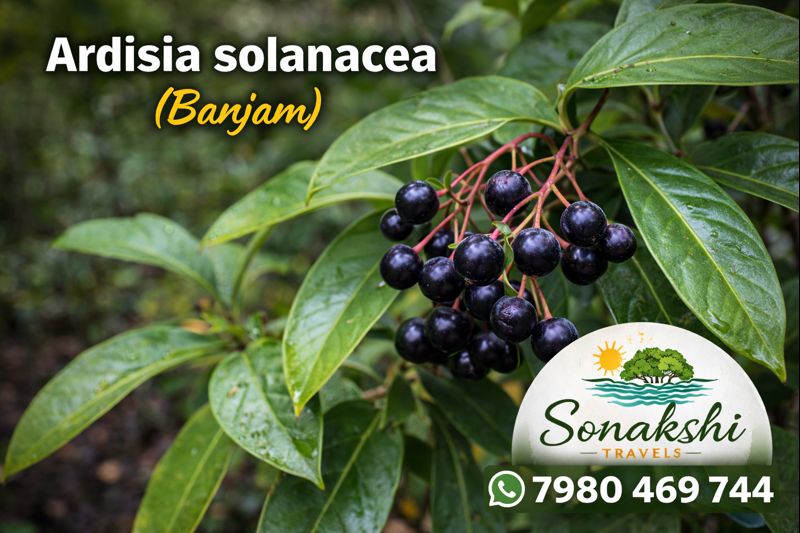
Ardisia solanacea, commonly known as Banjam, is a robust evergreen shrub belonging to the family Primulaceae. Widely distributed across tropical and subtropical regions of South and Southeast Asia, this species holds particular ecological relevance in moist forest margins, riverbanks, and mangrove-adjacent landscapes. Though not a true mangrove, Ardisia solanacea is frequently classified as a mangrove associate due to its strong affinity for humid, semi-saline, and estuarine environments.
In regions such as the Sundarbans, Banjam forms an integral part of the understory vegetation, contributing to soil stabilization, habitat diversity, and ecological resilience. Its striking foliage, seasonal flowers, and berry-like fruits make it easily recognizable in the field, while its adaptability allows it to persist under varying environmental pressures. This article presents a detailed, research-based overview of Ardisia solanacea, addressing its taxonomy, morphology, distribution, ecological role, and conservation considerations with special emphasis on the Sundarbans ecosystem.
Taxonomy & Classification
Systematic Placement
Ardisia solanacea is part of the genus Ardisia, which comprises over 500 species distributed primarily in tropical regions. Members of this genus are known for their evergreen nature, gland-dotted leaves, and ornamental as well as ecological significance.
Kingdom: Plantae
Clade: Angiosperms
Clade: Eudicots
Order: Ericales
Family: Primulaceae
Subfamily: Myrsinoideae
Genus:Ardisia
Species:Ardisia solanacea
Earlier taxonomic treatments placed the genus Ardisia under the family Myrsinaceae. However, molecular phylogenetic studies have since integrated Myrsinaceae into Primulaceae, reflecting a more accurate evolutionary relationship.
Morphology & Field Identification
Growth Habit and Stem
Ardisia solanacea is a large, woody evergreen shrub or small tree that can attain heights of 2 to 4 meters under favorable conditions. The stems are erect, stout, and often branched from the base. Young stems are green and smooth, gradually becoming woody and brown with age.
Leaves
The leaves are one of the most distinctive features of this species. They are simple, alternate, and large, often measuring 15–30 cm in length. Leaf blades are elliptic to oblong-lanceolate, with entire margins and a glossy, dark green upper surface. The leaves are thick and leathery, an adaptation that reduces transpiration and provides resilience against high humidity and intermittent salinity.
Minute glandular dots may be visible on the leaf surface, a characteristic trait of many Ardisia species. These glands are believed to play a role in chemical defense against herbivory.
Flowers
The flowers of Ardisia solanacea are small but numerous, borne in axillary or terminal panicles. Each flower is typically pink to pale lavender, with five petals fused at the base. The flowering period generally coincides with the onset of the monsoon, ensuring optimal conditions for pollinator activity.
Fruits and Seeds
Fruits are globose berries that turn from green to deep purplish-black upon maturity. These fleshy fruits contain one or more seeds and are highly attractive to birds and small mammals, facilitating seed dispersal across forested and riparian landscapes.
Habitat & Distribution
General Habitat
Ardisia solanacea thrives in moist tropical environments and is commonly found along forest edges, riverbanks, swamp margins, and mangrove-adjacent zones. It prefers areas with high humidity, moderate shade, and nutrient-rich soils.
Soil and Moisture Requirements
The species grows best in loamy to clayey soils with good organic content. While it favors freshwater-influenced habitats, it can tolerate mildly saline conditions, enabling its survival in estuarine regions where salinity fluctuates seasonally.
Global Range
The natural range of Ardisia solanacea extends across South Asia, Southeast Asia, and parts of southern China. It has been recorded in India, Bangladesh, Nepal, Sri Lanka, Myanmar, Thailand, Vietnam, Malaysia, and Indonesia.
Within this range, the species exhibits considerable ecological plasticity, occurring from lowland coastal plains to foothill forests, provided adequate moisture is available.
Occurrence
In India, Ardisia solanacea is widely distributed in the eastern and northeastern states, including West Bengal, Assam, Odisha, and parts of the Western Ghats. In West Bengal, it is particularly associated with the lower Gangetic plains and deltaic regions.
The species often forms dense thickets in suitable habitats, contributing to understory dominance in semi-natural and secondary forests.
Preferred Habitat in the Sundarbans Region
Microhabitat Characteristics
In the Sundarbans, Ardisia solanacea is most frequently encountered along the fringes of mangrove forests, canal banks, and elevated forest floors that experience occasional tidal influence. These zones provide a balance of moisture and aeration, preventing prolonged waterlogging.
Association with Mangrove Vegetation
Banjam commonly associates with mangrove and mangrove-associate species such as Heritiera, Bruguiera, and Acanthus. Its presence enhances vertical stratification and supports diverse faunal communities.
To observe mangrove-associated shrubs like Banjam in their natural surroundings, a guided Sundarban Tour offers valuable insight into the region’s unique plant diversity.
Ecological Role
Support to Wildlife
The berries of Ardisia solanacea serve as an important food source for frugivorous birds and small mammals. By attracting these animals, the plant plays a significant role in seed dispersal and forest regeneration processes.
Soil and Microclimate Regulation
The dense foliage and root system contribute to soil stabilization and organic matter accumulation. This improves soil structure and moisture retention, benefiting surrounding vegetation and maintaining microclimatic balance.
Habitat Alteration
Habitat loss and alteration pose growing threats to Ardisia solanacea. In coastal regions, embankment construction, land reclamation, aquaculture expansion, and pollution have reduced suitable habitats. In the Sundarbans, rising salinity levels and increased frequency of cyclones further stress the species.
Although relatively adaptable, prolonged environmental degradation can lead to population decline, particularly in fragmented habitats.
Conservation Efforts
Indirect Conservation Through Habitat Protection
Ardisia solanacea benefits from conservation initiatives aimed at protecting mangrove forests and wetland ecosystems. Protected area management, afforestation programs, and restoration of degraded mangrove fringes indirectly safeguard this species.
Research and Awareness
Further ecological studies and community awareness programs are essential to highlight the importance of mangrove-associate plants. Documenting species like Banjam strengthens the foundation for holistic ecosystem-based conservation planning.
Responsible eco-travel through a well-planned Sundarban Tour helps promote conservation awareness while supporting local livelihoods.
Did You Know?
Ardisia solanacea is often cultivated as an ornamental plant due to its attractive foliage and berries.
The genus Ardisia includes several species known for traditional medicinal applications.
Banjam is considered an indicator of relatively undisturbed moist habitats.
The plant’s fruits play a vital role in sustaining bird populations in mangrove-edge ecosystems.
External Reference
For general taxonomic and background information, consult: