Botanical Description, Wetland Ecology, and Conservation Significance in Deltaic Landscapes
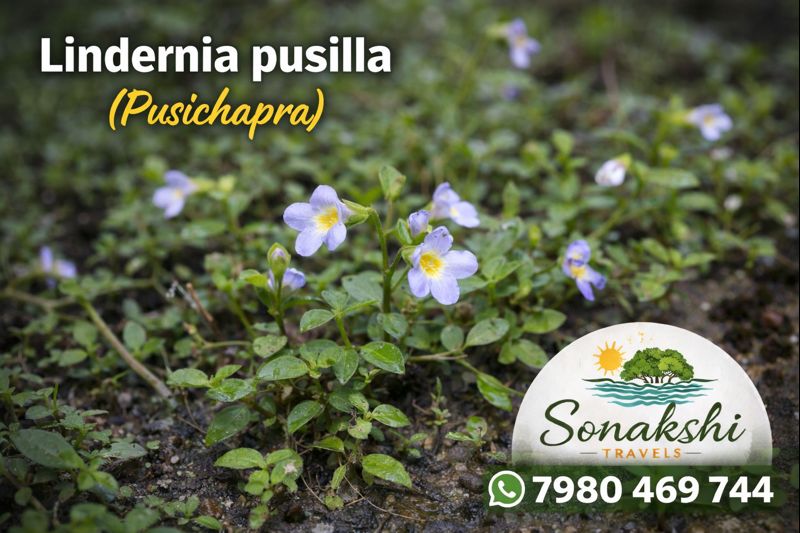
Lindernia pusilla, locally known as Pusichapra, is a delicate, small-sized herbaceous plant belonging to the family Linderniaceae. Despite its modest appearance and diminutive stature, this species plays a crucial ecological role in wetland ecosystems, particularly in seasonally inundated plains, paddy fields, marshes, and mangrove-adjacent freshwater zones. Its presence often signals healthy hydrological conditions and intact microhabitats.
In the Sundarbans and similar deltaic regions, Lindernia pusilla forms part of the ephemeral herb layer that emerges during monsoon and post-monsoon periods. These short-lived herbs contribute significantly to soil stabilization, nutrient cycling, and biodiversity maintenance. This article provides a comprehensive, research-oriented overview of Lindernia pusilla, focusing on its taxonomy, morphology, habitat preferences, ecological functions, and conservation considerations, with special emphasis on its occurrence in the Sundarbans region.
Taxonomy & Classification
Systematic Position
The genus Lindernia consists of numerous small herbs adapted to moist and aquatic environments. Taxonomic revisions based on molecular and morphological evidence have placed this genus within the family Linderniaceae, distinct from the formerly broader Scrophulariaceae.
Kingdom: Plantae
Clade: Angiosperms
Clade: Eudicots
Order: Lamiales
Family: Linderniaceae
Genus:Lindernia
Species:Lindernia pusilla
The species epithet pusilla refers to its very small size, which distinguishes it from several closely related but more robust members of the genus.
Morphology & Field Identification
Growth Habit
Lindernia pusilla is a tiny, prostrate to ascending annual herb, typically reaching only 5–12 cm in height. The plant completes its life cycle rapidly during periods of adequate moisture, making it well adapted to transient wetland conditions.
Stem
The stems are slender, soft, and often creeping along moist ground. They may root at the nodes when in contact with wet soil, enabling vegetative spread in favorable conditions. Stem surfaces are smooth or faintly pubescent.
Leaves
Leaves are opposite, simple, and small, usually ovate to elliptic in shape. Leaf margins are entire or slightly toothed, and the surface is glabrous to sparsely hairy. The thin leaf texture reflects adaptation to high moisture availability and low structural investment.
Flowers
The flowers are minute but distinctive, borne singly in the leaf axils. Corolla color ranges from pale violet to light bluish-purple, often with yellow markings on the throat that guide pollinators. Despite their small size, the flowers are structurally complex, featuring a bilabiate corolla typical of the order Lamiales.
Fruits and Seeds
The fruit is a small capsule containing numerous minute seeds. These seeds are easily dispersed by water movement, making seasonal flooding an important factor in population spread.
Habitat & Distribution
General Habitat
Lindernia pusilla is predominantly associated with moist, open habitats. It thrives in paddy fields, wet grasslands, pond margins, ditches, and seasonally flooded lowlands. The species favors areas with shallow standing water or saturated soils during its growing season.
Hydrological Preferences
The plant shows a strong preference for habitats that experience periodic inundation followed by gradual drying. Such conditions reduce competition from larger perennials and allow small annual herbs to complete their life cycles efficiently.
Global Range
Lindernia pusilla has a wide distribution across tropical and subtropical regions of Asia. Its range extends from the Indian subcontinent through Southeast Asia to parts of southern China. It is also reported from scattered locations in tropical Africa, indicating broad ecological adaptability.
Within this range, the species is often locally abundant but seasonally restricted, appearing prominently only during favorable climatic conditions.
Occurrence
In India, Lindernia pusilla is commonly recorded from eastern, northeastern, and southern states, including West Bengal, Assam, Odisha, Andhra Pradesh, and Tamil Nadu. It is particularly prevalent in agricultural landscapes where traditional rice cultivation maintains suitable hydrological regimes.
The species often escapes notice due to its small size and short lifespan, yet it can form extensive mats in optimal conditions.
Preferred Habitat in the Sundarbans Region
Microhabitat Characteristics
In the Sundarbans, Lindernia pusilla occurs primarily in freshwater-influenced zones, such as pond edges, rain-fed depressions, and seasonal wetlands within inhabited islands. These areas are less saline compared to core mangrove forests and provide suitable conditions for freshwater herbs.
Seasonal Appearance
The species typically emerges during the monsoon and persists into the early post-monsoon period. As water levels recede, it completes flowering and seed production before the onset of drier conditions.
Exploring the seasonal wetlands and plant diversity of the delta becomes more insightful through a guided Sundarban Tour, where subtle species like Pusichapra reveal their ecological value.
Ecological Role
Soil Stabilization and Nutrient Cycling
Despite its small size, Lindernia pusilla contributes to soil stabilization in shallow wetlands by forming low-growing mats that reduce surface erosion. Upon decomposition, it adds organic matter to the soil, enhancing nutrient availability.
Support to Microfauna
The plant provides microhabitats for aquatic invertebrates and insects, which in turn serve as food for fish, amphibians, and birds. This positions Lindernia pusilla as an important component of wetland food webs.
Habitat Alteration
The primary threats to Lindernia pusilla arise from wetland degradation. Drainage of seasonal wetlands, conversion of traditional paddy fields to intensive agriculture, excessive use of agrochemicals, and embankment construction reduce suitable habitats.
In the Sundarbans, increasing salinity intrusion and changes in freshwater availability pose additional challenges, potentially limiting the distribution of freshwater-dependent herbs.
Conservation Efforts
Habitat-Based Protection
There are no species-specific conservation programs targeting Lindernia pusilla. However, conservation of wetlands, sustainable agricultural practices, and maintenance of natural hydrological cycles indirectly protect this species.
Importance of Wetland Awareness
Recognizing the ecological value of small, seasonal herbs is essential for holistic ecosystem conservation. Botanical surveys and local awareness initiatives can help document and preserve such overlooked species.
A thoughtfully planned Sundarban Tour also highlights the importance of conserving freshwater wetlands that sustain delicate plants like Pusichapra.
Did You Know?
Lindernia pusilla completes its entire life cycle within a single wet season.
The plant’s tiny flowers are highly efficient in attracting small pollinators.
It is often considered an indicator species for healthy seasonal wetlands.
Despite its abundance in suitable habitats, it is rarely documented due to its short lifespan.
External Reference
For general botanical and taxonomic information, consult: