A Comprehensive Study of Biology, Ecology and Conservation Value
Hygrophila polysperma, widely known by its regional name Alai Kali, is a fast-growing aquatic and semi-aquatic herb belonging to the family Acanthaceae. Native to South and Southeast Asia, this species is notable for its remarkable adaptability to freshwater environments, rapid vegetative propagation, and strong ecological influence within wetlands, floodplains, and lowland river systems. In eastern India, including the deltaic landscapes of the Sundarbans, Hygrophila polysperma is an integral component of shallow water vegetation and seasonally inundated habitats.
Although popularly recognized today through its widespread use as an aquarium plant, Hygrophila polysperma holds far greater ecological importance in its natural environment. It contributes to sediment stabilization, aquatic food webs, and nutrient cycling, while also serving as a biological indicator of freshwater availability. This article presents a detailed, research-based overview of Hygrophila polysperma, focusing on its taxonomy, morphology, habitat preferences, geographic distribution, ecological role, and conservation concerns, with special emphasis on its presence in the Sundarbans region.
Taxonomy & Classification
The taxonomic placement of Hygrophila polysperma reflects its close evolutionary relationship with other water-loving herbs of the Acanthaceae family. The genus Hygrophila is distinguished by species adapted to aquatic or semi-aquatic conditions, often showing morphological plasticity in response to water depth and flow.
Kingdom: Plantae
Clade: Angiosperms
Clade: Eudicots
Order: Lamiales
Family: Acanthaceae
Genus: Hygrophila
Species:Hygrophila polysperma
The species epithet polysperma literally translates to “many-seeded,” highlighting its prolific seed production and strong reproductive capacity, both of which contribute to its rapid colonization of suitable habitats.
Morphology & Field Identification
Growth Habit
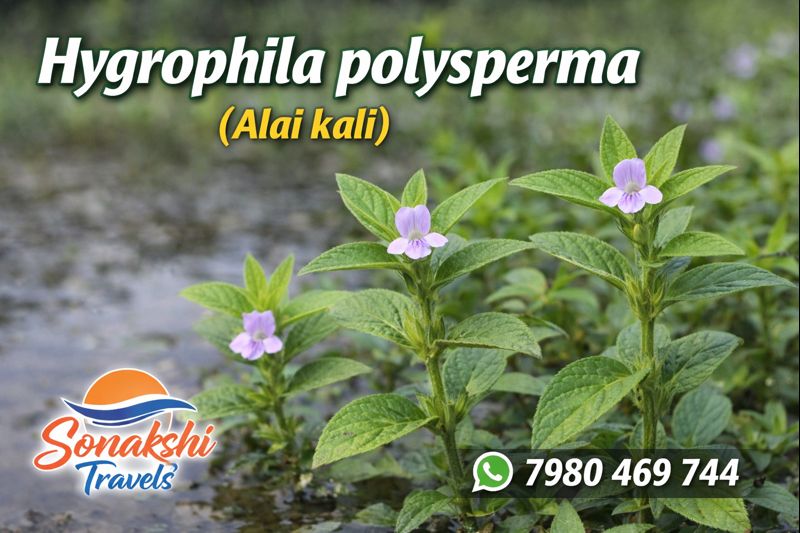
Hygrophila polysperma is an herbaceous plant that may grow in fully submerged, partially submerged, or emergent forms depending on water depth and seasonal conditions. In natural wetlands, it commonly exhibits a creeping or erect habit, with stems extending along muddy substrates or rising above shallow water surfaces.
Stem Characteristics
The stems are slender, soft, and highly flexible, often rooting at nodes when in contact with moist soil or water. This nodal rooting ability allows the plant to spread rapidly and form dense mats. Stems are usually green to light brown and may become slightly woody at the base in older specimens.
Leaves
Leaves are arranged oppositely and are simple, oblong to elliptic in shape. Leaf margins are smooth, and the surface is glabrous with a prominent midrib. Leaf color varies from bright green in submerged conditions to deeper green when emergent. Under high light and nutrient-rich conditions, leaves may develop reddish or bronze tinges.
Leaf size typically ranges from 3 to 8 centimeters in length, though submerged leaves tend to be narrower and more delicate.
Flowers and Fruits
The flowers of Hygrophila polysperma are small, axillary, and solitary. They are tubular with a bilabiate corolla, usually pale lavender, bluish, or whitish in color. Flowering is most common during the monsoon and post-monsoon periods when water availability is high.
The fruit is a small capsule containing numerous tiny seeds, facilitating effective dispersal through water currents and seasonal flooding.
Habitat & Distribution
Hygrophila polysperma is strongly associated with freshwater environments and thrives in habitats characterized by slow-moving or stagnant water. It is commonly found in both natural and man-made water bodies.
Common Habitat Types
Shallow ponds and lakes
Canals, ditches, and irrigation channels
Floodplains and low-lying wetlands
Rice paddies and agricultural watercourses
The species demonstrates exceptional tolerance to fluctuating water levels, allowing it to persist in environments that alternate between submergence and exposure.
Global Range
Native to the Indian subcontinent and Southeast Asia, Hygrophila polysperma has a broad natural distribution across India, Bangladesh, Sri Lanka, Nepal, Myanmar, Thailand, and parts of southern China.
In recent decades, the species has been introduced to many tropical and subtropical regions worldwide, largely through the aquarium trade. In some non-native regions, it has established invasive populations, underscoring its high adaptability and rapid growth potential.
Preferred Habitat
The ideal habitat conditions for Hygrophila polysperma include:
Freshwater or very low-salinity environments
Soft, nutrient-rich alluvial soils
Neutral to slightly acidic pH
High sunlight exposure with warm temperatures
The plant flourishes particularly well in eutrophic waters where nutrient availability supports rapid vegetative expansion.
Exploring the rich freshwater wetlands of the delta? Discover immersive Sundarban Tour experiences designed around nature and local ecology.
Occurrence
Across eastern India, Hygrophila polysperma is a familiar presence in village ponds, roadside ditches, and agricultural landscapes. Its ability to regenerate quickly from stem fragments makes it especially common in disturbed or managed wetlands.
Seasonal flooding plays a critical role in its life cycle, promoting dispersal and colonization of newly inundated areas. During dry months, residual root systems and buried seeds ensure survival until favorable conditions return.
Preferred Habitat in the Sundarbans Region
In the Sundarbans, Hygrophila polysperma occupies freshwater niches within an otherwise mangrove-dominated ecosystem. It is most frequently observed in inland wetlands, rain-fed pools, and freshwater canals associated with human settlements.
The species avoids high-salinity tidal creeks but thrives in:
Village-adjacent freshwater ponds
Seasonally flooded agricultural margins
Freshwater channels receiving monsoon runoff
Its presence highlights the ecological mosaic of the Sundarbans, where freshwater and mangrove systems coexist and interact.
Ecological Role
Primary Productivity
As a fast-growing aquatic herb, Hygrophila polysperma contributes significantly to primary productivity in freshwater wetlands, forming the base of local food webs.
Habitat and Shelter
Dense growth provides shelter and breeding grounds for aquatic invertebrates, juvenile fish, amphibians, and insects, enhancing overall biodiversity.
Water Quality Regulation
The plant absorbs excess nutrients from the water column, helping regulate nutrient levels and reduce algal blooms under natural conditions.
Habitat Alteration
Despite its resilience, Hygrophila polysperma faces habitat-related pressures within its native range, including:
Wetland drainage and land reclamation
Water pollution from agricultural chemicals
Alteration of natural hydrological regimes
Increasing salinity intrusion in deltaic regions
In the Sundarbans, climate-induced sea-level rise and reduced freshwater inflow pose additional challenges to suitable habitat availability.
Conservation Efforts
While Hygrophila polysperma is not globally threatened, its conservation in native ecosystems depends on wetland protection and sustainable water management. Conservation strategies focus on:
Preservation of natural freshwater wetlands
Maintenance of seasonal flooding cycles
Community-based wetland stewardship
Integration of native aquatic plants into restoration projects
Protecting native populations helps maintain ecological balance and prevents overreliance on invasive aquatic species in disturbed habitats.
Did You Know?
Hygrophila polysperma is one of the most widely cultivated aquatic plants in the global aquarium trade.
Its rapid growth allows it to double its biomass within a short period under ideal conditions.
The species exhibits remarkable morphological changes depending on whether it grows submerged or emergent.
In its native range, its presence often signals reliable freshwater availability.
External Reference
For general botanical information and taxonomic background, readers may consult the following external source: