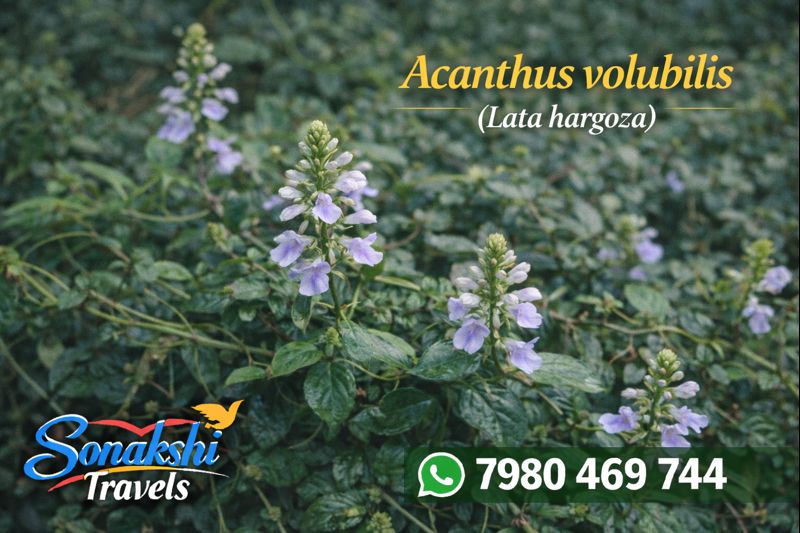
Acanthus volubilis, locally known in parts of coastal Bengal as Lata Hargoza, is a distinctive climbing mangrove associate belonging to the family Acanthaceae. Unlike its more widely known shrubby relatives, this species exhibits a twining or scrambling growth habit, allowing it to weave through mangrove thickets and coastal vegetation. Its presence is strongly linked with tidal wetlands, estuarine margins, and brackish-water ecosystems, making it an ecologically significant species in deltaic landscapes.
In the Sundarbans and similar mangrove-dominated regions, Acanthus volubilis contributes to vegetation complexity, shoreline stabilization, and habitat formation for a variety of organisms. The plant’s adaptability to fluctuating salinity, periodic tidal inundation, and soft alluvial soils highlights its role as a resilient component of coastal flora. This article provides a detailed, research-based account of Acanthus volubilis, covering its taxonomy, morphology, distribution, ecological role, and conservation relevance with particular emphasis on the Sundarbans region.
Taxonomy & Classification
Systematic Placement
Acanthus volubilis belongs to the family Acanthaceae, a group of flowering plants that includes herbs, shrubs, and climbers, many of which are adapted to tropical and subtropical climates. Within this family, the genus Acanthus is notable for species that inhabit coastal and mangrove-associated environments.
The genus name Acanthus is derived from the Greek word for “thorn,” referencing the spiny nature of some species in the group, while the species epithet volubilis reflects its twining or climbing habit.
Morphology & Field Identification
Growth Habit
Acanthus volubilis is a perennial, woody climber or scrambling shrub that often intertwines with mangrove roots and branches. It may extend several meters in length, forming tangled masses in suitable habitats.
Stem Characteristics
The stems are slender, flexible, and green to brown in color. They are generally smooth and lack the prominent spines seen in some other Acanthus species, which aids in distinguishing it during field identification.
Leaf Structure
Leaves are opposite, simple, and ovate to elliptic in shape, with smooth margins. The leaf surface is glossy green, and the texture is leathery, an adaptation that helps reduce water loss under saline and windy coastal conditions.
Flowers and Inflorescence
The flowers are tubular, pale bluish to lavender in color, and borne in axillary or terminal inflorescences. Each flower is moderately sized and adapted for insect pollination, particularly by bees.
Fruits and Seeds
The fruit is a capsule containing a small number of seeds. Upon maturity, the capsule splits open, releasing seeds into the surrounding soft sediment, where germination occurs during favorable conditions.
Habitat & Distribution
Natural Habitat
Acanthus volubilis is primarily associated with mangrove margins, tidal creeks, estuarine banks, and brackish-water wetlands. It prefers areas that experience regular tidal influence but are not permanently submerged.
Altitude Range
The species is largely restricted to lowland coastal regions, occurring from sea level up to approximately 100 meters above sea level.
Global Range
Geographical Distribution
Acanthus volubilis is distributed across South and Southeast Asia, including India, Bangladesh, Myanmar, Thailand, and parts of Indonesia. Its range closely follows tropical coastlines and estuarine systems.
Distribution in the Indian Subcontinent
In India, the species is mainly found along the eastern coastline, particularly in West Bengal, Odisha, and parts of the northeastern coastal regions where mangrove habitats occur.
Preferred Habitat
Soil and Substrate
The plant thrives in soft, muddy, alluvial soils rich in organic matter. These substrates are typically waterlogged during high tide and exposed during low tide.
Salinity and Moisture
Acanthus volubilis tolerates moderate salinity and requires consistent moisture. It is well adapted to fluctuating salinity levels characteristic of estuarine ecosystems.
Occurrence
Seasonal Growth Pattern
Vegetative growth is most active during the monsoon and post-monsoon seasons when freshwater input reduces salinity stress. Flowering and fruiting generally follow this period.
Preferred Habitat in the Sundarbans Region
Local Distribution
In the Sundarbans, Acanthus volubilis is commonly observed along tidal creeks, canal banks, and mangrove fringes, particularly in zones with moderate salinity and good freshwater influence.
Adaptation to Deltaic Conditions
The plant’s climbing habit allows it to survive periodic flooding, while its leathery leaves and flexible stems help it withstand tidal currents and saline winds.
Observing climbers that thrive in tidal mangrove margins adds rare botanical insight to a guided Sundarban Tour, where land and sea continuously interact.
Ecological Role
Bank Stabilization
Acanthus volubilis contributes to stabilizing soft tidal banks by binding soil with its root system and reducing erosion caused by tidal flow.
Habitat Complexity
The climbing structure provides shelter and nesting opportunities for small birds, insects, and aquatic-edge fauna, enhancing biodiversity within mangrove ecosystems.
Habitat Alteration
Anthropogenic Pressures
Clearing of mangroves, embankment construction, and pollution can reduce suitable habitat for Acanthus volubilis. Changes in tidal flow also affect its distribution.
Environmental Resilience
Despite these pressures, the species shows moderate resilience due to its ability to regenerate and adapt to changing salinity regimes.
Conservation Efforts
Conservation Status
Acanthus volubilis is not currently listed as globally threatened, but local populations may decline where mangrove habitats are degraded.
Habitat Protection
Protecting mangrove fringes, maintaining natural tidal flow, and reducing habitat disturbance are essential for the long-term survival of this species.
Understanding mangrove climbers that safeguard tidal ecosystems enhances any immersive Sundarban Tour, revealing lesser-known guardians of the delta.
Did You Know?
A Rare Mangrove Climber
Unlike most mangrove associates, Acanthus volubilis exhibits a true climbing habit, making it botanically unique within coastal flora.
Indicator of Healthy Tidal Zones
The presence of this species often indicates relatively undisturbed tidal environments with balanced salinity levels.
External Reference
For additional taxonomic and ecological information, consult the Wikipedia page on Acanthus volubilis.