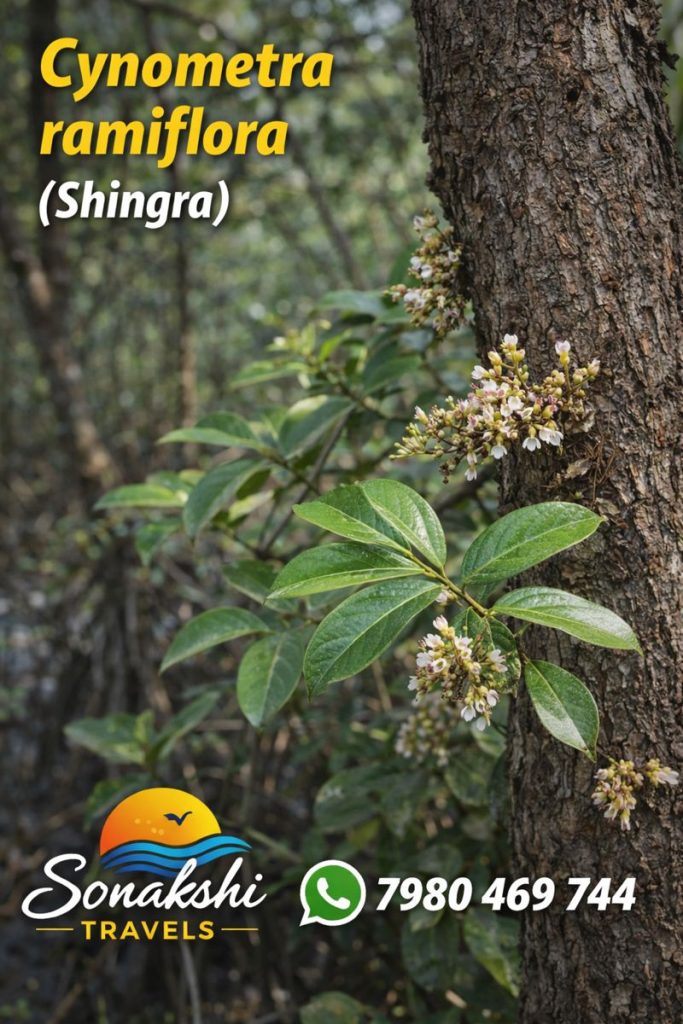
A Comprehensive Botanical and Ecological Profile of a Mangrove-Associated Tree
Cynometra ramiflora, locally known as Shingra, is a medium-sized evergreen tree belonging to the legume family and is widely recognized as an important component of tropical coastal forests and mangrove-associated ecosystems. The species is notable for its robust tolerance to waterlogged soils, fluctuating salinity, and tidal influence, making it particularly well adapted to estuarine and deltaic landscapes. Across South and Southeast Asia, Cynometra ramiflora is valued not only for its ecological role but also for its durable wood and long-standing presence in traditional land-use systems.
In the Sundarbans, the world’s largest mangrove ecosystem, Cynometra ramiflora contributes significantly to forest structure, shoreline stabilization, and biodiversity support. This article presents an in-depth, research-based examination of the species, encompassing taxonomy, morphology, habitat preferences, ecological importance, and conservation considerations, with a specific focus on its occurrence in the Sundarbans region.
Taxonomy & Classification
Cynometra ramiflora belongs to the family Fabaceae, one of the largest and most ecologically significant plant families, known for its nitrogen-fixing capabilities and wide adaptive range.
Kingdom: Plantae
Clade: Angiosperms
Clade: Eudicots
Order: Fabales
Family: Fabaceae
Subfamily: Detarioideae
Genus: Cynometra
Species:Cynometra ramiflora L.
The genus Cynometra comprises trees primarily distributed in tropical regions, many of which are associated with moist forests and coastal habitats. Cynometra ramiflora is distinguished within the genus by its ramiflorous flowering habit, where flowers and fruits emerge directly from older branches and trunks.
Morphology & Field Identification
Growth Habit and Trunk
Cynometra ramiflora is a medium-sized evergreen tree, typically attaining heights of 10 to 20 meters under favorable conditions. The trunk is often straight and cylindrical, occasionally buttressed at the base when growing in waterlogged soils. Bark color ranges from greyish-brown to dark brown, with a rough, fissured texture that becomes more pronounced with age.
The tree exhibits a well-developed root system capable of anchoring it firmly in soft, muddy substrates. This structural adaptation enhances stability in tidal zones and flood-prone environments.
Leaves
The leaves are alternate, pinnately compound, usually consisting of two thick, leathery leaflets. Each leaflet is oblong to elliptic, with a smooth margin and a glossy dark green upper surface. The leathery texture reduces water loss and protects the foliage from salt spray and intense sunlight common in coastal regions.
Leaf venation is conspicuous, contributing to efficient internal transport of water and nutrients in saline or nutrient-variable soils.
Flowers
The flowers of Cynometra ramiflora are small, pale yellow to cream-colored, and characteristically ramiflorous. They appear in dense clusters directly on older branches or the main trunk. This flowering strategy enhances pollination efficiency by making floral resources accessible to a wide range of insects.
Flowering generally occurs during the late winter to early summer months, depending on local climatic conditions.
Fruit and Seeds
The fruit is a hard, woody pod, usually containing a single seed. Fruits are often flattened and irregularly shaped, with a thick pericarp that protects the seed from mechanical damage and prolonged exposure to moisture. Seed dispersal occurs primarily through gravity and water movement, allowing the species to colonize suitable downstream habitats.
Habitat & Distribution
Global Range
Cynometra ramiflora is widely distributed across tropical Asia and parts of the Indo-Pacific region. Its native range includes India, Bangladesh, Sri Lanka, Myanmar, Thailand, Malaysia, Indonesia, and parts of southern China. The species is most commonly found in coastal forests, estuarine margins, and lowland tropical forests with high soil moisture.
This broad geographic distribution reflects the species’ strong adaptability to diverse hydrological regimes and soil conditions.
Preferred Habitat
The species prefers low-lying, moisture-rich habitats, particularly along riverbanks, estuaries, and coastal plains. It thrives in clayey to silty soils with high organic content and tolerates periodic inundation by freshwater or mildly saline water.
Although it favors full sunlight, Cynometra ramiflora can also grow under partial canopy shade, especially during its early developmental stages.
Occurrence
The occurrence of Cynometra ramiflora is closely tied to hydrological stability and soil moisture availability. Natural regeneration typically occurs along stable creek banks and elevated floodplains where prolonged submergence is limited.
Seedlings establish best in areas protected from strong wave action, while mature trees demonstrate resilience to seasonal flooding and moderate salinity. In suitable habitats, the species often forms small, scattered populations rather than dense monospecific stands.
Preferred Habitat in the Sundarbans Region
Within the Sundarbans, Cynometra ramiflora is primarily found in comparatively less saline zones, particularly in the eastern and central sectors where freshwater inflow from the Ganges–Brahmaputra river system reduces salt concentration. The tree commonly occurs along estuarine creek margins, elevated mangrove islands, and transitional zones between true mangroves and freshwater swamp forests.
Here, it often associates with species such as Heritiera fomes, Excoecaria agallocha, and Xylocarpus species. Its presence indicates relatively stable soil conditions and moderate salinity, making it an important indicator species within the Sundarbans ecosystem.
To witness mangrove-associated trees like Shingra in their natural habitat, consider a guided Sundarban Tour Package designed for nature and forest enthusiasts.
Ecological Role
Cynometra ramiflora plays a vital ecological role within coastal and mangrove-influenced forests. Its extensive root system stabilizes soil and reduces erosion along creek banks and estuarine margins. The tree contributes leaf litter and woody debris to the forest floor, enriching organic matter and supporting nutrient cycling.
The flowers provide nectar and pollen for insects, while the fruits serve as a food resource for certain wildlife species. By contributing to canopy structure, the tree creates shaded microhabitats essential for understory plants and small fauna.
Habitat Alteration
Habitat alteration represents a significant challenge to the long-term survival of Cynometra ramiflora. Coastal development, embankment construction, land reclamation, and reduced freshwater inflow have altered natural estuarine dynamics. Increasing salinity intrusion and sea-level rise further restrict suitable habitats, particularly in deltaic regions.
Fragmentation of mangrove and coastal forests limits natural regeneration and reduces population connectivity, making localized populations more vulnerable to environmental stress.
Conservation Efforts
Although Cynometra ramiflora is not currently classified as globally threatened, conservation of its habitat is essential for its continued persistence. Protection of mangrove forests, maintenance of freshwater flow, and regulation of coastal land use are critical measures.
In the Sundarbans, integrated ecosystem-based management approaches that balance biodiversity conservation with sustainable resource use provide the most effective framework for safeguarding species such as Shingra.
Explore the rich mangrove biodiversity responsibly through a customized Sundarban Private Tour guided by local naturalists.
Did You Know?
Cynometra ramiflora exhibits ramiflorous flowering, where blooms emerge directly from older branches.
The hard woody fruits protect seeds from prolonged water exposure.
The species is often associated with relatively low to moderate salinity zones.
Its durable wood has traditionally been used for local construction and tools.