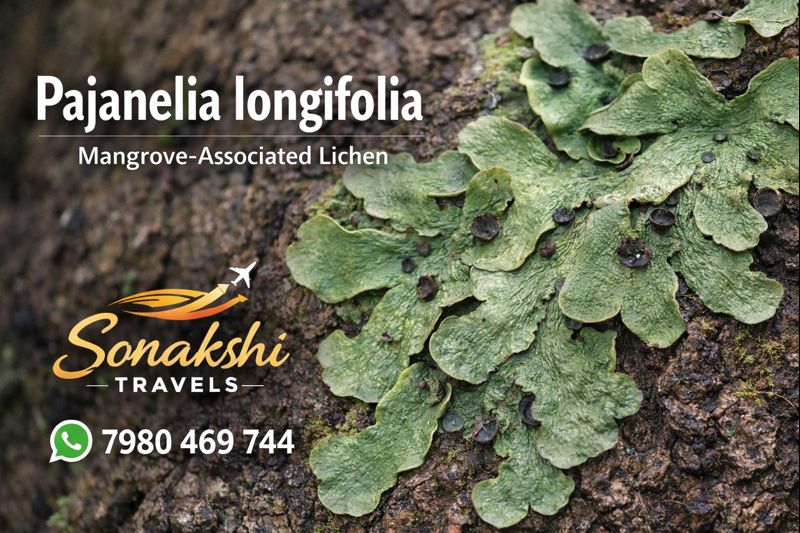
Pajanelia longifolia is a distinctive lichenized fungal species that occupies a specialized ecological niche within tropical and subtropical forest ecosystems. Although less conspicuous than flowering plants or large mangrove trees, this species plays a silent yet critical role in forest health, nutrient cycling, and ecological stability. Its presence is particularly relevant in humid coastal forests and mangrove-influenced regions such as the Sundarbans, where complex interactions between climate, salinity, and biodiversity shape the landscape.
This article presents a detailed, research-oriented exploration of Pajanelia longifolia, covering its taxonomy, morphology, habitat preferences, global distribution, ecological significance, conservation status, and occurrence within the Sundarbans region. The objective is to provide a scientifically grounded yet accessible reference for researchers, conservationists, and nature enthusiasts interested in cryptogamic biodiversity.
Taxonomy & Classification
Systematic Position
Pajanelia longifolia belongs to the lichenized fungi, a unique symbiotic association between a fungal partner (mycobiont) and a photosynthetic partner (photobiont), usually green algae or cyanobacteria. This relationship allows lichens to colonize environments that are often inhospitable to other life forms.
Kingdom: Fungi
Phylum: Ascomycota
Class: Lecanoromycetes
Order: Peltigerales
Family: Pannariaceae
Genus: Pajanelia
Species:Pajanelia longifolia
The genus Pajanelia is characterized by foliose to subfoliose thalli and a preference for humid, shaded habitats. The species epithet longifolia refers to the elongated, leaf-like lobes that distinguish this species from related taxa.
Morphology & Field Identification
Thallus Structure
The thallus of Pajanelia longifolia is foliose, loosely attached to the substrate, and composed of elongated, strap-like lobes. These lobes are often overlapping, forming a layered appearance that enhances moisture retention. The surface texture is smooth to slightly wrinkled, with a matte finish that may appear glossy under high humidity.
Coloration ranges from pale olive-green to dark bluish-green, depending on hydration levels and light exposure. During dry conditions, the thallus may appear dull and brittle, while in moist environments it becomes pliable and vibrant.
Reproductive Features
Reproductive structures are typically in the form of apothecia, which are small, disc-shaped fruiting bodies scattered across the thallus surface. These apothecia are usually darker than the surrounding thallus and may exhibit a slightly raised margin. Sexual reproduction through ascospores allows for genetic diversity and colonization of new substrates.
Vegetative propagation may also occur through fragmentation, a common survival strategy in unstable or disturbed habitats.
Habitat & Distribution
General Habitat Characteristics
Pajanelia longifolia is predominantly found in humid forest environments with consistent moisture availability. It favors shaded to semi-shaded conditions and is commonly associated with tree bark, decaying wood, and occasionally shaded rock surfaces. The species shows a strong preference for areas with stable microclimatic conditions.
High atmospheric humidity, minimal temperature fluctuations, and low levels of air pollution are critical for its survival. As a lichen, it lacks protective cuticles or vascular tissues, making it highly sensitive to environmental stress.
Global Range
The global distribution of Pajanelia longifolia spans tropical and subtropical regions, particularly in South and Southeast Asia. Isolated populations have also been reported in parts of Oceania and humid forest belts of East Africa. Its distribution is largely governed by climatic stability rather than latitude alone.
Within its range, the species is often locally abundant in undisturbed forests but becomes rare or absent in areas experiencing deforestation or urban expansion.
Occurrence
The occurrence of Pajanelia longifolia is closely linked to forest maturity. It is typically absent from young secondary forests and plantations, appearing instead in older, well-established ecosystems where ecological continuity has been maintained for decades.
Its presence is often considered an indicator of environmental quality, particularly in terms of air purity and humidity stability. Researchers frequently use such lichens as bioindicators when assessing forest health.
Preferred Habitat in the Sundarbans Region
Microhabitat Selection
In the Sundarbans, Pajanelia longifolia is primarily found on the bark of mature mangrove and mangrove-associated tree species. Sheltered creek banks, forest interiors, and zones protected from direct tidal inundation provide ideal microhabitats.
The species benefits from the region’s high humidity, frequent mist formation, and moderated temperatures created by dense vegetation and tidal water bodies. Bark texture and chemical composition of host trees also influence colonization success.
Salinity Tolerance
Although lichens are generally sensitive to salinity, Pajanelia longifolia demonstrates moderate tolerance when growing in estuarine forests. This tolerance is likely facilitated by its elevated positioning on tree trunks, reducing direct exposure to saline splash and tidal water.
Ecological Role
Nutrient Cycling
Pajanelia longifolia contributes to nutrient cycling by trapping airborne particles, organic debris, and moisture on its thallus surface. Over time, these materials are incorporated into the forest floor, enriching the soil with essential nutrients.
Microhabitat Creation
The layered structure of the lichen provides microhabitats for small invertebrates, microorganisms, and epiphytic algae. These micro-ecosystems enhance overall biodiversity and promote ecological resilience.
Environmental Indicator
Due to its sensitivity to air pollution and habitat disturbance, the presence of Pajanelia longifolia serves as a reliable indicator of ecological integrity. Declines in its population often precede visible signs of forest degradation.
Habitat Alteration
Anthropogenic Pressures
Deforestation, logging, and conversion of forest land for agriculture or aquaculture pose significant threats to Pajanelia longifolia. Removal of mature trees directly eliminates its primary substrate.
Air pollution from nearby industrial activities and increased boat traffic also negatively affects lichen health by introducing toxic compounds into the atmosphere.
Climate Change Impacts
Changes in rainfall patterns, increased frequency of cyclones, and rising temperatures can disrupt the delicate balance required for lichen survival. Prolonged dry periods are particularly harmful, leading to reduced growth and increased mortality.
Conservation Efforts
Habitat Protection
Conserving mature forest stands is the most effective strategy for protecting Pajanelia longifolia. Protected areas and biosphere reserves play a crucial role in maintaining the environmental conditions necessary for its survival.
Research and Monitoring
Long-term monitoring programs focusing on lichen diversity can provide early warning signals of environmental change. Increased taxonomic research is also essential, as many lichen species remain under-documented.
Did You Know?
Pajanelia longifolia can survive periods of complete desiccation and revive rapidly when moisture returns.
Lichens like this species can live for several decades, making them among the longest-living organisms in forest ecosystems.
They absorb nutrients directly from the air, not from soil, making them extremely sensitive to atmospheric quality.
Planning an immersive nature experience among mangrove forests? Discover curated itineraries through our
Sundarban Tour Package options designed for responsible exploration.
Looking for a personalized mangrove expedition with deeper ecological insights? Explore our exclusive
Sundarban Private Tour experiences tailored to your travel style.
External Reference
For taxonomic background and historical classification details, refer to the Wikipedia page on Pajanelia.