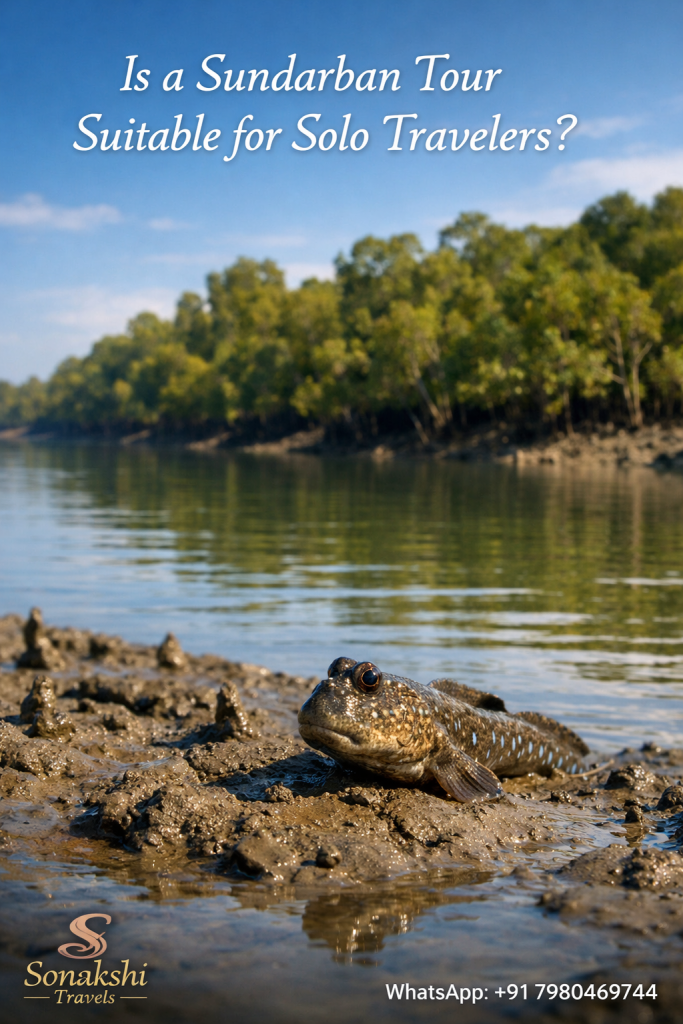
There is a quiet courage in traveling alone. It is not about proving independence to the world. It is about meeting a landscape without distraction and discovering how it responds to your presence. When the destination is a living mangrove delta shaped by tides and silence, the question becomes important: is a Sundarban tour suitable for solo travelers?
The Sundarban is not a casual weekend city break. It is a protected forest zone, a network of rivers, creeks, and watchtowers governed by permits and safety rules. For someone traveling alone, the idea may feel uncertain at first. Yet, with the right structure and understanding, a solo journey into this unique ecosystem can become one of the most meaningful travel experiences.
Understanding What a Sundarban Tour Really Involves
Before deciding whether a Sundarban tour is right for solo travel, it is important to understand how the experience works. The region lies within the vast mangrove forests of the Indian Sundarbans, part of the larger Ganges-Brahmaputra delta. Entry into core forest areas is controlled. Boats must be registered. Forest guides are mandatory. Movement is restricted to specific waterways and watchtowers.
This structure is not a limitation; it is a layer of safety and ecological protection. Unlike open hill stations or beach towns, you do not wander freely through the forest. You explore it through organized boat safaris, licensed accommodations, and guided visits to watchtowers such as Sajnekhali, Sudhanyakhali, or Dobanki.
For solo travelers, this organized nature can actually be reassuring. You are not isolated in an unknown place. You are part of a managed system designed to protect both visitors and wildlife.
Safety Considerations for Solo Travelers
Safety is the first concern for anyone traveling alone. In the case of a Sundarban tour, safety is built into the structure of the journey. Entry permits are checked. Boats operate with life jackets and trained crew members. Forest departments regulate routes. Night movement inside the core forest is not allowed.
For a solo traveler, this means you are rarely left without support. Even when traveling privately, there will be a captain, crew, and guide on board. If you join a small group tour, you share the boat with other travelers, reducing any feeling of isolation.
The forest itself demands respect, but the operational system surrounding it ensures structured safety.
The Emotional Experience of Traveling Alone in the Mangroves
Traveling alone in the Sundarban feels different from traveling alone in a city. There are no shopping streets or loud nightlife. The rhythm slows. Water replaces roads. Bird calls replace traffic.
A solo traveler often seeks clarity. In the quiet channels of the delta, you begin to hear your own thoughts more clearly. The boat glides through narrow creeks. Sunlight filters through mangrove roots. The tide rises and falls without drama. There is space to reflect.
Many solo travelers describe the experience as grounding. You are not entertained constantly. You observe. You wait. Wildlife sightings are never guaranteed. Patience becomes part of the journey.
A Short Reflection
On a still river bend I stood alone,
No crowd, no noise, no ringing phone.
The mangroves breathed in tidal air,
And silence settled everywhere.
A distant bird cut through the sky,
A muddy ripple drifting by.
No witness to the hour but me,
And water wide as memory.
Alone, yet never feeling small,
The forest held and heard it all.
Is a Sundarban Tour Boring for a Solo Traveler?
This is a common doubt. Without friends or family, will the journey feel empty? The answer depends on expectations.
If a solo traveler expects continuous action, the experience may feel slow. But if the traveler values observation, photography, birdwatching, journaling, or quiet reflection, the Sundarban becomes deeply engaging.
Many solo visitors spend time speaking with local guides about mangrove ecology, fishing practices, and the legends of Bonbibi. Conversations like these often feel more meaningful when experienced alone.
Accommodation Options for Solo Travelers
Accommodation in the Sundarban ranges from standard eco-lodges to premium resorts. For solo travelers, the choice depends on comfort level and budget.
Most properties offer private rooms, even for single occupancy. AC rooms are available in higher-category resorts. Meals are usually served in a common dining area, creating natural interaction opportunities with other guests.
If privacy is important, a private tour arrangement ensures exclusive vehicle pickup from Kolkata, dedicated boat safari, and separate room accommodation. If social interaction is preferred, joining a small group departure can make the journey more lively.
The key is selecting the right format before departure.
Cost Factors for Solo Travelers
Cost is another practical concern. A Sundarban tour often includes transport, permits, boat safari, guide, accommodation, and meals. When traveling solo, certain costs such as boat hire and vehicle transfer may not reduce proportionally.
This means Sundarban private solo tours may appear slightly more expensive per person compared to group sharing packages. However, shared group tours are available on fixed departure dates, which significantly reduce cost burden.
Solo travelers should consider:
– Whether they prefer privacy or are comfortable sharing
– Whether fixed departure dates suit their schedule
– The importance of AC transport and upgraded rooms
– The duration of stay (1 night vs 2 nights)
Clear planning avoids surprise expenses.
Practical Tips for Solo Travelers Planning a Sundarban Tour
Preparation enhances comfort. Solo travelers should pack light but smart. Sunscreen, insect repellent, comfortable cotton clothing, sunglasses, and personal medication are essential.
Mobile network coverage may fluctuate in deeper forest areas. Inform family or friends about your itinerary beforehand. Keep identification documents ready for permit processing.
It is also wise to confirm:
– Pickup and drop arrangements from Kolkata
– Whether the tour includes forest entry fees
– The number of safari sessions included
– Emergency contact details of the operator
With clarity on these points, the journey feels organized rather than uncertain.
Who Should Choose a Solo Sundarban Tour?
A solo Sundarban tour suits travelers who:
– Enjoy nature over nightlife
– Value calm environments
– Appreciate slow travel
– Seek time away from digital noise
– Have patience for wildlife observation
It may not suit those who require constant entertainment or luxury shopping experiences. The charm of the Sundarban lies in water, wind, and waiting.
Writers, photographers, researchers, and introspective travelers often find this delta especially meaningful.
A Realistic Scenario: A Day in a Solo Journey
Imagine arriving from Kolkata early in the morning. A car transfer takes you to the jetty. You board a registered boat. Tea is served as the vessel moves into wide river channels.
You stand quietly at the deck railing. A kingfisher dives. Mudflats stretch into the distance. Your guide explains mangrove species and tidal behavior.
Later, you climb a watchtower. The forest lies ahead, thick and silent. You do not see a tiger. You see deer tracks instead. You feel anticipation, not disappointment.
By evening, back at the lodge, you sit under open sky while dinner is served. There is no rush. No one demands attention. The day feels full without being loud.
For many solo travelers, this quiet completeness is enough.
So, Is a Sundarban Tour Suitable for Solo Travelers?
Yes, a Sundarban tour is suitable for solo travelers, provided expectations are aligned with reality. It is a structured, permit-based, guided wilderness journey. It offers safety through regulation. It offers reflection through silence.
It does not promise guaranteed wildlife sightings. It does not promise constant activity. Instead, it offers space. Space to think. Space to observe. Space to slow down.
For a solo traveler who values these qualities, the Sundarban is not just suitable—it can be transformative. The delta does not overwhelm. It listens. And sometimes, traveling alone is the best way to hear what a place is quietly saying.
If you are considering your first independent nature journey, the Sundarban stands ready—not as a test of bravery, but as an invitation to move gently through one of India’s most remarkable landscapes.