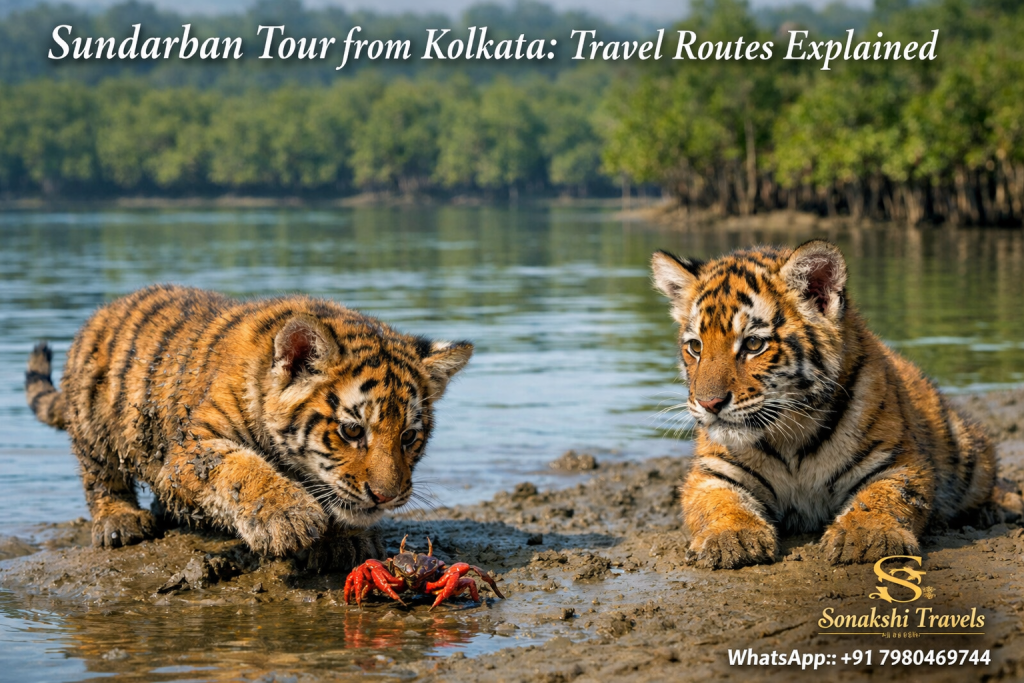
Sundarban Tour from Kolkata: Travel Routes Explained
The journey from Kolkata to the Sundarban is not merely a shift in geography. It is a steady movement from urban momentum to tidal quietness. Within a few hours, traffic noise softens into river wind, concrete recedes into mangrove green, and the wide Hooghly gradually narrows into creeks shaped by the tide. Many travelers planning a Sundarban tour from Kolkata focus on the destination itself, often overlooking the structure of the route. Yet the path taken plays a defining role in the overall experience. For a broader understanding of how the region is organized and accessed, the informational framework available at Sundarban Travel provides useful geographic context.
Clarity about travel routes removes hesitation. It explains distance, timing, embarkation points, and how road and river segments connect. Whether you are traveling with family, planning a quiet couple’s escape, or organizing a wildlife-focused visit, knowing how the route unfolds ensures that the journey begins with confidence rather than uncertainty.
Understanding the Geography Between Kolkata and the Sundarban
Kolkata stands along the eastern bank of the Hooghly River, part of the expansive Ganges delta. Southward lies the Sundarban, where freshwater rivers meet saline currents from the Bay of Bengal. This region is defined by tidal waterways, shifting mudbanks, and dense mangrove cover. Direct road access into the forest is not possible. Every journey requires a combined road and river approach.
The Indian portion of this ecosystem is protected as a national park and tiger reserve, operating under regulated entry rules. This means that any structured Sundarban tour program follows a coordinated system of vehicle transfer, jetty embarkation, and licensed boat navigation. Independent entry into forest creeks is not permitted.
From central Kolkata, the road distance to the main gateway points ranges between approximately 95 and 110 kilometers. After reaching the jetty, river transport becomes the principal mode of travel, carrying visitors into protected zones and watchtower regions.
Primary Road Routes from Kolkata to the Sundarban
Two main road corridors connect Kolkata to the Sundarban gateway jetties. Both are functional and reliable, though each leads to a slightly different boarding point.
Route 1: Kolkata – Basanti Highway – Godkhali
This is the most commonly used approach. Vehicles depart early in the morning and follow the Basanti Highway through suburban belts and rural stretches. Road conditions are generally stable, and the drive typically takes three to three and a half hours, depending on traffic movement within city limits.
Godkhali acts as a primary embarkation point. From here, licensed boats carry travelers into the mangrove network. Many structured Sundarban travel packages itineraries are designed around this route because it provides direct access to major watchtowers and permitted forest zones.
Route 2: Kolkata – Canning – Jharkhali
The second route passes through Canning and extends toward Jharkhali. While certain stretches are narrower, overall travel time remains comparable. Jharkhali has developed tourism infrastructure, including forest offices and jetty facilities. Some travelers prefer this approach for its relatively less congested boarding area.
Regardless of the chosen road corridor, both routes ultimately merge into the same river exploration system. The decision often depends on accommodation location, tour design, and tide timing.
Travel Time and Ideal Departure Planning
Departure timing influences the smoothness of the journey. Most organized departures for a Sundarban tour from Kolkata begin between 5:30 AM and 6:30 AM. Early movement helps avoid peak city traffic and ensures maximum daylight hours inside the forest zone.
The road segment generally requires around three hours. Boat boarding begins by mid-morning, after which navigation follows tidal rhythms and forest department scheduling. Unlike mountain destinations where roads dictate movement, here the tide determines safe passage through creeks. Careful alignment of boat timing improves the chances of productive wildlife observation.
For travelers considering a short-duration visit, the single-day Sundarban tour option is structured around this early departure model to maximize river exploration within limited hours.
Boat Transfer: The Core of the Sundarban Journey
Once the jetty is reached, the character of travel changes completely. Cars are left behind. Boats become the only link between mainland and forest. As engines move steadily across wide river channels, the transition from settlement to wilderness becomes visible.
Tourist vessels are licensed and regulated. They are equipped with life jackets, trained crew, and valid forest permits. Travelers choosing a more exclusive arrangement often opt for a private Sundarban tour, where the boat remains reserved for a single group, allowing flexible observation and quieter movement.
From Godkhali or Jharkhali, boats navigate toward watchtower zones such as Sajnekhali, Sudhanyakhali, and Dobanki, depending on forest clearance. Movement remains strictly monitored, and entry into sensitive areas follows fixed protocols.
The river stretch itself becomes an observation corridor. Deer may appear along muddy embankments, crocodiles rest at water edges, and migratory birds circle above the mangroves. The Sundarban tour from Kolkata turns immersive the moment the vessel enters narrower tidal channels.
Public Transport vs Private Transfer Options
Some travelers explore independent travel methods. It is possible to take a local train from Sealdah to Canning and then arrange onward transport to a jetty. However, this requires coordination with boat operators, awareness of permit procedures, and familiarity with local timings.
Most visitors prefer organized transfers for logistical clarity. Private vehicles provide direct pick-up and drop facilities from Kolkata, reducing transition stress. Those seeking enhanced comfort and personalized scheduling frequently choose a Sundarban luxury tour arrangement, where road and river segments are integrated into a seamless itinerary.
A structured journey generally includes coordinated vehicle transfer, boat allocation with permits, guided forest entry, meals, and accommodation for overnight programs. This integrated approach minimizes confusion and ensures compliance with regulated entry norms.
Best Seasons for a Smooth Travel Route
Seasonal variation affects both road and river segments. Winter months from November to February provide the most stable conditions. Roads remain dry, river visibility improves, and wildlife movement increases along exposed mudbanks.
Summer can be warm but manageable with air-conditioned vehicles and shaded boat decks. During monsoon, heavy rainfall may slow road travel and influence tidal behavior. While tourism operations continue in most seasons, weather awareness improves planning accuracy.
For first-time travelers undertaking a Sundarban tour from Kolkata, winter offers the most predictable combination of climate stability and comfortable transit conditions.
A Short Story from the Road to the Mangroves
One winter morning, a family departed South Kolkata before sunrise. The streets were still quiet as their vehicle moved beyond the city limits toward Basanti Highway. Children slept in the back seat, unaware of how gradually the landscape was changing.
As dawn unfolded, open fields replaced apartment blocks. Small tea stalls appeared along village crossings. By the time they reached the jetty, sunlight reflected across wide river water, and the children were fully awake, watching fishermen prepare nets.
When the boat finally left the shore, the father noticed the silence. No horns. No traffic signals. Only wind brushing across water. By afternoon, they were observing deer near a watchtower platform. The slow road journey had quietly prepared them for the stillness ahead.
That gradual transition defines a Sundarban tour from Kolkata. The route does not merely connect two points; it shapes the mental pace of the traveler.
Practical Tips for Planning Your Route
Carry valid government identification for forest entry permits. Both physical and digital copies should be accessible. Lightweight cotton clothing, sun protection, and comfortable footwear are advisable for extended boat travel.
Mobile network signals weaken within deeper river stretches. Inform family members beforehand regarding limited connectivity during forest exploration hours.
Travel with compact luggage. Soft bags are easier to manage during boarding than rigid suitcases. Confirm pick-up timing carefully, especially if departing from distant Kolkata neighborhoods where early traffic congestion may delay movement.
Why Route Knowledge Enhances the Experience
When travelers understand how the journey unfolds, anxiety decreases. The three-hour drive becomes anticipation rather than uncertainty. The boat ride becomes a meaningful progression instead of an unexpected adjustment.
The Sundarban is not reached abruptly. It is entered gradually. With every kilometer southward, city rhythm fades. With each river bend, the atmosphere grows quieter.
A Sundarban tour from Kolkata therefore functions as both physical travel and mental preparation. The route aligns you with tidal rhythm, encouraging patience and observation.
Upon returning to Kolkata, the contrast becomes clear. Urban noise feels sharper, movement quicker. The memory of mangrove silence lingers long after the journey ends.
Between Kolkata and the Sundarban lies more than a measurable distance. There is a passage from structure to wilderness. Understanding the travel routes ensures that the journey begins with clarity and ends with deeper appreciation for the landscape that waits beyond the road.