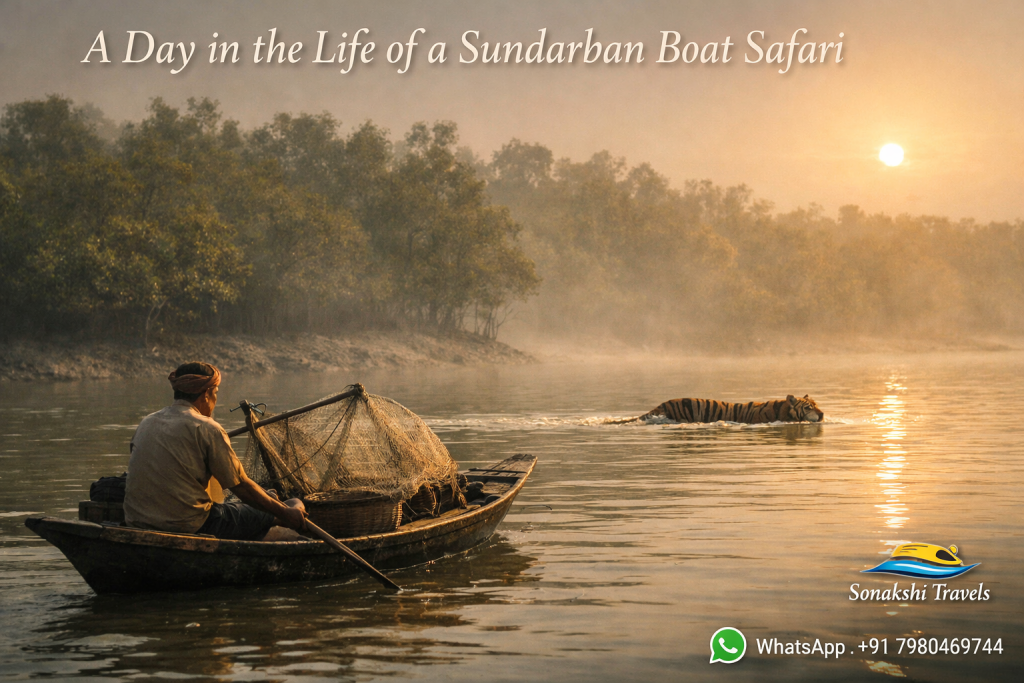
Morning begins softly in the Sundarbans. Long before the forest becomes busy with birds and river traffic, the mangrove delta wakes in silence. A thin mist floats over the water, and the tide moves slowly between the islands. For travelers exploring this extraordinary wilderness, a Sundarban river safari begins not with excitement or noise, but with calm anticipation.
The Sundarbans is the largest mangrove forest on Earth. It spreads across countless rivers, creeks, and mud islands where land and water constantly reshape each other. In such a landscape, roads are rare and boats become the only true way to travel. A boat safari here is not simply transportation. It is the journey itself — a slow passage through one of the most mysterious ecosystems in the world.
The Quiet Dawn Before the Safari Begins
The day usually starts just after sunrise. The first light touches the river surface like soft gold, and the air still carries the coolness of night. Travelers gather on the deck of the safari boat while the crew prepares for departure. Engines start gently, ropes are untied, and the boat slowly leaves the jetty.
At this early hour, the forest feels almost untouched. Fishermen move through narrow channels in small wooden boats. Birds circle above the water searching for breakfast. The calmness of the river creates a feeling that time moves differently here.
For visitors, the first moments of a Sundarban boat safari often become unforgettable. The wide rivers reflect the sky like glass, and mangrove roots stretch out from the muddy banks like natural sculptures. It is a quiet reminder that this region belongs more to nature than to humans.
Moving Through the Mangrove Rivers
As the boat travels deeper into the delta, the scenery begins to change. Wide rivers slowly narrow into winding creeks. The mangrove forest grows denser, forming green walls along both sides of the channel. These waterways are the natural highways of the Sundarbans.
The boat safari follows routes that pass through protected forest areas. Experienced boat pilots know how to read the tide and navigate safely through shifting channels. The rhythm of the engine blends with the sound of water touching the boat’s hull.
Travelers quickly notice how alive the landscape feels. Mudskippers jump along the riverbanks. Crabs move sideways across wet soil. Occasionally, a large crocodile may be seen resting near the water’s edge. Every bend in the river reveals another small moment of wild life, which is why many visitors see the journey as a true Sundarban mangrove safari.
Wildlife Encounters Along the Safari Route
One of the most exciting aspects of a Sundarban boat safari is the chance to observe wildlife in its natural environment. The forest shelters hundreds of species, many of which depend entirely on the mangrove ecosystem.
Spotted deer often appear near open mud banks where they graze quietly. Troops of monkeys move through the branches above the river. Colorful kingfishers dive suddenly into the water and return with tiny fish in their beaks.
Birdwatchers find the region especially fascinating. Egrets, herons, brahminy kites, and storks glide across the sky throughout the day. During certain seasons, migratory birds also arrive, adding even more life to the rivers and making the route especially rewarding for a Sundarban bird watching tour.
Of course, the most famous resident of the forest remains the Royal Bengal tiger. While sightings are rare, the presence of the tiger shapes the entire atmosphere of the Sundarbans. Sometimes travelers notice fresh paw marks in the mud or hear stories from guides about recent sightings. Even without seeing the animal itself, its hidden presence adds a sense of mystery that defines a memorable Sundarban wildlife safari.
Watchtowers and Observation Points
During the journey, the boat safari usually stops at several watchtowers located within the protected forest zones. These observation towers allow visitors to safely view the surrounding landscape from above.
Popular watchtowers overlook freshwater ponds where animals often come to drink. From these elevated platforms, travelers may observe deer, wild boars, and various birds moving through the forest edge.
Standing quietly on a watchtower provides a different perspective of the Sundarbans. The forest stretches endlessly toward the horizon, broken only by winding rivers and distant islands. It becomes clear how vast and complex this ecosystem truly is.
Life Aboard the Safari Boat
A Sundarban boat safari is also about the experience of living on the water for the day. Most safari boats are designed with open decks, shaded seating areas, and dining spaces where travelers can relax while enjoying the scenery. For those who prefer a quieter and more personal journey, a Sundarban private boat tour can make the time on the river feel even more intimate.
Breakfast or tea is often served while the boat continues its journey through the rivers. The gentle movement of the boat, combined with the sound of flowing water, creates a peaceful atmosphere. Conversations become quieter, and people often spend long periods simply watching the forest pass by.
Meals during the safari are usually simple but satisfying. Freshly prepared local dishes are served while the boat anchors near a calm riverbank. Eating in the middle of the mangrove delta, surrounded by water and forest, makes even a simple lunch feel special.
The Changing Light of Afternoon
As the day moves toward afternoon, the character of the river slowly shifts. The sunlight becomes stronger, and the reflections on the water grow brighter. The tide may rise or fall depending on the lunar cycle, revealing new mud banks and hidden creeks.
This part of the safari often feels slower and more reflective. Wildlife activity may decrease during the hottest hours, but the landscape itself becomes the main attraction. The patterns of mangrove roots, the movement of clouds, and the distant calls of birds create a peaceful rhythm.
Travelers often spend this time taking photographs or simply enjoying the quiet surroundings. In the Sundarbans, silence itself becomes part of the experience. For many nature lovers, this slower stretch of the day feels like the heart of a true Sundarban mangrove ecosystem tour.
Stories Shared by Local Guides
Guides play an important role during a Sundarban boat safari. Many of them grew up in nearby villages and understand the forest deeply. Their knowledge adds meaning to the journey beyond simple sightseeing.
They explain how the mangrove trees survive in salty water. They describe the role of tides in shaping the land. They share stories about fishermen, honey collectors, and forest workers who live close to this unpredictable wilderness.
Sometimes the stories are about wildlife encounters. Other times they describe the traditions of local communities. These conversations help travelers understand that the Sundarbans is not only a forest but also a living cultural landscape. For first-time visitors, such local insight becomes an essential part of a good Sundarban travel guide.
A Short Poem Inspired by the River Safari
Where quiet rivers slowly glide,
Mangrove shadows stretch wide.
A boat moves through the silent tide,
Where hidden forests softly hide.
Birds drift across the open sky,
Cloud reflections passing by.
A distant deer at water’s side,
The jungle watching far and wide.
In every ripple stories stay,
Of a timeless Sundarban day.
Evening Light Over the Mangrove Delta
Toward evening, the atmosphere changes once again. The strong sunlight fades into softer golden tones. The river becomes calmer, and long shadows stretch across the water.
This final part of the Sundarban boat safari often feels the most magical. Birds return to their nesting areas. The sky slowly shifts from blue to orange and then to deep purple. The forest appears darker, more mysterious, as night approaches.
Travelers often stand quietly on the deck during this moment. After spending a full day on the river, they begin to understand the slow rhythm of this place — a rhythm shaped by tides, wildlife, and the quiet strength of mangrove trees.
The Meaning of a Day on the Sundarban Rivers
A day spent on a Sundarban boat safari is not about rushing between attractions or checking places off a travel list. Instead, it is about observing nature patiently and allowing the landscape to reveal itself slowly.
From the gentle mist of morning to the golden calm of evening, every moment on the river tells a small story about the life of the delta. The forest may keep many of its secrets hidden, but the journey itself offers something rare — a chance to step into a world where nature still sets the rules.
For many travelers, the memory of this day stays long after the journey ends. The quiet rivers, the distant calls of birds, and the endless green of the mangrove forest continue to return in their thoughts. A Sundarban boat safari becomes more than a tour. It becomes an experience of patience, discovery, and deep respect for one of the planet’s most remarkable wilderness landscapes.