How a Thoughtfully Timed Sundarban Tour Becomes a Journey Through Wildlife, River Solitude, Seasonal Flavor, and the Deeper Meaning of Delta Travel
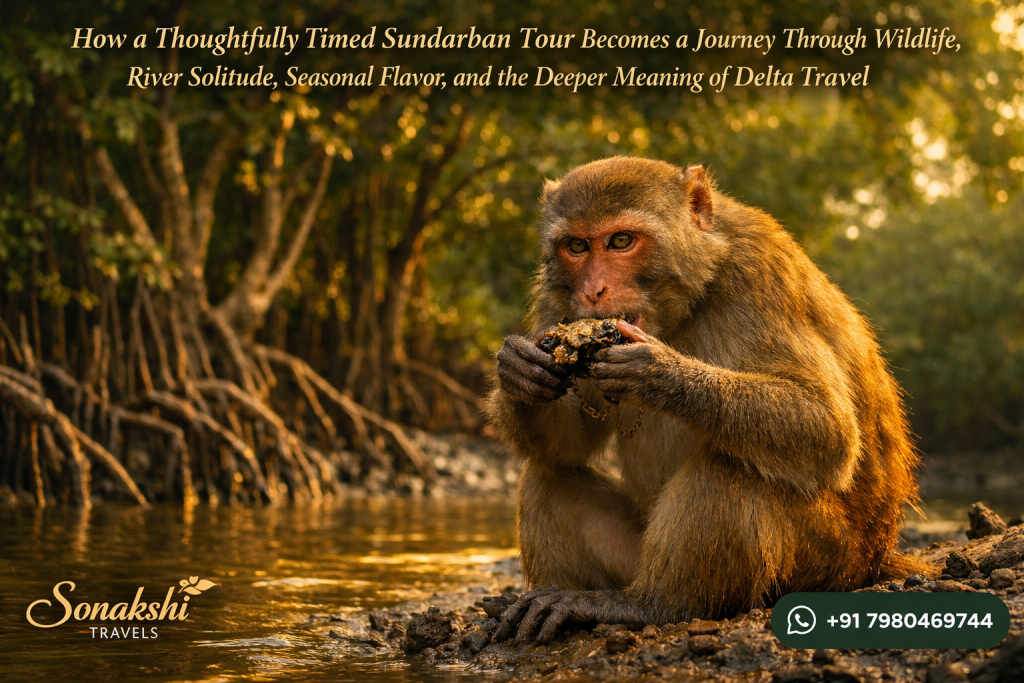
The Sundarban is often introduced through a small set of familiar ideas: mangrove forest, tiger country, river cruise, birdlife, village culture, or weekend escape from Kolkata. Yet none of these descriptions, taken alone, is enough. The real character of the delta begins to emerge only when one understands how its seasons, wildlife encounters, local food traditions, and human rhythms are woven together. A meaningful journey here is never only about movement through creeks and rivers. It is about entering a landscape where water decides direction, where light changes mood from hour to hour, and where even the smallest moment—a kingfisher dropping into a tidal channel, the quiet appearance of a crocodile on a muddy bank, the taste of fresh hilsa during the monsoon season, or the inward stillness of solo travel—becomes part of a larger experience.
For that reason, a well-designed Sundarban tour package should not be judged only by transport, accommodation, or itinerary duration. Its deeper value lies in timing, interpretation, atmosphere, and the ability to reveal the many layers of the delta without reducing them to spectacle. Some travelers come for wildlife, hoping to witness the region’s untamed ecological drama. Some come for seasonal culture and want to understand why river food, particularly hilsa, is treated with such affection across Bengal. Others come searching for quiet, privacy, and reflection, discovering that the Sundarban is one of the rare destinations where solitude itself becomes an essential part of travel.
This is why the Sundarban resists shallow tourism. It asks the traveler to pay attention. It rewards those who understand that the best journey is not always the loudest or the busiest, but the one that brings together ecology, seasonality, local identity, and personal perception. When these elements are allowed to meet naturally, the delta becomes more than a destination. It becomes a living conversation between wilderness and culture, between observation and feeling, and between outer travel and inner experience.
The Best Sundarban Journey Begins With Season, Not Distance
One of the most important truths about the delta is that timing shapes everything. A traveler may visit the same river routes in two different months and feel as though they have entered two different worlds. This is why understanding the best time to embark on a Sundarban tour is not a minor planning detail but a central part of the journey itself. The season influences not only temperature and comfort, but also river color, sky texture, wildlife visibility, food culture, photography conditions, and the overall emotional tone of the trip.
In cooler months, the atmosphere often feels clearer and more spacious. The light can be gentler, the air more comfortable for long hours on the boat, and the experience better suited to families, older travelers, and those who prefer extended observation decks and unhurried excursions. The waterways appear calm yet alert, and the mangrove lines seem more sharply drawn against the horizon. This season often supports a more balanced travel experience in which comfort and exploration work together.
Monsoon-linked travel, however, offers something different. Here the Sundarban becomes more dramatic, intimate, and emotionally charged. Water seems to rise into every idea of the landscape. The forest feels fuller, softer, and more mysterious. Rain clouds deepen the visual drama of the creeks, and local life becomes more closely tied to river cycles and seasonal harvest. This is the period when food and place begin to merge in a very special way, especially for travelers interested in Bengal’s culinary traditions.
Therefore, the best season depends partly on the type of experience one seeks. A family seeking stability, comfort, and broad scenic enjoyment may prefer one window of travel. A photographer, food enthusiast, or reflective solo traveler may be drawn to another. A truly thoughtful Sundarban luxury tour or Sundarban private tour should not simply offer dates. It should interpret season as experience, helping travelers choose the version of the delta most aligned with their expectations and temperament.
Wildlife in the Sundarban Is Not Spectacle Alone, but a Discipline of Observation
Many people first imagine the Sundarban through the idea of danger and wonder: tiger territory, tidal creeks, crocodiles, and sudden bird movement over still water. Yet the deeper value of wildlife travel here is not built on drama alone. It depends on patience, silence, and a willingness to notice smaller forms of life as carefully as larger ones. In the delta, wilderness is rarely theatrical on demand. It reveals itself in fragments—tracks, movement, posture, calls, shadows, reflections, and sudden appearances at the edge of vision.
This is why a title such as when crocodiles smile and kingfishers dive captures something essential about the region. The Sundarban is a place where ferocity and beauty coexist within the same visual field. A crocodile resting in apparent stillness can suggest ancient power, while a kingfisher slicing into water brings quick brilliance and color to the scene. Together, these images tell us that the delta is not only about one famous animal or one iconic narrative. It is an entire living system of predators, birds, mudflats, roots, tides, and silence.
To travel well here means learning how to look. A loud group that expects continuous excitement may return feeling they have seen less than they hoped. A more attentive traveler often discovers far more: estuarine textures, the geometry of mangrove roots, patterns of avian movement, basking reptiles, riverbank marks, and the subtle shifts that suggest how deeply alive the landscape really is. This is where expert guidance becomes invaluable. Not because guides manufacture experience, but because they teach travelers how to interpret what the landscape is already saying.
For this reason, the finest Sundarban tour experiences are not built on promises of guaranteed sightings. They are built on ecological respect, responsible navigation, quiet decks, and knowledgeable narration. In such a setting, wildlife becomes not a checklist item but part of a broader education in perception. One begins to understand that the delta’s beauty is inseparable from its unpredictability, and that the most memorable encounters are often the ones that arise unexpectedly from stillness.
The Hilsa Season Brings Culture, Appetite, and Regional Identity Into the Journey
The Sundarban is not only a wilderness destination. It is also part of a larger Bengali cultural world in which food, season, river ecology, and celebration often meet. Among the clearest examples of this meeting is the enduring emotional and culinary importance of hilsa. To understand the delta more fully, one must also understand why the arrival of this fish is not treated as an ordinary menu event but as a seasonal expression of memory, community, and anticipation.
This is why interest in what is Sundarban Hilsa Festival goes beyond curiosity about a single event. It reflects a larger search intent: travelers want to know how regional tourism can connect them not only to scenery, but to food heritage. A hilsa-focused journey appeals to those who want experience to be multisensory. They do not wish only to cruise through rivers; they wish to taste the season, understand local enthusiasm, and experience how hospitality in Bengal often expresses itself most deeply through the dining table.
In this context, the Sundarban becomes especially rich. The river is no longer only a visual environment. It becomes part of a culinary imagination shaped by monsoon mood, fresh catch traditions, local cooking styles, and the celebratory spirit that surrounds special meals. The presence of hilsa adds emotional texture to the journey. Travelers begin to feel that the destination is not merely observed from outside but entered through appetite, conversation, and cultural participation.
Such seasonal food experiences also transform the atmosphere of the trip. A wildlife-centered morning, followed by a lunch shaped by river tradition, creates a more rounded form of travel—one that respects both ecology and local life. It reminds the visitor that meaningful tourism in the Sundarban should not isolate forest from village, or wildlife from cuisine. The region’s identity is made from both. When well curated, a Sundarban luxury tour package can present this synthesis with elegance, allowing travelers to move naturally from observation deck to dining table without losing the authenticity of place.
Cost Matters Most When It Is Understood as Experience Value, Not Only Price
Whenever travelers consider a seasonal or specialty journey, practical questions inevitably arise. Among them, budget is one of the most important. Curiosity around the cost of Sundarban Ilish Utsav is therefore significant not merely because people want a number, but because they want to understand the relationship between price and experience. In travel, especially in a destination as layered as the Sundarban, cost becomes meaningful only when interpreted through inclusions, atmosphere, timing, exclusivity, and service design.
A lower-priced journey may provide transport and basic sightseeing, but it may not always deliver the quiet, comfort, flexible pacing, culinary emphasis, or interpretive quality that certain travelers desire. A more refined package may include better accommodation, better onboard arrangements, thoughtfully timed meals, smaller groups, and an itinerary designed around both ecological enjoyment and seasonal celebration. The question, then, is not only “How much does it cost?” but “What kind of experience is this cost supporting?”
This distinction is vital in the Sundarban because the destination cannot be consumed efficiently in the same way as a city break or a standard resort holiday. Here, value often lies in what cannot be measured quickly: silence on the boat, quality of guidance, the ability to avoid crowd pressure, care in food preparation, smooth transfers, and the emotional coherence of the overall journey. A package that understands these aspects may be far more meaningful than one that appears economical but treats the destination as a checklist.
For travelers interested in seasonal food experiences, the value equation becomes even more nuanced. They are not simply paying for movement through a forested region. They are paying for timing, access to a specific seasonal atmosphere, culinary curation, and the chance to inhabit a particular cultural moment. In that sense, thoughtful pricing in the Sundarban should be evaluated through depth of experience rather than surface comparison alone. A strong travel planner helps travelers make exactly this distinction.
Solo Travel in the Delta Reveals a More Intimate and Reflective Side of the Journey
Among the many ways to experience the Sundarban, solo travel offers one of the most revealing. In a crowded world, there are few destinations where being alone does not feel like absence, but like heightened presence. The reflective spirit suggested in what I found when I took the Sundarban tour package alone points toward an important truth: the delta can become deeply personal when approached without noise, obligation, or social distraction.
Solo travel here is not necessarily about isolation. Rather, it is about clarity. Without constant conversation, the traveler begins to hear the sounds that usually disappear beneath group activity—the changing engine rhythm of the boat, the wingbeat near the deck, the distant call from the riverbank, the soft interruption of water against wood. Time becomes less fragmented. Observation grows more precise. The journey acquires a meditative quality that is especially suited to the Sundarban’s tidal rhythm.
This does not mean that solo travel is only for the adventurous or the introspective. It can also be ideal for writers, photographers, researchers, and travelers recovering from the exhaustion of urban life. In a destination so governed by nature’s own tempo, solitude often becomes restorative rather than lonely. A single traveler may notice more, feel more, and remember more because the experience is not diluted by constant external interpretation.
At the same time, solo travel also highlights the importance of good planning. Safety, logistical clarity, comfortable accommodation, and reliable support become even more essential when one travels alone. This is where a well-structured Sundarban private tour package or carefully curated small-group itinerary can make a profound difference. It preserves freedom while reducing uncertainty. The traveler remains open to introspection and discovery, yet supported by a system that understands the practical needs of the destination.
The Most Memorable Sundarban Experience Is One That Unites Ecology, Seasonality, and Human Feeling
When these different strands are considered together—best travel season, wildlife observation, hilsa-centered culinary culture, cost awareness, and the inner depth of solo exploration—a more complete picture of the Sundarban emerges. It is not only a tour destination. It is a place where different forms of meaning overlap. Wilderness is present, but so is appetite. Solitude is present, but so is celebration. Practical planning matters, but so does emotional readiness. The landscape can be thrilling, but it can also be tender, thoughtful, and unexpectedly personal.
This is why the delta rewards thematic travel design rather than generic packaging. A traveler who arrives only with the expectation of seeing a forest may leave with an incomplete understanding. A traveler who is guided into the relationship between tide, season, wildlife, cuisine, and human mood encounters something much richer. The Sundarban begins to feel less like an attraction and more like a living world whose meaning unfolds through patience.
For travel planners, writers, and hospitality professionals, this carries an important lesson. The best way to present the Sundarban is not through exaggerated promises or shallow romanticism. It is through honest, layered storytelling supported by thoughtful curation. Travelers deserve to know that this is a destination of atmosphere as much as activity, of interpretation as much as itinerary. When communicated in that way, the region stands apart from ordinary tourism and appeals to a more serious, more emotionally engaged traveler.
Ultimately, the finest Sundarban tour package is one that allows the visitor to encounter the delta in its full complexity. It recognizes that a crocodile on a mudbank, a kingfisher in motion, a monsoon meal of hilsa, a carefully chosen travel season, and a solitary moment on the deck at dusk are not separate attractions. They are chapters of one experience. Together they create a journey shaped by wilderness, flavor, silence, and reflection—a journey that remains in memory long after the rivers themselves have disappeared from view.