Botanical Characteristics, Ecological Importance, and Regional Significance
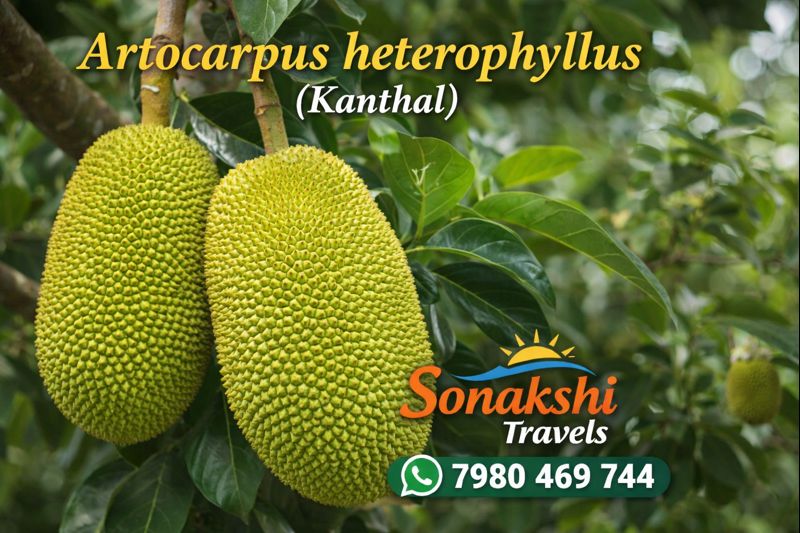
Artocarpus heterophyllus, popularly known as Kanthal or Jackfruit tree, is one of the most iconic tropical fruit-bearing trees of South and Southeast Asia. Beyond its culinary value, the species holds immense ecological, cultural, and economic importance. As the national fruit of Bangladesh and a traditional agroforestry species across eastern India, Artocarpus heterophyllus represents a unique convergence of biodiversity conservation and human livelihood.
In the eastern Gangetic plains and deltaic landscapes adjacent to the Sundarbans, Kanthal occupies a vital position as a homestead and boundary tree. Its resilience to warm, humid climates and moderate soil salinity allows it to thrive near mangrove-influenced zones, making it an important species in transitional ecosystems. This article presents a detailed, scientific overview of Artocarpus heterophyllus, emphasizing its taxonomy, morphology, distribution, ecological functions, and relevance to the Sundarbans region.
Taxonomy & Classification
The taxonomic placement of Artocarpus heterophyllus reflects its evolutionary adaptation as a latex-producing, large-fruited angiosperm.
Kingdom: Plantae
Clade: Angiosperms
Clade: Eudicots
Order: Rosales
Family: Moraceae
Genus: Artocarpus
Species:Artocarpus heterophyllus Lam.
The family Moraceae includes ecologically significant genera such as figs and mulberries, many of which play keystone roles in tropical ecosystems. Artocarpus is distinguished by its large syncarpous fruits and latex-bearing tissues.
Morphology & Field Identification
Growth Form and Canopy Structure
Artocarpus heterophyllus is a large, evergreen tree capable of reaching heights between 10 and 20 meters, with some mature individuals exceeding this range under optimal conditions. The crown is dense and broadly spreading, offering deep shade. The trunk is thick, straight, and cylindrical, often branching at a moderate height.
Bark and Latex
The bark is rough, greyish-brown, and exudes a sticky white latex when cut or injured. This latex serves as a natural defense mechanism against herbivores and pathogens. The presence of copious latex is a key field identification feature.
Leaves
Leaves are simple, alternate, leathery, and glossy, measuring 10–20 cm in length. They are elliptic to obovate with entire margins and a pronounced midrib. Juvenile leaves may exhibit lobing, while mature leaves are typically unlobed. The thick cuticle helps reduce water loss under high humidity and temperature.
Flowers and Fruits
The species is monoecious, bearing separate male and female inflorescences on the same tree. Male inflorescences are elongated and cylindrical, while female inflorescences are compact and globular. The fruit, known as jackfruit, is the largest tree-borne fruit in the world, often weighing between 10 and 25 kilograms. Each fruit is a multiple fruit composed of numerous fused flowers.
Habitat & Distribution
Global Range
Artocarpus heterophyllus is native to the tropical rainforests of the Western Ghats of India but is now widely cultivated and naturalized across:
Eastern and Northeastern India
Bangladesh
Sri Lanka
Southeast Asia
Parts of Africa
Tropical regions of South America
Its wide distribution is primarily driven by human cultivation due to its high nutritional and economic value.
Preferred Habitat
The species thrives in warm, humid climates with annual rainfall exceeding 1000 mm. It prefers deep, well-drained loamy soils but can tolerate a range of soil types, including lateritic and slightly saline soils. Optimal growth occurs in areas with full sunlight and minimal water stagnation.
Occurrence
In eastern India, Kanthal is predominantly found in village homesteads, agricultural boundaries, roadsides, and agroforestry systems. Its long lifespan and minimal maintenance requirements make it a preferred multipurpose tree for rural landscapes.
Preferred Habitat in the Sundarbans Region
Within the Sundarbans biosphere influence zone, Artocarpus heterophyllus is absent from core mangrove forests but is commonly cultivated in:
Village settlements on elevated land
Embankment tops
Freshwater-influenced islands
Buffer zones adjacent to mangrove tracts
Its moderate tolerance to salinity and flooding allows survival in areas with occasional tidal influence, making it an important tree for food security in the deltaic environment.
Understanding the relationship between rural life and forest ecology becomes richer through immersive travel. Discover curated experiences under a guided Sundarban Tour
that highlights cultural and natural heritage.
Ecological Role
Artocarpus heterophyllus contributes significantly to ecosystem stability. Its dense canopy moderates microclimates, while fallen leaves enhance soil organic matter. The large fruits provide food for birds, bats, and mammals, supporting local food webs.
As an agroforestry species, it integrates seamlessly with crops and other trees, reducing erosion and enhancing landscape-level biodiversity.
Habitat Alteration
Despite its resilience, the species faces indirect threats from land-use changes, urban expansion, and declining traditional agroforestry practices. In the Sundarbans region, increasing soil salinity and cyclone-induced damage may affect long-term productivity.
Conservation Efforts
Artocarpus heterophyllus is not currently threatened, owing to widespread cultivation. However, conservation of traditional landraces and promotion of climate-resilient varieties are essential. Inclusion of Kanthal in community-based plantation programs strengthens food security and ecological resilience.
Nature and culture intersect vividly across deltaic villages. Experience this harmony through a thoughtfully planned Sundarban Tour
that offers deeper insight into local ecology.
Did You Know?
Jackfruit is the largest fruit produced by any tree in the world.
Almost every part of the Kanthal tree is utilized, including fruit, seeds, wood, and leaves.
The wood is naturally termite-resistant and used in furniture making.
Unripe jackfruit is widely used as a plant-based meat alternative.
External Reference
For additional scientific and botanical information, refer to: