A Comprehensive Botanical, Ecological, and Conservation Study
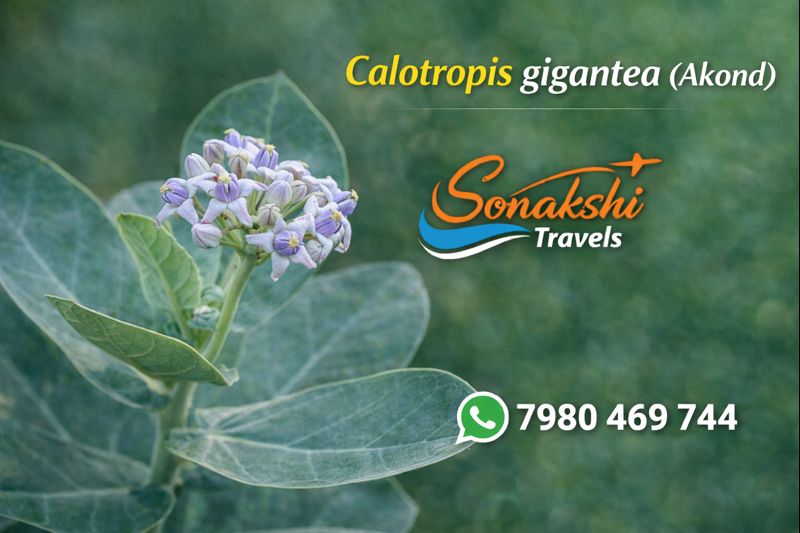
Calotropis gigantea, locally known as Akond, Crown Flower, or Giant Milkweed, is a striking perennial shrub widely distributed across tropical and subtropical Asia. Characterized by its large bluish-green leaves, robust growth habit, and distinctive star-shaped flowers, this species represents an important ecological component of dryland, coastal, and disturbed habitats. Although often regarded as a wasteland plant, Calotropis gigantea plays a critical role in ecosystem stabilization, pollinator support, and successional dynamics.
The plant is deeply embedded in regional landscapes of eastern India and the Sundarbans periphery, where it thrives under challenging environmental conditions such as salinity stress, drought, and nutrient-poor soils. This article presents a detailed, research-based examination of Calotropis gigantea, encompassing its taxonomy, morphology, habitat preferences, distribution, ecological functions, and conservation outlook, with special reference to the Sundarbans region.
Taxonomy & Classification
Systematic Position
Calotropis gigantea belongs to the family Apocynaceae, a family renowned for latex-producing plants with complex floral structures and diverse ecological strategies. The genus Calotropis comprises only a few species, yet they are ecologically dominant wherever they occur.
Kingdom: Plantae
Clade: Angiosperms
Clade: Eudicots
Order: Gentianales
Family: Apocynaceae
Subfamily: Asclepiadoideae
Genus: Calotropis
Species:Calotropis gigantea (L.) Dryand.
The species is closely related to Calotropis procera, from which it can be distinguished by its larger leaves, bluish foliage, and flower coloration.
Morphology & Field Identification
Growth Habit
Calotropis gigantea is an erect, woody shrub or small tree, typically reaching heights of 2 to 4 meters. The plant develops a thick, corky stem and a broad crown, enabling it to dominate open landscapes. Its rigid structure allows survival under strong winds and prolonged dry spells.
Stem and Latex
The stem is stout, pale grey, and covered with a waxy surface. When cut or damaged, it exudes a copious amount of milky latex. This latex is rich in bioactive compounds and serves as a potent defense against herbivores.
Leaves
Leaves are large, opposite, ovate to obovate, measuring up to 20 centimeters in length. They are thick, leathery, and covered with a bluish-green waxy coating. The prominent midrib and lateral veins are clearly visible, aiding in field identification.
Flowers
Flowers are borne in umbellate clusters at the ends of branches. Each flower is waxy, star-shaped, and typically pale lavender, bluish-white, or purplish in color. The corona structure is highly specialized, facilitating pollination by large insects.
Fruits and Seeds
The fruit is a large, inflated follicle containing numerous seeds, each equipped with silky white coma hairs. These hairs enable effective wind dispersal, allowing the species to colonize distant open habitats.
Habitat & Distribution
General Habitat
Calotropis gigantea thrives in open, sun-exposed environments and is particularly well adapted to arid and semi-arid conditions. It commonly inhabits roadsides, embankments, sandy plains, abandoned fields, and coastal scrublands.
Soil Adaptability
The plant exhibits exceptional tolerance to poor soils, including sandy, lateritic, alkaline, and saline substrates. Its deep root system allows access to subsoil moisture, supporting survival during extended dry periods.
Global Range
The native range of Calotropis gigantea extends across South Asia, including India, Bangladesh, Sri Lanka, Nepal, and Myanmar. From this core region, it spreads throughout Southeast Asia, southern China, Indonesia, and the Philippines.
Due to its resilience and wind-dispersed seeds, the species has become naturalized in parts of Africa, the Middle East, and tropical islands of the Pacific. Its global presence reflects both ecological adaptability and human-mediated dispersal.
Preferred Habitat
Climatic Preferences
The species prefers warm tropical to subtropical climates with pronounced dry seasons. Optimal growth occurs in regions receiving moderate rainfall, although established plants tolerate drought with minimal physiological stress.
Light and Exposure
Full sunlight is essential for vigorous growth and flowering. Shaded conditions significantly reduce plant vitality and reproductive output.
Occurrence
In the Indian subcontinent, Calotropis gigantea is a familiar feature of open landscapes. It frequently appears along highways, village outskirts, railway embankments, and fallow agricultural lands. Its presence often signals disturbed or degraded ecosystems.
The species exhibits a strong pioneer character, rapidly establishing itself in newly exposed or abandoned sites.
Preferred Habitat in the Sundarbans Region
Peripheral Zones of the Sundarbans
Within the Sundarbans landscape, Calotropis gigantea does not occur in core mangrove forests due to tidal inundation. Instead, it is widely found along embankments, island edges, coastal scrublands, and village peripheries where salinity levels fluctuate.
Salinity and Wind Tolerance
The plant’s waxy leaves and robust physiology confer tolerance to salt-laden winds and occasional saline intrusion, making it particularly suited to the Sundarbans fringe environment.
Coastal scrub plants like Akond shape the outer landscapes of the delta. Explore these lesser-known ecosystems with a thoughtfully curated Sundarban Tour Package designed for nature enthusiasts.
Ecological Role
Pollinator Support
The complex flowers of Calotropis gigantea attract bees, butterflies, moths, and beetles. Its prolonged flowering period ensures continuous nectar availability in dry seasons.
Soil Stabilization
The extensive root system binds loose soil, reducing erosion in sandy and coastal habitats. This function is especially important in embankment zones and cyclone-prone areas.
Faunal Interactions
Certain insect species depend exclusively on Calotropis for larval development. The plant thus supports specialized trophic relationships within local ecosystems.
Habitat Alteration
Urban expansion, infrastructure development, and intensive land reclamation alter the availability of suitable habitats for Calotropis gigantea. While the species tolerates disturbance, complete surface sealing and excessive chemical use can reduce its populations.
In coastal regions, embankment concreting may limit natural regeneration despite the plant’s resilience.
Conservation Efforts
Conservation Status
Calotropis gigantea is not currently considered threatened due to its wide distribution and robust reproductive capacity. However, its ecological value is often underestimated.
Landscape-Level Conservation
Maintaining natural scrublands, reducing indiscriminate clearing, and recognizing the ecological importance of so-called wasteland species are key to sustaining healthy populations.
For travelers seeking a deeper understanding of delta-edge vegetation, a customized Sundarban Private Tour offers focused ecological interpretation.
Did You Know?
The silky fibers attached to the seeds can carry them several kilometers by wind.
The waxy leaf surface reduces water loss and reflects intense sunlight.
Despite its toxicity, the plant supports highly specialized insect species.
Akond often colonizes cyclone-disturbed coastal lands before other shrubs.