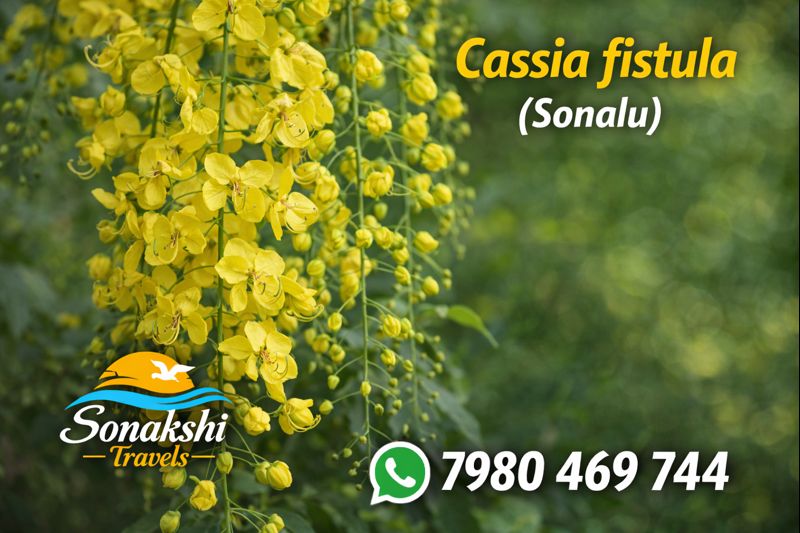
Cassia fistula, popularly known as Sonalu, Golden Shower Tree, or Indian Laburnum, is one of the most iconic flowering trees of the Indian subcontinent. Celebrated for its cascading clusters of golden-yellow blossoms, the species holds exceptional botanical, ecological, medicinal, and cultural importance. Its seasonal floral display marks the advent of summer and has inspired poetry, festivals, and traditional symbolism across South and Southeast Asia.
Beyond its ornamental magnificence, Cassia fistula functions as a vital component of dry deciduous and semi-evergreen forest ecosystems. It contributes to pollinator networks, soil enrichment, and habitat stability, while also serving as a key medicinal resource in classical and folk traditions. This article offers a detailed, research-based exploration of the species, emphasizing its biological attributes, habitat preferences, ecological role, and relevance to the Sundarbans fringe landscape.
Taxonomy & Classification
Systematic Position
Cassia fistula belongs to the family Fabaceae (Leguminosae), one of the largest and most ecologically significant plant families. Members of this family are widely recognized for their nitrogen-fixing ability and their role in enhancing soil fertility.
Kingdom: Plantae
Clade: Angiosperms
Clade: Eudicots
Order: Fabales
Family: Fabaceae
Subfamily: Caesalpinioideae
Genus: Cassia
Species: Cassia fistula L.
The species is taxonomically stable and easily distinguished from other Cassia species by its pendulous inflorescences and long cylindrical pods.
Morphology & Field Identification
Growth Habit and Form
Cassia fistula is a medium-sized, deciduous tree that typically reaches heights of 10 to 20 meters. It develops a straight trunk with a spreading crown, providing moderate shade. During the flowering season, the tree often sheds most of its leaves, allowing the golden flowers to dominate the visual landscape.
Leaves
Leaves are pinnately compound, measuring 30 to 40 centimeters in length, with 4 to 8 pairs of ovate leaflets. The leaflets are smooth, leathery, and deep green, turning yellow before shedding. The deciduous nature of the foliage reflects the tree’s adaptation to seasonal drought.
Flowers
The flowers are bright yellow, large, and borne in long, pendulous racemes that may exceed 50 centimeters in length. Each flower consists of five unequal petals and prominent stamens. Flowering typically occurs in late spring to early summer, often when the tree is nearly leafless, creating a dramatic visual effect.
Fruits and Seeds
The fruit is a long, cylindrical, indehiscent pod that may reach up to 60 centimeters in length. The pod contains numerous seeds embedded in a dark, sticky pulp. These pods often persist on the tree for extended periods, serving as a distinctive identification feature.
Habitat & Distribution
Natural Habitat
Cassia fistula naturally occurs in dry deciduous forests, open woodlands, riverbanks, and forest margins. It is well adapted to monsoonal climates, thriving in regions with distinct wet and dry seasons.
Anthropogenic Landscapes
Due to its ornamental appeal and cultural value, the species is widely planted along roadsides, in gardens, temple complexes, and public parks. It often integrates seamlessly into human-dominated landscapes without disrupting local ecology.
Global Range
The native range of Cassia fistula extends across the Indian subcontinent, Sri Lanka, and parts of Southeast Asia. Over centuries, it has been introduced to tropical regions of Africa, the Caribbean, Australia, and Central America.
Its global distribution is supported by its tolerance to drought, heat, and a wide range of soil conditions, making it a favored ornamental tree in tropical climates worldwide.
Preferred Habitat
Soil Requirements
The species prefers well-drained loamy or sandy soils but can tolerate lateritic and slightly rocky substrates. It performs poorly in waterlogged conditions, emphasizing the importance of proper drainage.
Climate and Light
Cassia fistula thrives in full sunlight and warm climates with annual rainfall between 600 and 2000 millimeters. Flowering intensity is closely linked to exposure to sunlight and a pronounced dry season.
Occurrence
In India, Sonalu is widely distributed from the plains to lower hill slopes. It is frequently encountered along highways, village roads, institutional campuses, and forest edges. The tree often persists in semi-wild conditions, particularly near riverbanks and abandoned lands.
Seasonal landscapes reveal the beauty of native flora. Explore curated itineraries with our
Sundarban Tour Package options for immersive nature experiences.
Preferred Habitat in the Sundarbans Region
Ecological Position in the Delta
Within the Sundarbans region, Cassia fistula is primarily found in non-saline and mildly saline zones, especially in village settlements, forest fringes, and elevated embankments. It does not grow within core mangrove forests but forms an important component of the transitional terrestrial vegetation.
Its deep root system helps stabilize soil, while its seasonal leaf fall contributes organic matter to nutrient-poor deltaic soils.
Ecological Role
Pollinator Support
The bright yellow flowers attract bees, butterflies, and other pollinating insects. Flowering during periods of reduced floral availability enhances its importance within pollinator networks.
Soil Enrichment
As a member of the Fabaceae, Cassia fistula contributes indirectly to soil nitrogen levels through symbiotic associations with soil microorganisms, improving soil fertility in degraded landscapes.
Habitat Alteration
Impact of Land Use Change
Urban expansion, road widening, and intensive agriculture have reduced natural habitats suitable for the species in some regions. However, its popularity as an ornamental tree has offset these losses to a significant extent.
In the Sundarbans fringe, rising soil salinity and embankment modifications influence local distribution patterns.
Conservation Efforts
Sustainable Use and Protection
Cassia fistula is not considered threatened globally. Conservation efforts focus on maintaining genetic diversity through native planting and protecting mature trees in public and cultural spaces.
Encouraging plantation in buffer zones around sensitive ecosystems supports both biodiversity conservation and landscape aesthetics.
For an intimate exploration of delta landscapes and village ecology, consider our
Sundarban Private Tour experiences curated for discerning travelers.
Did You Know?
Cultural and Medicinal Importance
Cassia fistula is the national flower of Thailand and holds sacred significance in various Indian festivals. In Ayurveda, the fruit pulp is widely used as a gentle laxative and detoxifying agent.
The tree’s flowering period often coincides with traditional seasonal transitions, making it a living calendar marker in rural landscapes.