Climate and Seasonal Transformation in the Sundarbans:
Reading the Delta Through Time
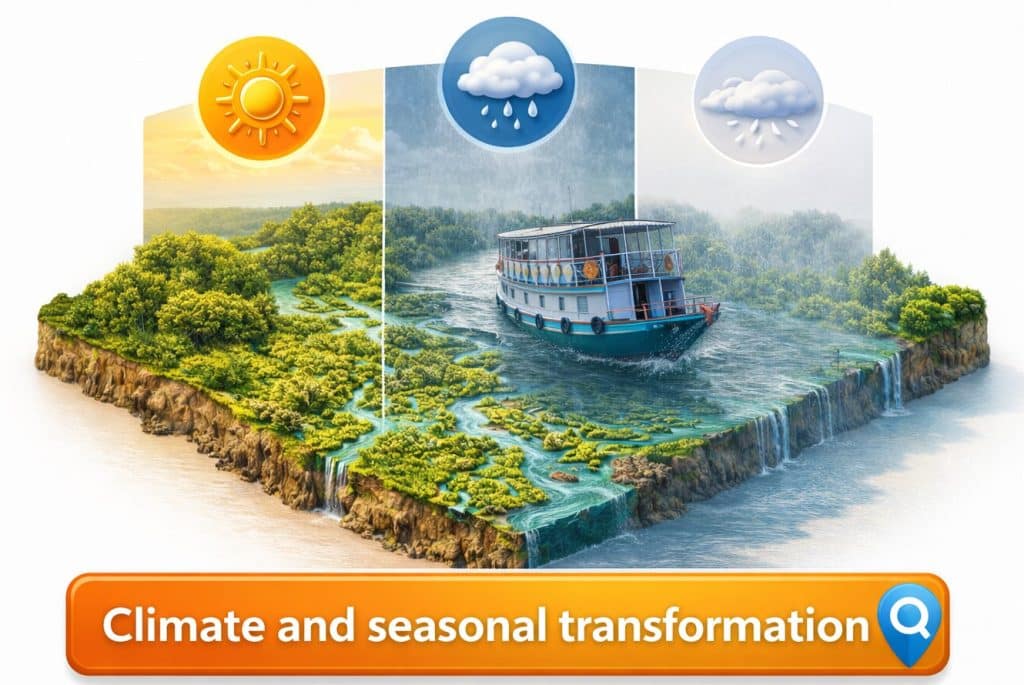
Climate in the Sundarbans is not a background detail—it is the main narrator of the landscape. Every creek, mudflat, and mangrove edge is shaped by a living calendar of heat, rain, wind, salinity, and tidal exchange. What travelers often call “weather” is, in the Sundarbans, a chain reaction that governs visibility on rivers, the scent of the forest air, the behavior of birds, and the very texture of the soil beneath exposed banks. To understand the delta is to understand its seasonal transformation: how the same channel looks different in April than it does in August, how winter light reveals distant tree lines, and how monsoon clouds can turn a familiar horizon into a moving curtain of grey. For a visitor arriving with curiosity, this region offers something rare: a destination where the climate does not simply influence the experience—it continually rebuilds it.
The Sundarbans sit at the meeting point of river and sea, where freshwater from the Ganga-Brahmaputra-Meghna system merges with the saline pull of the Bay of Bengal. This boundary is never stable. It shifts with rainfall upstream, with seasonal river discharge, and with coastal conditions that vary month by month. The mangrove forest survives not by resisting change, but by adapting to it. Leaves, roots, salt glands, and breathing structures in the trees are all responses to climate-driven pressures. The traveler who pays attention begins to see the forest as an ongoing negotiation between extremes—flood and exposure, freshwater and salt, calm and storm. If you are using Sundarban Travel resources for planning, it helps to remember that “best season” is not a single answer; it depends on what kind of transformation you want to witness and how you prefer to move through the delta.
Why the Sundarbans Change So Dramatically Across Seasons
Seasonal transformation in the Sundarbans is intense because the region is a low-lying coastal delta. Small shifts in sea level, rainfall, or river flow can produce large changes in salinity and water depth. Mangrove creeks that appear narrow and quiet in winter can feel broader and faster after heavy rains. Mudflats that are exposed at low tide in one month may remain covered longer in another due to altered tidal timing and storm-driven surges. Climate is not acting alone; it interacts with tides, sediment movement, and river discharge, creating a landscape that is always in motion.
Three forces are particularly important:
(1) the monsoon’s rainfall and runoff, (2) the seasonal cycle of heat and humidity, and (3) coastal winds and occasional cyclonic systems. Together, they influence salinity, which is one of the most powerful ecological drivers here. Salinity changes can shift where certain fish congregate, how crabs and prawns move, and how mangrove species dominate in different zones. The result is a forest that feels like a set of overlapping worlds rather than one uniform environment.
Winter: Clarity, Comfort, and Long-Distance Observation
The winter atmosphere: light, visibility, and quiet water
Winter in the Sundarbans often brings clearer skies, lower humidity, and more comfortable daytime temperatures. For a traveler, the most immediate change is visual. The river surface tends to appear calmer during many winter mornings, reflecting mangrove silhouettes with a mirror-like steadiness. In this season, distant tree lines seem sharper, and the forest edges read more clearly: a thin strip of aerial roots, a dark mass of foliage, and a faint line of sky beyond. When wind is low, you can hear subtle layers of sound—water lapping against a boat’s side, distant bird calls, and the soft creak of branches shifting over tide.
Wildlife cues in winter: birds and shoreline activity
Winter is often associated with stronger bird activity and better observation conditions. Migratory and resident species are easier to spot because the heat shimmer is reduced and midday fatigue is less intense. Shorelines can be more “readable” in winter: footprints on exposed banks appear crisp, and mudflat textures show finer details. Even without dramatic sightings, the forest feels like an open book—one where tracks, calls, and movement patterns are easier to interpret.
Practical insight for travelers in winter
Pack for layered comfort rather than extreme cold. Early mornings on open water can feel cooler than expected due to wind across the river. Neutral-colored clothing helps you blend into the visual field and avoid startling birds at close range. If you prefer a short, high-impact visit with strong visibility, a focused itinerary such as a Sundarban Single Day Package can be especially effective in winter because travel conditions are comparatively stable and observation time is efficient.
Summer: Heat, Intensity, and the Forest’s Defensive Architecture
What heat does to the delta
Summer in the Sundarbans can feel uncompromising. Heat is not just a sensation; it alters how the forest behaves. High temperatures increase evaporation, which can intensify salinity in certain zones. The air often becomes dense and bright, and the forest edges can look harsher under strong sunlight. In these months, the Sundarbans reveals its defensive architecture: salt-tolerant leaves that look thick and waxy, roots that rise like stilts, and mangrove stands that seem built for endurance rather than softness.
Wildlife behavior in summer: timing becomes everything
In hotter months, timing matters more than distance. Early mornings and late afternoons tend to be the most rewarding for both comfort and observation. Midday heat can reduce surface activity in many species, and the stillness can feel absolute—until the tide turns or a distant call breaks the silence. Summer also brings a different type of awareness: the traveler learns to read shade lines along the forest edge and to respect the energy limits imposed by humidity and sun.
Practical insight for travelers in summer
Hydration is not optional; it is a safety practice. Choose breathable fabrics, protect skin from direct sun, and keep water accessible rather than packed away. Plan your most observation-focused segments for early hours. If you are sensitive to heat, select routes that allow for shade and frequent rest, and maintain flexible pacing. The Sundarbans in summer rewards patience: rather than chasing constant activity, you learn to appreciate the forest’s slower, survival-oriented tempo.
Monsoon: The Great Renewal and the Most Dramatic Transformation
Rain reshapes the map
Monsoon is the Sundarbans’ most visible season of transformation. Rainfall and upstream runoff increase freshwater input, altering salinity patterns and changing the “feel” of the waterways. Creeks can look fuller, banks soften, and the forest appears newly washed. The color palette shifts: deeper greens, darker water tones, and sudden bright highlights when sunlight breaks through cloud layers. The air becomes richly scented—earth, leaf, and river—creating an immersive sensory experience that is difficult to replicate in drier months.
Monsoon’s ecological effect: nutrients, breeding cycles, and movement
With rain comes nutrient flow. Sediment and organic matter move through channels, feeding aquatic systems and influencing fish and crustacean dynamics. Monsoon also aligns with breeding cycles for many organisms in delta environments. While some forms of observation may be more challenging due to weather variability, the forest itself feels intensely alive. Even when visibility drops, the landscape conveys motion: water level fluctuations, drifting debris, and shifting cloud light that changes every few minutes.
Practical insight for travelers in monsoon
Plan for unpredictability. Waterproof protection for essentials, quick-dry clothing, and secure packing methods matter more than luxury items. Always respect local safety guidance regarding water conditions and route selection. In monsoon, the best travel mindset is adaptive: treat the day as a living itinerary rather than a fixed schedule. If your priority is comfort and stable viewing, you may choose another season; but if you want to witness the delta’s renewal and its most dramatic atmospheric moods, monsoon offers a powerful, research-worthy experience.
Post-Monsoon: Balance Returns, and the Forest Looks Newly Sculpted
A season of easing extremes
Post-monsoon often feels like the delta exhaling. Rain becomes less constant, water levels stabilize, and the forest carries a fresh, structured look—like a landscape recently re-sculpted by flowing water. The humidity may remain present, but the oppressive edge of peak summer heat is reduced. River surfaces can show a mix of calm and sudden wind-driven texture. For travelers, this season can offer a balance: the forest remains lush, yet moving through it can feel less physically demanding than in peak monsoon or peak summer.
Practical insight for travelers in post-monsoon
This is often a strong season for those who want vivid greenery without the constant rain of monsoon. Keep insect protection and light rain cover available, as conditions can still shift quickly. Photography can be particularly rewarding because the forest tends to appear saturated and dramatic, and cloud patterns often create layered light without the harshness of midsummer sun.
Seasonal Food Culture in the Delta: Climate on the Plate
In the Sundarbans, climate influences not only ecology but also local food rhythms. Seasonal catches and regional preferences tend to shift with water conditions and availability. One of the most culturally recognizable seasonal anchors is hilsa, a fish deeply linked to Bengal’s culinary identity. When travelers plan around seasonal food experiences, they are indirectly planning around climate and river conditions that affect movement and abundance. For those interested in the cultural side of seasonal transformation, the Sundarban Hilsa Festival 2026 is an example of how seasonal ecology becomes community celebration and travel focus, blending food tradition with a time-specific landscape mood.
How Seasonal Transformation Changes the “Feeling” of a Boat Safari
Winter: slow scanning and long observation
In winter, the Sundarban boat journey often becomes a practice of careful scanning. The relative comfort allows longer attention spans. Travelers tend to notice smaller details: kingfisher flashes, ripples near roots, or distant birds lifting from a mudflat. The experience is analytical in a calm way—ideal for those who enjoy patient observation.
Summer: tactical movement and shade-based timing
In summer, movement becomes more tactical. You plan around shade and breeze. The Sundarban journey is still rewarding, but it is shaped by energy management and timing. The delta teaches discipline: you learn when to watch, when to rest, and how to pace your curiosity.
Monsoon: atmosphere becomes the main event
During monsoon, the boat safari feels cinematic. Clouds lower, rain patterns move across the river, and the forest appears to emerge and retreat behind shifting veils. Even without constant wildlife visibility, the sense of being inside a changing ecosystem becomes unusually strong.
Salinity, Mangroves, and the Science of Seasonal Adaptation
One of the most important climate-linked transformations in the Sundarbans is salinity fluctuation. Mangrove species are not identical in how they tolerate salt; their distribution reflects long-term patterns of freshwater influence and coastal exposure. Seasonal rainfall can lower salinity in certain stretches, while dry months can increase it. The forest’s structure—where certain mangroves dominate, where roots are denser, where banks erode faster—often reflects this underlying chemical reality.
For the traveler, you do not need technical equipment to appreciate the effect. You can observe differences in leaf thickness, root formations, and the presence of salt residue in drier periods. Over multiple visits, seasonal transformation becomes visible as a pattern rather than a surprise. This is one reason repeat exploration feels rewarding: the same route can teach a different lesson in each season, as though the delta is offering new pages from the same book.
Responsible Seasonal Travel: Practical Principles That Fit Every Month
Plan with the season, not against it
The most successful Sundarbans journeys align expectations with seasonal reality. In winter, plan for longer observation windows. In summer, prioritize early hours and hydration. In monsoon, accept weather-driven changes as part of the experience and keep schedules flexible. Seasonal transformation is not an obstacle; it is the central feature of the destination.
Protect the ecosystem through low-impact behavior
Maintain quiet observation, avoid throwing anything into waterways, and respect distance from wildlife. Mangrove edges are sensitive; constant disturbance can affect nesting and feeding behaviors. The delta supports livelihoods and biodiversity simultaneously, and visitor behavior should reflect that balance.
Choose an itinerary style that matches your season
If you prefer concentrated exploration with minimal complexity, a single-day format can be a practical match in stable conditions. If you want deeper immersion across changing light and tides, longer exploration allows the forest to reveal its layered character. Travelers who seek a more private, slower-paced experience often focus on comfort, timing, and reduced crowding—an approach commonly associated with a Sundarban Luxury Tour, where the core value is not extravagance but the ability to move with the landscape’s pace rather than rushing through it.
A Field-Ready Seasonal Checklist for Travelers
What to carry in all seasons
Carry sun protection, basic first-aid essentials, adequate drinking water, and secure waterproof storage for electronics. Footwear should be stable and easy to clean, as mud and moisture are part of the delta’s reality. A small binocular can transform your experience by turning distant movement into meaningful observation.
Winter additions
Bring a light layer for early mornings and evenings, and consider gloves if you are sensitive to cool wind on open water. Batteries can drain faster in cooler conditions, so keep spares for cameras and torches if used.
Summer additions
Electrolytes, breathable clothing, and a cap or scarf for sun protection are highly practical. Avoid heavy perfumes and strong scents that can attract insects or cause discomfort in dense humidity.
Monsoon additions
Waterproof cover for bags, quick-dry clothing, and an extra change of essentials are valuable. Keep footwear that handles wet surfaces and avoid carrying items that cannot tolerate sudden exposure to rain.
The Sundarbans as a Living Seasonal Text
To travel through the Sundarbans with seriousness is to accept that you are entering a place that changes its face with the calendar. Winter offers clarity and comfort, summer reveals resilience and intensity, monsoon delivers renewal and drama, and post-monsoon restores balance with fresh detail. Each season teaches a different way of seeing: the patient scanning of winter, the disciplined timing of summer, the atmospheric surrender of monsoon, and the lush structure of the months that follow. Climate and seasonal transformation here are not optional themes for a travel article—they are the framework that explains everything you will notice on the river and at the forest edge.
If you approach the delta as a student rather than a consumer, the Sundarbans becomes more than a destination. It becomes a living field site where every change in wind, water, and light carries meaning. You do not simply visit the forest; you read it—season by season—until the landscape begins to feel less like scenery and more like a dynamic world, continuously rewritten by climate, tide, and time.