Updated Date: 27 February 2026
Exclusive Wildlife Viewing in Sundarban Private Tour
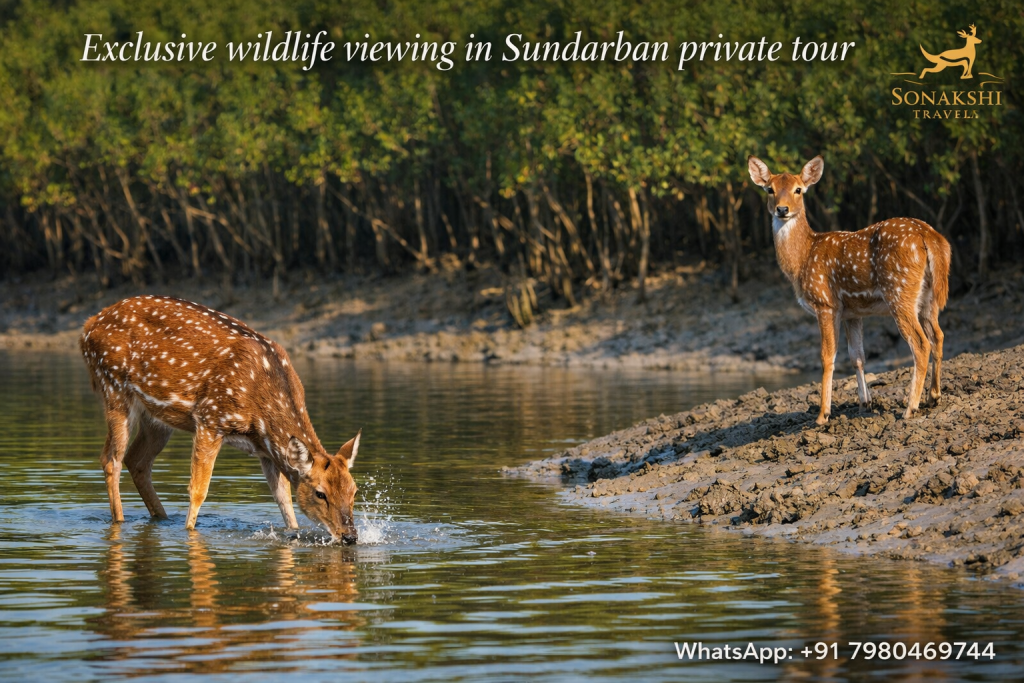
Exclusive wildlife viewing during a private experience in the Sundarban is not only about encountering animals. It is about shaping conditions that make careful observation possible. In a mangrove landscape where sightlines are short and many species avoid open movement, the quality of viewing depends on quiet travel, patient positioning, minimal disturbance, and informed interpretation. Within the broader knowledge base on SundarbanTravel.com, this approach is best understood as a field method: the tour structure is designed to reduce noise and improve decision-making in real time.
The region’s wildlife includes apex predators, large reptiles, and a wide range of birds adapted to life between water and forest. Many are elusive by design, relying on camouflage, low-profile movement, and layered cover. In such settings, sightings are rarely the result of speed or chance alone. They depend on time, reduced disturbance, and choices guided by ecological signals. A private format strengthens these factors and allows wildlife viewing to become focused, calm, and methodical rather than rushed or crowded.
Understanding Wildlife Behavior in a Mangrove Ecosystem
The mangrove forest functions as a natural concealment system. Dense roots, shifting channels, and multi-layered vegetation break visibility and soften sound. Animals move through this terrain with caution, using shade lines and creek edges to remain hidden. A tiger may keep to the darker margin of the bank before stepping into view. Saltwater crocodiles often remain just beneath the surface, exposing only eyes and snout. Birds perch inside foliage where leaves and branches mask shape and colour.
Because survival here depends on stealth, small disturbances can alter behaviour quickly. Loud talk, sudden movement, or a crowded deck can push animals deeper into cover long before they are visible. This is where a private arrangement becomes practical rather than symbolic. With fewer passengers, sound levels remain lower, movement stays steadier, and the guide can maintain a controlled pace that matches wildlife caution. These conditions support longer observation windows and reduce the likelihood of animals abandoning exposed positions.
Focused and Personalized Wildlife Safaris
Observation Without Time Pressure
Wildlife does not follow fixed schedules. A predator may appear briefly and withdraw without warning. A feeding flock may gather on a mud edge and disperse within minutes. In larger groups, viewing time is often limited by collective pacing and the need to keep moving. A private safari removes this pressure. If activity builds in one zone, the vessel can hold position, allow silence to settle, and give the guide time to confirm movement without forcing a quick departure.
This additional time changes what “seeing” means. Instead of a fast sighting, travellers can observe patterns: how an animal tests the edge before crossing, how birds respond to a passing shadow, or how reptiles shift position when they sense vibration. The experience becomes about behaviour and habitat use, not only about presence.
Reduced Human Noise and Its Impact
Research on disturbance in wildlife habitats consistently shows that noise affects feeding, resting, and movement. In dense vegetation, sound often reaches animals before humans can see them. A sudden rise in noise can trigger early retreat, leaving only empty banks and quiet water behind. With fewer people onboard, a private tour maintains a lower acoustic profile. Instructions from the guide are easier to follow, and silence can be requested and maintained without repeated reminders.
This calmer setting supports natural activity. Deer may continue grazing along the fringe instead of lifting heads and withdrawing. Crocodiles may remain partly exposed rather than sliding immediately into water. Birds may return to perches and resume feeding once the vessel remains still. The reduction of crowd noise directly improves viewing quality because it reduces the triggers that cause wildlife to disappear.
Customized Focus for Different Wildlife Interests
Wildlife interest is rarely uniform. Some visitors are most attentive to large predators. Others care more about bird diversity, reptile ecology, or the small clues that indicate animal movement. A private format allows the guide to adjust attention and travel decisions to suit these preferences without compromising observation discipline. This is also where a broader understanding of the regulated Sundarban tour experience becomes useful, because the most meaningful viewing often depends on how calmly and selectively one moves through the landscape.
For birdwatchers, this may mean slow navigation along creek edges where kingfishers, herons, and raptors show predictable feeding patterns. The guide can identify calls, explain hunting methods, and track flight lines across open water. For those focused on apex predators, attention may shift to banks where recent signs suggest passage, or to quiet corners where deer behaviour indicates tension. If crocodile activity is visible on a mud slope, the vessel can hold steady at a safe distance for detailed viewing without unnecessary movement.
This targeted approach ensures that wildlife viewing matches personal curiosity rather than general group preference. It also reduces distraction: observation stays coherent because the day is not repeatedly pulled in different directions by competing interests.
Precision Navigation Through Waterways
Access to Narrow Creeks
The network of rivers and creeks forms natural corridors used by animals for movement and feeding. Smaller channels often experience less traffic, which can make them quieter and more suitable for extended observation. Wildlife may rest along shaded bends or use creek mouths as crossing points. A private vessel can enter these narrow passages carefully when conditions permit, without needing to negotiate speed or route preferences with a large group.
This controlled navigation improves the chances of noticing wildlife that avoids busier routes. The ability to slow down, adjust direction gently, or pause without debate strengthens both safety and observation. It also gives the guide time to read banks for tracks and to interpret changes in animal behaviour ahead.
Positioning for Optimal Visibility
Boat positioning is not a minor detail in mangrove wildlife viewing. Angle and distance determine whether glare hides movement, whether branches block the subject, and whether the observer can see both the waterline and the upper foliage where birds rest. In a private setting, small adjustments can be made immediately and quietly. If a crocodile is resting on a sloped bank, the boat can align parallel for an unobstructed view. If birds become active on one side of a channel, the vessel can reposition gradually to improve sightlines while maintaining respectful distance.
Such precision is more difficult in crowded conditions where movement onboard creates vibration and changes balance. The controlled setting of a private tour makes fine positioning practical, improving the clarity and stability needed for serious wildlife observation.
Expert Interpretation and Ecological Insight
Direct interaction with an experienced guide is one of the strongest advantages of a private wildlife tour. Skilled guides read the terrain like a layered record. They notice paw prints in soft mud, claw marks on trunks, and the subtle lines on banks where animals have climbed in and out of water. They also distinguish between older signs and recent ones by assessing moisture, edge sharpness, and overlap patterns.
Beyond tracking, guides explain behavioural context. If deer suddenly lift their heads and freeze, it can indicate disturbance nearby. If birds produce a sharp alarm pattern from the canopy, it may signal a predator moving below. These cues make wildlife viewing more than a search for silhouettes. The experience becomes interpretive, where signs and responses are read as part of an ecological system.
In a one-to-one setting, these interpretations can be discussed in depth. Questions about territorial movement, feeding sequences, or the way species share habitat space can be answered with clarity. This helps the viewer understand that sightings are connected to habitat conditions, not isolated moments.
Observing Apex Predators with Respect and Clarity
The Bengal tiger in mangrove terrain shows adaptations that differ from those seen in dry forests. Movement may include water crossings, mud navigation, and careful use of cover along creek edges. Observing such a predator requires calm distance, steady attention, and a viewing environment that avoids sudden reactions. A private tour improves the chances of detecting early indicators such as faint movement in shade, disturbed grass along the bank, or tracks that suggest recent passage.
When a sighting occurs, control is essential. Silence, stable positioning, and clear instructions reduce the risk of disturbance and protect the viewing window. Without crowd pressure, viewers can observe posture, gait, and direction with concentration rather than responding to collective excitement. The encounter remains respectful to the animal’s space and safer for those observing.
This measured environment also allows the guide to interpret the moment—whether the tiger is crossing, scanning, or retreating into cover—so the sighting becomes a behavioural observation instead of a brief visual event.
Reptiles and Aquatic Wildlife in Detail
Saltwater crocodiles are among the most striking animals encountered in this habitat. They often rest on exposed banks for thermoregulation, positioning their bodies to manage heat and energy. On crowded boats, movement and vibration can cause them to slip back into water before observers can study details. A private arrangement reduces this vibration, allowing steadier viewing and more time to watch stillness, breathing rhythm, and subtle posture shifts.
When the boat remains stable, travellers can observe skin texture, tail structure, and changes in jaw position that often signal awareness. Occasionally, crocodiles interact with fish movement near the bank, or birds approach cautiously along the same edge. Watching these interactions without interruption adds depth because it shows how species share space without direct conflict.
Other aquatic life becomes more visible in calm conditions. Ripples that move against the current, brief flashes near the surface, or small splashes in sheltered corners can suggest feeding activity below. Quiet observation increases the likelihood of noticing these signs and understanding that the water itself is an active part of the wildlife system.
Birdlife Observation with Concentration
Bird diversity in mangrove zones is substantial, but it is easy to miss without sustained attention. Many species rely on quick movement through foliage, short flights between branches, or still perching that blends into the background. Kingfishers may dive suddenly into water. Egrets move slowly along the edge, tracking prey with minimal motion. Raptors may circle at height, their presence more often detected by shadow and alarm calls than direct sight.
In a private tour, observers can remain focused on one species long enough to notice detail: feeding technique, call patterns, perching preference, and the way birds respond to vessel movement. The guide can describe nesting behaviour and explain why certain zones attract specific birds based on prey availability and cover. Stillness becomes a practical tool; when the boat stays quiet, birds often resume normal activity and remain within view longer.
Wildlife Photography Under Controlled Conditions
Photography in dense mangrove environments demands stability and time. Sightlines can be narrow, backgrounds can be cluttered, and subjects may appear briefly. A private setting improves the photographer’s control. With fewer people, the viewing area remains unobstructed. The boat is steadier because there is less movement across the deck, and minor positioning changes can be made to improve framing without constant interruption.
Preparation matters when the subject is unpredictable. If a tiger crosses a creek or a bird launches into flight, the difference between a missed shot and a successful one often lies in readiness. A guide who reads the terrain can anticipate likely movement zones, giving the photographer time to adjust settings and choose focal length. This approach is especially valuable for travellers selecting structured short stays such as a one-night Sundarban tour, where the available viewing windows are limited and every quiet opportunity matters.
Psychological Immersion and Concentrated Attention
Wildlife viewing requires mental stillness. In crowded environments, attention breaks easily because conversations overlap and reactions pull focus away from subtle signs. A private tour supports quiet alertness. Travellers become more aware of small changes—water movement, leaf vibration, distant calls, and the brief silence that often precedes animal appearance.
This psychological shift improves perception. The environment feels clearer because distraction is reduced. Observers begin to understand that the mangrove landscape communicates through small signals, and that the most meaningful wildlife moments often arrive without dramatic warning.
Ethical Wildlife Observation and Conservation Sensitivity
Exclusive wildlife viewing also aligns with responsible practice. Smaller groups create less disturbance, and fewer vessels converging on the same space reduce pressure on animals. Observing from respectful distance helps prevent stress responses that can alter feeding or movement patterns. Ethical viewing is not passive; it requires discipline, silence, and a willingness to accept that the goal is observation, not pursuit.
Conservation depends on reducing repeated disturbance in sensitive habitats. A controlled private format supports this goal while still allowing meaningful engagement. It also encourages a viewing mindset shaped by respect for the animal’s choice to appear or remain hidden, which is central to ethical wildlife tourism.
Conclusion: The Value of Exclusivity in Wildlife Viewing
Exclusive wildlife viewing in a private Sundarban setting is defined by calm precision. It brings together reduced disturbance, flexible positioning, expert interpretation, and sustained observation. The focus remains on understanding wildlife as it lives within its habitat, not on forcing encounters. For travellers exploring privacy-focused options described through curated Sundarban trip packages, the central advantage is clear: conditions are shaped around observation quality rather than group convenience.
By removing crowd pressure and allowing adaptive movement, a private arrangement turns wildlife viewing into a deliberate process. Each sighting carries context, and each sign of presence becomes part of a larger ecological story. The experience is not rushed or diluted. It is patient, respectful, and deeply attentive—qualities that matter most when viewing wildlife in a mangrove ecosystem built for concealment and silence.