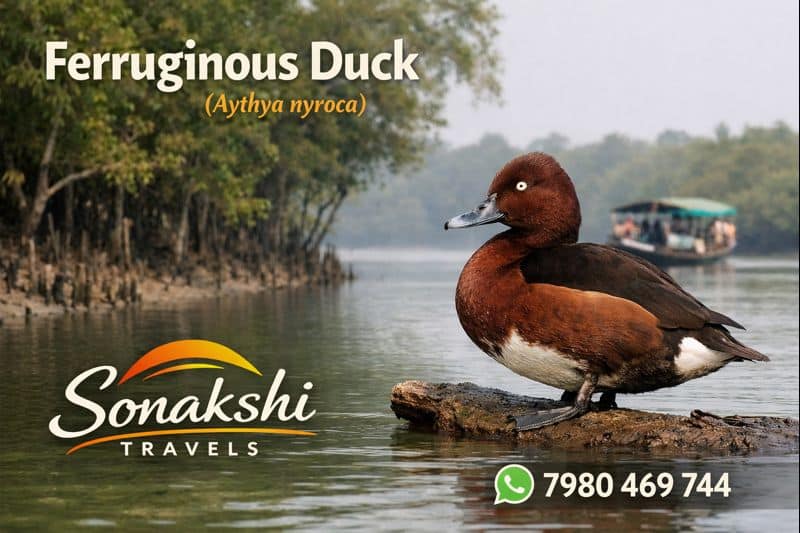
The Ferruginous Duck (Aythya nyroca), also known as the White-eyed Pochard, is one of the most elegant and ecologically significant diving ducks of the Old World wetlands. Distinguished by its rich chestnut plumage, contrasting white eye, and graceful diving behavior, this species occupies a vital niche in freshwater and brackish wetland ecosystems. Although discreet in nature and often overlooked in mixed flocks of waterfowl, the Ferruginous Duck plays a meaningful role in aquatic food webs and serves as a sensitive indicator of wetland health.
Taxonomy & Classification
Systematic Position
The Ferruginous Duck belongs to the family Anatidae, which includes ducks, geese, and swans. Within this family, it is placed in the genus Aythya, a group of true diving ducks known for their ability to forage underwater.
Kingdom: Animalia
Phylum: Chordata
Class: Aves
Order: Anseriformes
Family: Anatidae
Genus:Aythya
Species:Aythya nyroca
Morphology & Field Identification
General Appearance
The Ferruginous Duck is a medium-sized diving duck characterized by a compact body, rounded head, and relatively short neck. Its most striking field mark is the pale, almost white iris that stands out sharply against the dark head, especially in good light.
Male Features
Adult males exhibit deep mahogany or ferruginous-brown plumage over the head, neck, and body. The flanks are clean white, clearly visible when the bird is resting or swimming. The breast and upperparts appear darker, often with a subtle gloss. The bill is bluish-gray with a darker tip, adapted for grasping submerged food.
Female Features
Females are slightly duller in coloration, displaying a warmer brown tone with less contrast on the flanks. The white eye is present but often less striking than in males. Juveniles resemble females but show an overall paler and more muted plumage.
Size & Wingspan
The Ferruginous Duck measures approximately 38–42 cm in length. Its wingspan typically ranges from 63 to 70 cm, allowing agile and direct flight between wetlands during daily movements and seasonal migrations.
Flight Characteristics
In flight, the species shows rapid wingbeats and a relatively straight trajectory. White underwings are noticeable when the bird takes off, while the compact silhouette and fast acceleration distinguish it from dabbling ducks.
Habitat & Distribution
Global Range
The Ferruginous Duck has a wide but fragmented distribution across southern and eastern Europe, North Africa, West and Central Asia, and parts of the Indian subcontinent. It is largely migratory in the northern parts of its range and more resident in warmer regions.
Preferred Habitat
This species favors shallow freshwater lakes, marshes, oxbow lakes, slow-flowing rivers, and lagoons rich in submerged vegetation. During winter, it may also use brackish wetlands and estuarine backwaters, provided adequate food resources are available.
Diet & Feeding Ecology
Diet Composition
The Ferruginous Duck is omnivorous, feeding primarily on aquatic vegetation, seeds, tubers, and algae. Animal matter such as mollusks, aquatic insects, crustaceans, and small fish supplements the diet, particularly during the breeding season.
Foraging Technique
As a proficient diving duck, it forages by submerging completely, using powerful legs to propel itself underwater. Typical dives last between 10 and 20 seconds, during which the bird probes soft substrates or grazes on submerged plants.
Breeding & Reproduction
Breeding Season
Breeding generally occurs between April and July, depending on latitude and climatic conditions. Pairs form during late winter or early spring migration.
Nesting Sites
Nests are usually well concealed among dense emergent vegetation such as reeds, sedges, or floating mats of plants. The nest is a shallow cup lined with down feathers, offering insulation and camouflage.
Unique Adaptations & Behavioral Ecology
Speed & Agility
The streamlined body and strong webbed feet allow swift underwater maneuvering. This agility helps the duck evade predators and exploit food resources unavailable to surface-feeding species.
Camouflage and Nesting Strategy
The subdued earthy tones of the female provide excellent camouflage during incubation. Nests are strategically placed to minimize detection by terrestrial and avian predators.
Social Behavior
Outside the breeding season, Ferruginous Ducks are moderately social, often forming small flocks or mixing with other diving ducks. During breeding, pairs become territorial and discreet.
Occurrence & Seasonal Movement
In temperate regions, the species undertakes seasonal migrations to avoid freezing wetlands. Populations breeding in Europe and Central Asia move southward to the Mediterranean basin, Middle East, and South Asia during winter.
Preferred Habitat in the Sundarbans Region
Within the Sundarbans landscape, Ferruginous Ducks are primarily winter visitors, favoring freshwater ponds, creeks, and calm backwaters slightly away from strong tidal influence. Areas with dense aquatic vegetation provide both food and shelter, making the region an important seasonal refuge.
Exploring wetland birds is best experienced firsthand. Plan your nature-focused journey with a carefully designed Sundarban Tour and witness migratory waterfowl in their natural mangrove surroundings.
Ecological Role
The Ferruginous Duck contributes to nutrient cycling by redistributing organic matter within wetlands. Its feeding activity helps regulate aquatic vegetation and invertebrate populations, supporting balanced ecosystem functioning.
Habitat Alteration
Drainage of wetlands, pollution, unsustainable fishing practices, and invasive plant species pose significant threats to suitable habitats. Altered hydrology often reduces food availability and nesting success.
Conservation Efforts
International conservation initiatives focus on wetland restoration, protection of key breeding and wintering sites, and long-term population monitoring. Legal protection in many countries has improved awareness, though habitat preservation remains critical.
Did You Know?
The Ferruginous Duck’s white eye is one of the most reliable identification features among diving ducks.
It is considered Near Threatened in parts of its range due to ongoing wetland loss.
The species often prefers quieter, less disturbed water bodies compared to other pochards.