A Comprehensive Botanical and Ecological Study of a Versatile Legume
Lablab purpureus, locally known as Shim, is one of the most ancient and agriculturally significant leguminous plants cultivated across tropical and subtropical regions. Beyond its widespread use as a vegetable and fodder crop, the species holds considerable ecological value, particularly in deltaic and semi-coastal landscapes. In eastern India, including the lower Gangetic plains and the peripheral zones of the Sundarbans, Lablab purpureus demonstrates remarkable adaptability to variable soils, seasonal flooding, and human-modified habitats.
This article presents an in-depth botanical, ecological, and regional account of Lablab purpureus, covering its taxonomy, morphology, habitat preferences, distribution patterns, ecological roles, and conservation relevance, with special reference to the Sundarbans region.
Taxonomy & Classification
belongs to the family Fabaceae, a plant family recognized globally for its nitrogen-fixing ability and agricultural importance. The species has undergone several taxonomic revisions due to its morphological variability and extensive cultivation history.
Kingdom: Plantae
Clade: Angiosperms
Clade: Eudicots
Order: Fabales
Family: Fabaceae
Subfamily: Faboideae
Genus: Lablab
Species:Lablab purpureus
Historically, the species has been placed under the genus Dolichos, but molecular and morphological evidence has established Lablab as a distinct monotypic genus, with Lablab purpureus as its sole species.
Morphology & Field Identification
is a vigorous, twining or trailing perennial climber, often cultivated as an annual. The plant exhibits considerable morphological diversity depending on cultivar, climate, and management practices.
Vegetative Characteristics
The stem is herbaceous to semi-woody, extensively branched, and capable of climbing using twining growth. Leaves are trifoliate, with broad ovate to rhomboid leaflets measuring 6–15 cm in length. The leaf surface is smooth to slightly pubescent, with prominent venation.
Floral Features
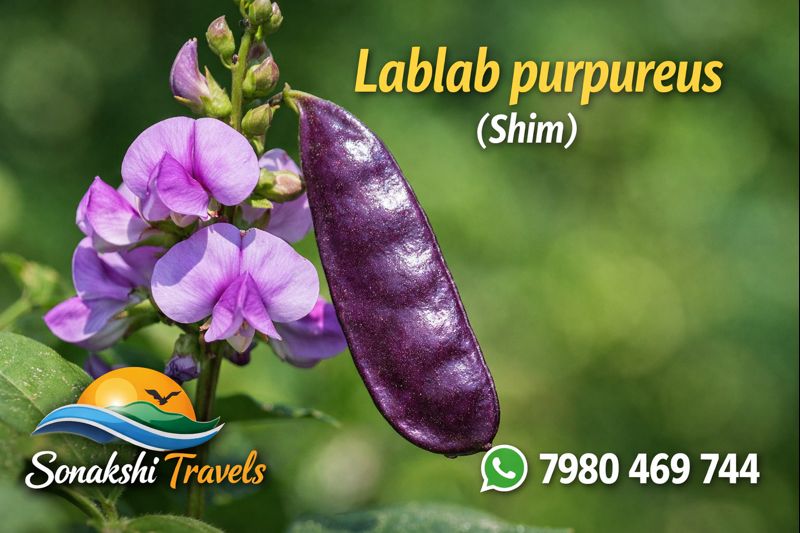
Flowers are borne in axillary racemes, typically purple, violet, or white. Each flower is papilionaceous, characteristic of legumes, with a standard, wings, and keel. Flowering is influenced by photoperiod, often increasing under shorter day lengths.
Fruit and Seed Identification
The pods are flattened, broad, and slightly curved, measuring 6–12 cm long. Pod color ranges from green to deep purple, depending on variety. Seeds are oval, laterally compressed, and vary in color from white and brown to black, often with a contrasting hilum.
Habitat & Distribution
thrives across a wide range of ecological settings, from cultivated fields to semi-wild margins of villages, riverbanks, and homestead gardens. Its adaptability to both humid and semi-arid climates has facilitated its global dispersal.
Global Range
The species is believed to have originated in Africa, with early domestication occurring thousands of years ago. Today, it is cultivated throughout South Asia, Southeast Asia, East Africa, Central America, South America, and parts of Australia. Its presence in tropical Asia is particularly pronounced due to favorable climatic conditions.
Preferred Habitat
prefers well-drained loamy soils but is tolerant of clayey substrates and mildly saline conditions. It grows best under full sunlight, with moderate rainfall, and can survive short periods of drought once established.
Exploring plant diversity alongside mangrove waterways enhances the understanding of regional ecology. Discover curated itineraries through our Sundarban Tour Package options for nature-focused journeys.
Occurrence
In India, Lablab purpureus is widely cultivated across plains and plateau regions. Its occurrence is particularly common in eastern India, including West Bengal, where it is grown as a seasonal vegetable and occasionally found naturalized near agricultural settlements.
Preferred Habitat in the Sundarbans Region
In the Sundarbans periphery, Lablab purpureus is primarily observed in village homesteads, embankments, reclaimed agricultural lands, and elevated areas protected from prolonged tidal inundation. While it is not a true mangrove species, its tolerance to humid, saline-influenced air makes it suitable for cultivation near mangrove ecosystems.
Farmers in buffer zones often grow the plant on trellises or fences, taking advantage of its climbing habit and soil-enriching properties.
Ecological Role
As a leguminous plant, Lablab purpureus plays a crucial ecological role through biological nitrogen fixation. Symbiotic bacteria in its root nodules convert atmospheric nitrogen into bioavailable forms, improving soil fertility and benefiting adjacent crops.
The plant also supports pollinators such as bees and butterflies, contributing to local biodiversity. Its dense foliage offers microhabitats for insects and small invertebrates.
Habitat Alteration
Habitat alteration due to agricultural intensification, embankment construction, and land-use changes affects the traditional cultivation patterns of Lablab purpureus in coastal zones. While the species itself is resilient, the loss of small-scale mixed farming systems reduces varietal diversity.
Climate variability, including erratic rainfall and increased soil salinity, may influence productivity in low-lying areas surrounding the Sundarbans.
For travelers seeking deeper insight into rural landscapes and traditional farming near mangroves, explore our customized Sundarban Private Tour experiences designed around nature and culture.
Conservation Efforts
is not considered threatened at a global level; however, conservation of traditional landraces is increasingly important. Seed conservation initiatives, community seed banks, and sustainable agriculture programs contribute to preserving genetic diversity.
In the Sundarbans region, promoting mixed cropping systems and organic cultivation indirectly supports the continued presence of this species in agro-ecological landscapes.
Did You Know?
Lablab purpureus is one of the oldest domesticated legumes, with archaeological evidence dating back several millennia.
Different plant parts are used globally as vegetables, fodder, green manure, and cover crops.
The species exhibits exceptional drought tolerance once established.
Purple-pod varieties are rich in anthocyanins, natural antioxidant compounds.
External Reference
For additional taxonomic and botanical information, readers may consult the relevant entry on Wikipedia.