Northern Pintail (Anas acuta):
Identification, Ecology, and Seasonal Presence in the Sundarbans
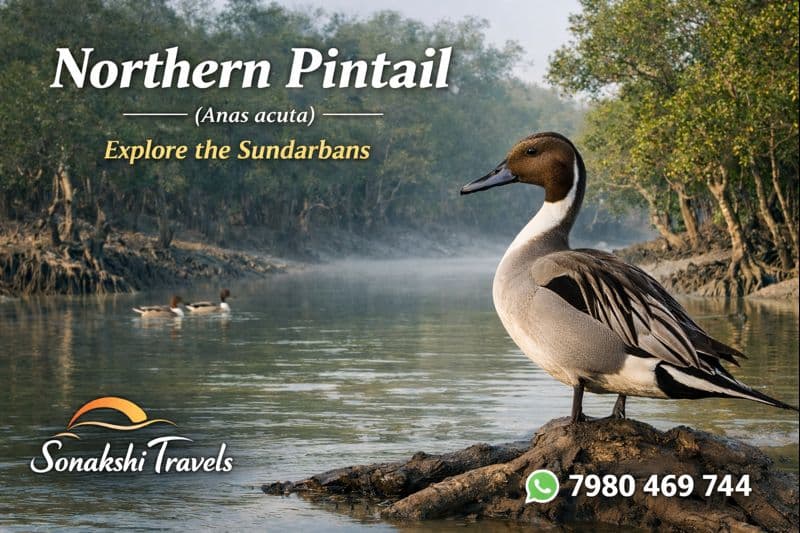
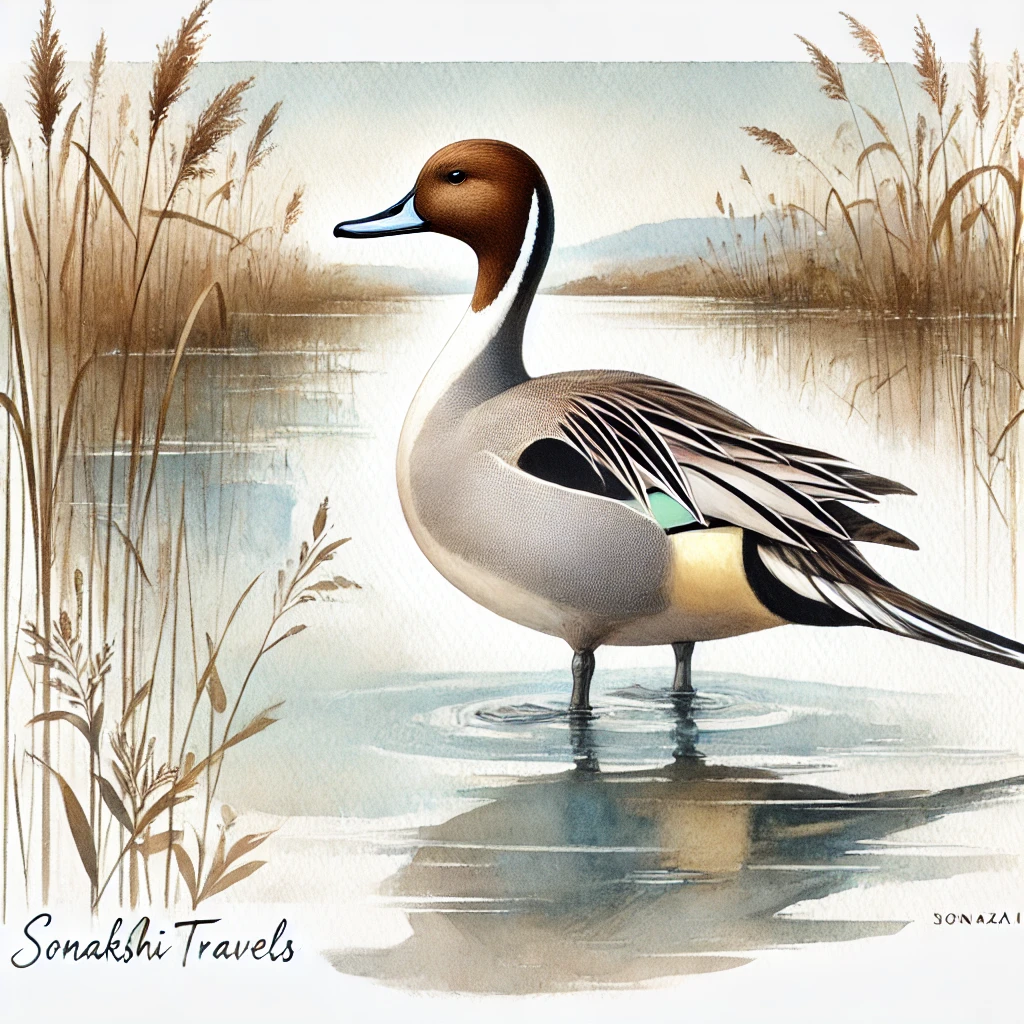
The Northern Pintail (Anas acuta) is widely regarded as one of the most elegant dabbling ducks in the world. Its streamlined body, long neck, and—most famously—its elongated, pointed tail in males provide a distinctive silhouette in flight and on water. Beyond its beauty, the species is ecologically important: it links wetland food webs through seed movement, invertebrate predation, and energy transfer across continents through migration. In winter, parts of the Indian subcontinent—including coastal wetland mosaics near the Sundarbans—can become seasonal refuges when northern breeding landscapes are locked under ice or depleted by harsh weather.
Taxonomy & Classification
- Common Name: Northern Pintail
- Scientific Name: Anas acuta
- Family: Anatidae (ducks, geese, and swans)
- Order: Anseriformes
- Genus: Anas
- Conservation Status: Least Concern (IUCN Red List)
Morphology & Field Identification
The Northern Pintail is a medium-to-large dabbling duck recognized by its slender proportions and refined posture. In mixed winter flocks, it often appears “longer” than many other surface-feeding ducks because of its extended neck and tapered rear profile. While plumage can vary with age, season, and wear, several features remain especially helpful for reliable identification.
Male Features
- Long, pointed tail feathers that create the classic “pintail” outline.
- Sleek brown head with a clean white stripe that typically extends from the throat along the side of the neck.
- Grey body with crisp black-and-white patterning that can appear sharply defined in good light.
- Bill often bluish-grey; eyes appear dark.
Female Features
- Mottled brown plumage designed for camouflage, especially important during nesting.
- Tail is shorter than the male’s but still notably pointed compared to many other dabbling ducks.
- Bill tends to be darker and more subtly patterned.
Size & Wingspan
- Length: 50–65 cm
- Wingspan: 80–95 cm
- Weight: 600–1,100 g
Flight Characteristics
- Fast, direct flight; long wings contribute to efficient long-range movement.
- Frequently travels in organized groups during migration, with strong endurance over extended distances.
Habitat & Distribution
Global Range
The Northern Pintail breeds across broad northern latitudes of North America, Europe, and Asia, selecting open wetlands and marshy basins that provide shallow feeding zones and nearby cover. In winter, large populations migrate to comparatively warmer regions, including parts of Africa, South Asia, and Central America. This seasonal expansion is driven by food access, ice-free water availability, and the ecological stability that wintering wetlands can provide.
Preferred Habitat
- Wetlands, lakes, marshes, and coastal estuaries.
- Shallow freshwater or brackish systems rich in aquatic vegetation and soft-bottom feeding areas.
- During migration, it can use flooded grasslands and agricultural fields where grain resources are accessible.
Diet & Feeding Ecology
Diet Composition
The Northern Pintail is an omnivore with a strong preference for plant matter when available, while shifting toward higher animal protein intake during energetically demanding periods such as breeding or pre-migration fattening. This flexible strategy helps the species exploit changing wetland conditions across different geographies.
- Seeds and grains (including rice and wheat where birds feed in harvested or flooded fields).
- Aquatic plants and algae in shallow wetland zones.
- Insects, crustaceans, and mollusks, often increasing in importance seasonally.
Foraging Technique
- Primarily a dabbling duck: feeds by tipping forward in shallow water rather than diving.
- Its relatively long neck can help it reach vegetation slightly deeper than some other dabbling species.
Breeding & Reproduction
- Breeding Season: Typically April to June (varies by region and latitude).
- Nesting Sites:
- Ground nests in open but well-concealed grassy or scrubby areas near wetlands.
- Nest is usually a shallow depression lined with down feathers for insulation.
- Clutch Size: Commonly 6–12 eggs
- Incubation Period: About 22–24 days
- Chick Development:
- Precocial young: able to walk and follow the mother soon after hatching.
- Fledging often occurs around 45–50 days, depending on conditions.
Unique Adaptations & Behavioral Ecology
Long-Distance Migration Capacity
- Among the more wide-ranging migratory ducks, capable of covering very large distances between seasonal habitats.
- Its migration strategy depends on networks of wetlands; degradation of stopover sites can reduce survival and breeding success.
Speed & Agility
- Noted for rapid, direct flight and strong maneuverability—traits that can reduce predation risk and support long travel segments.
Camouflage and Nesting Strategy
- Female plumage is strongly cryptic, reducing detectability during incubation and while escorting young.
- Ground nesting increases vulnerability, making habitat integrity and low disturbance especially important.
Social Behavior
- Often forms large winter flocks, sometimes mixing with other duck species where food resources are concentrated.
- Courtship displays can include head movements and vocal cues, supporting pair formation before breeding.
Presence of Northern Pintail in the Sundarbans
The Sundarbans—the world’s largest mangrove ecosystem—represents a complex interface of tidal creeks, brackish lagoons, mudflats, and seasonally productive wetlands. For migratory waterbirds, such landscapes can function as winter feeding zones when inland waters fluctuate or when northern habitats become inaccessible. Although the Northern Pintail is not a mangrove specialist, it may utilize peripheral wetland habitats and nearby open waters that provide shallow feeding opportunities and relative security in large, mixed-species congregations.
Occurrence & Seasonal Movement
- The Northern Pintail typically behaves as a winter visitor in much of South Asia, appearing when northern breeding regions enter severe cold periods.
- Seasonal arrivals often align broadly with October to March, when post-monsoon wetlands can be rich in seeds, aquatic plants, and invertebrates.
Preferred Habitat in the Sundarbans Region
- Brackish-water lakes, estuarine mudflats, mangrove-fringed lagoons, and tidal creeks with shallow margins.
- Quiet zones with reduced disturbance where birds can feed and rest, especially at low tide when dabbling areas expand.
Ecological Role
- Seed dispersal:
Wetland plants can be dispersed through ingestion and later excretion, supporting vegetation renewal across sites. - Food-web regulation:
By consuming aquatic invertebrates and plant material, pintails help shape wetland energy pathways and nutrient cycling. - Prey value:
Waterfowl can form an important component of predator diets, linking aquatic productivity to higher trophic levels.
Threats & Conservation Considerations in the Sundarbans
Although globally assessed as Least Concern, the Northern Pintail can still be affected by local pressures in wintering landscapes. In dynamic coastal systems like the Sundarbans, changes in salinity, sedimentation, and human disturbance can quickly reshape feeding conditions. Conservation outcomes therefore depend not only on protected-area designation but also on wetland quality, pollution control, and responsible nature-based tourism.
- Habitat alteration:
Wetland shrinkage and shoreline changes can reduce shallow feeding areas and roosting security. - Pollution:
Agrochemicals, plastics, and oil residues can degrade food resources and increase health risks. - Illegal hunting and disturbance:
Even low-level, sporadic pressure may cause repeated flushing, energy loss, and displacement to poorer habitats. - Climate-driven change:
Sea-level rise and salinity shifts may modify plant communities and invertebrate availability in shallow zones.
Conservation Efforts
- Protected status:
The Sundarbans landscape benefits from formal protection frameworks that support wildlife safeguarding. - Habitat restoration:
Mangrove and wetland restoration helps maintain ecological integrity, benefiting resident and migratory birds. - Community awareness and ecotourism discipline:
Responsible visitor practices—quiet approach, distance maintenance, and reduced plastic footprint—can lower disturbance and improve wintering success.
The Northern Pintail (Anas acuta) is a globally distributed migratory duck that combines refined morphology with strong ecological versatility. Its seasonal movements connect wetlands across continents, making it both a symbol of migratory resilience and a sensitive indicator of wetland health. In and around the Sundarbans, the species’ winter presence highlights the broader role of coastal wetland networks as feeding and resting landscapes for migratory birds. Protecting shallow-water habitats, reducing pollution, and strengthening community stewardship remain central to ensuring that these seasonal visitors continue to find safe passage and suitable refuge year after year.
Did you know?
During peak winter months, Northern Pintails may associate with other migratory ducks in shared feeding areas, especially where shallow waters concentrate seeds and aquatic invertebrates.
External reference:
Northern Pintail (Anas acuta) – species overview