A Comprehensive Biological and Ecological Profile of the Blue Water Lily
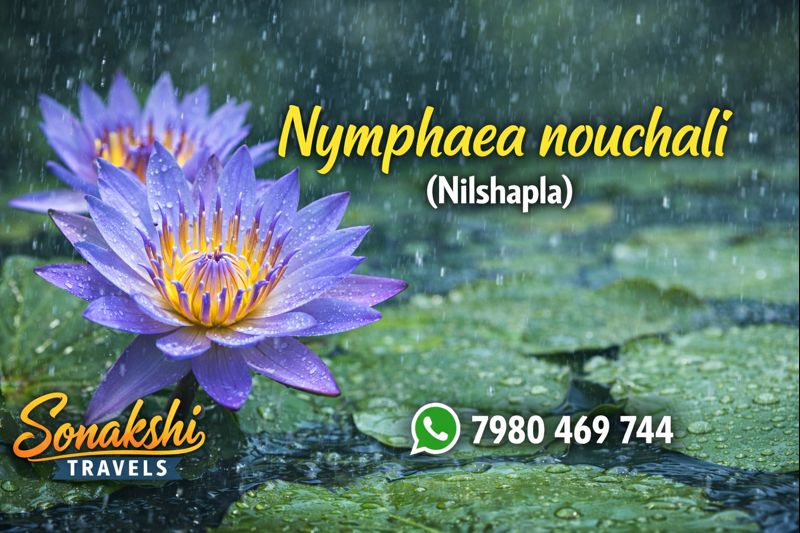
Nymphaea nouchali, popularly known as Nilshapla or the Blue Water Lily, is one of the most visually striking and ecologically important aquatic flowering plants of South Asia. Celebrated for its serene blue to violet blossoms floating gracefully on calm waters, this species occupies a unique position at the intersection of botany, wetland ecology, cultural heritage, and freshwater ecosystem functioning. Its presence is deeply embedded in traditional landscapes, folklore, and religious symbolism, while scientifically it represents a highly specialized hydrophyte adapted to life in still or slow-moving freshwater bodies.
As a perennial aquatic herb, Nymphaea nouchali exhibits remarkable physiological and structural adaptations that allow survival in fluctuating water levels, varying nutrient conditions, and seasonal hydrological changes. From village ponds and oxbow lakes to floodplain wetlands and mangrove-associated freshwater zones, the species contributes significantly to habitat complexity, water quality regulation, and biodiversity support. This article presents an in-depth, research-oriented exploration of the taxonomy, morphology, habitat preferences, ecological role, and conservation considerations of Nymphaea nouchali, with particular emphasis on its occurrence in the Sundarbans region.
Taxonomy & Classification
Nymphaea nouchali belongs to one of the most ancient lineages of angiosperms, representing early evolutionary adaptations to aquatic life. Its taxonomic placement is outlined below:
Kingdom: Plantae
Clade: Angiosperms
Clade: Basal angiosperms
Order: Nymphaeales
Family: Nymphaeaceae
Genus: Nymphaea
Species:Nymphaea nouchali Burm. f.
The family Nymphaeaceae is characterized by rooted aquatic plants with floating leaves and showy, radially symmetrical flowers. Within the genus Nymphaea, N. nouchali is distinguished by its blue-hued petals, a trait that is relatively rare among water lilies, which more commonly exhibit white, pink, or yellow flowers.
Morphology & Field Identification
Nymphaea nouchali is a rooted, floating-leaved aquatic perennial that exhibits a highly specialized morphology suited to lentic water environments. Each structural component of the plant contributes to buoyancy, gas exchange, and reproductive success.
Rhizome and Root System
The plant is anchored to the muddy substrate by a thick, horizontal rhizome embedded in the sediment. From this rhizome arise numerous fibrous roots that secure the plant firmly in soft, anoxic soils. The rhizome serves as a storage organ, accumulating starch and other reserves that support regrowth during favorable seasons.
Leaves (Floating Pads)
Leaves are large, circular to broadly ovate, measuring 15–30 cm in diameter, with a characteristic basal notch where the petiole attaches. The upper surface is glossy green and water-repellent, while the underside often exhibits a purplish tinge. Long, flexible petioles allow leaves to adjust their position in response to changing water levels, ensuring continuous access to sunlight.
The leaf anatomy includes extensive air-filled spaces (aerenchyma) that facilitate buoyancy and internal oxygen transport, enabling survival in oxygen-poor substrates.
Flowers
The flowers of Nymphaea nouchali are solitary, large, and highly ornamental, typically measuring 8–15 cm across. Petals range from pale blue to deep violet, often with lighter centers, surrounding a dense cluster of yellow stamens. Flowers usually open during early morning hours and gradually close by afternoon, a rhythmic behavior linked to pollinator activity and temperature regulation.
Fruit and Seeds
Following pollination, the flower stalk coils, drawing the developing fruit underwater. The fruit matures as a spongy, berry-like structure containing numerous small seeds. Upon decay, seeds are released and dispersed by water currents, contributing to colonization of new habitats.
Habitat & Distribution
Nymphaea nouchali is intrinsically associated with freshwater ecosystems, where stable or gently fluctuating water conditions prevail. Its distribution reflects a preference for warm climates with abundant sunlight and nutrient availability.
Global Range
The species is widely distributed across South and Southeast Asia, including India, Bangladesh, Sri Lanka, Nepal, Myanmar, Thailand, Laos, Cambodia, Vietnam, Malaysia, and parts of southern China. It has also been reported from freshwater bodies in northern Australia. In several regions, it is cultivated ornamentally and has naturalized beyond its native range.
Preferred Habitat
Nymphaea nouchali thrives in still or slow-moving freshwater bodies such as ponds, lakes, oxbow wetlands, marshes, and floodplain pools. It prefers shallow waters, typically 30–150 cm deep, with soft, silty or clay-rich substrates. Optimal growth occurs in waters with neutral to slightly acidic pH and moderate nutrient levels.
Occurrence
The species occurs both in natural wetlands and in man-made water bodies, including village ponds and irrigation reservoirs. Seasonal flowering is most pronounced during the warmer months, coinciding with increased daylight and nutrient availability. In many rural landscapes, populations persist for decades due to stable hydrological conditions and traditional protection of ponds.
Preferred Habitat in the Sundarbans Region
Within the Sundarbans landscape, Nymphaea nouchali is primarily confined to freshwater-dominated zones rather than saline mangrove channels. It is commonly found in rain-fed ponds, freshwater creeks, canals, and low-salinity wetlands situated on the periphery of the mangrove forest.
These habitats experience seasonal freshwater influx during the monsoon, creating favorable conditions for the growth and flowering of the species. The presence of Nymphaea nouchali in the Sundarbans often indicates relatively low salinity levels and stable freshwater influence, making it an important ecological indicator plant.
Exploring freshwater wetlands alongside mangrove ecosystems adds depth to any Sundarban Tour, revealing the region’s delicate ecological gradients.
Ecological Role
Nymphaea nouchali plays a vital ecological role in freshwater ecosystems. Its floating leaves provide shade, reducing water temperature and limiting excessive algal growth. This shading effect helps stabilize dissolved oxygen levels, benefiting aquatic fauna.
The plant offers habitat and refuge for aquatic invertebrates, fish fry, and amphibians. Flowers attract a variety of pollinating insects, while submerged plant parts contribute organic matter to detrital food webs. Together, these functions enhance biodiversity and ecosystem resilience.
Habitat Alteration
Despite its adaptability, Nymphaea nouchali is vulnerable to habitat alteration. Wetland drainage, pollution from agricultural runoff, eutrophication, and increased salinity intrusion pose significant threats. Excessive nutrient loading can lead to algal blooms that block sunlight, while chemical contaminants impair plant growth and reproductive success.
Conservation Efforts
While not currently listed as globally threatened, conservation of Nymphaea nouchali depends on the protection of freshwater wetlands. Community-based pond management, reduction of chemical pollution, and maintenance of natural hydrological cycles are critical measures.
In culturally significant regions, traditional reverence for the plant indirectly supports its conservation. Integrating wetland plants into environmental education and eco-tourism narratives further strengthens conservation awareness.
Understanding aquatic flora enhances responsible travel. A well-planned Sundarban Tour offers insights into both mangrove forests and their freshwater counterparts.
Did You Know?
Nymphaea nouchali is the national flower of Bangladesh.
The flowers open in the morning and close by afternoon, following a daily rhythm.
Its presence often indicates relatively clean, low-salinity freshwater.
The species belongs to one of the most ancient flowering plant lineages on Earth.