Sundarban Ilish Utsav Food Journey – Discover authentic hilsa delicacies
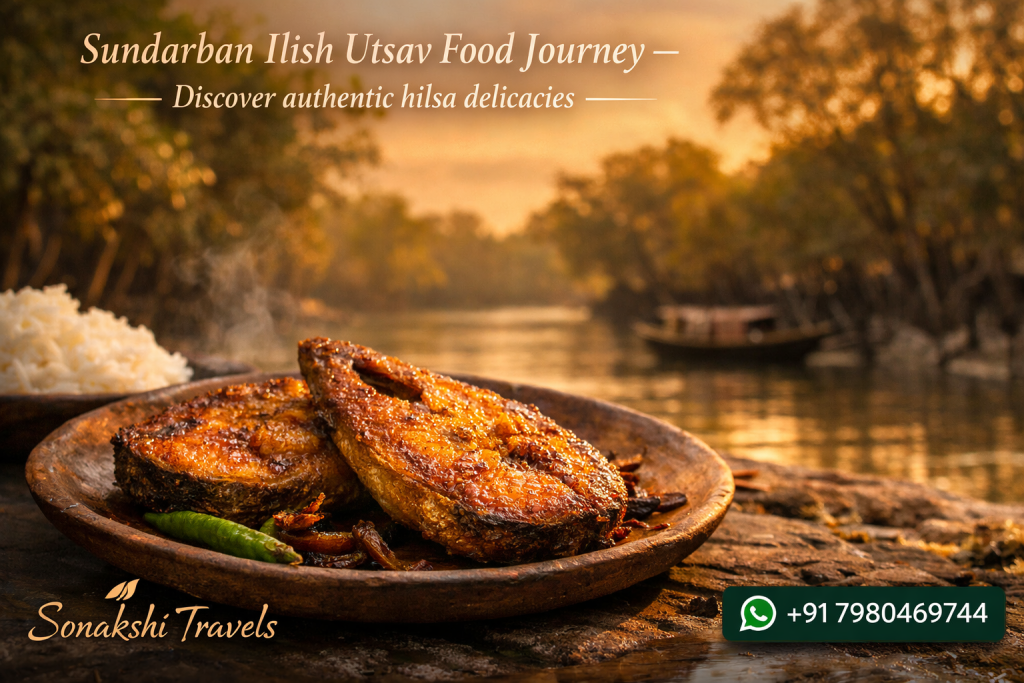
The meaning of a food journey becomes deeper when the meal is connected with river life, season, local memory, and the slow rhythm of a real place. That is why the idea of a Sundarban Ilish Utsav food journey deserves careful attention. This is not simply a trip where visitors eat a famous fish and return home with a few photographs. It is an experience shaped by water, mudflats, village kitchens, boat meals, local cooking styles, and the emotional value of hilsa in Bengali culture. When travelers enter the delta during the ilish season, they do not only taste food. They enter an atmosphere where the dish carries history, identity, and place.
The finest part of this journey is authenticity. In many destinations, a food festival becomes too commercial and loses its local soul. In the Sundarban, however, the best ilish-based experiences still depend on freshness, traditional preparation, and the setting in which the food is served. A plate of hilsa curry on a boat drifting through a calm river channel feels very different from the same dish in an urban restaurant. The breeze, the sounds of water, the changing light, and the local style of cooking all change the meaning of the meal. This is why many travelers now connect the food experience with a smooth journey from Kolkata with a full itinerary, because the pleasure of the dish grows when the route, timing, and setting work together naturally.
Why hilsa feels so special in the Sundarban setting
Hilsa is not treated as an ordinary fish in Bengal. It carries emotion. It belongs to family meals, monsoon memories, festive tables, and a long culinary tradition that has shaped regional taste for generations. Yet the emotional power of hilsa becomes even stronger in a riverine landscape like the Sundarban. The delta is defined by tides, estuarine movement, fishing culture, and a close human relationship with water. In such a place, hilsa feels less like a market product and more like a living part of the environment.
That is one reason the food journey matters. A traveler who eats ilish in a city may admire the flavor. A traveler who eats it in the Sundarban begins to understand context. The region teaches that food is not isolated from geography. The taste is linked with the wet air, the river economy, the cultural habits of local households, and the patient cooking methods that have survived because they still work. The dish becomes meaningful not only because it is delicious, but because it fits the land and the people who prepare it.
In a proper Sundarban food festival setting, the traveler also notices something else. Hilsa is rarely presented in only one form. It appears through different textures, spice balances, cooking mediums, and serving styles. This variety reveals the intelligence of Bengali cooking. The same fish can taste rich, delicate, fiery, mustard-heavy, leaf-scented, or softly steamed depending on the method. That diversity is the heart of the food journey.
The real meaning of an ilish utsav food journey
A true food journey is not built on quantity. It is built on sequence. One good dish follows another in a way that helps the traveler understand the range of the ingredient. In the case of the Sundarban Ilish Utsav, the experience usually begins with anticipation. Guests travel from Kolkata or nearby regions into the delta, settle into a boat or lodge environment, and then slowly enter the culinary theme of the trip. The first meal often introduces a classic style. Later meals deepen the experience through contrast.
This gradual movement is important. Hilsa is a fish with a strong identity. Its natural oil, aroma, and soft flesh need balance. If the festival meal plan is careless, the dishes feel repetitive. But if the journey is planned well, each preparation shows a different side of the fish. A traveler can then move from mustard-based gravy to steamed leaf-wrapped style, from fried pieces to lighter broths, and from bold flavor to subtle finish. The journey becomes educational without losing pleasure.
This is where the idea behind the linked travel route becomes useful. A Sundarban ilish utsav from Kolkata is often described as a smooth journey with full itinerary because the food experience depends on order. The traveler must arrive without confusion, settle in without hurry, and enjoy the meals at the right pace. When the logistics are calm, the palate is more open, and the festival feels complete.
The essential hilsa delicacies that define the experience
Sorshe ilish and the power of mustard
No discussion of authentic hilsa delicacies can begin anywhere else. Sorshe ilish remains the most iconic preparation because it expresses both strength and restraint. Mustard has force, but a skilled cook never allows it to overpower the fish. The right version is sharp but not harsh, rich but not heavy, and aromatic without becoming bitter. In the Sundarban setting, this dish often tastes fresher because the fish and the cooking rhythm both feel closer to their source.
The quality of the mustard paste matters greatly. It must be smooth, balanced, and properly mixed with salt, turmeric, green chili, and mustard oil. Too much grinding can make the paste bitter. Too little care can make it grainy. When prepared properly, the sauce wraps the hilsa in a flavor that is bold yet elegant. With hot rice, it becomes a complete expression of Bengali culinary identity.
Bhapa ilish and the beauty of softness
Bhapa ilish represents another side of the fish. Here the emphasis is not on open gravy but on contained steam. The fish is often marinated with mustard paste, coconut in some versions, green chili, salt, and mustard oil, then steamed until the flesh becomes tender and fragrant. This method protects the inner moisture of the fish and allows the natural oil to enrich the texture.
In a festival context, bhapa ilish often appeals to travelers who want flavor without excessive heaviness. It feels refined. The aroma rises gently, and the mouthfeel is smooth. When served on a riverboat or in a simple dining space near the mangroves, the dish carries a kind of quiet dignity. It does not need visual excess. Its strength lies in purity.
Ilish paturi and the fragrance of leaf cooking
Ilish paturi is one of the most memorable preparations in any serious ilish journey. The fish is coated with mustard, chili, salt, and mustard oil, then wrapped in banana leaf and cooked slowly. The leaf does more than hold the fish. It creates aroma, protects moisture, and adds a faint earthy sweetness to the final dish. When the parcel is opened, the fragrance itself becomes part of the dining experience.
This style often leaves a strong impression on first-time visitors because it feels intimate and traditional. It carries the logic of older kitchen methods where flavor was built through patience rather than showmanship. In the Sundarban, where natural materials and water-centered life still shape local habits, paturi feels especially appropriate.
Ilish bhaja and the value of simplicity
Some travelers assume that a festival must always present the richest dishes first. Yet a simple ilish bhaja can be one of the most revealing parts of the journey. A lightly seasoned piece of hilsa, fried with care, shows the natural taste of the fish more clearly than heavily layered preparations. The outer surface becomes slightly crisp, while the inside remains soft and oily.
This dish also works as a bridge between more intense styles. It prepares the palate. It also allows the traveler to understand how much flavor is already present in the fish itself. In many well-planned festival meals, fried hilsa appears not as a minor side item but as an important statement of confidence. A cook who can fry hilsa perfectly usually understands the ingredient deeply.
Light hilsa jhol for balance and comfort
After stronger preparations, a lighter ilish jhol can restore balance. This style usually uses a thinner broth with gentle seasoning, allowing the fish to remain central. It may seem less dramatic at first, but it plays a valuable role in the overall food journey. Not every memorable dish must be intense. Some are memorable because they feel calm, digestible, and emotionally familiar.
For many Bengali households, this lighter form of fish curry carries a domestic comfort that festive dishes cannot replace. In the Sundarban, where the landscape itself is quiet and fluid, such a preparation can feel deeply suitable. It reminds the traveler that authenticity also includes simplicity.
How place changes the taste of the meal
A key part of the food journey is setting. The same dish can feel ordinary in one context and unforgettable in another. In the Sundarban, the environment adds meaning to every course. Meals may be served on a moving boat, in a riverside lodge, or in a modest dining space surrounded by wet air and the distant sound of birds. The landscape does not act as decoration. It shapes appetite, mood, and memory.
Food experts often note that taste is not only about the tongue. It is also about smell, temperature, anticipation, and emotional atmosphere. The Sundarban provides all of these in a distinctive way. The air is moist. The daylight changes slowly over the water. The travel pace is quieter than in the city. This slows the mind and makes the diner more attentive. A festival meal in such surroundings naturally feels more immersive.
This is why the journey matters as much as the menu. A rushed traveler cannot receive the full beauty of the experience. But someone following a carefully paced route, such as an full itinerary from Kolkata to the ilish utsav, is more likely to enjoy the cuisine in the right emotional frame. The movement from city to river prepares the senses for what comes next.
The role of freshness, texture, and cooking discipline
An authentic hilsa meal depends on three things above all: freshness, restraint, and technique. Hilsa is a precious ingredient, but it is also delicate. Its bones demand careful eating, and its flesh demands careful cooking. Too much heat can break the texture. Too many spices can hide its character. Too little seasoning can make the dish feel unfinished. The finest cooks know where to stop.
Authentic hilsa delicacies are never careless. The fish should retain shape while remaining soft. The natural oil should enrich the dish, not flood it. Mustard must be balanced. Green chili should bring brightness, not aggression. Salt must support flavor without making the fish feel heavy. These details seem small, but they decide whether a festival meal feels truly local and skillful or merely decorative.
Texture is especially important. A good piece of hilsa should separate gently, not collapse into mush. Even the bones have a role in the experience, because hilsa teaches a slower way of eating. The diner must pay attention. In that sense, the fish creates its own rhythm of respect. It asks the traveler not to rush.
Why this journey appeals to both food lovers and cultural travelers
The Sundarban Ilish Utsav attracts more than one kind of traveler. Some come mainly for taste. Others are drawn by the combination of food, river landscape, and Bengali cultural memory. This second group often finds the deepest value in the journey because the festival offers more than a plate. It offers narrative.
Each preparation of hilsa reflects a way of life. Mustard-based dishes show the regional flavor logic of Bengal. Leaf-wrapped cooking shows traditional household intelligence. Light broths reveal the comfort of everyday meals. Fried hilsa reflects confidence in ingredient quality. Together, these dishes tell a story about local taste, seasonal eating, and the relationship between river and kitchen.
This is why the experience cannot be reduced to simple food tourism. It belongs equally to culinary travel, cultural travel, and river-based heritage experience. The traveler who understands this returns home with more than a memory of flavor. They return with a stronger understanding of how food expresses place.
What makes the journey feel complete
A complete food journey is not judged by one excellent dish alone. It is judged by harmony. The route must be manageable. The meals must be spaced properly. The preparations must show variety. The surroundings must support the mood. The cooking must remain faithful to local identity. When these elements come together, the festival feels whole.
That is exactly why the title of this journey deserves its full meaning. To discover authentic hilsa delicacies is not only to list famous recipes. It is to experience how those recipes live inside the Sundarban environment. The food must be tasted where river culture still shapes daily life. Only then does the traveler understand why hilsa occupies such a high place in Bengali imagination.
A well-designed journey also allows time for reflection between meals. One dish should not erase the memory of the previous one. Instead, the meal sequence should create continuity. A traveler might begin with fried hilsa, move toward mustard gravy, then enjoy bhapa or paturi later, ending with a lighter preparation that restores calm. Such a structure feels thoughtful. It respects both the ingredient and the guest.
The lasting memory of a Sundarban ilish experience
Long after the trip ends, what remains is rarely just the taste of one preparation. The deeper memory is usually composite. It includes the look of river water beside the boat, the aroma rising from a freshly opened banana leaf parcel, the warmth of rice served with mustard-rich curry, the careful attention needed to eat hilsa properly, and the sense that the meal belonged to the land around it.
This is what gives the Sundarban Ilish Utsav food journey its value. It offers authenticity not through marketing language but through alignment. The ingredient, the place, the cooking methods, and the travel rhythm all support one another. The result is a culinary experience that feels rooted, cultured, and deeply satisfying.
For anyone who wants to understand hilsa beyond the level of restaurant familiarity, this journey provides a richer answer. It shows that true taste is never separate from context. In the Sundarban, hilsa is not simply served. It is interpreted through water, season, memory, and tradition. That is why this food journey remains one of the most meaningful ways to discover the real beauty of Bengali hilsa cuisine.