The Cultural Heritage of Sundarban: Exploring by Sundarban Tour
The cultural heritage of the Sundarban cannot be understood as an isolated collection of rituals, artworks, or culinary customs. It is a living continuum shaped by a tidal landscape where land and water constantly redefine boundaries. Within this ecological setting, communities have developed belief systems, occupational codes, artistic traditions, and food practices that remain inseparable from the mangrove forest. The interpretive framework presented through Sundarban Travel contextualizes this region not only as a natural reserve but as a complex cultural landscape formed through adaptation.
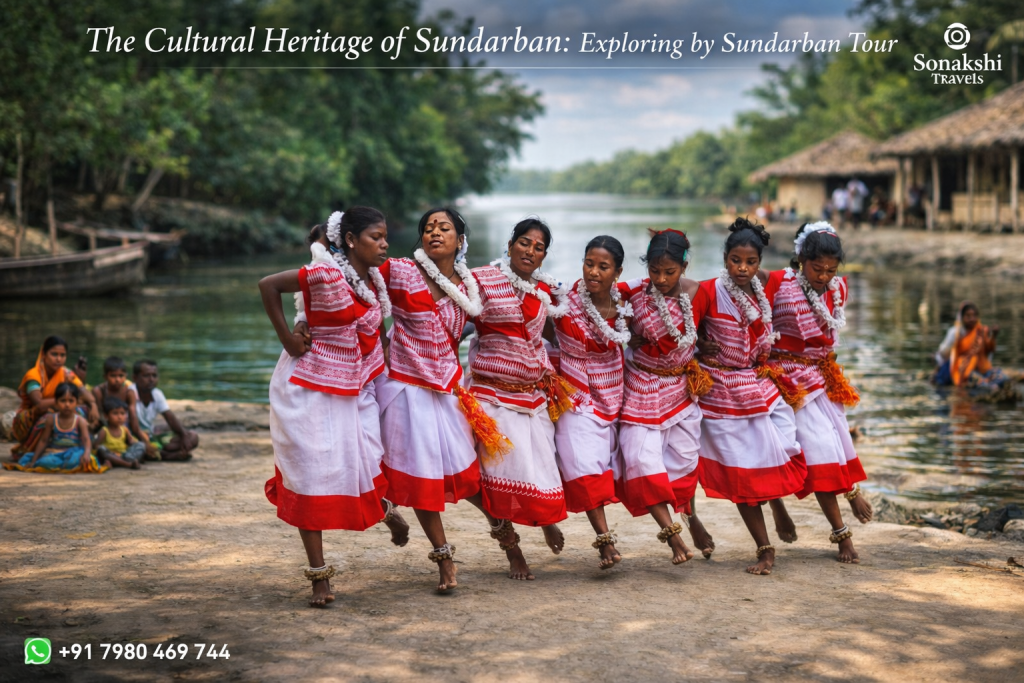
The region is inhabited by diverse communities, including tribal groups such as the Munda and Mahato, alongside Baul performers and agrarian fishing households whose livelihoods depend directly on forest and river systems. Over generations, this dependency has produced a social structure distinct from mainland Bengal. Daily rhythms are influenced by tides, forest permissions, inherited oral traditions, and collective rituals. Cultural continuity here is not ornamental; it is operational.
Ecology as Cultural Architect
In the Sundarban, culture emerges not from monumental architecture but from negotiation with risk. The mangrove forest functions simultaneously as provider and threat. Honey collectors, fishermen, woodcutters, and crab gatherers enter forest zones under ritual observance, acknowledging forces beyond human control. This ecological tension shapes language, proverbs, songs, and ceremonial conduct.
Anthropological studies of delta communities suggest that environments marked by unpredictability—cyclonic systems, shifting riverbanks, wildlife encounters—tend to cultivate belief systems centered on mediation between humans and nature. In this deltaic setting, that mediation finds expression most clearly in the worship of Bonbibi.
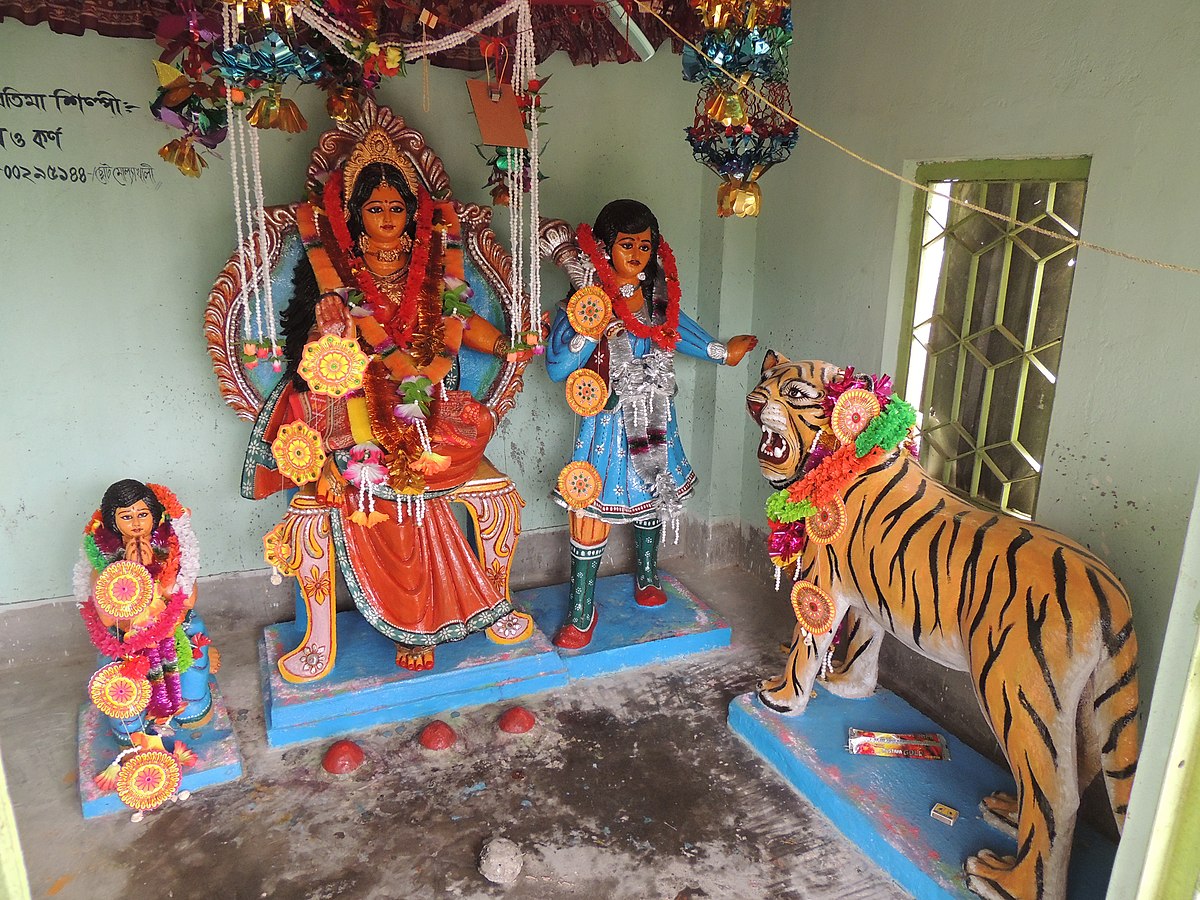
Bonbibi: The Forest as Sacred Territory
Bonbibi is revered as the guardian of forest dwellers. Her narrative, preserved in the Bonbibi Johuranama, recounts the moral struggle between human survival and the forces symbolized by Dakkhin Rai, often associated with the tiger. Unlike exclusive religious figures, Bonbibi transcends sectarian lines; she is worshipped by both Hindu and Muslim communities. This syncretic reverence reflects a cultural structure shaped by shared vulnerability rather than theological division.
Ritual Structure and Social Meaning
Before entering restricted forest areas, honey collectors and fishermen perform modest rituals invoking protection. Offerings are simple, reflecting the economic conditions of forest-dependent households. These rituals establish an ethical boundary: extraction must remain measured and respectful. Cultural practice thus becomes a regulatory mechanism, reinforcing ecological restraint through devotion.
The annual Bonbibi Mela transforms private observance into collective affirmation. Folk theatre dramatizes the legend, transmitting ethical lessons across generations. During curated explorations of the region through a structured Sundarban tour, witnessing these performances reveals how mythology functions as social governance, embedding conservation principles within narrative form.
Patachitra: Narrative Art of the Delta
Patachitra represents another enduring element of regional heritage. Executed on cloth, paper, or clay surfaces, these paintings operate as narrative scrolls accompanied by song. Artists gradually unfold painted panels while singing stories that recount mythological episodes, local legends, or contemporary realities.
Iconography and Thematic Depth
Sundarban Patachitra frequently depicts Bonbibi, forest expeditions, river journeys, and village life. Tigers appear stylized yet authoritative; mangrove roots create rhythmic geometries; boats symbolize livelihood and exposure to risk. The visual grammar preserves ecological memory, recording how communities interpret their environment.
In recent decades, artists have incorporated themes of environmental awareness and resilience. This adaptive continuity demonstrates how tradition evolves without relinquishing foundational aesthetics. Encounters with artisans during thoughtfully designed cultural immersions—such as those included in extended programs like the 2 Nights 3 Days cultural exploration—allow observers to witness heritage in dynamic transformation rather than static preservation.
Culinary Heritage: Taste as Cultural Archive
Cuisine in the Sundarban reflects geographic determinism. Rice and fish dominate daily meals, mirroring riverine abundance. Mustard oil and panchphoran establish the foundational aromatic profile. Preparations such as fish curry, prawn malai curry, and seasonal pitha illustrate how local ingredients merge with broader Bengali culinary traditions while retaining distinct regional nuance.
Ecological Determinants of Diet
Soil salinity shapes crop selection; tidal flows influence fishing cycles; forest access affects ingredient diversity. Tribal culinary techniques introduce smoked flavors and minimally processed methods. Food therefore functions as a cultural archive, encoding environmental conditions within taste.
Shared meals, often experienced within community settings during a carefully arranged Sundarban tour packages 2026, reveal the social dimension of cuisine. Cooking practices reinforce kinship networks, and recipes are transmitted orally, preserving continuity without written codification.
Festivals and Collective Expression
Festivals operate as structural anchors of community life. Beyond Bonbibi observances, regional celebrations blend agrarian cycles with devotional forms. Music, dance, and ritual games form integral components of these gatherings. The cloth-ball ceremonial game, once part of festival activity, symbolized collective participation rather than competition, reinforcing unity within vulnerable settlements.
Baul Influence and Oral Traditions
Baul singers contribute significantly to the cultural soundscape. Their compositions explore spiritual longing, human connection, and philosophical introspection. Within the delta, these themes gain ecological resonance; references to impermanence mirror a landscape shaped by erosion and renewal.
Evenings that include Baul recitals and village performances, often incorporated into privately curated cultural itineraries such as a Sundarban Private Tour, demonstrate how intangible heritage survives through communal repetition rather than institutional preservation.
Livelihood and Cultural Identity
Fishing, honey collection, and small-scale agriculture define occupational identity. Each practice carries ritual codes and inherited technical knowledge. Honey collectors navigate forest creeks using traditional cues; fishermen read tidal rhythms with precision developed over generations. Labor shapes dialect, humor, and social hierarchy.
Cultural heritage thus extends into everyday economic practice. Identity is constructed through engagement with the forest. The psychological dimension—respect tempered by caution—produces a worldview grounded in humility before ecological power.
Folklore and Mythic Consciousness
Legends of the Bengal Tiger occupy central narrative space. These stories arise not from abstraction but from lived proximity. The tiger becomes a moral figure integrated into songs and cautionary tales. Folklore functions as behavioral instruction, guiding conduct within forest territories.
Within interpretive frameworks often associated with immersive uxurySundarban luxury tour, these narratives gain analytical depth. Wildlife is understood not solely as biological presence but as a symbolic force embedded in collective imagination.
Conservation Ethics within Cultural Practice
Conservation in the Sundarban does not emerge exclusively from modern policy; it is rooted in inherited ethics. Ritual boundaries, seasonal pauses in resource extraction, and reverence for guardian deities collectively encourage ecological restraint. Cultural continuity therefore reinforces environmental sustainability.
When engagement with local communities is structured thoughtfully, visitors observe how belief systems operate as conservation frameworks. Cultural heritage becomes both interpretive lens and protective mechanism, ensuring that ecological stewardship remains embedded in daily life.
Interpreting Cultural Heritage through Experience
Understanding the Sundarban’s heritage requires attentive observation. A Bonbibi shrine, a Patachitra scroll, a Baul performance, or a shared meal each reveals a distinct dimension of collective memory. Together, they compose a layered narrative of adaptation, resilience, and continuity.
The Sundarban stands simultaneously as ecological frontier and cultural treasury. Its traditions are neither ornamental nor detached from survival. They are shaped by necessity, refined by experience, and transmitted through ritual, art, cuisine, and oral history. Exploring these dimensions through a structured about Sundarban tour offers a perspective in which culture and environment are understood as inseparable systems.
Conclusion
The cultural heritage of the Sundarban reflects an adaptive civilization forged within ecological uncertainty. From the inclusive worship of Bonbibi to the narrative discipline of Patachitra, from cuisine shaped by salinity to festivals rooted in collective resilience, each component reveals a society in continuous dialogue with its surroundings. Engaging with this heritage through carefully structured experiences deepens understanding beyond surface observation. It clarifies how belief, art, livelihood, and ecological awareness coalesce into a coherent identity—one that continues to evolve while remaining anchored to the mangrove forest that sustains it.