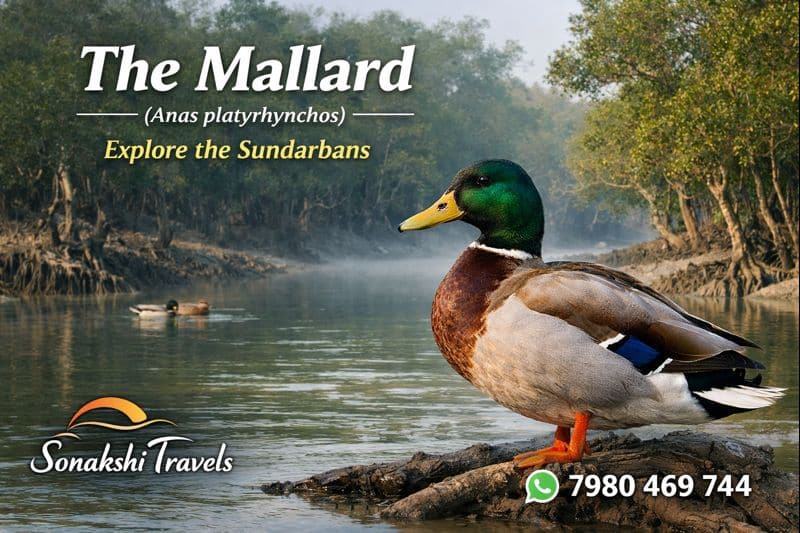
Among the most recognizable waterfowl species on Earth, the Mallard (Anas platyrhynchos) stands as a symbol of adaptability, ecological balance, and evolutionary success. This widely distributed dabbling duck has colonized wetlands across continents, thriving in environments shaped both by natural hydrological cycles and human-altered landscapes. Beyond its familiar appearance, the Mallard represents a remarkable case study in avian biology, behavior, and resilience.
Taxonomy & Classification
The Mallard belongs to the order Anseriformes, a group encompassing ducks, geese, and swans—birds evolutionarily adapted to aquatic and semi-aquatic ecosystems. Within this order, it is classified under the family Anatidae, which includes over 170 species globally. The genus Anas comprises dabbling ducks characterized by surface-feeding habits rather than deep diving. The species name platyrhynchos, derived from Greek, translates to “broad-billed,” an anatomical feature fundamental to its feeding ecology.
Morphology & Field Identification
Mallards exhibit pronounced sexual dimorphism, making field identification relatively straightforward during the breeding season. Their body structure reflects a balance between buoyancy, flight efficiency, and terrestrial mobility, allowing them to exploit a wide range of habitats.
Male Features
Adult males, commonly referred to as drakes, display a glossy emerald-green head separated from the chestnut-brown breast by a narrow white collar. The body is predominantly pale gray, with black rear feathers accentuated by distinctive upward-curling tail feathers. The bill is bright yellow, and the legs are vivid orange, features that play a role in mate attraction and species recognition.
Female Features
Females are cryptically colored, dominated by mottled shades of brown, beige, and black. This subdued plumage provides essential camouflage during nesting. The bill is typically orange with dark blotches, and the eye-stripe pattern aids in species identification despite the overall muted appearance.
Size & Wingspan
Adult Mallards generally measure between 50 and 65 centimeters in body length, with a wingspan ranging from 81 to 98 centimeters. Body mass varies seasonally, influenced by migratory demands and food availability, typically falling between 700 and 1,600 grams.
Flight Characteristics
In flight, Mallards demonstrate strong, direct wingbeats, enabling rapid takeoff from water surfaces. Their flight speed can exceed 80 kilometers per hour, particularly during migration or escape responses. The iridescent blue-violet speculum on the wings, bordered by white bands, is visible in flight and serves as a visual cue within flocks.
Habitat & Distribution
Global Range
The Mallard possesses one of the widest natural distributions of any duck species. Native to the Northern Hemisphere, it occurs across North America, Europe, Asia, and parts of North Africa. Human-mediated introductions have established feral populations in Australia, New Zealand, South America, and southern Africa.
Preferred Habitat
This species favors shallow freshwater habitats such as lakes, ponds, marshes, floodplains, slow-moving rivers, and agricultural wetlands. Its tolerance for human proximity allows it to thrive in urban parks and artificial water bodies, provided adequate food and nesting cover exist.
Diet & Feeding Ecology
Foraging Technique
Mallards are classic dabbling ducks, feeding primarily at the water’s surface or by tipping forward to reach submerged vegetation. Their broad, lamellae-lined bill acts as a natural sieve, filtering seeds, aquatic plants, algae, and small invertebrates from water and mud. Seasonal shifts in diet occur, with higher protein intake during breeding and increased carbohydrate consumption before migration.
Breeding & Reproduction
Breeding typically begins in early spring, synchronized with increasing daylight and food abundance. Pair bonds often form during winter, though they are generally seasonal rather than lifelong.
Nesting Sites
Females select concealed nesting sites on the ground, often near water but sometimes at considerable distances from it. Nests are lined with down feathers plucked from the female’s breast, providing insulation and camouflage. Clutch size ranges from 8 to 13 eggs, incubated for approximately 26 to 28 days.
Unique Adaptations & Behavioral Ecology
Speed & Agility
Mallards possess powerful pectoral muscles and efficient wing morphology, enabling sudden vertical takeoffs known as “flush flights.” This agility is crucial for predator avoidance in open wetlands.
Camouflage and Nesting Strategy
The female’s cryptic plumage blends seamlessly with reed beds and grasslands, significantly reducing nest detection by predators. This evolutionary strategy enhances reproductive success in exposed habitats.
Social Behavior
Outside the breeding season, Mallards are highly social, forming flocks that provide safety in numbers and increased foraging efficiency. Vocal communication, including the familiar female quack, plays a role in maintaining group cohesion.
Presence of Northern Pintail in the Sundarbans
Occurrence & Seasonal Movement
While the Mallard itself is an uncommon visitor to the Sundarbans, ecologically similar dabbling ducks such as the Northern Pintail are regular winter migrants. These species arrive with the onset of cooler months, utilizing the delta’s extensive wetlands as feeding and resting grounds.
Preferred Habitat in the Sundarbans Region
In the Sundarbans, migratory ducks favor freshwater pockets, tidal creeks with reduced salinity, and seasonally flooded mudflats. Such habitats provide abundant aquatic vegetation and invertebrates essential for overwintering energy requirements.
Ecological Role
Dabbling ducks contribute significantly to wetland ecosystems by dispersing plant seeds, regulating invertebrate populations, and enhancing nutrient cycling through their feeding and movement patterns.
Habitat Alteration
Alterations to wetland hydrology, salinity intrusion, and human disturbance can impact migratory waterfowl in the Sundarbans. Maintaining freshwater inflow and protecting seasonal wetlands remain critical for sustaining avian diversity.
Conservation Efforts
Globally, the Mallard is classified as a species of Least Concern due to its large population and broad distribution. Nevertheless, wetland conservation initiatives, pollution control, and sustainable water management are essential to ensure long-term population stability. The species serves as an important indicator of wetland health, linking avian conservation with broader ecosystem preservation.
Planning a guided mangrove adventure? Explore our Sundarban Tour Packages and choose the best itinerary for your dates.
Did You Know?
Mallards are the primary wild ancestors of most domestic duck breeds worldwide.
Their eggshell coloration subtly changes during incubation, aiding camouflage.
Mallards can hybridize with several other duck species, demonstrating remarkable genetic compatibility.
They possess excellent night vision, allowing nocturnal foraging in undisturbed wetlands.
External Reference
For authoritative ornithological data and global population trends, consult international waterfowl monitoring organizations and peer-reviewed avian ecology journals dedicated to wetland biodiversity and migratory bird conservation.