A Detailed Botanical and Ecological Profile of a Riverine Tree Species
Trewia polycarpa, commonly known as Pitali, is a medium to large deciduous tree widely distributed across South and Southeast Asia. Belonging to the family Euphorbiaceae, this species is especially associated with riverbanks, floodplains, and seasonally inundated landscapes. Its ecological adaptability, rapid growth, and tolerance to periodic flooding make it a prominent component of riparian and deltaic vegetation systems.
In eastern India and the lower Gangetic plains, Trewia polycarpa is frequently observed along river margins, canals, and moist lowlands. In regions adjoining the Sundarbans, the species plays a notable role in stabilizing riverine soils and supporting biodiversity in transitional freshwater–brackish ecosystems. This article presents a comprehensive, research-oriented account of Trewia polycarpa, covering its taxonomy, morphology, habitat preferences, ecological role, and conservation relevance, with special reference to the Sundarbans region.
Taxonomy & Classification
Trewia polycarpa is a well-defined member of the Euphorbiaceae family, a large and diverse plant family that includes trees, shrubs, and herbs adapted to a wide range of ecological conditions. The genus Trewia is relatively small, with Trewia polycarpa being the most widely recognized species.
Kingdom: Plantae
Clade: Angiosperms
Clade: Eudicots
Order: Malpighiales
Family: Euphorbiaceae
Genus:Trewia
Species:Trewia polycarpa
The species epithet polycarpa refers to the tree’s characteristic production of numerous fruits. Taxonomically, the species is distinguished by its dioecious nature and its unique globose, multi-seeded fruits.
Morphology & Field Identification
Trewia polycarpa is a fast-growing deciduous tree that can reach heights of 15–25 meters under favorable conditions. Its overall form and distinctive fruiting structures make it readily identifiable in riparian landscapes.
Trunk and Bark
The trunk is straight and cylindrical, often branching at a moderate height. Bark is grey to pale brown, smooth in young trees and becoming slightly fissured with age. The inner bark exudes a watery latex when cut, a characteristic common within the Euphorbiaceae family.
Leaves
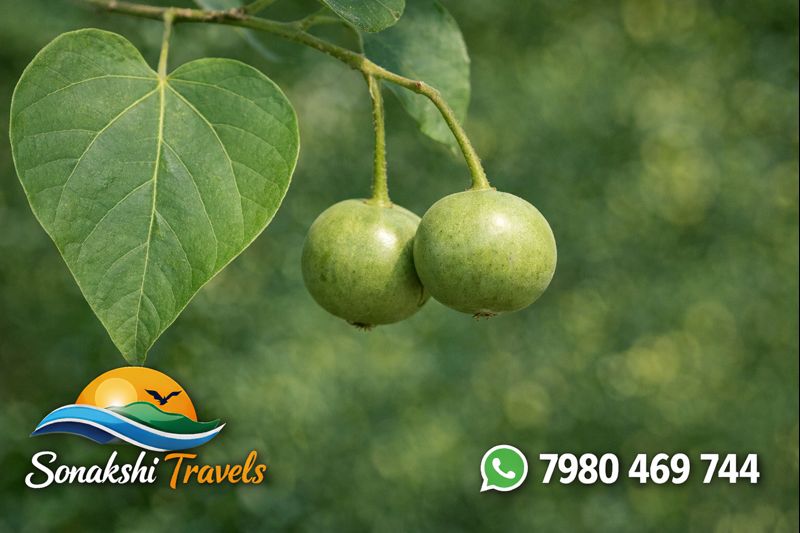
Leaves are large, broadly ovate to heart-shaped, measuring 10–25 cm in length. They are arranged alternately and borne on long petioles. The leaf surface is smooth, with prominent veins radiating from the base. Margins are entire, and the apex is acuminate.
Flowers and Fruits
The species is dioecious, with male and female flowers occurring on separate trees. Flowers are small, greenish, and borne in axillary clusters. Pollination is primarily facilitated by insects.
Fruits are large, globose capsules, often 5–8 cm in diameter, containing multiple seeds embedded in a spongy pulp. These fruits are a key identifying feature and contribute significantly to the tree’s ecological interactions.
Habitat & Distribution
Trewia polycarpa is strongly associated with moist, fertile environments and demonstrates a clear preference for alluvial soils. Its distribution is closely linked to river systems and flood-affected landscapes.
Global Range
The species is native to South and Southeast Asia, with confirmed occurrences in India, Bangladesh, Nepal, Myanmar, Thailand, and parts of southern China. Within this range, it is most abundant in regions influenced by large river networks and monsoonal rainfall.
Preferred Habitat
Preferred habitats include riverbanks, floodplains, canal edges, moist lowlands, and seasonally inundated forests. The species thrives in deep, nutrient-rich soils and tolerates prolonged waterlogging during the monsoon season.
Understanding riverine trees becomes far more engaging through immersive field experiences. Thoughtfully curated Sundarban Tour Package options allow visitors to explore such ecosystems in their natural setting.
Occurrence
In India, Trewia polycarpa occurs extensively across the Gangetic plains, Brahmaputra valley, and eastern coastal regions. It is commonly found in association with other riparian tree species and often forms dominant stands along river margins.
Preferred Habitat in the Sundarbans Region
Within the Sundarbans landscape, Trewia polycarpa is primarily restricted to freshwater-influenced zones rather than saline core mangrove forests. It occurs along riverbanks, canals, and low-lying areas where freshwater input dilutes salinity levels.
These transitional zones provide ideal conditions for seed germination and growth, allowing the species to function as a stabilizing element in dynamic deltaic environments.
Ecological Role
Trewia polycarpa plays a crucial ecological role in riparian ecosystems. Its extensive root system helps bind alluvial soils, reducing erosion during seasonal flooding. The dense canopy provides shade and moderates microclimatic conditions along riverbanks.
The fruits serve as a food source for a variety of mammals and birds, facilitating seed dispersal across floodplains. Fallen leaves contribute organic matter, enhancing soil fertility and supporting detritivore communities.
Habitat Alteration
Habitat alteration poses increasing challenges to the persistence of Trewia polycarpa. River channel modification, embankment construction, and conversion of floodplains for agriculture reduce natural regeneration sites.
In deltaic regions such as the Sundarbans, changes in freshwater flow and rising salinity levels may further restrict suitable habitats for this freshwater-dependent species.
For travelers seeking deeper insight into transitional forest landscapes and riverine ecology, customized Sundarban Private Tour experiences offer focused, guided exploration.
Conservation Efforts
Trewia polycarpa is not currently classified as threatened, yet localized population declines have been observed in areas of intensive river regulation. Conservation efforts should emphasize protection of natural flood regimes and preservation of riparian vegetation corridors.
In the Sundarbans region, community-based conservation and sustainable water management indirectly support the continued presence of this ecologically valuable tree.
Did You Know?
Trewia polycarpa is a dioecious species, with male and female flowers on separate trees.
The fruits can contain numerous seeds, giving rise to the species name polycarpa.
The tree is highly tolerant of seasonal flooding.
It is commonly associated with riverbanks and alluvial plains.
External Reference
For detailed taxonomic notes and botanical descriptions, consult the relevant entry on Wikipedia.