Updated: March 8, 2026
Embrace the Taste of Nostalgia at Sundarban Ilish Utsav
— Rekindle Your Love for Authentic Bengali Flavors
🌧️ A Monsoon That Tastes Like Home
There are certain moments in life when taste becomes memory. For Bengalis, one of those moments arrives quietly with the monsoon. The sky turns deep grey, rain touches the riverbanks, and kitchens across Bengal begin to carry the unmistakable aroma of mustard oil and fresh Hilsa. This is not simply a seasonal craving. It is an emotional rhythm that connects generations.
In the river landscapes described across the Sundarban travel region, food traditions have always been shaped by water, migration of fish, and the slow cultural exchange between fishing communities and rural households. The Hilsa season therefore carries meaning that extends far beyond the kitchen.
The Sundarban Ilish Utsav captures that rhythm with remarkable authenticity. It is not merely a culinary gathering. It is a cultural space where food, rivers, and memory meet. Recipes prepared during the festival are rarely experimental. Instead, they follow long-standing traditions that have been preserved through generations of Bengali households.
For many visitors, the experience feels personal from the very first meal. The dishes carry flavors that remind people of childhood kitchens, family lunches during rainy afternoons, and the quiet joy of eating fresh Hilsa with warm rice. The festival therefore becomes more than an occasion to taste fish. It becomes a return to something emotionally familiar.
Within the river-bound environment of the Sundarbans, these flavors acquire deeper meaning. Mangrove waterways, fishing villages, and seasonal river flows create the ecological background that makes Hilsa cuisine possible. Here the fish is not a distant delicacy. It is part of daily life.
This connection between place, people, and food gives the Ilish celebration its emotional strength. Every dish served during the festival carries traces of rivers, rainfall, and family kitchens.
🚗 The Journey Begins: From Concrete to Creek
From Kolkata to the Kingdom of Rivers
The journey toward the festival begins long before the first Hilsa dish appears on the plate. Leaving Kolkata in the early morning reveals a slow transformation in landscape. Tall buildings gradually fade behind fields, ponds, and clusters of rural homes.
For travelers exploring the delta through a carefully planned Sundarban travel package, the route itself becomes an introduction to the region’s culture. Roadside markets sell seasonal vegetables, fishermen repair nets beside village ponds, and small tea stalls fill the air with steam and conversation.
Rain during the monsoon softens the countryside. Bamboo groves sway quietly in the wind while narrow village roads lead toward the river gateways of the delta. The pace of movement gradually slows, preparing visitors for the calm rhythm of river life.
This gradual transition from city to countryside is not simply a change of scenery. It helps visitors mentally enter the world where the Hilsa festival truly belongs.
Godkhali Jetty — Where the River Takes Over
At Godkhali Jetty the character of the journey changes completely. The sound of traffic fades away and is replaced by the gentle movement of boats along the riverbanks.
Rows of wooden vessels wait along the jetty, preparing to navigate the tidal creeks that define the Sundarbans. As soon as the boat leaves the shore, the horizon opens into a wide network of waterways bordered by mangrove forests.
For travelers participating in a guided river-based Sundarban exploration, this moment often marks the beginning of a completely different sensory experience. The air becomes heavier with moisture, the sound of water replaces traffic noise, and the landscape begins to unfold slowly.
The calm movement of the boat allows visitors to observe everyday river life. Fishermen pull nets from the water while small settlements appear occasionally along the muddy banks. The rhythm of the river gradually replaces the rhythm of the city.
By the time the boat moves deeper into the delta, travelers begin to feel that they have entered a quieter world where food traditions and river culture remain closely connected.
🍛 A Bite of the Past: When Nostalgia Is Served on a Plate
The First Hilsa Meal on the Water
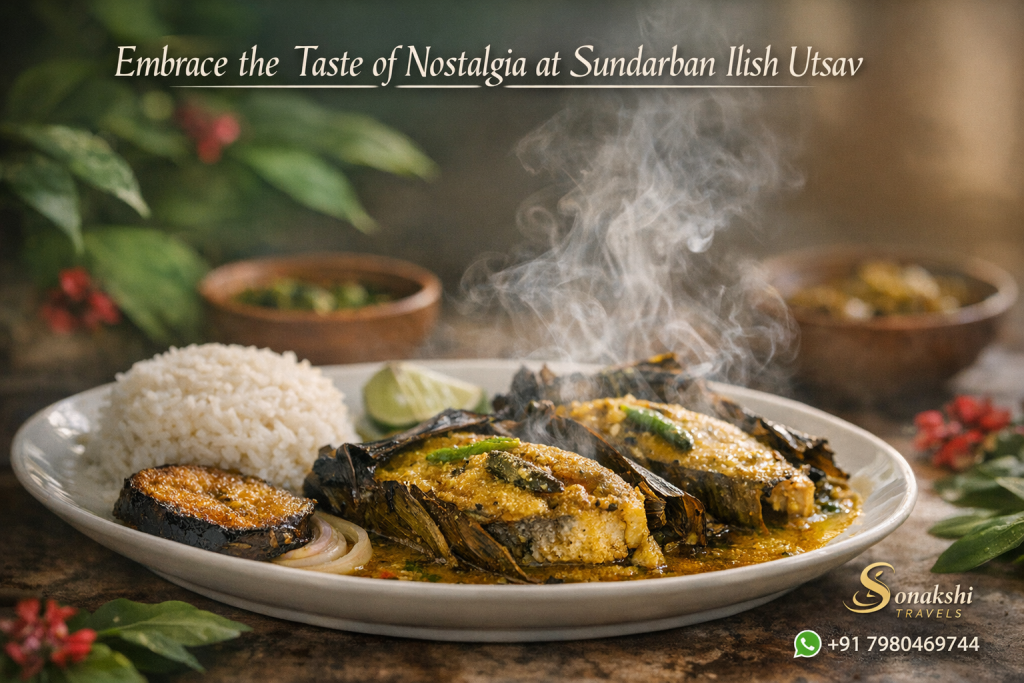
Meals during the festival often begin with one of the most respected preparations in Bengali cuisine — Shorshe Ilish. Although the dish appears simple, it reflects centuries of culinary refinement.
Fresh Hilsa pieces are cooked in a paste of mustard seeds, turmeric, green chilies, and mustard oil. The technique preserves the delicate texture of the fish while allowing the pungent flavor of mustard to develop slowly.
When served with steaming rice, the combination produces a remarkable balance of aroma, softness, and gentle heat. The oil releases fragrance, the fish provides richness, and the spices remain subtle rather than overwhelming.
Visitors often notice that the taste feels instantly familiar, even if they have not eaten Hilsa for many years. That emotional reaction explains why Hilsa continues to occupy such an important position in Bengali culinary culture.
Within the river ecosystem of the Sundarbans, where Hilsa migrates during the monsoon, the dish carries an additional symbolic meaning. It reflects the seasonal relationship between rivers and food traditions.
The Ilish Thali — A Culinary Memory Archive
During the festival, meals frequently appear as a complete Hilsa thali. This arrangement allows visitors to experience the wide range of cooking methods developed across Bengal.
Doi Ilish introduces a softer flavor profile. Cooked with yogurt, the dish develops a creamy texture that balances the richness of the fish while adding gentle acidity.
Ilish Bhuna offers a deeper taste. The fish is slowly cooked with spices until the oil and masala form a concentrated coating around each piece.
Ilish Polao blends Hilsa with fragrant rice. The grains absorb the natural oils of the fish, creating a dish that feels festive and celebratory.
Ilish Paturi remains one of the most beloved preparations. Hilsa pieces are wrapped carefully in banana leaves with mustard paste and steamed slowly, allowing the leaf to protect the fish while adding a mild earthy aroma.
Each preparation represents a different culinary philosophy. Some rely on mustard, others emphasize slow spice cooking or yogurt-based sauces. Together they create a living record of Bengali food heritage.
🎶 Evenings of Stories and Song
Folk Music and River Narratives
When evening arrives, the atmosphere of the festival shifts from cuisine to culture. Music, storytelling, and local traditions begin to shape the experience.
Village musicians perform folk songs that describe rivers, fishermen, seasonal rainfall, and the emotional bond between people and water. Many of these songs have survived through oral tradition rather than written records.
The themes often revolve around monsoon life. Lyrics tell stories of fishermen waiting for Hilsa to return upstream and families celebrating the arrival of the fish season.
The performances usually take place on simple bamboo stages near riverside eco-resorts. Lantern light reflects softly on the water while the sound of rainfall occasionally blends with the music.
These cultural expressions remind visitors that Hilsa is more than a dish. It represents a shared symbol in Bengali folklore.
🌿 Culture and Nature in Harmony
The River Ecosystem Behind the Festival
The culinary celebration of Hilsa also reflects an ecological reality. Hilsa is a migratory species that moves from the sea into freshwater rivers during the monsoon season.
This seasonal migration has influenced cooking traditions across Bengal for centuries. Communities living near rivers have always adapted their diets and fishing practices to the arrival of Hilsa.
Within the Sundarbans, where tidal rivers form a complex network of waterways, this ecological pattern becomes especially visible. Fishermen read subtle signs in the water to understand when Hilsa movement is likely to increase.
For visitors experiencing the region through a curated private Sundarban tour, observing this connection between nature and cuisine adds another layer of meaning to the festival.
The food therefore becomes a reminder that culinary traditions often emerge directly from ecological cycles.
🏡 Village Traditions and Culinary Knowledge
Learning Hilsa Cooking from Local Families
One of the most memorable aspects of the festival is the opportunity to observe traditional cooking practices in nearby villages. Local families demonstrate how Hilsa dishes are prepared using methods that have remained largely unchanged for generations.
Banana leaves are cleaned carefully before wrapping fish for paturi. Mustard seeds are ground slowly on stone slabs to create a smooth paste. Turmeric and green chilies are added according to family recipes that have been preserved through memory rather than written instructions.
Many women who cook during the festival learned these techniques from mothers and grandmothers. Their knowledge reflects years of practice and cultural inheritance.
Listening to their stories reveals how Hilsa season shaped domestic life. During monsoon months, kitchens became gathering places where relatives cooked together and shared meals.
These demonstrations reveal the human side of the festival. Each dish represents more than technique. It represents identity and memory.
📅 The Emotional Meaning of the Festival
The Sundarban Ilish Utsav continues to grow because it resonates deeply with Bengali cultural memory. Hilsa represents far more than a seasonal delicacy. It symbolizes monsoon arrival, family gatherings, and the intimate connection between rivers and communities.
Festivals centered around traditional cuisine allow these memories to remain visible in a rapidly changing society. Visitors often realize that the experience stimulates several senses simultaneously — taste, sound, and cultural storytelling.
When these elements combine within the river landscapes of the Sundarbans, the result is a festival where cuisine becomes a bridge between past and present.
Travel with Sonakshi Travels — your gateway to Bengal’s heart.
📲 WhatsApp: +91 7980469744