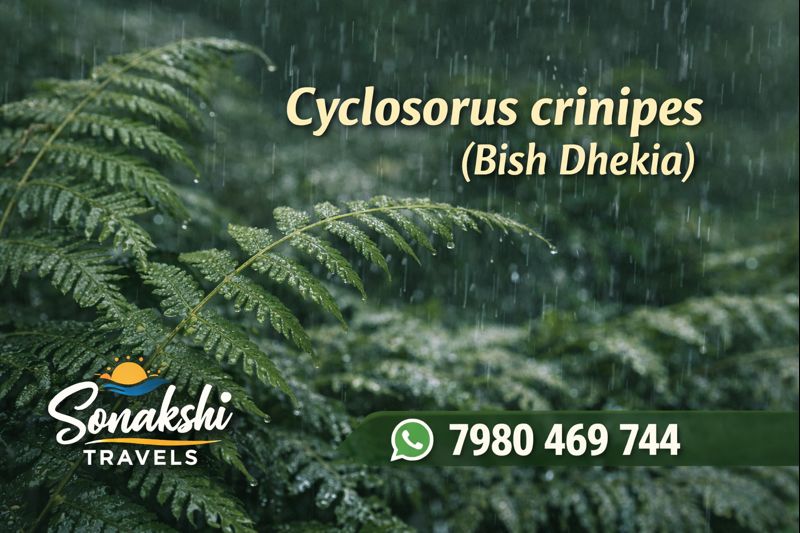
A Detailed Botanical, Ecological and Regional Study
Cyclosorus crinipes, commonly referred to as Bish Dhekia in parts of eastern India and northeastern Bangladesh, is a semi-aquatic fern species closely associated with wetlands, marshlands, and seasonally inundated landscapes. Though less widely consumed than other edible ferns, Bish Dhekia is deeply interwoven with traditional ecological knowledge and rural ethnobotany, particularly in floodplain regions.
This fern occupies an important ecological niche, contributing to soil stabilization, hydrological balance, and biodiversity support in freshwater ecosystems. The present article offers a comprehensive, research-based exploration of Cyclosorus crinipes, covering its taxonomy, morphology, habitat preferences, geographic distribution, ecological functions, and conservation considerations, with special emphasis on its occurrence within the Sundarbans region.
Taxonomy & Classification
Cyclosorus crinipes belongs to the large and diverse fern family Thelypteridaceae, a group known for species adapted to moist and semi-aquatic environments. Taxonomic placement reflects both morphological traits and evolutionary adaptations to wetland ecosystems.
Kingdom: Plantae
Division: Polypodiophyta (Pteridophyta)
Class: Polypodiopsida
Order: Polypodiales
Family: Thelypteridaceae
Genus: Cyclosorus
Species:Cyclosorus crinipes
The genus Cyclosorus is characterized by creeping or short-erect rhizomes, pinnate fronds, and round to kidney-shaped sori, features that distinguish it from closely related fern genera.
Morphology & Field Identification
Overall Growth Form
Cyclosorus crinipes is a medium-sized terrestrial to semi-aquatic fern, typically forming loose clumps in damp soil. Mature fronds range from 50 to 110 cm in length, emerging from a short-creeping or sub-erect rhizome anchored firmly in soft, water-retentive substrates.
Fronds and Leaf Architecture
The fronds are pinnate to bipinnate, with elongated pinnae arranged alternately along the rachis. Each pinna is lanceolate, tapering at both ends, and bears shallowly lobed or finely serrated margins. The leaf surface is light to medium green, slightly leathery when mature, and glabrous or sparsely hairy depending on habitat conditions.
Reproductive Structures
Sori are rounded and arranged regularly on the underside of fertile pinnae, usually positioned close to the mid-vein. Each sorus is protected by a thin, kidney-shaped indusium. Spore production is seasonal and closely linked to moisture availability, ensuring successful dispersal during humid periods.
Habitat & Distribution
Global Range
Cyclosorus crinipes is distributed across tropical and subtropical Asia. Its range includes eastern and northeastern India, Bangladesh, Nepal, Bhutan foothills, Myanmar, southern China, Thailand, Laos, Cambodia, and parts of Vietnam.
The species thrives primarily in monsoon-dominated regions where periodic flooding and high humidity create favorable growth conditions throughout much of the year.
Preferred Habitat
This fern prefers freshwater wetlands, marshy fields, riverbanks, canal edges, and low-lying floodplains. It is particularly common in areas with slow-moving or stagnant water, fine alluvial soil, and abundant organic matter.
Partial shade to filtered sunlight supports optimal development, although the species demonstrates tolerance to open, sunlit environments when soil moisture remains consistently high.
Occurrence
Cyclosorus crinipes exhibits a pronounced seasonal growth pattern. In eastern India, new fronds emerge rapidly during the onset of the monsoon, followed by vigorous vegetative expansion through the rainy and post-monsoon months.
During dry seasons, above-ground fronds may wither or reduce in size, while underground rhizomes remain dormant yet viable, allowing regeneration when favorable moisture conditions return.
Preferred Habitat in the Sundarbans Region
Within the Sundarbans landscape, Cyclosorus crinipes is primarily restricted to freshwater microhabitats, including village ponds, rain-fed wetlands, embankment slopes, and transitional zones between agricultural land and mangrove forests.
Although the Sundarbans is largely saline, freshwater pockets formed by monsoon rainfall and upstream river discharge create suitable ecological niches for this fern. In these zones, Bish Dhekia contributes to vegetation diversity and helps maintain soil stability.
Exploring the delicate balance of wetlands and mangroves is best done with expert guidance. Discover our Sundarban Tour itineraries designed around nature and seasons.
Ecological Role
Cyclosorus crinipes performs several critical ecological functions within wetland ecosystems. Its rhizome and root systems bind loose soil, reducing erosion along pond margins and floodplain slopes.
The fern also enhances habitat complexity by offering shelter for insects, amphibians, and small aquatic organisms. Decaying fronds contribute organic matter, enriching wetland soils and supporting nutrient cycling.
Habitat Alteration
Human-Induced Changes
Wetland drainage, land reclamation, intensive agriculture, and aquaculture expansion pose significant threats to natural populations of Cyclosorus crinipes. The conversion of marshlands into cropland disrupts hydrological regimes essential for its survival.
Climate-Related Stress
Irregular rainfall, prolonged dry spells, and increasing salinity intrusion—particularly relevant in deltaic regions—can severely reduce suitable habitats. These changes may fragment populations and limit natural regeneration.
Conservation Efforts
Although Cyclosorus crinipes is not currently classified as threatened on a global scale, local conservation measures remain crucial. Protecting freshwater wetlands, maintaining natural drainage systems, and minimizing chemical runoff can significantly support population stability.
Community awareness and integration of traditional ecological knowledge can further promote sustainable coexistence between human activities and wetland biodiversity.
Experience the living wetlands of the delta responsibly. Plan your journey with our curated Sundarban Tour experiences focused on ecology and culture.
Did You Know?
Bish Dhekia is traditionally distinguished from edible dhekia ferns due to its bitter or irritating properties.
The species acts as a natural indicator of healthy freshwater wetland conditions.
Its spores are dispersed most effectively during periods of high humidity.
Dense fern growth helps reduce surface evaporation in wetlands.