Botanical Profile, Ecology, and Its Role in Wetland Ecosystems
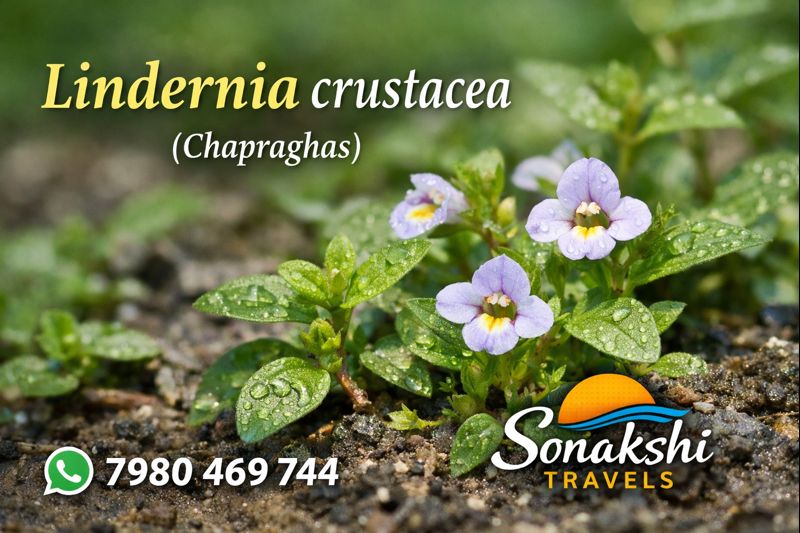
Lindernia crustacea, locally known in many parts of eastern India as Chapraghas, is a small yet ecologically meaningful herbaceous plant commonly encountered in moist lowland habitats. Although modest in stature, this species plays a subtle but important role in wetland ecology, particularly within floodplain regions, rice-growing landscapes, and seasonally inundated grasslands. Its resilience, adaptability, and association with shallow water bodies make it a noteworthy component of tropical and subtropical flora.
In regions such as the lower Gangetic plains and the Sundarbans delta, Lindernia crustacea thrives under fluctuating hydrological conditions, surviving cycles of flooding and drying that characterize monsoon-driven ecosystems. Beyond its ecological presence, the plant also holds ethnobotanical relevance in certain rural communities, where it has traditionally been recognized for minor medicinal or practical uses.
Taxonomy & Classification
The scientific classification of Lindernia crustacea reflects its placement among flowering plants adapted to wet and semi-aquatic environments. Taxonomic studies have historically grouped this species with other small creeping herbs that show morphological plasticity in response to moisture availability.
Taxonomic Hierarchy
Kingdom: Plantae
Clade: Angiosperms
Clade: Eudicots
Clade: Asterids
Order: Lamiales
Family: Linderniaceae
Genus:Lindernia
Species:Lindernia crustacea (L.) F. Muell.
Earlier botanical literature sometimes placed the genus Lindernia within the family Scrophulariaceae. However, advances in molecular phylogenetics have led to the recognition of Linderniaceae as a distinct family, highlighting evolutionary relationships shaped by habitat specialization and floral morphology.
Morphology & Field Identification
Lindernia crustacea is a low-growing, prostrate to creeping herb that often forms mats over damp soil surfaces. Its morphology is well-suited for rapid colonization of open, wet substrates, especially in areas periodically disturbed by water movement or human activity.
Vegetative Characteristics
The stems are slender, soft, and frequently root at the nodes when in contact with moist soil, enabling vegetative spread. Leaves are opposite, ovate to elliptic in shape, with entire or slightly toothed margins. The leaf surface is generally smooth, with a delicate texture that reflects its herbaceous nature.
Leaf size varies depending on moisture availability, with more robust growth observed in persistently wet conditions. The petioles are short, and the leaves exhibit a fresh green coloration that contrasts against muddy or silty substrates.
Floral Characteristics
Flowers are small, solitary or paired in the leaf axils, and typically pale blue, lilac, or light violet in color, often marked with yellow or white patches on the throat. The corolla is bilabiate, a characteristic feature of many Lamiales, aiding in pollinator attraction.
Despite their diminutive size, the flowers are conspicuous upon close inspection and serve as reliable diagnostic features during the flowering season, which usually coincides with monsoon and post-monsoon months.
Habitat & Distribution
Lindernia crustacea exhibits a strong preference for moist and waterlogged environments. It is commonly found along the margins of ponds, canals, irrigation channels, rice paddies, and low-lying fields that retain water for extended periods.
The species demonstrates remarkable ecological flexibility, allowing it to survive in both natural wetlands and anthropogenically altered landscapes such as agricultural fields and roadside ditches.
Global Range
The global distribution of Lindernia crustacea spans large parts of South and Southeast Asia, extending into tropical Africa and northern Australia. It is particularly abundant in countries with monsoon climates, where seasonal flooding creates ideal growth conditions.
In Asia, the species is widely recorded across India, Bangladesh, Sri Lanka, Nepal, Myanmar, Thailand, and parts of southern China. Its broad distribution reflects both natural dispersal mechanisms and inadvertent spread through agricultural practices.
Preferred Habitat
The plant favors open, sunlit habitats with saturated or periodically inundated soils. Clayey or silty substrates rich in organic matter are especially suitable. While it tolerates shallow standing water, prolonged deep submergence may limit flowering and seed production.
Occurrence
Lindernia crustacea typically appears as a seasonal herb, emerging vigorously during the monsoon and persisting into the early dry season. In regions with year-round moisture, populations may be present throughout the year.
Its occurrence is often patchy, influenced by microtopography, water retention, and disturbance regimes. The species readily colonizes newly exposed wet soil, making it a common pioneer in disturbed wetland margins.
Preferred Habitat in the Sundarbans Region
Within the Sundarbans delta, Lindernia crustacea is most frequently encountered in freshwater and slightly brackish zones away from direct tidal influence. It grows along village ponds, rain-fed depressions, embankment edges, and seasonally flooded grasslands adjacent to mangrove forests.
The fluctuating salinity gradient of the Sundarbans restricts its presence to areas where freshwater input from rainfall and upstream rivers dilutes saline intrusion. During the monsoon, extensive freshwater pooling creates favorable conditions for its rapid growth and flowering.
Exploring the botanical richness of the delta becomes even more rewarding with a guided journey. Discover curated Sundarban Tour options that blend nature, wetlands, and local ecology.
Ecological Role
Although small in size, Lindernia crustacea contributes meaningfully to wetland ecosystem functioning. Its creeping growth stabilizes moist soil surfaces, reducing erosion during rainfall and shallow flooding events.
The plant provides microhabitats for small invertebrates and serves as a minor nectar source for insects. In agricultural wetlands, it forms part of the complex plant community that supports nutrient cycling and soil health.
Habitat Alteration
Wetland modification poses a significant challenge to the persistence of Lindernia crustacea populations. Drainage of seasonal wetlands, conversion of marshy lands into intensive agriculture, and excessive use of herbicides can reduce suitable habitats.
In deltaic regions, increasing salinity intrusion linked to climate change and upstream water diversion further threatens freshwater-dependent herbs. While Lindernia crustacea shows adaptability, long-term habitat degradation may lead to localized population declines.
Conservation Efforts
Currently, Lindernia crustacea is not listed as a threatened species at a global level. Nevertheless, its conservation is indirectly linked to the protection of wetlands and sustainable water management practices.
Maintaining natural hydrological cycles, reducing chemical runoff, and conserving small freshwater bodies within larger landscapes are essential measures that support the continued survival of this and other wetland-associated herbs.
To witness wetland plants in their natural setting, consider immersive nature-focused itineraries. Carefully planned Sundarban Tour programs offer opportunities to observe seasonal flora alongside the region’s unique landscapes.
Did You Know?
Lindernia crustacea can root at stem nodes, allowing it to spread rapidly across wet soil.
The plant often appears soon after monsoon rains, making it an indicator of seasonal wetland revival.
Its small flowers are adapted for insect pollination despite their ground-hugging growth habit.
In traditional knowledge systems, the plant has been casually referenced for minor herbal uses.
External Reference
For additional taxonomic and botanical details, readers may consult: