Eco-Friendly Practices During a Sundarban Tour
The Sundarban is not simply a forest that travelers visit and photograph. It is a living delta where land, river, tide, and mangrove trees exist in a fragile balance. Every creek, mudbank, and patch of forest belongs to a system that supports wildlife, protects coastal communities, and regulates the ecological health of the Bay of Bengal. When people travel here, they do not step into an ordinary tourist destination. They enter one of the most sensitive ecosystems on Earth.
Because of this delicate balance, eco-friendly behavior during a Sundarban tour is not an optional gesture. It is a responsibility shared by visitors, guides, boat operators, and tour organizers. Small actions—how waste is handled, how wildlife is observed, how boats move through narrow creeks—can influence the environment in ways that may not be immediately visible but accumulate over time.
A responsible visitor understands that the beauty of the Sundarban is inseparable from its ecological stability. Protecting that stability ensures that future travelers will still experience the silent rivers, the breathing mangroves, and the rare wildlife that define this remarkable landscape.
Understanding the Fragile Ecology of the Sundarban
The Sundarban is the largest mangrove forest in the world, spread across the tidal delta formed by the Ganges, Brahmaputra, and Meghna rivers. Unlike a mountain forest or inland national park, this region constantly changes. Twice each day the tide rises and falls, reshaping riverbanks and redistributing nutrients across the mangrove islands.
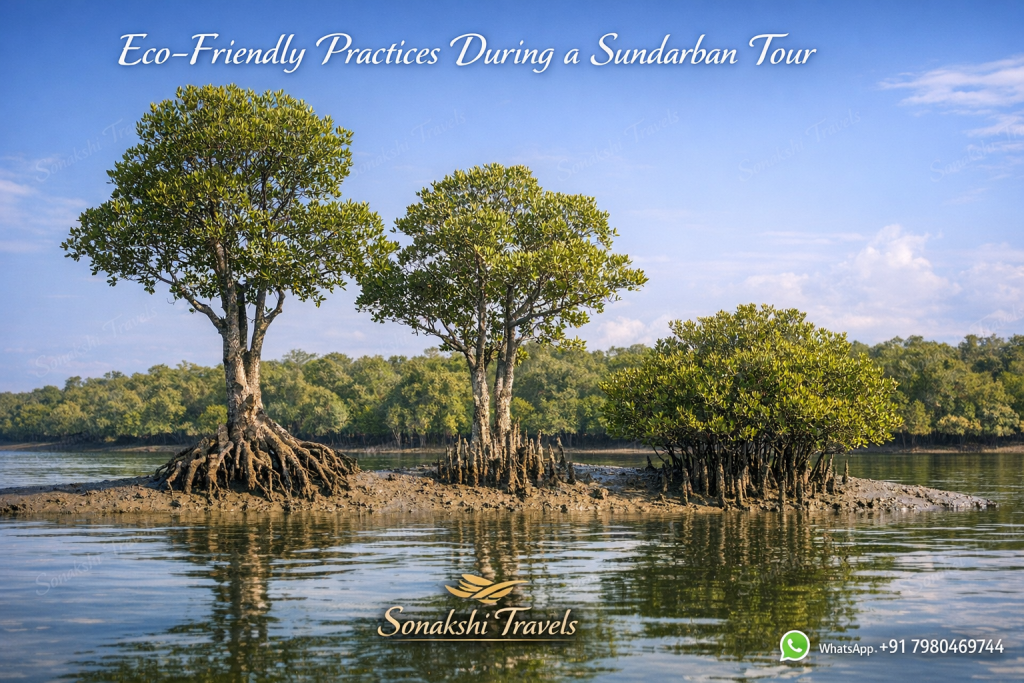
Mangrove trees such as the famous sundari, gewa, and goran have evolved to survive in salty, waterlogged soil. Their roots rise above the mud to breathe, forming complex networks that protect the coastline from storms and provide shelter for fish, crabs, and countless microorganisms. These roots also prevent soil erosion and act as natural barriers against cyclones.
The forest is also home to extraordinary wildlife. The Royal Bengal tiger, estuarine crocodiles, spotted deer, fishing cats, otters, and hundreds of bird species inhabit this ecosystem. Many of these animals depend on quiet surroundings and healthy mangrove vegetation. Even small disturbances—loud noises, plastic pollution, or careless human movement—can affect their natural behavior.
For travelers, understanding this ecological context is the first step toward practicing responsible tourism. When visitors appreciate how interconnected the system is, they naturally become more mindful of their actions during a Sundarban tour.
Why Eco-Friendly Tourism Matters in the Sundarban
Tourism brings both opportunities and risks to remote natural areas. On one hand, responsible tourism supports local livelihoods, encourages conservation awareness, and generates income that can fund environmental protection. On the other hand, uncontrolled tourism can damage ecosystems through waste, pollution, and excessive disturbance.
In the Sundarban, the balance is particularly delicate. The islands are inhabited by communities who depend on fishing, farming, honey collection, and small-scale tourism. If tourism grows without environmental awareness, it can lead to river pollution, mangrove damage, and disruption of wildlife habitats.
Eco-friendly travel practices ensure that tourism remains a positive force. Visitors who follow sustainable guidelines help maintain the forest’s natural integrity while still enjoying a meaningful travel experience. Responsible travel also encourages tour operators to maintain higher standards of environmental care.
Responsible Boat Travel in the Mangrove Rivers
Most exploration in the Sundarban takes place by boat. The wide rivers and narrow creeks that weave through the forest can only be navigated by motor launches or small wooden vessels. Because boats are the primary mode of travel, the way they operate has a direct impact on the ecosystem.
Eco-friendly boat travel begins with responsible navigation. Boats should move slowly in sensitive areas to avoid disturbing wildlife and to reduce wave action along fragile riverbanks. Sudden acceleration or reckless driving can erode mudbanks and disrupt aquatic life.
Noise control is equally important. Loud engines, music systems, or shouting can disturb birds and animals that rely on quiet environments for feeding and nesting. Experienced guides usually maintain a calm atmosphere on the boat, allowing travelers to observe the forest in silence.
Waste management on boats also plays a crucial role. Responsible tour operators ensure that all garbage remains onboard until it can be disposed of properly on land. Throwing plastic bottles, food wrappers, or other waste into the river can harm fish and birds that inhabit the waterways.
Managing Waste Responsibly During the Tour
Plastic pollution is one of the greatest threats to coastal ecosystems worldwide. In the Sundarban, floating plastic can travel through tidal currents and accumulate in mangrove roots, where it may remain trapped for years.
Travelers can significantly reduce their environmental impact by carrying reusable items during their trip. A refillable water bottle, cloth bag, and reusable containers help minimize the need for disposable packaging. Many responsible tour operators already encourage guests to follow these practices.
Food waste should also be managed carefully. Leftover food thrown into rivers or forest edges may attract animals to human areas, altering their natural behavior. Maintaining a clean boat and disposing of waste at designated facilities protects both wildlife and local communities.
A simple rule often followed by experienced travelers is this: whatever you bring into the forest should leave with you as well. This approach ensures that the ecosystem remains untouched by human activity.
Respecting Wildlife from a Safe Distance
Wildlife observation is one of the most exciting parts of a Sundarban tour. Travelers hope to see deer grazing along riverbanks, crocodiles resting on mudflats, or colorful kingfishers diving into the water. Occasionally, visitors may even glimpse the elusive Royal Bengal tiger moving through the mangroves.
However, responsible wildlife viewing requires patience and respect. Animals should never be approached closely or provoked for photographs. Sudden movements, loud noises, or attempts to feed animals can create stress and disrupt their natural routines.
Maintaining distance allows wildlife to behave naturally while still providing memorable viewing opportunities. Binoculars and cameras with zoom lenses help travelers observe animals without disturbing them. Guides are trained to follow safe observation practices that prioritize both visitor safety and wildlife protection.
When travelers accept that wildlife encounters depend on nature rather than human control, the experience becomes more authentic and respectful.
Supporting Local Communities and Sustainable Livelihoods
Eco-friendly tourism in the Sundarban extends beyond environmental protection. It also involves supporting the people who live within the delta. Many island communities rely on tourism as an important source of income, especially during seasons when fishing or farming is difficult.
Choosing locally operated boats, guides, and accommodations ensures that tourism benefits the communities closest to the forest. Local residents often possess deep knowledge of the rivers, wildlife behavior, and traditional ecological practices that have sustained life in the delta for generations.
Travelers who respect local culture and traditions contribute to a more meaningful exchange between visitors and residents. Simple gestures—purchasing locally made products, respecting village customs, and listening to community stories—create connections that enrich the travel experience.
Sustainable Sundarban tourism strengthens these communities while encouraging conservation efforts that protect the mangrove ecosystem.
Choosing Responsible Tour Operators
The choice of Sundarban tour operator significantly influences the environmental impact of a Sundarban trip. Responsible operators follow guidelines established by forest authorities and conservation organizations. They maintain clean boats, trained guides, and proper waste disposal systems.
Such operators also limit unnecessary disturbance to wildlife. They avoid entering restricted zones, maintain safe viewing distances, and ensure that guests understand the importance of eco-friendly behavior throughout the journey.
Travelers can identify responsible operators by observing a few key practices. Boats should carry waste containers, guides should explain environmental guidelines, and itineraries should respect forest regulations. These details indicate a genuine commitment to sustainable tourism rather than short-term commercial gain.
Simple Eco-Friendly Habits Travelers Can Follow
Many eco-friendly practices are simple actions that require only a small change in habits. Travelers who prepare thoughtfully before their trip can reduce their environmental impact significantly.
Carrying reusable water bottles, avoiding single-use plastic, and conserving electricity in resorts are easy steps that protect natural resources. Respecting designated walking paths and watchtower areas prevents damage to fragile vegetation. Even maintaining silence during wildlife observation helps preserve the forest’s natural rhythm.
Photography enthusiasts should also practice responsible photography. Flash photography near animals can disturb them, especially birds and nocturnal species. Observing quietly from a distance often results in more natural and beautiful photographs.
These habits may appear small, yet when practiced by thousands of travelers each year, they collectively protect the ecological health of the Sundarban.
A Quiet Reflection on the Mangrove Rivers
There is a moment that many travelers remember long after leaving the Sundarban. The boat drifts slowly through a silent creek. The water reflects the sky like a mirror, and mangrove roots stretch into the river like the fingers of the forest itself. No sound interrupts the air except the distant call of a bird and the gentle movement of the tide.
In that quiet moment, the traveler understands that the forest does not exist for human entertainment. It exists because nature has shaped it through centuries of balance and resilience. Every visitor becomes a temporary guest in that living landscape.
The tide breathes softly through tangled roots,
A silent river holds the sky.
Mangrove shadows lean and listen,
Where hidden wings of birds pass by.
A distant deer moves through green silence,
The forest watches without sound.
A traveler waits with quiet patience,
Where river and wilderness are bound.
Leave only footsteps in the memory,
Let the mangrove world remain unbroken.
Preserving the Spirit of the Sundarban for Future Travelers
The Sundarban offers something rare in modern travel—a landscape where nature still shapes every moment. The tides determine the rhythm of exploration, the forest decides when wildlife appears, and silence often speaks louder than words.
Eco-friendly practices during a Sundarban tour ensure that this fragile environment remains healthy for generations to come. Responsible travel protects mangrove forests, safeguards wildlife habitats, and supports the communities who share their lives with the delta.
For travelers, these practices also deepen the experience itself. When visitors move through the forest with awareness and respect, they begin to notice details that hurried tourism often misses—the shifting light on tidal water, the patterns of mangrove leaves, and the quiet presence of life hidden within the roots.
In protecting the Sundarban, travelers protect the very beauty that draws them here. The forest does not ask for grand gestures. It asks only for care, patience, and the understanding that every visitor plays a small role in preserving its enduring spirit.