Updated Date: 27 February 2026
Discover the Sundarbans Wildlife Tour
The Sundarbans Wildlife Tour is not merely a recreational excursion into a forested delta. It is a structured ecological encounter within one of the most biologically complex mangrove systems on Earth. A wildlife-focused journey through this landscape demands more than casual sightseeing; it requires interpretive guidance, operational discipline, and ecological sensitivity. For readers seeking a grounded overview of the region’s regulated travel ecosystem, the resource base at SundarbanTravel.com helps frame how wildlife-focused experiences are typically organized and interpreted.
Within this framework, the wildlife tour becomes a carefully mediated experience. Visitors enter a protected ecosystem where apex predators, estuarine reptiles, migratory birds, and mangrove-adapted mammals coexist within a fragile tidal matrix. The success of the experience depends on preparation, trained naturalists, and adherence to conservation principles. When these components function in harmony, the tour evolves from passive observation into informed participation in ecological awareness.
Ecological Complexity and Wildlife Adaptation
The Sundarbans Wildlife Tour centers on biodiversity that has evolved under extreme environmental conditions. Salinity gradients, tidal flux, and soft sediment terrain shape the survival strategies of resident species. Unlike terrestrial forests with fixed boundaries, this ecosystem expands and contracts rhythmically with tidal cycles. Wildlife here exhibits physiological and behavioral adaptations rarely observed elsewhere, and many visitors first encounter this ecological logic through a structured Sundarban forest tour that prioritizes observation over spectacle.
Mangrove-Dependent Mammals
The Royal Bengal Tiger in the Sundarbans demonstrates adaptations distinct from its counterparts in dry deciduous or grassland habitats. Scientific observations indicate stronger swimming capability, modified hunting patterns influenced by tidal movement, and spatial navigation within shifting creek networks. Such behavioral plasticity illustrates evolutionary response to habitat fluidity. Wildlife tours guided by trained naturalists help interpret these ecological distinctions rather than reducing the tiger to a symbolic attraction.
Spotted deer populations also reflect adaptation to saline vegetation. Their grazing behavior integrates with mangrove edge ecology, forming a crucial prey base within the trophic hierarchy. Observing these interactions through informed commentary enhances understanding of predator-prey balance rather than isolating sightings as independent events.
Reptilian and Amphibious Life
Saltwater crocodiles occupy the estuarine channels as apex aquatic predators. Their thermoregulation strategies, nesting patterns, and ambush techniques are closely linked to sediment banks and brackish water composition. Responsible wildlife tours emphasize observation from regulated distances, maintaining safety while preserving natural behavior patterns.
Monitor lizards, mudskippers, and estuarine snakes further illustrate amphibious adaptation. These species bridge terrestrial and aquatic environments, highlighting the ecosystem’s transitional nature. Interpretation of such species deepens ecological awareness and reinforces the importance of habitat integrity.
Avian Biodiversity and Seasonal Dynamics
The Sundarbans Wildlife Tour offers exposure to a diverse avian assemblage, including resident raptors, kingfishers, herons, and migratory species. Birdlife here functions as a biological indicator of ecosystem health. Variations in salinity, fish availability, and mangrove density directly influence avian distribution, a theme often expanded in broader reading on planned Sundarbans travel packages where natural history interpretation is central to the visitor experience.
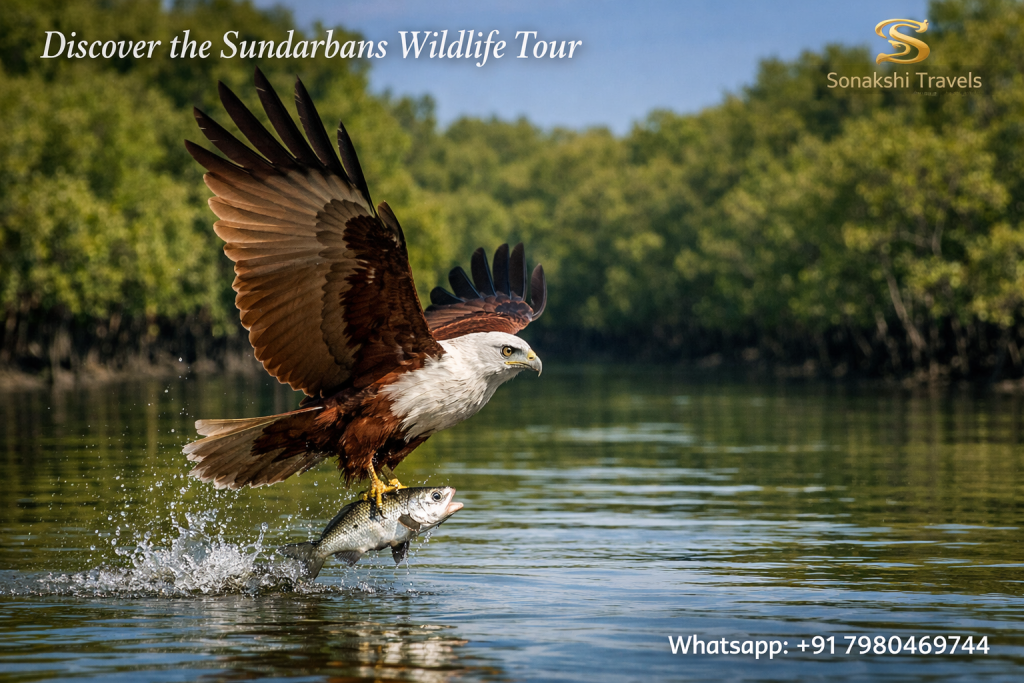
Raptors such as the brahminy kite exhibit aerial hunting patterns that reveal the productivity of tidal fisheries. Wading birds, including egrets and herons, rely on exposed mudflats during receding tides. The interpretive value of a wildlife tour lies in decoding these patterns, explaining how tidal timing governs feeding opportunities and breeding success.
Photographic documentation under guided supervision allows visitors to engage responsibly with avian diversity. Ethical field conduct—such as minimizing noise and avoiding sudden movements—ensures that wildlife observation does not disrupt feeding or nesting cycles.
Role of the Naturalist Guide
The credibility of a Sundarbans Wildlife Tour is closely tied to the competence of its naturalist guides. Ecological interpretation transforms observation into education. A trained guide explains spoor identification, tidal influence on movement corridors, and vegetation markers that signal animal presence. In practice, this interpretive layer becomes especially consistent when the experience is designed as a Sundarban private tour where attention can remain fixed on ecological reading rather than group pacing.
Field Interpretation Skills
Reading pugmarks in soft sediment, identifying alarm calls of deer or macaques, and recognizing avian distress signals are specialized skills developed through sustained field exposure. These observational cues often precede actual sightings. Visitors thereby learn to perceive subtle ecological indicators rather than relying solely on visual confirmation of large mammals.
Safety Protocol Integration
Wildlife tours operate within regulated zones where compliance with forest department guidelines is mandatory. Guides coordinate vessel positioning, maintain designated distances from wildlife, and ensure that behavioral stress is not induced. This operational discipline protects both visitors and animals, reinforcing conservation ethics.
Ethical Wildlife Observation
The sustainability of wildlife tourism depends on non-intrusive engagement. Ethical guidelines prohibit feeding wildlife, using flash photography near sensitive species, or attempting to provoke movement for better visibility. The integrity of the wildlife tour rests upon respecting natural rhythms.
Conservation science emphasizes that repeated disturbance alters feeding cycles and breeding success. Responsible tour operators therefore integrate environmental awareness into every excursion. Waste management practices, reduced plastic usage, and adherence to designated channels minimize ecological footprint.
Community Participation in Wildlife Stewardship
Local communities surrounding the forest periphery contribute significantly to wildlife conservation. Many residents participate as licensed guides, boat operators, and field assistants. Their experiential knowledge of tidal behavior, animal movement corridors, and seasonal ecological patterns enhances interpretive accuracy.
Community engagement also reinforces coexistence strategies. Educational outreach and livelihood integration reduce dependency on extractive practices that could threaten biodiversity. A wildlife tour structured around inclusive employment models indirectly supports habitat preservation by aligning economic benefit with conservation success.
Research and Monitoring Contributions
Wildlife tours increasingly intersect with conservation research. Data gathered through camera traps, field observations, and species reporting contribute to broader monitoring frameworks. Ethical tourism operators collaborate with authorities to maintain accurate wildlife databases.
Understanding population density trends of key species such as the tiger or crocodile informs management decisions. Visitors who participate in guided interpretation sessions gain insight into these research processes, recognizing tourism not as extraction but as a supportive component of conservation infrastructure.
Psychological Dimensions of Wildlife Encounters
Human perception shifts markedly within environments where unpredictability governs movement. The Sundarbans Wildlife Tour engages the senses in subtle ways: distant calls, rippling sediment, fleeting shadows at the waterline. This sensory immersion fosters attentiveness and patience—qualities essential to authentic wildlife observation.
Unlike safari environments characterized by open visibility, mangrove landscapes require cognitive adaptation. Visitors learn to interpret silence as information and subtle sound variation as ecological signal. Such experiences cultivate ecological humility, reinforcing respect for non-human agency.
Operational Integrity and Regulatory Compliance
All wildlife tours function within a regulated conservation framework. Entry permissions, licensed vessels, and designated observation routes ensure that tourism remains controlled. Adherence to these regulations safeguards breeding zones and restricts access to sensitive habitats.
Operational transparency—clearly outlining inclusions, conservation commitments, and field conduct expectations—strengthens trust between visitors and operators. Ethical structuring of wildlife tours reflects long-term ecological thinking rather than short-term commercial interest.
Photography, Documentation, and Scientific Awareness
Wildlife photography within the Sundarbans demands technical adaptation to reflective water surfaces, shifting light conditions, and dense foliage. Professional guidance assists visitors in capturing images without compromising ecological balance. Photography becomes documentation rather than intrusion.
Image archives generated through responsible tourism may support awareness campaigns and educational initiatives. However, respect for wildlife always supersedes visual ambition. Ethical photography principles reinforce conservation priorities.
Economic Responsibility and Conservation Funding
Revenue generated from wildlife tours contributes indirectly to ecosystem management. Park fees, licensing structures, and regulated entry systems support maintenance, monitoring, and habitat restoration efforts. Transparent financial integration strengthens sustainability, particularly when visitors choose formats such as a 2 nights 3 days Sundarban tour itinerary that can sustain extended interpretive field time without increasing disturbance pressure.
Responsible wildlife tourism thus operates as a participatory conservation model. Visitors become contributors to ecological preservation through structured engagement rather than passive consumption.
Conservation Initiatives and Environmental Accountability
Ongoing conservation initiatives within the Sundarbans include habitat stabilization, anti-poaching surveillance, and environmental education programs. Wildlife tours that align with these initiatives reinforce the region’s ecological resilience. By minimizing environmental disturbance and promoting informed awareness, such tours maintain a balanced relationship between observation and preservation.
Environmental accountability also involves continuous review of operational practices. Waste reduction strategies, controlled vessel emissions, and eco-sensitive lodging partnerships represent evolving commitments to sustainability. Wildlife tourism in this context becomes a disciplined ecological partnership rather than a recreational indulgence.
Conclusion: Wildlife Tourism as Ecological Responsibility
The Sundarbans Wildlife Tour represents a structured engagement with one of the planet’s most dynamic mangrove ecosystems. Its value lies not in guaranteed sightings but in the integrity of observation, the depth of ecological interpretation, and the adherence to conservation ethics. Each encounter—whether with a tiger’s distant presence, a crocodile’s silent vigilance, or a bird’s tidal flight—illustrates adaptive survival within a fragile environment.
When guided by expertise, regulated by conservation frameworks, and supported by community participation, the wildlife tour transcends tourism. It becomes a measured act of environmental stewardship. Discovering the Sundarbans through this lens fosters awareness, respect, and long-term commitment to preserving the intricate web of life that defines this remarkable mangrove wilderness.