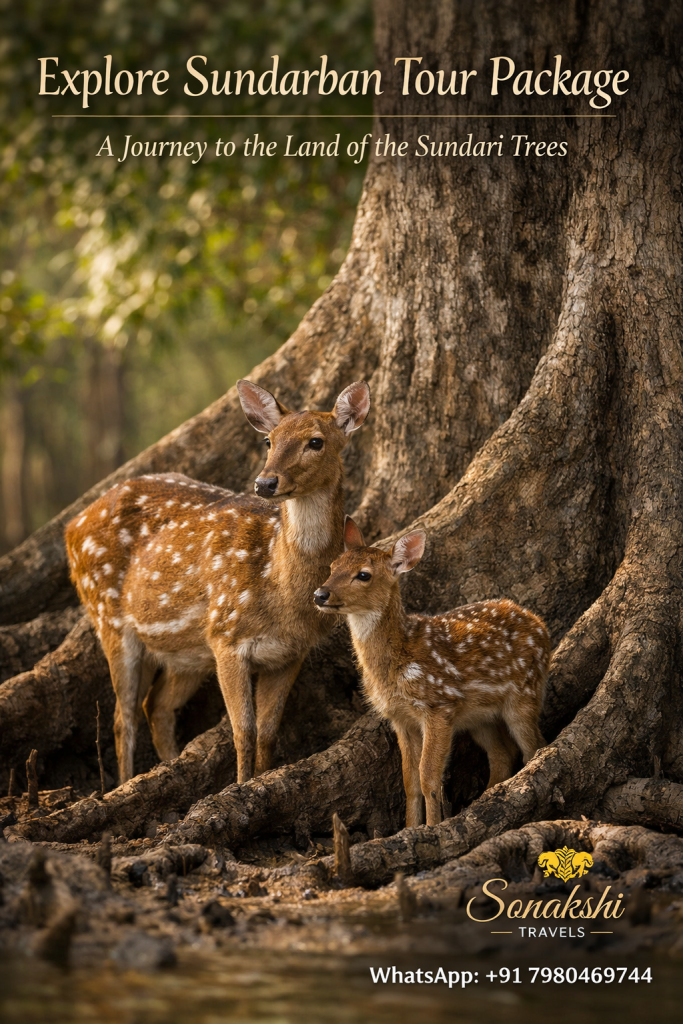
Explore Sundarban Tour Package: A Journey to the Land of the Sundari Trees
At the ecological heart of the lower Ganges delta stands a tree that has shaped both landscape and identity — the Sundari (Heritiera fomes). The very name “Sundarban” is widely associated with this dominant mangrove species. To explore the region through a structured program curated by Sundarban Travel is therefore not simply to enter a forested delta, but to encounter a landscape defined by one remarkable botanical presence of Sundari trees.
The Sundari is not an ornamental tree admired from a distance. It functions as an architectural force within the mangrove ecosystem, a biological stabilizer of tidal terrain, and a long-standing resource for delta communities. A well-designed journey built around a comprehensive Sundarban travel program that foregrounds the Sundari allows visitors to engage directly with the ecological, structural, and experiential dimensions of this species in its natural habitat.
The Sundari Tree: Botanical Identity and Ecological Role
The Sundari trees (Heritiera fomes), belonging to the Malvaceae family, is one of the principal mangrove species of the deltaic forest. It thrives in moderately saline intertidal zones where twice-daily tidal flux deposits nutrient-rich silt while simultaneously testing plant tolerance to salinity and waterlogging. The tree has evolved distinct physiological adaptations: specialized root systems that facilitate oxygen intake in anaerobic mud, internal mechanisms that regulate salt concentration, and structural resilience against strong tidal currents.
Its buttressed trunk rises from unstable substrates, supported by plank-like extensions that enhance stability in shifting alluvial soil. Beneath the surface, lateral roots spread widely to secure anchorage. The leaves are thick, leathery, and adapted to reduce moisture loss in saline air. During flowering and fruiting cycles, the Sundari contributes significantly to the mangrove food web, supporting insects, crustaceans, and arboreal bird species.
Within an interpretative Sundarban forest exploration, close observation of the Sundari reveals how a single species can function simultaneously as habitat, sediment stabilizer, and ecological regulator. Dense root networks reduce shoreline erosion, trap suspended particles, and gradually assist in land formation. In measurable ways, the tree participates in shaping the geography through which visitors travel.
Structural Dominance in the Mangrove Canopy
The Sundari is frequently regarded as a climax species in comparatively less saline zones of the mangrove system. Its presence often indicates balanced hydrological conditions and stable soil composition. As one moves through channels dominated by Sundari stands, the visual structure of the forest changes perceptibly: taller canopies, thicker trunks, and an ordered spacing that creates an almost colonnaded effect along the banks.
Where salinity intensifies, Sundari density may decline and give way to more salt-tolerant species. This ecological sensitivity transforms the tree into a biological indicator of environmental change. A focused private Sundarban experience centered on ecological interpretation enables visitors to recognize these variations not as abstract data but as visible transitions in canopy height, bark texture, and root morphology.
The bark of the Sundari is dark grey to brown and often fissured with age. Its timber is durable and resistant to decay, qualities that historically encouraged local utilization. In protected forest interiors, however, mature Sundari stands form layered corridors where filtered sunlight produces subdued tonal gradients across the forest floor.
Sundari and Human Dependence: Resource and Responsibility
Traditional Uses of Sundari Wood
For generations, communities of the delta have depended on Sundari wood for construction and fuel. Its hardness and resistance to rot made it suitable for boat frames, house posts, agricultural tools, and structural supports in tidal settlements. Certain local medicinal practices also incorporated parts of the tree for therapeutic use.
Yet the history of extraction illustrates the delicate balance between resource and preservation. Overharvesting combined with salinity stress has historically affected Sundari populations. Responsible engagement through a structured luxury-oriented Sundarban journey often incorporates interpretative discussions that highlight conservation ethics alongside observation, reinforcing awareness of regulated interaction with mangrove ecosystems.
Conservation Perspective
In certain pockets of the forest, the Sundari has been affected by top-dying disease, a condition associated with environmental stress and salinity shifts. Scientific assessments link such decline to hydrological changes and increased saline intrusion. Observing affected and unaffected clusters within a single landscape provides a tangible understanding of ecological vulnerability.
Rather than presenting conservation as a distant concern, standing within a Sundari-dominated grove allows visitors to perceive fragility directly: isolated dead branches, uneven canopy density, and subtle transitions in species composition. Such field-based insight transforms ecological theory into lived awareness.
Experiencing the Sundari Tree Through Guided Exploration
Mangrove Channel Safaris
Navigating tidal creeks by boat provides a vantage point uniquely suited to observing Sundari stands. From water level, buttressed trunks appear monumental, emerging from mudflats etched by crab burrows and tidal markings. Reflections of foliage on slow-moving channels create layered visual fields in which tree and tide converge.
During such explorations, attention frequently turns to root systems — intricate, exposed, and sculptural. These structures function as anchors and sediment traps, nurturing microhabitats for crustaceans and juvenile fish. The perspective from a drifting vessel offers a sense of scale and spatial continuity not easily achieved through terrestrial movement alone.
Jungle Walks in Designated Zones
In permitted stretches of forest, guided walks bring observers closer to bark texture, leaf form, and the layered composition of the forest floor. Under the canopy of mature Sundari trees, filtered light softens visual contrasts, producing a subdued and enclosed atmosphere.
Walking among these vertical trunks emphasizes rhythm and proportion. Fallen leaves decompose slowly in moist soil, contributing to nutrient cycling and sustaining smaller organisms. The scent of brackish earth, combined with restrained ambient sound, reinforces the perception of the Sundari as a living structural presence rather than a decorative element.
Birdlife and Arboreal Habitat
The branches of the Sundari provide elevated platforms for kingfishers, herons, egrets, and raptors. From these vantage points, birds survey tidal flats for prey. Observing avian activity within Sundari canopies highlights ecological interdependence, as fruiting cycles and insect populations sustained by the tree attract foraging species.
Seed dispersal facilitated by birds further integrates the Sundari into broader ecological processes. The tree is therefore not an isolated organism but a central participant in a network of life forms sustained by tidal rhythm.
Comparative Significance Among Mangrove Species
The mangrove ecosystem includes species such as Avicennia, Rhizophora, and Sonneratia, each adapted to distinct salinity thresholds and tidal exposure. The Sundari, however, maintains symbolic and structural prominence due to its height, timber quality, and historical abundance in moderately saline zones.
Compared with the prop-rooted formations of Rhizophora, which extend visibly above mudflats, the Sundari’s buttressed base offers a grounded architectural profile. Observing these differences within a thematic journey encourages refined ecological literacy, enabling distinctions based on structure, habitat preference, and functional adaptation.
Psychological and Aesthetic Dimensions of the Sundari Landscape
Beyond ecological significance, the Sundari contributes to the perceptual character of the mangrove forest. Its cohesive stands create enclosure without density overload. Vertical trunks aligned along tidal channels produce visual order against the horizontal sweep of mudflats and water.
In quieter stretches where Sundari canopies dominate, the interplay of light and shadow generates tonal restraint. This consistency shapes perception of the mangrove not as fragmented wetland but as a unified ecological system.
Experiencing Sundari stands during an extended immersion, such as a 2 Nights 3 Days Sundarban tour package, allows visitors to observe tidal transitions and changing light conditions across successive cycles. Such duration enhances awareness of dynamic interaction between tree and water.
Designing a Meaningful Sundarban Journey Around the Sundari
A carefully curated exploration centered on the Sundari prioritizes interpretation over superficial coverage. Knowledgeable guidance draws attention to bark fissures, root aeration structures, and leaf orientation relative to saline exposure, encouraging systematic observation.
By observing Sundari stands at varying tidal stages, visitors witness adaptive design in motion. Exposed roots during ebb tide reveal structural complexity; rising waters partially submerge lower trunks, demonstrating resilience to cyclical inundation. The rhythm of tide and tree becomes perceptible through direct engagement.
Conclusion: Encountering the Living Identity of the Sundarban
To explore the delta through the lens of the Sundari tree is to approach its conceptual core. The species is not peripheral to the mangrove forest; it is foundational. It shapes sediment deposition, supports wildlife, influences settlement practices, and lends the region its name.
Engagement with the Sundari in its natural habitat transforms a journey into a structured study of adaptation, resilience, and ecological design. The towering trunks, buttressed roots, and layered canopies collectively narrate a story of survival within tidal terrain.
A journey to the land of the Sundari trees is therefore defined not by spectacle but by depth — depth of observation, ecological understanding, and respect for a species that sustains both landscape and life within the delta.