Updated Date: 19 February 2026
Exploring the Wonders of Sundarban Travel and Its Biodiversity

The Sundarban mangrove forest represents one of the most intricate and biologically complex ecosystems on Earth. Its interlacing rivers, tidal creeks, mudflats, and dense mangrove formations create an ecological mosaic that sustains an extraordinary diversity of life. Exploring this region through informed Sundarban travel perspectives is not merely a passage through a forested delta; it is an immersion into a living system shaped by adaptation, survival, and ecological interdependence. The biodiversity of the Sundarban is structured by salinity gradients, tidal rhythms, sediment deposition, and hydrological flux that continuously redefine its terrain.
This article examines the biological richness of the Sundarban through a structured ecological lens, focusing on its fauna, flora, avian diversity, ecosystem functions, and social-ecological significance. Each dimension reveals how life has evolved to persist within one of the world’s most demanding estuarine environments.
The Ecological Identity of the Sundarban Mangrove System
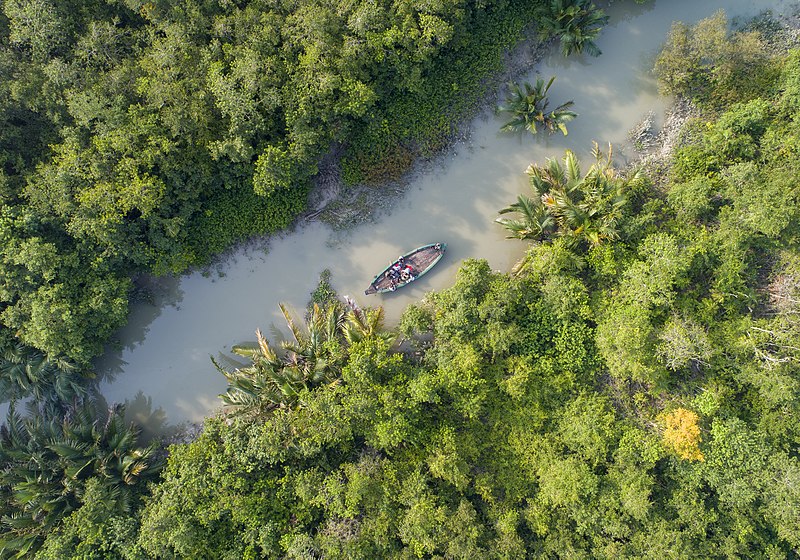
The Sundarban is globally recognized as the largest contiguous mangrove forest, formed at the confluence of major river systems that deposit vast volumes of silt into the Bay of Bengal. Continuous sedimentation combined with tidal inundation produces a dynamic deltaic ecosystem where land and water remain in constant interaction. Unlike stable terrestrial forests, this region operates within a fluctuating hydrological regime defined by twice-daily tidal cycles.
The defining ecological feature of the Sundarban is its salinity gradient. Northern zones receive relatively higher freshwater discharge, while southern sections experience stronger saline intrusion from the sea. This gradient determines plant distribution, wildlife movement, and species composition. As a result, biodiversity shifts spatially according to tidal exposure, sediment texture, and dissolved salt concentration.
Floral Diversity: Mangrove Adaptations and Structural Complexity
Mangrove Species and Adaptive Mechanisms
The Sundarban supports approximately 60–65 true mangrove species, making it one of the most diverse mangrove assemblages in the world. These species have developed remarkable physiological and structural adaptations to survive in saline, oxygen-deficient, and waterlogged soils.
Among the dominant species are Heritiera fomes (Sundari), Avicennia marina, Rhizophora mucronata, Bruguiera gymnorrhiza, and Sonneratia apetala. They exhibit specialized traits such as pneumatophores for aerial respiration, stilt and prop roots for mechanical stability, salt-filtering mechanisms, and viviparous germination where seeds sprout while attached to the parent tree. These adaptations allow them to anchor within unstable sediments while maintaining internal physiological balance.
Pneumatophores emerge vertically from submerged soil to facilitate oxygen exchange during low tide. Prop roots extend laterally and downward, forming dense structural networks that resist tidal currents. These root matrices not only stabilize the forest but also create sheltered microhabitats for juvenile fish, crustaceans, mollusks, and algae, strengthening ecological interconnections.
Ecological Role of Mangrove Vegetation
Mangrove vegetation forms the structural backbone of the delta. Root systems trap sediments, reduce shoreline erosion, and buffer coastal zones against tidal turbulence. By slowing water flow, they enhance nutrient deposition and stimulate primary productivity. Leaf litter and decaying organic matter form detritus, which serves as a foundational energy source for estuarine food webs.
This detrital chain sustains plankton populations, which in turn nourish fish, crustaceans, and higher trophic predators. The mangrove forest therefore functions not simply as vegetation cover but as a biogeochemical engine driving sustained biological productivity. Observational journeys organized under structured forest exploration programs often reveal how these root systems influence both terrestrial and aquatic biodiversity.
Wildlife of the Sundarban: Apex Predators and Ecological Balance
The Bengal Tiger in a Mangrove Habitat
The Bengal tiger remains the most iconic inhabitant of the Sundarban. Unlike tigers in grassland or dry deciduous forests, the Sundarban population occupies a saline tidal environment marked by muddy banks and interwoven creeks. Estimates suggest approximately 100–150 individuals inhabit the Indian portion of the forest.
These tigers demonstrate distinctive behavioral adaptations. They are powerful swimmers capable of traversing wide tidal channels, and their hunting strategies rely on stealth within dense mangrove cover. Prey species include spotted deer and wild boar, both integral to the herbivore base of the ecosystem.
As an apex predator, the tiger regulates herbivore populations and maintains trophic equilibrium. Variations in tiger numbers often signal broader ecological changes, underscoring its role as an indicator species within the mangrove landscape. Carefully managed wildlife-focused journeys, including specialized private wildlife expeditions in the Sundarban, frequently emphasize this predator-prey dynamic within the tidal forest context.
Other Predators and Reptilian Diversity
Beyond the tiger, the Sundarban sustains an extensive range of predators. The saltwater crocodile (Crocodylus porosus) dominates estuarine channels and brackish rivers, ranking among the largest living reptiles. It occupies a pivotal position within aquatic food chains, regulating fish populations and occasionally preying on mammals along riverbanks.
The king cobra and Indian python represent significant reptilian inhabitants. The king cobra, primarily ophiophagous, controls snake populations, while the python feeds on birds and small mammals. Monitor lizards, mudskippers, and estuarine turtles further diversify the reptile assemblage.
Spotted deer and wild boar constitute the primary herbivorous base, browsing on leaves, shoots, and fallen fruits. Their feeding behavior influences vegetation regeneration and nutrient cycling, reinforcing the interconnectedness of predator and prey relationships.
Avian Diversity: A Confluence of Resident and Migratory Species
Resident Birds and Ecological Niches
The Sundarban supports more than 300 bird species, establishing it as a major avifaunal zone within eastern India. Resident species include the black-capped kingfisher, brown fish owl, white-bellied sea eagle, and osprey. These birds occupy specialized feeding niches, ranging from piscivory to nocturnal predation.
Sea eagles function as apex avian predators, while kingfishers regulate fish populations in shallow creeks. Owls contribute to nocturnal balance by controlling rodent and small vertebrate numbers. Such ecological roles highlight the layered complexity of the mangrove food web.
Migratory Birds and Seasonal Ecological Exchange
The delta also serves as a winter refuge for migratory birds arriving from Central Asia and Siberia. These species utilize mudflats and estuarine shallows rich in invertebrates. Seasonal influx enhances genetic diversity and underscores the Sundarban’s role in transcontinental ecological networks.
Migratory arrivals temporarily increase species density, influencing predator-prey interactions and altering energy distribution across trophic levels. Observational studies integrated into curated guided mangrove research tours frequently document these seasonal avian shifts.
Aquatic Biodiversity and Estuarine Productivity
The aquatic dimension of the Sundarban is equally significant. Estuarine waters support diverse fish species including hilsa, mullet, catfish, and mudskippers. Crabs and prawns form essential components of the aquatic food chain, contributing to both ecological balance and local subsistence.
The mixing of freshwater and saline water creates nutrient-rich conditions conducive to plankton proliferation. Plankton forms the primary trophic base for fish and invertebrates. Continuous tidal flushing replenishes dissolved oxygen and redistributes nutrients, sustaining high levels of biological productivity.
Occasional sightings of Irrawaddy dolphins in deeper channels indicate the ecological health of certain water corridors. For shorter field observations focused primarily on aquatic ecosystems, structured programs such as the Sundarban single day ecological study visit provide concentrated exposure to estuarine biodiversity.
Ecosystem Services and Environmental Protection
The ecological significance of the Sundarban extends beyond species diversity. Mangrove forests function as natural coastal buffers, absorbing wave energy and reducing the destructive force of cyclonic systems. Their root systems stabilize sediments and prevent erosion, protecting inland communities from tidal surges.
Mangroves are also recognized as efficient carbon sinks. Substantial amounts of carbon are stored within both above-ground biomass and waterlogged sediments. This carbon sequestration capacity contributes to regional climate moderation and long-term ecological resilience.
Nutrient recycling through decomposition processes ensures sustained regeneration. The continuous interplay between tidal exchange and organic matter breakdown reinforces ecosystem stability across seasons.
The Social Role of Biodiversity in Sundarban Travel
The biodiversity of the Sundarban directly supports local livelihoods. Fishing communities depend on estuarine fish and crustaceans, while honey collectors harvest wild honey produced by bees that forage on mangrove blossoms. Forest-dependent households operate under regulated resource extraction frameworks that attempt to balance subsistence with conservation.
When aligned with ecological sensitivity, biodiversity-based travel initiatives generate employment tied to wildlife interpretation, boat operations, and conservation awareness. The forest’s biological richness thus becomes both an environmental and socio-economic asset.
In this setting, biodiversity preservation ensures continuity of livelihood systems while sustaining ecological equilibrium. Responsible engagement with the mangrove ecosystem reinforces the long-term viability of both community welfare and environmental integrity.
Biodiversity as the Core of Sundarban Travel
The Sundarban mangrove forest stands as a profound example of ecological adaptation and interdependence. Its floral diversity stabilizes sediments; its predators regulate trophic hierarchies; its birds connect distant continents; its aquatic systems sustain food webs; and its root networks shield coastlines from erosion.
Exploring the wonders of Sundarban travel is fundamentally an engagement with biodiversity. The forest’s biological wealth defines its resilience, ecological significance, and global importance. Safeguarding this biodiversity is not only a conservation responsibility but a commitment to preserving one of the planet’s most intricate and enduring natural systems.