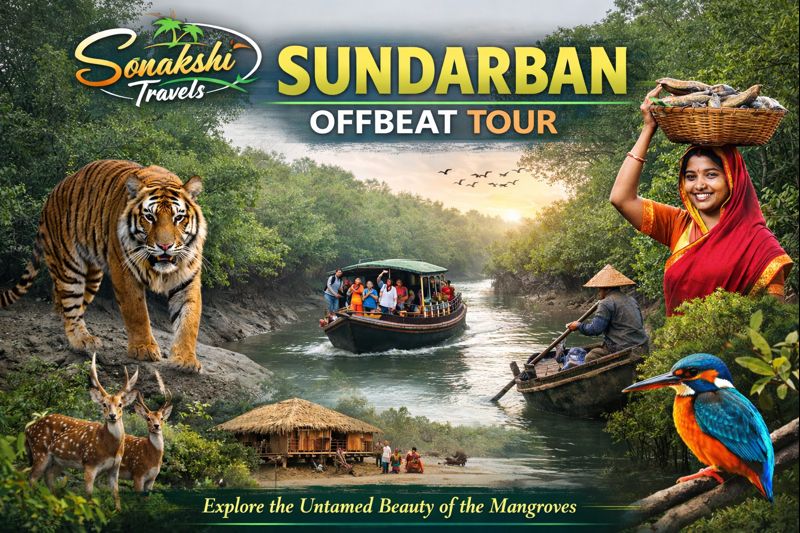
Sundarban Offbeat Tour

Sundarban Offbeat Tour:

Exploring the Untouched Heart of the Mangrove Delta


The Sundarban Offbeat Tour is designed for travelers who seek more than conventional sightseeing. It offers a deeply immersive experience into the lesser-explored corners of the Sundarbans, where dense mangrove forests, winding creeks, remote islands, and age-old village cultures coexist in delicate harmony. Unlike mainstream itineraries, an offbeat Sundarban journey emphasizes silence, authenticity, ecological awareness, and meaningful interaction with nature and local communities.

Spread across the southern fringe of West Bengal, the Sundarbans represent the world’s largest mangrove delta, shaped by the confluence of the Ganga, Brahmaputra, and Meghna river systems. While the core protected areas attract most visitors, vast stretches of the buffer zones and inhabited islands remain relatively untouched by mass tourism. These regions form the foundation of a true offbeat Sundarban experience.

What Makes the Sundarban Offbeat Tour Unique?

An offbeat tour focuses on exploration beyond popular watchtowers and crowded boat routes. Travelers are introduced to narrow tidal creeks, forest-edge villages, traditional fishing hamlets, and islands where life unfolds at nature’s pace. The emphasis remains on slow travel, observation, and understanding the fragile ecosystem rather than ticking off attractions.

Key Characteristics of an Offbeat Experience

  • Navigation through lesser-known creeks and canals
  • Village walks and interaction with local communities
  • Observation of mangrove ecology and tidal rhythms
  • Minimal crowd density and private or small-group travel
  • Opportunities for birdwatching, photography, and research

Important Places and Experiences to See

The offbeat Sundarban landscape offers numerous subtle yet powerful experiences. These are not monumental attractions but living environments that reveal their beauty through patience and awareness.

Remote Mangrove Creeks

Narrow channels branching off from major rivers provide an intimate view of the mangrove ecosystem. The dense canopy, reflected water surfaces, and occasional wildlife sightings create a profound sense of wilderness.

Forest-Fringe Villages

Villages located near the forest boundary showcase extraordinary human resilience. Traditional mud houses, tiger-deity shrines, honey collection tools, and sustainable fishing practices reflect centuries of coexistence with nature.

Birding Zones and Mudflats

Seasonal mudflats and shallow wetlands attract resident and migratory birds. Early mornings and late afternoons are ideal for observing herons, egrets, kingfishers, sandpipers, and raptors.

River Confluences and Tidal Landscapes

Watching the meeting of freshwater and saline tidal flows offers insight into the geomorphology of the delta. The constant transformation of land and water defines the Sundarbans’ character.

Major Distances and Route Overview

Understanding distances helps travelers plan efficiently while appreciating the scale of the region.

  • Kolkata to Godkhali Jetty: approximately 95–100 km by road
  • Kolkata to Sonakhali Jetty: approximately 90 km by road
  • Jetty points to interior offbeat islands: 2 to 6 hours by motorized boat, depending on tides and routes

Travel time may vary due to road conditions, weather, and tidal schedules. Offbeat routes often require additional buffer time, which is considered part of the experience rather than an inconvenience.

How to Reach the Sundarbans for an Offbeat Tour

By Road

Kolkata serves as the primary gateway. Travelers typically proceed by road to designated jetties such as Godkhali or Sonakhali. The journey passes through rural Bengal landscapes, offering glimpses of agrarian life.

By Boat

From the jetty points, motorized boats navigate through wide rivers and narrow creeks. Boat travel is essential for accessing offbeat islands and forest-edge villages. Tidal timing plays a crucial role in route selection.

Staying Options During an Offbeat Sundarban Tour

Accommodation in offbeat Sundarban regions prioritizes location, sustainability, and cultural authenticity rather than luxury alone.

Eco-Resorts

Eco-resorts are designed using local materials and follow environmentally responsible practices. They often include nature interpretation sessions and guided village interactions.

Village Homestays

Homestays provide firsthand exposure to local lifestyles, cuisine, and traditions. Guests share space with host families, gaining insights into daily routines shaped by tides and seasons.

Forest-Edge Lodges

Lodges located near buffer zones allow close observation of mangrove landscapes while maintaining regulated distance from protected core areas.

Best Time to Visit for an Offbeat Experience

The ideal period for a Sundarban Offbeat Tour depends on climatic conditions and travel objectives.

October to March

This is the most favorable season, offering pleasant weather, clear visibility, and rich wildlife activity. It is ideal for photography, birdwatching, and comfortable exploration.

April to June

Summer brings higher temperatures and intense humidity. However, this period offers dramatic skies, fewer visitors, and heightened chances of observing reptiles and riverine fauna.

July to September

The monsoon transforms the delta into a lush, vibrant ecosystem. While travel can be challenging, researchers and nature enthusiasts appreciate the ecological vitality of this season.

Ecological and Cultural Significance

The Sundarbans are not merely a travel destination but a living laboratory of climate adaptation, biodiversity, and human resilience. The region acts as a natural barrier against cyclones, supports fisheries, and sustains millions of livelihoods.

For authoritative information on conservation and management frameworks, travelers may refer to the official government resource of the Sundarbans Biosphere Reserve available at a relevant Government of India conservation portal, which provides insights into policy and environmental stewardship.

Historical and Global Context

The Sundarbans have been referenced in ancient texts, colonial records, and modern scientific literature. Their global importance as a mangrove ecosystem is widely documented. A comprehensive overview of the region’s geography, history, and biodiversity can be explored through this detailed encyclopedic reference.

Why Choose an Offbeat Sundarban Journey?

An offbeat itinerary fosters responsible tourism by reducing pressure on core zones and supporting local economies. It encourages travelers to observe, learn, and reflect rather than consume experiences superficially.

Those seeking a more structured overview of standard itineraries may also explore a comprehensive Sundarban Tour guide to understand how offbeat experiences complement conventional routes.

The Sundarban Offbeat Tour is an invitation to slow down and witness a world governed by tides, forests, and centuries-old wisdom. It rewards patience with rare moments of tranquility, profound ecological understanding, and meaningful human connections. For travelers who value depth over display and authenticity over excess, the offbeat Sundarbans offer an experience that remains etched in memory long after the journey ends.