Sundarban Tour – Complete Travel Guide from Kolkata
A Deep Exploration into India’s Mangrove Wilderness — The Mangrove Forest Experience
A Sundarban Tour is not a conventional holiday built around quick sightseeing. It is an immersive journey into one of the world’s most complex mangrove ecosystems, where rivers meet the Bay of Bengal and the landscape changes every few hours with the tides.
To understand what a Sundarban Tour truly means, it helps to look beyond “spots” and instead read the geography, ecology, conservation rules, and the real-life rhythm of the delta.
View All Sundarban Tour Packages

Quick Browse Topics on Sundarban Tour
How the Tour Works
Best Time to Visit
Boat Safari
Watchtowers
Wildlife
Culture & Folklore
How to Reach
Safety
Responsible Travel
FAQs
1) What is a Sundarban Tour?
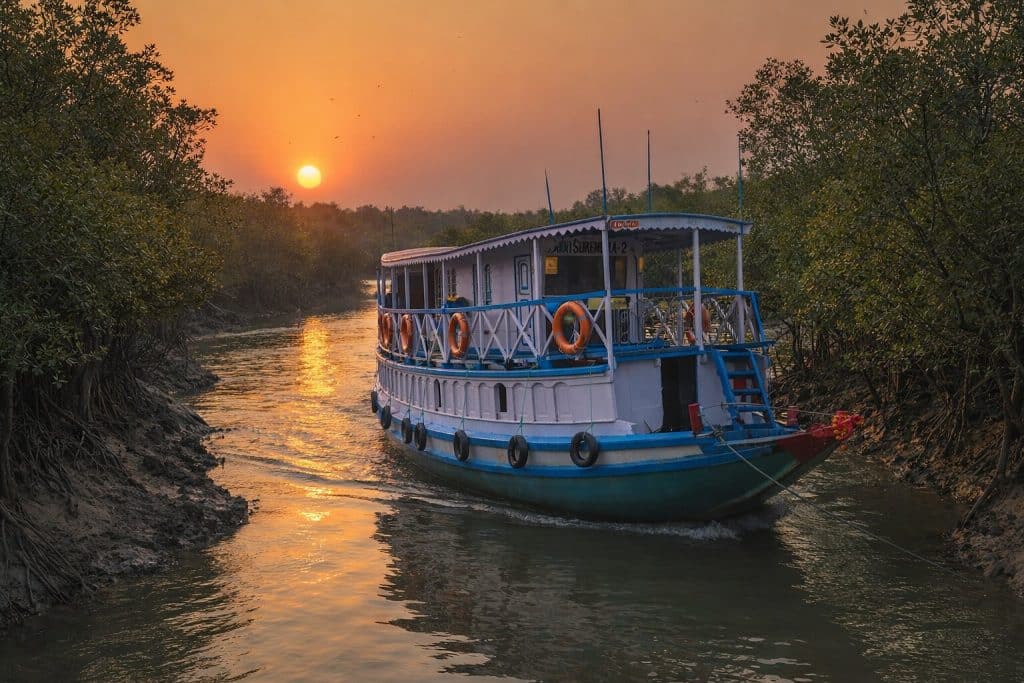
The Sundarbans form one of the world’s most distinctive mangrove landscapes—a vast deltaic system shaped by river discharge, sedimentation, and tidal exchange with the Bay of Bengal.
A Sundarban tour is primarily a boat-based exploration of tidal channels, creeks, and forest edges, combined with permitted watchtower visits and community insights across inhabited islands.
Unlike inland jeep safaris, the Sundarbans require a different mindset: observation is slower, routes depend on tides, and the forest is best understood as an estuarine wilderness, not a single “spot” for guaranteed sightings.
A landscape shaped by tides and time
One of the most distinctive aspects of a Sundarban Tour is witnessing the daily transformation of the landscape. Water levels rise and fall, exposing mudflats, changing river currents, and affecting which channels can be navigated safely.
This constant change reinforces a key truth for travelers: the Sundarbans are not static—this is a living system in motion.
- Tides control the routes: depth and current change through the day.
- Mangroves define the habitat: salt-tolerant trees and breathing roots shelter fish, birds, and reptiles.
- Wildlife signs come first: tracks, ripples, alarm calls, and movement cues often appear before sightings.
- Human and wild boundaries overlap: villages and forest margins sit close, shaping daily life.
Geography of the Sundarbans explained for travelers | How tides shape a Sundarban tour experience
Rich biodiversity of the mangrove ecosystem
Travelers are often more likely to encounter spotted deer, wild boar, monitor lizards, estuarine crocodiles, and diverse birdlife along waterways.
Kingfishers, herons, egrets, and raptors are frequent highlights. The ecosystem also supports countless fish, crabs, and mollusks that sustain both wildlife and local livelihoods.
Learn more:
Mangrove species found in Sundarban | Climate and seasonal transformation |Cyclones and environmental challenges
2) How a Sundarban Tour Works in Reality
Most Sundarban tours from Kolkata follow a simple backbone: road travel to a river jetty, boat transfer into the delta, and then guided movement through selected channels and permitted forest-facing zones.
What varies between itineraries is the route depth, time spent on water, and the quality of interpretation (how well the guide explains what you are seeing).
Typical flow (planning logic, not a rigid schedule)
- Kolkata to jetty: early departure helps maximize daylight on water.
- Boat transfer: entry into inhabited islands and forest-adjacent channels.
- Forest interface: cruising + watchtower visits as permitted.
- Community element: village life insights and cultural context where relevant.
- Return: timing depends on tides and road conditions.
3) Best Time to Visit the Sundarbans
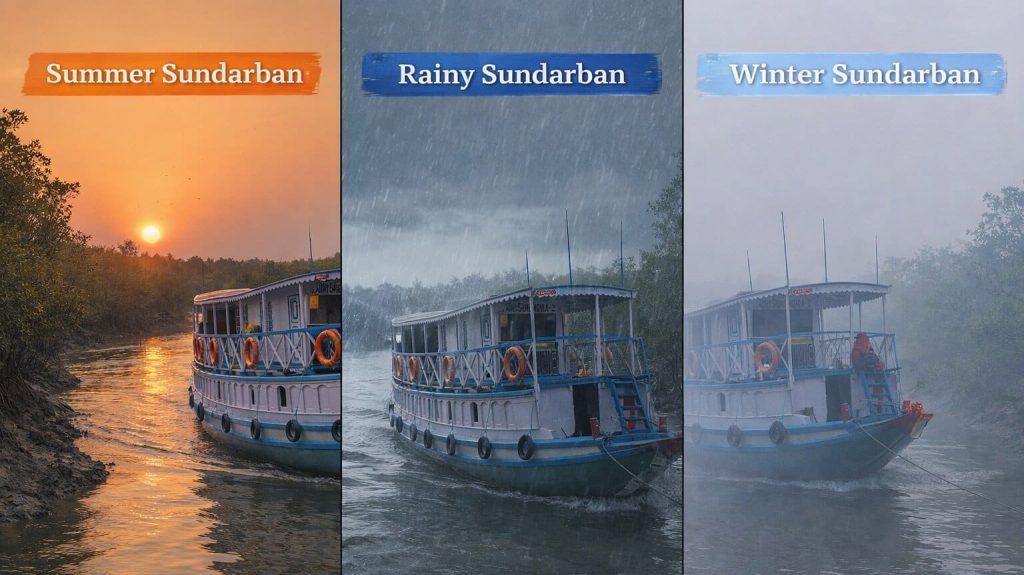
The “best” season depends on what you value: comfort, greenery, bird activity, or quieter waterways. The Sundarbans remain navigable through much of the year, but experience quality changes with heat, humidity, rainfall, and river conditions.
Winter (most comfortable for most travelers)
- Why it works: milder temperatures and clearer days support long boat hours.
- What to expect: pleasant mornings, cooler evenings, strong bird activity.
Summer (hot, but raw and intense)
- Why some choose it: fewer crowds and a quieter river-scape.
- What to expect: high heat and humidity; mornings and late afternoons feel best.
Monsoon (green transformation, variable conditions)
- Why it’s unique: the delta looks lush and dramatically alive.
- What to expect: rain interruptions and flexible routing.
4) The Sundarban Boat Safari Experience
The boat safari is the heart of a Sundarban tour. You move through creeks and channels where mangrove forests meet brackish waters, scanning banks for birds, crocodiles, deer, and subtle movement signals. The emphasis is quiet observation, not speed.
Why tides matter during a boat safari
At low tide, exposed mudflats reveal tracks and feeding grounds for birds, but some channels become shallow.
At higher tide, navigation improves and deeper routes may open, while mudflat visibility reduces.
Understanding this rhythm helps you appreciate why Sundarban itineraries emphasize timing over distance.
Practical expectations on a boat safari
- Movement is slow: the goal is to watch, listen, and interpret.
- Sightings are not guaranteed: this is real wilderness.
- Silence improves outcomes: noise reduces wildlife visibility near banks.
- Interpretation matters: a strong guide turns scenery into understanding.
5) Watchtowers and Forest Viewing Points
Watchtowers are structured viewing points that help visitors observe forest edges and water bodies while following conservation rules.
In the Sundarbans, watchtowers are valuable not only for possible sightings, but also for understanding habitat structure and forest management.
Commonly discussed watchtowers
- Sajnekhali: often considered a strong interpretation-oriented zone.
- Sudhanyakhali: frequently linked with water-body viewing near forest edges.
- Dobanki: known for its canopy-level walkway experience in visitor narratives.
6) Wildlife in the Sundarbans
The Sundarbans are globally known for the Royal Bengal Tiger, but the ecological richness extends far beyond one species.
This delta supports a complex food web: fish and crustaceans in tidal waters, reptiles along banks, birds across mudflats and canopies, and mammals adapted to fragmented islands and brackish habitats.
For most travelers, birds and reptiles provide the most frequent and rewarding sightings.
What you can realistically see during a well-run tour
- Birdlife: kingfishers, herons, egrets, raptors, and seasonal migratory activity.
- Reptiles: estuarine crocodiles in basking zones, monitor lizards, and water snakes.
- Mammals: spotted deer and other habitat-adapted wildlife along edges.
- Aquatic indicators: mudskippers and crabs on exposed flats.
Verified birds |Reptiles |Mammals |Aquatic animals |Plant diversity
7) Culture, Livelihood, and Folklore of the Sundarbans
A complete Sundarban tour is not only about forest edges. It is also about understanding how communities live at the frontier of tides, storms, and wildlife.
Island livelihoods connect deeply with fishing, small-scale agriculture, and delta navigation. Cultural narratives reflect respect and caution toward the forest—especially in rituals and folklore.
What cultural interpretation adds to your tour
- Context for human–wildlife proximity: why boundaries are not simple lines here.
- Local resilience: how communities adapt to salinity, flooding, and storms.
- Folklore as memory: stories that encode survival logic and respect for nature.
8) How to Reach Sundarban from Kolkata
Most travelers begin in Kolkata and proceed by road to a river jetty that connects to the delta’s river network. Travel time depends on traffic and the chosen jetty point.
Because the Sundarbans are tide-sensitive, reaching the boat at the right time can significantly improve usable exploration hours.
Travel planning advice
- Start early: morning departures maximize daylight on water.
- Keep buffers: traffic delays can reduce forest-facing time.
- Avoid rushed transfers: the best experiences feel calm and well-paced.
9) Safety, Rules, and Forest Etiquette
A Sundarban tour is safe when operated responsibly and when travelers follow instructions. Rivers, currents, weather shifts, and wildlife boundaries require disciplined travel behavior.
Safety is not only about emergency response—it is also about preventing risk through good decisions and respectful conduct.
Core safety practices
- Use life jackets when advised: especially during transfers and rough river conditions.
- Avoid unstable edges: currents and boat wakes can shift balance unexpectedly.
- Follow guide and crew instructions: they understand channel behavior and route constraints.
- Respect protected boundaries: do not attempt prohibited entry.
10) Responsible Travel in the Sundarbans
Responsible tourism in the Sundarbans is a necessity. The ecosystem is sensitive to pollution, noise, and careless movement.
Communities face real pressures from climate events and livelihood vulnerability. Responsible travel supports conservation outcomes and protects the integrity of the experience.
Simple, high-impact responsible travel rules
- Zero plastic litter: carry all waste back.
- Keep sound low: loud noise disturbs habitats and reduces sightings.
- Do not feed animals: it changes behavior and creates risk.
- Respect local life: ask before photographing people.
11) Who Should Choose a Sundarban Tour?
The Sundarbans suit travelers who value ecosystem-based exploration and appreciate landscapes that reveal themselves slowly.
If your expectation is a fast-paced “guaranteed sightings” trip, expectations should be reset.
If your goal is to experience a rare coastal wilderness—where mangroves, tides, and wildlife coexist—this journey is deeply rewarding.
Ideal traveler profiles
- Nature learners: travelers who enjoy geography, ecology, and intertidal dynamics.
- Bird and wildlife observers: those who enjoy frequent birdlife and subtle signs.
- Photographers: riverscapes, mudflats, textures, and bird activity.
- Families: when guided well, it becomes a living classroom.
Other Resourceful links are here : https://sundarbanstour.in https://sundarbanprivatetour.com
Selected Traveler Reviews
⭐⭐⭐⭐⭐ “Unforgettable trip! Beautiful creeks, amazing birdlife, and a very smooth overall experience.”
— Sohini Gupta, Kolkata
⭐⭐⭐⭐⭐ “The boat ride at sunrise was incredibly peaceful. The team managed timing and safety very well.”
— Dr. Arindam Das, New Delhi
⭐⭐⭐⭐⭐ “Very informative tour. I learned a lot about tides, mangroves, and the delta ecosystem.”
— Ananya Roy, Kolkata
⭐⭐⭐⭐⭐ “Excellent for photography—strong guidance on where to look, what to expect, and how to stay respectful.”
— Arjun Mehta, Mumbai
⭐⭐⭐⭐⭐ “Great for families. My kids enjoyed the nature learning and the calm pace of travel.”
— Riya Sharma, New Delhi
⭐⭐⭐⭐⭐ “Clean planning and professional coordination from start to finish.”
— Karan Gupta, Jaipur
12) Frequently Asked Questions (FAQs)
Is a Sundarban tour suitable for first-time wildlife travelers?
Yes, provided expectations are correct. A Sundarban tour is about reading a landscape—tides, forest edges, birds, and signs of animal presence—rather than chasing a single species.
Can a Sundarban tour be done as a short trip?
Short trips are possible, but the experience improves when you have enough time for relaxed river movement and at least one meaningful forest-facing session.
What is the most important factor for a good experience?
Timing and interpretation. Good timing aligns with daylight and suitable tidal windows. Good interpretation helps travelers understand mangroves, wildlife behavior, and route logic.
Is the Sundarban boat safari safe?
With responsible operations and disciplined traveler behavior, boat safaris are generally safe. Follow crew instructions, use safety equipment as advised, and avoid careless movement on decks.
Do I need to manage permits and forest rules personally?
In most organized tours, travelers do not manage permits directly. However, understanding forest etiquette and rules improves cooperation and helps protect the ecosystem.
Explore Sundarban Tour Packages
Contact: +91 7980469744 |sundarbantravel.com
Resources :
- Geography of the Sundarbans explained for travelers
- How tides shape a Sundarban tour experience
- Mangrove species found in Sundarban
- Climate and seasonal transformation
- Cyclones and environmental challenges
More Traverler’s Testimonials
-
“My Sundarban Tour with Sonakshi Travels was magical! From the boat safari to the cultural shows, everything was perfect.” – Riya Sharma, New Delhi
-
“The guides were so knowledgeable, and I loved learning about the mangroves. I’ll definitely book again!” – Arjun Mehta, Mumbai
-
“Spotting a Royal Bengal Tiger was the highlight of my trip. Sonakshi Travels made it seamless!” – Sneha Kapoor, Kolkata
-
“The Sundarban Tour exceeded my expectations. Great service and amazing wildlife sightings.” – Karan Gupta, Jaipur
-
“The local food was delicious, and the accommodations were very comfortable. Thank you, Sonakshi Travels!” – Anjali Nair, Bangalore
-
“The best way to experience the Sundarban! I felt safe and well taken care of throughout.” – Vikram Singh, Lucknow
-
“The team at Sonakshi Travels knows how to create a memorable experience. Highly recommended!” – Meera Joshi, Pune
-
“I loved the sunrise boat ride. It was so peaceful and beautiful.” – Rahul Desai, Ahmedabad
-
“Perfect trip for nature lovers. I can’t wait to visit again!” – Tanya Rao, Hyderabad
-
“The Sundarban Luxury Tour was worth every penny. Great service and unforgettable memories.” – Neha Jain, Chandigarh
-
“Amazing hospitality and wonderful wildlife sightings. Thank you, Sonakshi Travels!” – Manish Verma, Patna
-
“The guides made the experience truly special. Their knowledge added so much value.” – Priya Kapoor, Chennai
-
“Sailing through the mangroves was an adventure like no other. Highly recommended!” – Rohan Khanna, Goa
-
“The boat safari was thrilling, and the accommodations were so comfortable.” – Swati Mishra, Indore
-
“This was my second Sundarban Tour with Sonakshi Travels, and it was as amazing as the first!” – Arjun Patel, Surat
-
“The personalized service made our family trip unforgettable. Thank you!” – Divya Reddy, Visakhapatnam
-
“The village visit was so enriching. It was fascinating to see their way of life.” – Siddharth Menon, Kochi
-
“Perfect trip for birdwatching enthusiasts. I spotted so many species!” – Richa Das, Guwahati
-
“The eco-friendly practices of Sonakshi Travels are commendable. Great job!” – Nisha Tiwari, Nagpur
-
“The best Sundarban Tour experience I could have asked for!” – Akash Yadav, Agra
-
“Our honeymoon in the Sundarban was magical, thanks to Sonakshi Travels!” – Aarti Pillai, Thiruvananthapuram
-
“I’ve been on many wildlife tours, but this was the most unique. Thank you!” – Vikash Sharma, Ranchi
-
“The kids loved the boat safaris. A great family getaway!” – Ravi Sinha, Bhopal
-
“Sonakshi Travels made the Sundarban accessible and comfortable for us.” – Meena Aggarwal, Kanpur
-
“The local cultural program was a highlight. So entertaining and insightful!” – Rajat Singh, Amritsar
-
“Sonakshi Travels planned everything perfectly. We didn’t have to worry about a thing!” – Ankita Sen, Kolkata
-
“The mangrove forests were mesmerizing. The boat safari was an experience I’ll cherish forever!” – Harsh Sharma, Jaipur
-
“I was blown away by the biodiversity of the Sundarban. Thank you for a wonderful trip!” – Rajesh Gupta, Chandigarh
-
“The sunset cruise was the most beautiful part of our tour. Highly recommend it!” – Pooja Nair, Kochi
-
“I never knew such a peaceful place existed. Sonakshi Travels made it even better!” – Kabir Rao, Mumbai
-
“Every part of our Sundarban Tour was planned with precision. Great job!” – Ishita Ghosh, Pune
-
“The accommodations were fantastic. I especially loved the eco-resort!” – Ravi Jain, Ahmedabad
-
“Our guide was knowledgeable and friendly. It made the experience so much richer!” – Simran Kaur, Amritsar
-
“Traveling with Sonakshi Travels was stress-free and enjoyable. Thank you!” – Aditya Desai, Nagpur
-
“The wildlife sightings were amazing. I can’t wait to book another trip!” – Priyanka Verma, Indore
-
“The luxury houseboat stay was incredible. It felt like a dream!” – Arjun Mishra, Lucknow
-
“The staff was polite and professional. I felt safe throughout the trip.” – Sneha Reddy, Hyderabad
-
“The cultural evening added so much value to our experience. Wonderful!” – Vikrant Mehta, Chennai
-
“The Sundarbans are a must-visit destination, and Sonakshi Travels made it effortless.” – Aditi Singh, Bhopal
-
“I learned so much about the local ecosystem. A truly enriching experience!” – Manoj Kumar, Bhubaneswar
-
“The sunrise views from the boat were breathtaking. A memory I’ll cherish forever!” – Rachna Joshi, Dehradun
-
“The local food served during the trip was fresh and delicious.” – Rohan Sharma, Surat
-
“I had no idea the Sundarbans were so beautiful. Thank you for showing us!” – Swati Kapoor, Varanasi
-
“Spotting the tiger was thrilling. Sonakshi Travels exceeded our expectations!” – Deepak Yadav, Patna
-
“The guides were very attentive and made sure we were comfortable throughout.” – Tanya Sen, Siliguri
-
“I’ll definitely recommend Sonakshi Travels to my friends and family!” – Aakash Jain, Gurgaon
-
“The mangrove boat safari was both adventurous and serene. Loved it!” – Megha Pillai, Trivandrum
-
“The Sundarban Tour was perfectly planned. Kudos to the team!” – Ramesh Tiwari, Noida
-
“I loved the evening cultural program. It was vibrant and fun!” – Sakshi Gupta, Kolkata
-
“Sonakshi Travels provided excellent service. I couldn’t ask for more!” – Nikhil Das, Bhagalpur
FAQs
General Questions About Sundarban Tour
- What is the best time to plan a trip?
- Why should I choose a Sundarban travel for my next vacation?
- What are the must-see attractions on a Sundarbans?
- Is a Sundarban tour suitable for families with kids?
- Are there any luxury options available for a Sundarban package?
- How do I book a Sundarban tour package with Sonakshi Travels?
- Is a Sundarban tour safe for solo travelers?
Wildlife and Nature Questions
- What makes the mangroves special?
- Are there dolphins in the Sundarbans, and can I see them on a tour?
- Which watchtower offers the best views during a Sundarban visit?
- What are the unique features of the Sundarbans’ ecosystem?
- Are there night safaris available on a safari?
- Can I explore the backwaters?
- Is it possible to spot deer or other herbivores on a trip?