Update: March 7, 2026
Sundarban Tour Package: A Journey to the Land of the Olive Ridley Turtles
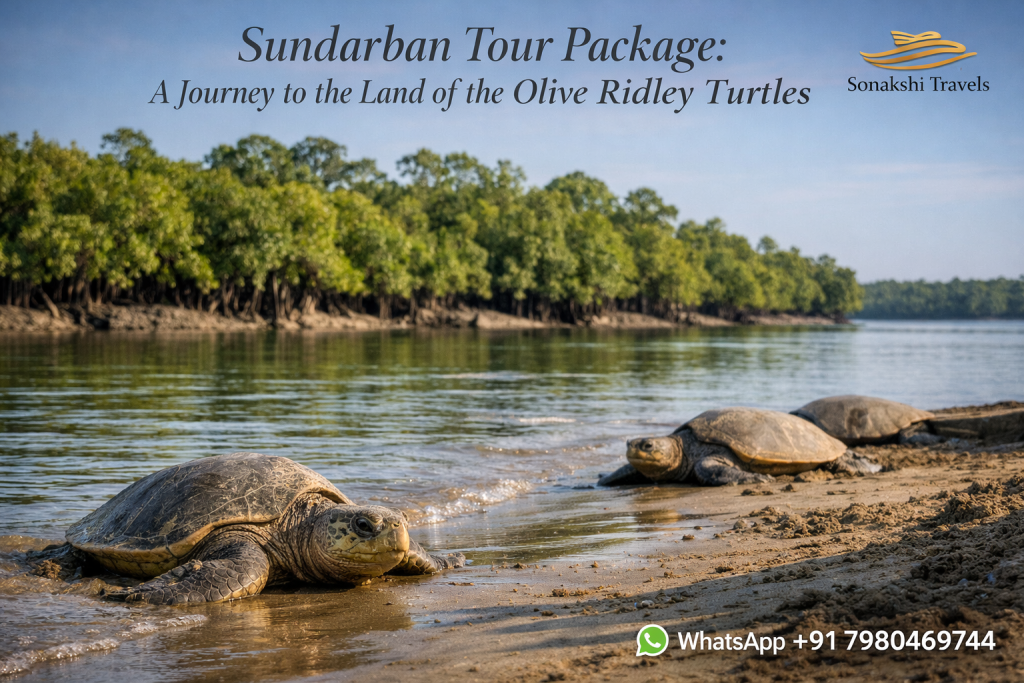
Few ecosystems in the world demonstrate the delicate relationship between land, water, and wildlife as clearly as the Sundarbans. Within this vast tidal landscape lives an extraordinary range of species that have adapted to a constantly shifting environment of muddy banks, tidal rivers, and dense mangrove vegetation. The ecological complexity of this region is often explored through scientific studies, wildlife observations, and carefully guided nature journeys described across the official information platform of the Sundarban travel ecosystem.
Among the many inhabitants connected to this dynamic delta environment, the Olive Ridley turtle holds a particularly fascinating place. These marine reptiles are primarily creatures of the ocean, yet their movements often bring them into coastal environments where mangrove forests interact with the Bay of Bengal. A thoughtfully arranged Sundarban tour package allows travelers to explore the ecological context in which these turtles exist, revealing a dimension of biodiversity that extends beyond the forest itself.
Understanding the connection between the Sundarbans and the Olive Ridley turtle requires examining the ecological structure of the delta, the biological behavior of the species, and the environmental processes that link mangrove habitats with nearby marine waters. For wildlife observers and researchers, the region offers a rare opportunity to witness how coastal ecosystems function as integrated networks rather than isolated landscapes.
The Ecological Relationship Between the Sundarbans and Olive Ridley Turtles
The Sundarbans is not only a forest of mangroves. It forms part of a much larger coastal ecosystem connected directly to the Bay of Bengal. Rivers flowing through the delta eventually merge with the sea, creating brackish water zones where freshwater and saltwater mix. These transitional environments support a wide range of aquatic life, including fish, crustaceans, and marine reptiles that move between estuarine and oceanic habitats.
Olive Ridley turtles spend most of their lives in open ocean waters, but their biological cycle periodically brings them toward coastal areas. Female turtles approach shorelines to lay eggs in sandy coastal environments, returning to land only during nesting periods. While major nesting beaches exist elsewhere along the eastern coastline of India, the waters surrounding the Sundarbans form part of the migratory routes used by these turtles during seasonal movement across the Bay of Bengal.
The proximity of the delta to the sea allows marine species to occasionally appear within tidal river systems. Estuarine environments can act as feeding grounds where turtles find jellyfish, small crustaceans, and other organisms that thrive in nutrient-rich coastal waters. Observing these ecological connections is often part of educational wildlife journeys organized through experiences such as a guided Sundarban tour experience that focuses on understanding the natural environment rather than simply observing individual species.
Such experiences gradually reveal how the mangrove forest, tidal rivers, and coastal waters operate together as a unified ecological system. Marine animals, forest wildlife, and migratory birds all depend on the same environmental balance maintained by the delta’s complex network of rivers and wetlands.
Biological Characteristics of Olive Ridley Turtles
The Olive Ridley turtle is among the smaller members of the sea turtle family, yet its ecological importance within marine environments is significant. The species takes its name from the olive-green coloration of its shell, a natural adaptation that provides camouflage against the shifting colors of coastal waters and shallow seas. Adult turtles typically measure between sixty and seventy centimeters in shell length and can weigh up to forty-five kilograms.
One of the most remarkable aspects of Olive Ridley biology is its synchronized nesting behavior. In certain coastal regions, thousands of females arrive simultaneously to lay eggs on the same beach. This phenomenon, known as arribada, represents one of the largest mass reproductive events observed in marine wildlife. The timing of these nesting events appears to be influenced by lunar cycles, ocean currents, and complex environmental cues that scientists are still studying.
Although the Sundarbans itself is not widely recognized as a major arribada site, the surrounding marine environment forms part of the broader migration zone used by these turtles. Their occasional presence in waters near the delta reflects the health of the coastal ecosystem that supports them. For travelers seeking to understand these ecological interactions more closely, interpretive journeys described under a Sundarban wildlife travel package often emphasize the interconnected nature of marine and mangrove habitats.
Olive Ridley turtles feed mainly on jellyfish, crustaceans, mollusks, and small marine organisms. Through this feeding behavior they help regulate populations of certain invertebrates, contributing to balance within marine food chains. Their ecological role therefore extends far beyond their physical presence, influencing the structure of coastal ecosystems over time.
The Role of Mangrove Ecosystems in Supporting Marine Life
Mangrove forests perform ecological functions that extend well beyond the visible boundaries of the forest itself. Their dense root systems stabilize muddy coastlines, reduce erosion, and create sheltered aquatic environments where juvenile fish and crustaceans can grow before moving into open sea waters.
These protected environments act as natural nurseries for many marine species. Fish that begin their life cycles within mangrove creeks eventually move into deeper coastal waters, where they become part of the larger marine food web. Predators such as sea turtles benefit indirectly from these nursery habitats because they support the organisms that form part of the turtles’ diet.
The Sundarbans therefore contributes to marine biodiversity by maintaining the productivity of nearby coastal waters. Nutrients carried through tidal channels circulate between the forest and the sea, sustaining a wide range of aquatic organisms. Travelers exploring the region through specialized journeys such as a private guided Sundarban tour often gain deeper insight into these subtle ecological processes that are not immediately visible on the surface.
Watching tidal flows move through narrow mangrove creeks reveals how the entire system functions. Organic material, nutrients, and small organisms travel continuously through the waterways, creating conditions that support both terrestrial wildlife and marine species beyond the forest.
Wildlife Diversity Surrounding the Olive Ridley Habitat
The environment associated with Olive Ridley turtles overlaps with an extraordinary diversity of wildlife. The Sundarbans contains reptiles, mammals, birds, and aquatic species that occupy different ecological niches within the same landscape.
Spotted deer often graze along forest edges, while saltwater crocodiles inhabit muddy riverbanks and tidal creeks. Several species of monkeys live in mangrove islands, feeding on fruits and leaves available within the forest canopy. Beneath the water surface, fish and crustaceans move with the tides, forming an essential component of the delta’s aquatic ecosystem.
Birdlife is equally diverse. Herons, kingfishers, egrets, and birds of prey can often be seen along river channels. Many migratory birds travel long distances across continents before arriving in coastal wetlands such as the Sundarbans. These birds rely on the same aquatic food sources that sustain marine organisms offshore.
The presence of Olive Ridley turtles therefore reflects the health of a much broader ecological network. Their survival depends on the stability of coastal habitats that support marine food chains. Observing these ecological relationships often forms part of interpretive experiences designed around a Sundarban luxury nature journey where travelers learn how wildlife species coexist within the mangrove delta.
Observing Marine Wildlife During a Mangrove Boat Exploration
One of the most meaningful ways to understand the relationship between the Sundarbans and marine species is through a guided boat exploration of mangrove waterways. Moving slowly through tidal rivers allows visitors to observe subtle environmental patterns that are rarely visible from land.
Mangrove creeks reveal the quiet rhythms of the delta. The surface of the water reflects dense vegetation while occasional ripples signal fish movements beneath the surface. Birds fly low across the rivers searching for prey, and crocodiles sometimes rest along muddy banks.
Although sightings of Olive Ridley turtles are not guaranteed, journeys through estuarine channels provide valuable understanding of the type of environment that supports marine reptiles. Observers begin to recognize how nutrient flows, tidal cycles, and aquatic habitats interact to sustain biodiversity.
Many travelers exploring the mangrove ecosystem through longer nature journeys such as the two-nights Sundarban tour program find that extended time within the delta allows them to notice these environmental patterns more clearly.
Conservation Challenges Facing Olive Ridley Turtles
Despite their wide distribution across tropical oceans, Olive Ridley turtles face several environmental threats. Coastal development, marine pollution, and accidental capture in fishing nets have affected turtle populations in many regions around the world.
Conservation programs along India’s eastern coastline aim to protect nesting sites and encourage fishing practices that reduce accidental harm to turtles. Environmental awareness campaigns also emphasize the importance of maintaining healthy marine habitats.
Mangrove forests such as the Sundarbans play a supporting role in these conservation efforts. Healthy mangrove ecosystems maintain the productivity of coastal waters and provide protection against coastal erosion. Damage to mangroves can disrupt marine food chains and ultimately affect species that depend on those systems.
Responsible wildlife tourism contributes to conservation by encouraging visitors to understand ecological relationships rather than simply observing animals. When travelers learn about the environmental importance of species such as the Olive Ridley turtle, they often develop a stronger appreciation for protecting fragile coastal ecosystems.
Experiencing the Deeper Meaning of a Sundarban Wildlife Journey
A tour through the Sundarbans offers more than visual encounters with wildlife. It allows observers to witness how natural systems function across interconnected environments. Rivers, forests, mudflats, and coastal waters all operate together as part of a living ecological network.
Travelers who spend time observing these landscapes often notice patterns that are easily missed during brief visits. Tidal water moves silently through forest channels, birds adjust their feeding behavior with changing currents, and aquatic organisms respond to fluctuations in salinity.
Within this network, marine turtles serve as a biological link between ocean ecosystems and coastal habitats. Their occasional presence near the Sundarbans highlights the importance of protecting both mangrove forests and marine environments.
The Sundarbans is widely recognized for its dense mangrove forests and remarkable wildlife, yet its ecological importance extends beyond what is immediately visible within the forest itself. The movement of Olive Ridley turtles through the surrounding marine environment reveals how closely connected coastal ecosystems truly are.
Understanding these connections transforms a simple wildlife observation into a deeper exploration of environmental relationships. Mangrove habitats, tidal rivers, and coastal waters together create conditions that sustain a wide range of life.
The story of the Olive Ridley turtle within the Sundarbans therefore represents more than the presence of a single species. It illustrates the delicate balance between marine migration, mangrove ecosystems, and environmental conservation within one of the world’s most remarkable coastal landscapes.