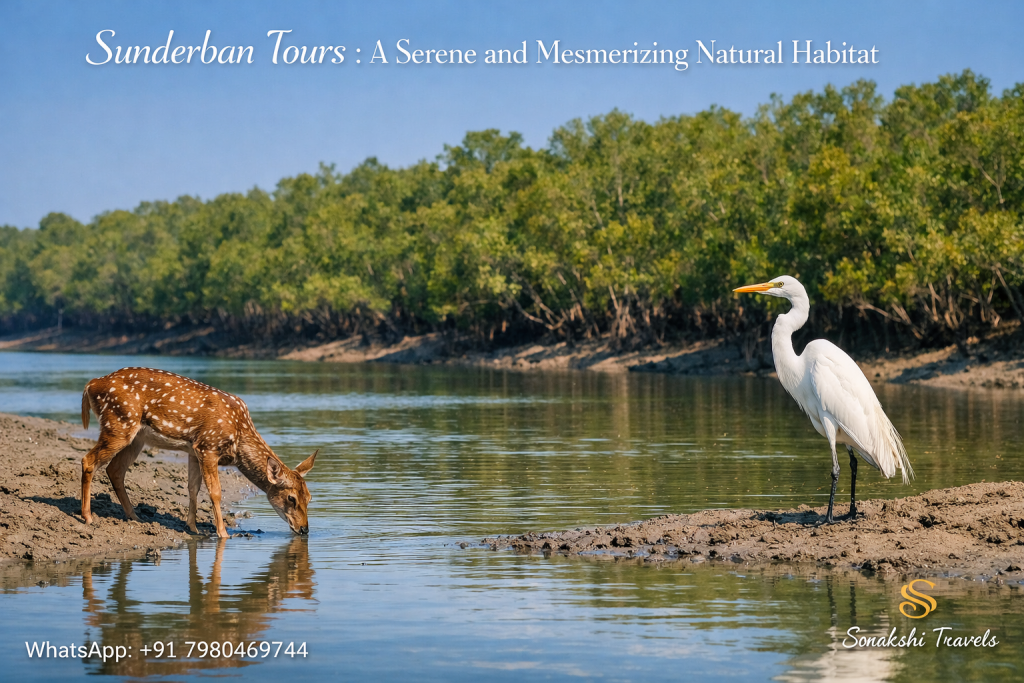
Sunderban Tours : A Serene and Mesmerizing Natural Habitat
Sunderban Tours represent far more than a recreational visit to a forested delta. They offer immersion into a living mangrove ecosystem where land, river, wildlife, and human settlement exist in a state of constant negotiation. Within the broader documentation and research available through Sundarban Travel, the region is consistently described not merely as a destination, but as an ecological system shaped by tides, salinity, and centuries of biological adaptation. Visitors are drawn not only by the possibility of wildlife sightings, but by the experience of inhabiting a landscape that feels structurally alive. The appeal lies in its layered serenity — a calm that is dynamic rather than empty.
The attraction sustains itself through return journeys. Many who enter this mangrove delta once choose to return, not in pursuit of novelty, but to reconnect with a rare ecological rhythm. The stillness of the waterways, the presence of dense mangrove corridors, and the silent movement of wildlife create an atmosphere distinct from terrestrial forest reserves. This distinction defines the character of a structured exploration of the Sundarban tour as a nature-centered engagement rather than a conventional sightseeing activity.
The Ecological Structure Behind the Experience
The Sundarbans form one of the largest contiguous mangrove ecosystems on the planet. Its identity as a natural habitat is grounded in measurable ecological structure. The forest survives on saline tidal water, and its vegetation has developed adaptive mechanisms such as aerial roots, salt filtration processes, and resistance to periodic submergence. For visitors, this complexity translates into a dense visual field — intertwined roots, layered foliage, and a shifting interplay between water and sediment.
Mangrove forests differ fundamentally from inland jungles. Instead of continuous ground pathways, they are segmented by channels and creeks that reorganize space. Movement occurs along water corridors, and the visual frame expands or narrows with each bend of the river. This generates a distinctive perceptual experience. The habitat is encountered through floating observation rather than terrestrial trails, and that structural difference influences how a well-designed Sundarban packages unfolds within the mangrove network.
Salinity and Adaptation
The slightly saline water of the rivers defines biological survival in this region. Mangrove species such as the Sundari tree have evolved specialized root systems capable of filtering salt and absorbing nutrients under tidal pressure. Their presence stabilizes riverbanks and sustains interconnected food chains. Fish, crustaceans, reptiles, and mammals rely on this vegetative structure for breeding grounds and shelter.
For observers, these adaptations become visible in the intricate root formations that rise above muddy banks. The exposed roots resemble natural buttresses, reinforcing the forest against erosion and tidal flow. The landscape therefore appears simultaneously delicate and resilient. This tension between fragility and strength contributes to the serene yet compelling identity of the habitat.
The River as a Moving Observation Platform
Unlike many wildlife environments accessed by road, Sunderban Tours unfold predominantly from the deck of a river vessel. This operational framework shapes the relationship between visitor and habitat. Boats move at regulated speeds through winding channels, minimizing disturbance while enabling sustained observation.
The rivers are expansive, creating psychological openness rarely experienced in dense forest zones. As a boat advances, the horizon remains visible, framed by mangrove silhouettes. The sensation is one of gradual progression rather than abrupt transition. Water against the hull establishes a steady rhythm, encouraging attentiveness. In carefully managed formats such as a Sundarban private tour experience, this measured navigation further enhances the sense of controlled immersion within the ecosystem.
Wildlife Encounters from Water Level
Observation from water level alters perspective. Crocodiles may be seen partially submerged, with only their eyes and snouts visible above the surface. Turtles rest along muddy edges, and schools of fish disturb the water in fleeting patterns. These sightings occur within authentic ecological contexts rather than curated enclosures, reinforcing the integrity of the habitat.
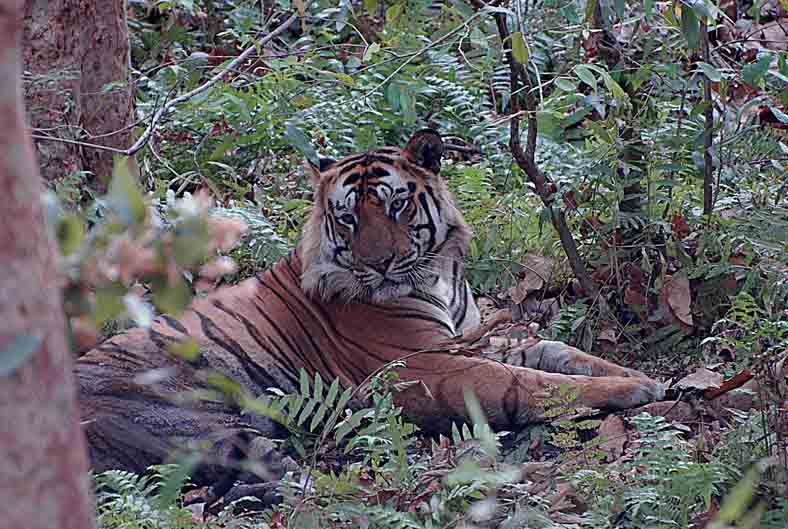
The Royal Bengal tiger, uniquely adapted to mangrove terrain, occasionally appears along riverbanks. Its movement through mudflats or between dense trunks is neither predictable nor staged. Encounters depend on ecological timing rather than itinerary control. The possibility of witnessing such a predator within its natural domain adds quiet intensity to the experience, deepening respect for the ecosystem rather than encouraging spectacle.
Mangrove Forest: A Living Architecture
Mangrove canopies form interwoven layers that filter sunlight in fragmented patterns. Illumination shifts continuously across water and foliage, creating alternating zones of brightness and shadow. This dynamic light contributes to the forest’s mesmerizing quality. The landscape appears to breathe as it transitions between reflection and opacity.
The structural density of mangroves provides habitat security for numerous species. Reptiles, insects, and birds occupy different vertical layers within this natural architecture. Ecological stratification supports biodiversity, and that diversity becomes visible during extended river-based observation. In certain refined formats such as a luxury-oriented exploration of the Sundarban tour, attention to pace and positioning allows deeper appreciation of these layered habitats.
Silence as an Ecological Feature
Silence in the Sundarbans is structured rather than empty. The forest’s quiet is textured by distant bird calls, subtle water movement, and occasional rustling within vegetation. Unlike mountainous forests dominated by wind currents, the mangrove delta produces a softer acoustic profile. This subdued soundscape strengthens the perception of serenity.
From a psychological standpoint, environments characterized by rhythmic natural sound and minimal mechanical intrusion can reduce sensory overload. The mangrove habitat provides precisely this condition. Visitors experience sustained visual continuity and acoustic moderation, factors that contribute to restorative immersion rather than momentary distraction.
Birdlife and Migratory Patterns
The Sundarbans support an extensive avian population, including hundreds of resident and migratory species. The convergence of freshwater inflows and saline tidal currents generates nutrient-rich zones that attract waders, kingfishers, herons, egrets, and raptors. Bird activity introduces movement across vertical planes of the landscape.
Migratory species utilize the delta as a seasonal refuge. Their arrival introduces variations in color and behavioral patterns, reshaping the visual character of the mangrove backdrop. Observers witness not only static beauty, but cyclical biological rhythms that extend beyond national boundaries.
The sustained presence of migratory birds signals ecological resilience. Avian populations respond rapidly to environmental stress; therefore, continued seasonal return suggests relative habitat stability. Sunderban Tours thus become opportunities to observe ecological continuity within a globally significant wetland system.
Human Dependence and Coexistence
Communities surrounding the Sundarbans depend on forest and river resources for subsistence. Fishing, honey collection, and small-scale cultivation are shaped by tidal cycles and regulated access to protected zones. This relationship demonstrates that the habitat is neither isolated nor artificial; it is shared space governed by ecological limits.
The coexistence of settlements and wildlife, including occasional tiger movement near inhabited edges, underscores the seriousness of this environment. The same landscape that inspires tranquility also demands caution and respect. Visitors encounter not only scenic beauty, but a functioning ecosystem where boundaries remain fluid.
Psychological Dimensions of Serenity
The descriptor “serene” gains depth within the Sundarbans. Reduced mechanized traffic, limited built infrastructure, and dominance of organic forms create an atmosphere of sensory moderation. Horizons extend across tidal rivers, and visual fragmentation common in urban environments is replaced by continuity.
Environmental psychology research indicates that sustained exposure to blue and green spaces can lower stress markers and improve attentional restoration. The Sundarbans integrate reflective water surfaces with dense vegetation in continuous alignment. This combination fosters cognitive recalibration rather than transient relaxation.
Why Visitors Return
Repeat visitation is shaped by ecological variability within structural constancy. Tidal shifts subtly redefine river edges; wildlife movement changes daily; light transforms mangrove silhouettes. The habitat retains identity while altering expression. This interplay sustains long-term interest.
For those who seek extended immersion, formats such as a two-night Sundarban tour packages allow deeper engagement with these gradual transitions, enabling observation of subtle changes across consecutive tidal cycles.
A Habitat That Defines the Experience
Sunderban Tours remain inseparable from the ecological framework that shapes them. Mangrove forests, saline rivers, diverse wildlife, and human coexistence collectively define the experience. The serenity perceived by visitors emerges from ecological balance and measured operational practice rather than superficial calm.
To enter this delta is to observe a functioning system rather than a curated stage. Rivers carry reflection and motion; mangroves resist tidal pressure; birds follow migratory routes; apex predators navigate mudbanks with adaptive precision. Within this convergence, Sundarbans Tours become sustained encounters with structural harmony.
It is this intricate equilibrium — adaptive, layered, and resilient — that continues to draw travelers back to the Sundarbans, reaffirming its identity as a serene and mesmerizing natural habitat.