Why a Sundarban Private Tour Becomes a Journey Into Silence, Mystery, and the Living Soul of the Delta
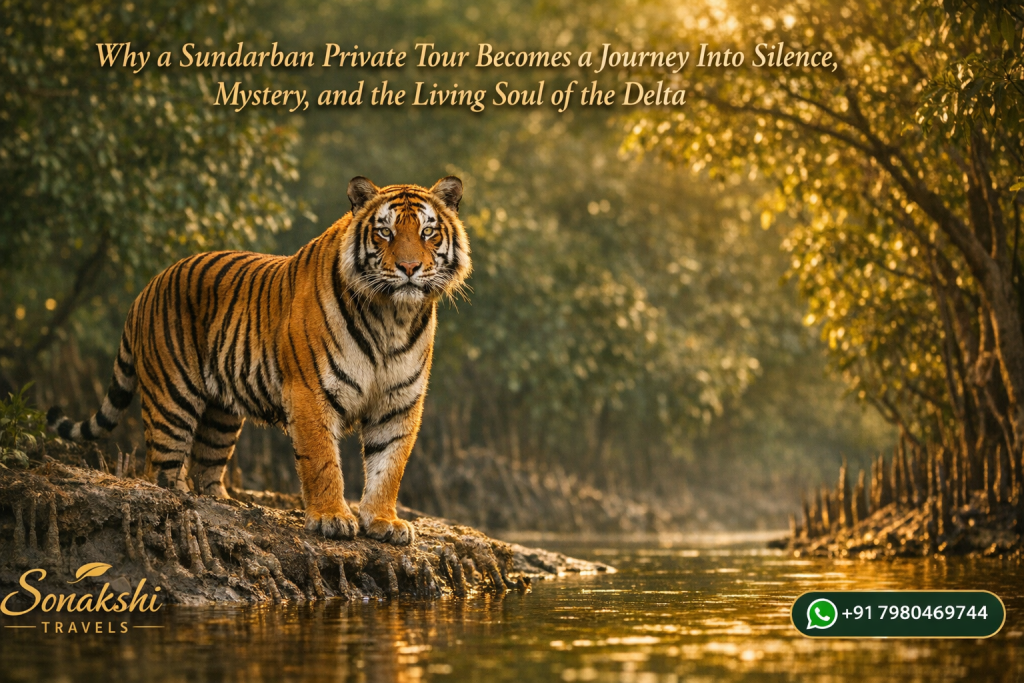
There are certain destinations that can be appreciated through photographs, brief itineraries, and familiar travel language. The Sundarban is not one of them. It does not reveal itself through hurried movement, loud tourism, or the simple act of passing through. It is a region of tidal thought, mangrove shadow, animal presence, and river memory. To enter it meaningfully is to accept that the journey will be shaped not only by what is seen, but by what is felt, heard, sensed, and gradually understood. That is why the finest experience of this landscape is rarely defined by speed or spectacle alone. It is defined by depth.
A meaningful Sundarban tour is not merely an excursion into a famous forest. It is an immersion into a living world where silence carries information, where water reshapes geography each day, and where the emotional force of the journey often comes from atmosphere rather than overt drama. In such a place, privacy matters. Time matters. Interpretation matters. So does the freedom to travel at a pace that allows observation to mature into understanding. This is where the idea of a Sundarban private tour becomes more than a premium option. It becomes the most appropriate way to encounter a landscape that resists superficial travel.
The deeper appeal of the delta lies in its layered character. It is wild yet contemplative, dangerous yet deeply beautiful, remote yet emotionally intimate. One moment offers still water and birdsong. The next suggests unseen movement in the mangrove line, the memory of tiger country, or the subtle authority of a forest older than ordinary imagination. To journey here well is not only to travel through a destination, but to enter a state of heightened attention. That is the true promise of the Sundarban: not only wildlife, not only scenery, but transformation through presence.
The Sundarban Is Not Merely Visited, It Is Slowly Entered
Most travel destinations introduce themselves quickly. Their landmarks are obvious, their rhythms are accessible, and their attractions are arranged for immediate recognition. The Sundarban operates by an entirely different logic. It is a place that must be approached with patience because its essence lies in mood, ecology, and gradual revelation. The rivers do not simply carry visitors. They initiate them. The mangroves do not act as passive scenery. They create a psychological threshold between the known world and something far more elemental.
This is why so many travellers feel that the delta begins to speak most clearly when noise falls away. In a crowded setting, the Sundarban can be reduced to checklist tourism: a watchtower here, a creek there, a hurried meal, a return before anything inward has truly happened. But when the journey is shaped with care, the experience becomes more layered. The forest is no longer just a destination on a route map. It becomes an unfolding reality. Even the act of looking changes. Instead of trying to consume the landscape, one begins to read it.
That reading happens through silence. The stillness over a tidal bend. The texture of wind through mangrove leaves. The sudden alertness of birds. The long intervals where nothing obvious occurs and yet the sense of expectancy grows stronger. In emotional terms, the Sundarban often reaches its deepest expression through restraint. That is why a journey framed around introspection and immersion can feel more powerful than one built entirely around action. The delta does not always shout. More often, it whispers. And those whispers are part of what give the region its extraordinary hold over the imagination, a feeling captured in the poetic sense of mangroves that seem to call inwardly to the traveller.
To understand this is to understand the real search intent behind premium and private travel in the region. Travellers are not only looking for transport, meals, and accommodation. They are seeking the conditions under which the Sundarban can be felt fully. That means less interruption, better pacing, richer interpretation, and a greater capacity to dwell inside the mystery of the landscape rather than merely pass through it.
Why Privacy Deepens the Experience of a Wild and Tidal Landscape
The value of privacy in the Sundarban is often misunderstood. It is not only a matter of comfort, exclusivity, or personal space, though all of those have their place. In this particular landscape, privacy shapes perception itself. A Sundarban private tour package allows the journey to unfold with fewer distractions, greater flexibility, and a more intimate relationship with the environment. It gives the traveller time to listen, observe, pause, and absorb. In a setting defined by fragile ecological rhythms and subtle signs, this matters enormously.
Private travel allows a family, couple, solo explorer, or small group to move in emotional synchrony with the destination. There is room for silence without social pressure. There is space for questions, local interpretation, and unhurried meals. There is also the freedom to appreciate the intervals between visible attractions, which in the Sundarban are often as meaningful as the formal highlights. The journey becomes more than an itinerary. It becomes a curated encounter with a living ecosystem.
This is especially important in a place where atmosphere is central to meaning. The Sundarban is not defined only by the possibility of spotting wildlife. It is defined by anticipation, by environmental tension, by the sense that every channel and creek belongs to a much larger ecological drama. In a private setting, that drama becomes easier to feel. One hears more. Notices more. Understands more. The landscape regains its scale and dignity.
There is also an emotional security in private travel that changes the tone of the journey. The forest may be mysterious, but the traveller’s experience need not feel chaotic. When the route, hospitality, timing, and interpretive flow are managed carefully, the result is not merely convenience. It is confidence. That confidence allows one to open more fully to the place itself. A well-designed Sundarban luxury private tour is therefore not a contradiction of wilderness. It is the structure that allows wilderness to be encountered with clarity, respect, and calm.
The Emotional Power of Tigers, Tides, and the Unseen
The Sundarban exerts such a strong hold on the imagination because it is one of the rare places where the visible and the invisible coexist with unusual intensity. The traveller may not always see the tiger, yet the presence of tiger country transforms the meaning of the entire journey. The forest becomes charged with possibility. Every shoreline suggests hidden movement. Every silence feels inhabited. In this sense, the Sundarban is as much a psychological landscape as a physical one.
The tiger here is not only an animal of fascination. It is part of a wider symbolic field that includes danger, reverence, folklore, ecological balance, and human humility. The traveller enters a domain where human authority feels reduced, and that reduction is part of the experience’s profundity. One does not come merely to consume beauty. One comes to stand at the edge of a world still governed by forces beyond tourism’s control.
Yet the emotional power of the region is not built on fear alone. It emerges from the relationship between danger and beauty, silence and vitality, concealment and revelation. The tides themselves contribute to this drama. They do not simply move water in and out. They reorder access, alter mood, reshape reflection, and remind the traveller that the delta is never static. It is a place in continuous negotiation with time and tide.
That is why so many literary and experiential descriptions of the region revolve around whispering waters, awakening wonder, and the inward call of the forest. A journey through this landscape often feels less like ordinary tourism and more like an act of emotional listening. The sensation that tigers and tides call out through silence speaks to something deeply true about the Sundarban experience: the journey is powerful not because it constantly provides dramatic events, but because it surrounds the traveller with charged stillness.
This is also where a Sundarban luxury tour can become far more meaningful than the phrase may initially suggest. In this context, luxury is not simply décor or indulgence. It is the privilege of time, quiet, interpretation, comfort, and controlled immersion in one of the most psychologically compelling landscapes in the region.
Wonder in the Sundarban Comes From Atmosphere, Not Excess
One of the most striking things about the delta is that wonder here is not manufactured. It rises naturally from the relationship between land, water, weather, and imagination. Unlike destinations that rely on built spectacle, the Sundarban generates awe through elemental conditions. Early light over a broad river. A distant watchtower framed by mangrove density. Mudbanks marked by the logic of tide. Fisher culture at the ecological frontier. Birdlife crossing open sky. The feeling of entering a place where the rules of the mainland no longer fully apply.
This kind of wonder is subtle but lasting. It does not overwhelm through quantity. It deepens through texture. Travellers often discover that the most memorable moments are not always the most dramatic ones. A pause in the middle of a creek. The collective stillness of everyone on deck. The guide lowering his voice while describing local forest knowledge. The changing colour of the river as day turns toward evening. These are the experiences that create emotional permanence.
The Sundarban therefore rewards a mode of travel that honours atmosphere. A crowded, rushed, or noisy format can weaken exactly what makes the place special. A thoughtful format strengthens it. This is why the most successful journeys into the region are those that allow wonder to emerge organically. They do not force the destination into performance. They let it remain what it is: wild, tidal, elusive, and strangely intimate.
That sensibility is reflected in the idea that the forest is a place where the wild whispers and wonder slowly awakens. The phrase captures the essential truth that awe in the Sundarban is cumulative. It is built through many small recognitions rather than a single dominant sight. To travel well here is to create the conditions under which those recognitions can occur naturally and deeply.
The Deeper Meaning of Luxury in the Delta
Luxury is often misunderstood when applied to wilderness travel. In many destinations, the term suggests separation from nature through excess comfort. In the Sundarban, the finest form of luxury does the opposite. It creates a bridge between comfort and immersion. It removes avoidable strain without dulling the rawness of the environment. It allows the traveller to remain open, attentive, and emotionally available to the landscape.
A true Sundarban luxury tour package should therefore be judged not only by surface amenities, but by how well it supports meaningful experience. Does the itinerary allow for unhurried observation? Does the setting preserve privacy and calm? Does the hospitality respect the character of the region rather than distract from it? Does the journey feel curated around ecology, atmosphere, and interpretation instead of mere movement? These are the questions that matter.
In the delta, comfort becomes valuable because it sharpens receptivity. A restful night, a clean and quiet boat environment, well-managed meals, and thoughtful hosting do not reduce adventure. They sustain it. They help the traveller remain mentally alert and emotionally present. That is especially important in a landscape where significance often lies in nuance. Fatigue, crowding, and disorder can flatten the experience. Careful design restores its depth.
This is why the idea of luxury in the Sundarban should be understood as intelligent travel design rather than extravagance alone. It is the art of enabling stillness without discomfort, wildness without confusion, and intimacy without compromise. In that sense, luxury becomes inseparable from meaning. It is not about escaping the forest. It is about meeting it under the best possible conditions.
Why the Sundarban Leaves a Lasting Inner Impression
Many journeys are remembered for their landmarks. The Sundarban is remembered for its atmosphere of presence. Travellers often return with fewer boastful stories than they expected, but with a much deeper internal impression. They remember the feeling of entering tiger country, the rhythm of river travel, the strange intimacy of a vast tidal wilderness, and the humility that comes from standing inside an ecology that does not revolve around human convenience.
That inner impression is precisely what distinguishes a profound journey from a superficial one. The Sundarban does not always reward the eye alone. It rewards the whole sensibility of the traveller. It asks for patience and offers resonance. It withholds certainty and gives depth. It replaces the quick satisfaction of ordinary sightseeing with something slower and more enduring: a sense of having encountered a landscape that remains partly mysterious even after one has left it behind.
This is why a carefully designed Sundarban private tour can feel transformative. The privacy allows the emotional texture of the place to surface. The quiet allows subtle details to accumulate. The pacing allows the traveller to enter the region rather than skim it. And the living tension between beauty and danger, wonder and restraint, visibility and concealment gives the journey an almost literary quality. One does not merely visit the Sundarban. One carries it away inwardly.
In that sense, the truest journey into the delta is also a journey toward self-clarity. The traveller meets not only forest and river, but a different quality of attention within themselves. This is beautifully aligned with the idea that there are places where silence, tiger lore, and wilderness help a traveller find something essential. The Sundarban remains one of those rare places. It does not simply entertain. It deepens.
For that reason, the finest article of faith about this remarkable region is also the simplest: the Sundarban should not be rushed. It should be entered with respect, interpreted with care, and experienced through a format that protects silence, privacy, and ecological attentiveness. When approached in that spirit, the journey becomes more than a holiday into the mangroves. It becomes a rare encounter with a living delta that still has the power to humble, awaken, and remain unforgettable long after the rivers have disappeared from view.