Sundarban Tour Offers a Close View of Traditional Island Life
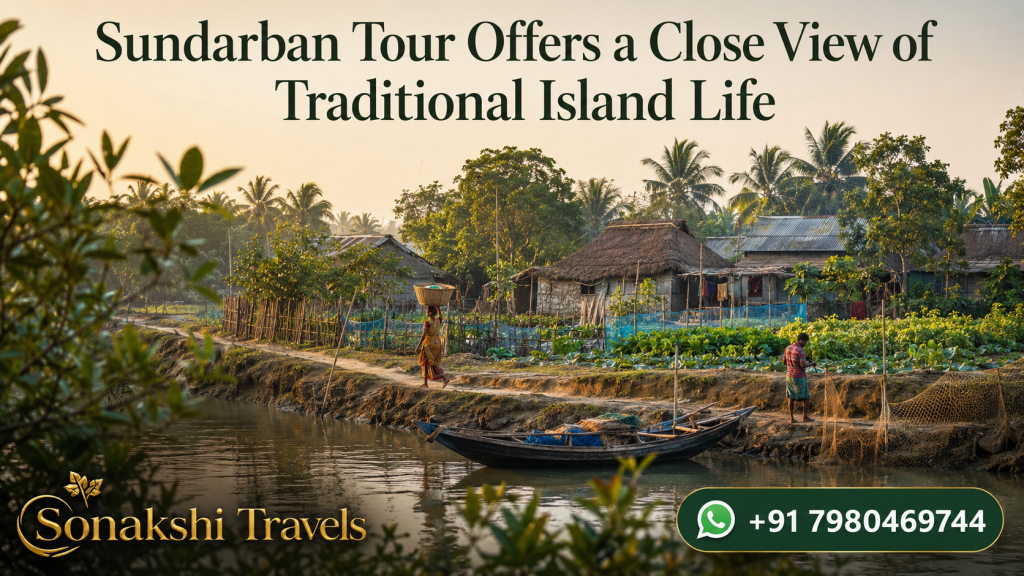
A well-planned Sundarban tour offers visitors a close and respectful view of traditional island life in one of India’s most unusual river-based regions. Beyond mangrove forests and wildlife, the journey reveals how people live beside tidal rivers, depend on changing water levels and manage daily work in places where road access and urban facilities are limited. Boats, embankments, village paths, fishing nets, small farms and local markets form part of the living landscape.
The island communities of the Sundarban have developed practical ways of living with rivers, saline water, seasonal uncertainty and the constant movement of tides. Their houses, occupations, food habits and methods of travel reflect the conditions of the delta. Observing these details helps travellers understand that the Sundarban is not simply a forest destination. It is also a populated region where human life remains closely connected with land and water.
This understanding should come through quiet observation rather than intrusion. A responsible visitor does not treat a village as a display or interrupt residents for photographs. The purpose is to learn how island life functions while respecting privacy, local customs and everyday work. Proper planning by a capable Sundarban tour operator can make this interaction more meaningful, comfortable and sensitive.
Why Island Life Is Central to a Sundarban Tour
The inhabited islands and protected forest areas are distinct, but they exist within the same tidal system. Rivers and creeks influence both. Forest permissions control entry into protected zones, while embankments, ferries and local boats support life on inhabited islands. A visitor gradually understands this relationship while moving through the region.
Traditional island life becomes visible through ordinary scenes. Residents may travel by boat to reach markets, carry vegetables along narrow paths, repair fishing equipment beside a water channel or tend small plots protected by earthen embankments. Children may walk or cycle to school, while local traders move essential goods between landing points and villages. These are not staged tourism activities. They are part of daily life in a river-dependent settlement.
The subject is closely connected with Bengal’s wider coastal identity. Readers who want to understand this cultural connection can also explore how a Sundarban Tour Helps You Experience Bengal’s Coastal Soul. That perspective supports a deeper appreciation of local speech, food, occupations, hospitality and the practical knowledge passed through island families.
Visitors should remember that village life is not untouched by change. Mobile phones, electricity, education, modern materials and improved communication have influenced many settlements. Traditional island life therefore does not mean life frozen in the past. It refers to the continuing practices and local knowledge shaped by tidal geography, limited land, river transport and community cooperation.
Living with Tides, Rivers and Embankments
Tides influence the rhythm of the Sundarban in ways that may not be immediately clear to a city traveller. Water levels rise and fall, altering the appearance of riverbanks, mudflats and narrow channels. Boat movement, fishing activity and access to certain landing points may depend on these changes. Residents learn to read the water and organise their work accordingly.
Embankments have an important place in inhabited islands. They separate settlements and agricultural land from tidal water, although they remain exposed to erosion and damage. Village life near an embankment often reveals how closely people watch river conditions. Paths may run along its upper surface, livestock may be moved beside it and residents may take part in repair work when necessary.
These observations also explain why the mangrove environment matters to nearby communities. The article Sundarban Tour Shows How Mangroves Protect Coastal Communities provides related context about the protective role of mangrove vegetation. Forest belts cannot remove every coastal risk, but their roots, trunks and dense growth can reduce wave energy, hold sediment and support the stability of this sensitive delta.
A knowledgeable guide can explain these relationships without turning the experience into a technical lecture. Simple explanations about tides, embankments, saline water and river erosion allow travellers to interpret what they see. This is one reason guided observation is more valuable than passing quickly through a village without context.
Traditional Occupations and Local Knowledge
Livelihoods across the inhabited islands vary according to location, access to fresh water, land conditions and available resources. Agriculture, fishing, small trade, boat work, livestock care, honey-related work, handicrafts and tourism services may all support local families. Not every household follows the same occupation, and responsible writing should avoid presenting the entire population as dependent on one activity.
Fishing and River-Based Work
Fishing is one of the most visible river-related occupations. Travellers may notice small boats, nets placed near channels or people sorting a catch near a landing point. The methods used depend on water conditions, local rules and the type of fishing activity. Forest access is regulated, and visitors should not assume that every person seen on the river enters protected forest areas.
Boatmen also possess detailed practical knowledge. They understand currents, channel depth, tidal timing and safe navigation. Their experience is essential because the Sundarban is not a destination where a route can be understood only through road maps. Respect for the boat crew is therefore part of responsible travel.
Farming and Household Production
Small agricultural plots may support rice, vegetables or other locally suitable crops, depending on soil and water conditions. Salinity can affect cultivation, making freshwater management especially important. Families may also keep poultry, goats, cattle or ducks as part of a mixed household economy.
Courtyards often serve several purposes. They may be used for drying produce, repairing nets, caring for animals or completing household work. These spaces show how island homes are organised around practical needs. Visitors should observe them only from appropriate public areas unless a resident has clearly invited closer interaction.
Tourism-Related Livelihoods
Tourism supports boat crews, cooks, guides, drivers, accommodation workers, local suppliers and small traders. A properly managed Sundarban tour package can distribute economic benefits through several levels of local service. This value is greater when organisers employ trained local people, purchase suitable supplies locally and maintain fair working conditions.
Tourism should not encourage performances that misrepresent community life. Cultural activities, when included, should be organised with consent and fair payment. Genuine engagement comes from listening, observing and understanding rather than expecting residents to behave according to a visitor’s idea of rural tradition.
Homes, Food and Everyday Social Life
Homes across the islands differ greatly. Some are built with brick and concrete, while others use combinations of mud, bamboo, wood, tiles or metal sheets. Building choices depend on income, location, land ownership and exposure to environmental conditions. Raised plinths, compact courtyards and careful storage arrangements may reflect the need to manage rainwater, tidal risk and limited space.
Food provides another useful connection with island life. Rice, lentils, vegetables and locally available fish are common elements of Bengali meals, although menus vary between households and tourism services. Ingredients depend on availability, cultural preference and affordability. Travellers gain a more honest understanding when local food is presented as daily nourishment rather than as an exotic display.
A well-managed tour kitchen must balance regional taste with hygiene, dietary needs and the comfort of guests. Clean water, fresh preparation, safe storage and clear meal timings are especially important in a river-based setting. Families travelling with children or senior citizens should share dietary restrictions before the journey. This allows the organiser to make practical arrangements instead of attempting last-minute changes.
Social life is often connected with courtyards, tea stalls, markets, schools, religious places and shared village spaces. These locations reveal how information and support move through a community. However, travellers should avoid making broad assumptions from a short visit. Island society includes different occupations, income levels, beliefs and personal experiences.
How Careful Planning Improves the Experience
The Sundarban is different from a city or hill station where hotels, restaurants and vehicles can be arranged independently at short notice. Here, boats, permissions, accommodation, meals, guides and transfers must work together. A delay or misunderstanding in one service can affect the rest of the experience. Careful coordination is therefore essential.
A reliable Sundarban travel agency should explain what kind of village exposure is actually included. Travellers need to know whether they will pass inhabited islands from the boat, walk through an appropriate settlement area or visit a local market or cultural location. Clear information prevents unrealistic expectations and protects communities from unplanned intrusion.
Many visitors choose a Sundarban tour from Kolkata, but the value of the journey depends on more than the starting point. The organiser must coordinate each service stage so that guests are not left confused at transfer points or boat landings. This becomes particularly important for families, senior citizens and travellers unfamiliar with rural river travel.
Urban residents often appreciate the slower pace and absence of constant city noise. The related article Sundarban Tour Is a Refreshing Break for City Travelers explains this change of environment in more detail. Within the present theme, that slower pace also gives visitors time to notice household activities, river movement and the working character of island settlements.
Boat, Guide, Food and Stay Coordination
The boat is not merely a sightseeing vehicle. It is the main space from which travellers observe rivers, forest edges and inhabited islands. Seating, shade, cleanliness, drinking water, life jackets and responsible navigation all influence comfort. A crowded or poorly maintained boat can reduce the quality of observation and create avoidable safety concerns.
The guide connects the visible landscape with its social meaning. A competent guide can explain why settlements develop behind embankments, how local boats are used and why particular occupations are common. The guide should also make clear when photography is inappropriate and help visitors interact politely if a local conversation takes place.
Accommodation affects rest, but it should not be treated as separate from the wider coordination. Guests need accurate information about room type, basic facilities, meal service and access conditions. A comfortable stay is valuable, yet it should support the journey rather than replace engagement with the destination.
Travellers considering a Sundarban private tour may receive greater control over boat space, meal timing and the pace of observation. This can be helpful when the group wants to spend more time understanding the inhabited landscape without following the fixed rhythm of a larger shared group.
A Sundarban luxury tour package may place additional emphasis on private services, upgraded accommodation and personalised coordination. Luxury in the Sundarban should be understood as organised comfort and attentive service. It should never mean disturbing village life, ignoring forest regulations or demanding activities that are unsuitable for the region.
Suitability for Families, Couples and Senior Citizens
A family Sundarban tour can help younger travellers understand how communities adapt to a tidal environment. Children may learn more from seeing a working embankment, a local boat or a small agricultural plot than from reading only a general description. Adults should guide them to observe respectfully and avoid entering private spaces.
Senior citizens often benefit from steady assistance during boarding, suitable seating and realistic activity planning. Long periods on a boat may be comfortable when shade, back support, drinking water and clean facilities are available. Walking through uneven village paths should be optional and assessed according to individual mobility.
Couples may prefer quiet observation and flexible service rather than crowded group movement. A private arrangement can provide this flexibility, but visitors should still follow local rules. Privacy for guests must not come at the cost of privacy for residents.
Small private groups may also find it easier to listen to explanations and pause at suitable viewpoints. A Sundarban private tour package should clearly define the boat arrangement, guide support, meals, accommodation and permitted activities. Clear inclusions are more useful than vague claims of exclusivity.
Responsible Observation of Island Communities
Responsible travel begins with the recognition that inhabited islands are homes, not open-air exhibits. Visitors should ask before photographing a person, particularly a child, worker or family inside a residential space. A landscape photograph taken from a public path is different from a close image of someone’s private life.
Gifts and money should not be handed out casually, especially to children. Although the intention may be kind, unplanned distribution can create discomfort or encourage repeated demands. Travellers who wish to support a community should use a transparent and organised channel suggested by a responsible local coordinator.
Waste management is equally important. Plastic wrappers, bottles and other rubbish should never be left on a boat, riverbank or village path. Noise must remain low near settlements and forest areas. These basic practices are discussed within the wider context of responsible tourism in Sundarban Tour Offers Excellent Scope for Eco-Friendly Travel.
Travellers should also avoid romanticising hardship. Island residents possess knowledge, skill and strong community connections, but many households face real challenges connected with erosion, salinity, employment, healthcare access and environmental risk. Respectful tourism acknowledges both local resilience and the practical difficulties of life in the delta.
Realistic Expectations from Wildlife and Village Experiences
A visit to the Sundarban should not depend on the promise of seeing a tiger. Wildlife movement is unpredictable, and sightings cannot be guaranteed by any ethical organiser. Birds, deer, crocodiles, monkeys and other species may be observed depending on natural conditions, but every sighting should be treated as a possibility rather than an entitlement.
The same realistic approach is needed for village experiences. Travellers may see farming, fishing, boat repairs or local trading, but daily work does not follow a tourism schedule. A genuine visit should not require residents to stage activities. The value lies in understanding the landscape and noticing whatever normal life presents at that time.
This balanced expectation makes the journey more rewarding. When travellers stop measuring success only by rare wildlife sightings, they begin to notice the relationship between forest, river and settlement. The skills of boatmen, the structure of embankments and the daily movement of essential goods then become meaningful parts of the experience.
Choosing the Right Sundarban Tour Package
The right choice depends on service clarity, group needs and the type of experience expected. An affordable Sundarban tour can still be organised responsibly when essential services are clearly defined. Lower cost should not mean unsafe boating, poor hygiene, overcrowding or untrained guidance.
Before booking, travellers should confirm the group format, boat sharing arrangement, accommodation standard, meal plan, guide service and assistance available at boarding points. They should also ask how the organiser handles forest permissions and schedule changes caused by operational conditions. Written clarity helps prevent misunderstandings.
Travellers who want a quieter experience may consider a private format. Those seeking more comfort can explore a Sundarban luxury tour, provided the services match the description. The most expensive option is not automatically the most suitable. The correct choice is the one that offers dependable coordination, appropriate comfort and respectful access to the region.
People planning to book Sundarban travel should also evaluate the quality of communication. A dependable organiser answers practical questions directly, avoids wildlife guarantees and explains limitations honestly. This approach indicates a better understanding of the destination than promotional language alone.
Conclusion: Understanding Island Life Through a Sundarban Tour
A thoughtfully organised Sundarban tour offers much more than views of rivers and mangrove banks. It helps visitors understand how people build homes, manage livelihoods, travel by water and adapt their routines to a tidal landscape. Traditional island life is visible through ordinary details: a fishing net being repaired, produce carried along an embankment, a boat
Sundarban Tour Offers a Close View of Traditional Island Life
A well-planned Sundarban tour offers travellers a close and respectful view of traditional island life in one of India’s most unusual inhabited landscapes. The experience is not limited to mangrove forests and wildlife observation. It also reveals how people live beside tidal rivers, travel by boat, protect their homes from saline water and depend on local resources for their daily needs.
Life on the inhabited islands is closely connected with rivers, embankments, agriculture, fishing, small markets and changing tides. Travellers can observe these connections while passing villages, ferry points, cultivated land and river-facing settlements. These scenes help visitors understand that the Sundarban is not simply a forest destination. It is also a living cultural landscape where people have adapted their routines to a demanding natural environment.
This human perspective gives greater meaning to the journey. The article Sundarban Tour Helps You Experience Bengal’s Coastal Soul explains this wider relationship between landscape, community and regional identity. A responsible visitor does not treat village life as a performance. Instead, the visitor observes it with patience, respects personal space and learns how island communities organise everyday life.
Why a Sundarban Tour Reveals a Different Way of Life
The inhabited islands are surrounded by rivers, creeks and tidal channels. In many places, waterways remain essential for movement, work and communication. Boats carry residents, supplies, agricultural products and building materials. Jetties act as important meeting points, while local markets connect scattered settlements with essential goods and services.
This river-based setting creates a daily routine that is very different from life in a large city. Residents plan many activities around ferry timings, tidal conditions and the practical limits of island infrastructure. Schoolchildren, workers, farmers, traders and healthcare workers may all depend on the same water-based connections. Seeing these ordinary movements can be one of the most informative parts of a Sundarban tour.
The close relationship between people and water is visible in the design of settlements. Houses are generally built on comparatively raised ground, and paths often follow embankments or connect homes with jetties and market areas. Ponds may support household needs, while raised boundaries and drainage arrangements help residents manage seasonal water pressure. These features are practical responses developed through long experience.
Visitors should understand that the occupied islands and the protected forest are not the same space. Forest regulations control entry into wildlife areas, while villages have their own social and economic character. A knowledgeable guide can explain this distinction clearly. Such interpretation prevents travellers from forming an incomplete picture of the region or assuming that every island is part of the core forest.
Traditional Livelihoods Visible During the Journey
Traditional island life is shaped by several livelihoods, although their importance varies from one settlement to another. Agriculture supports many households on inhabited islands where suitable land is available. Paddy cultivation, vegetables and small household gardens may be seen behind embankments. Farming remains challenging because soil quality, drainage and salinity can affect production.
Fishing is another visible activity. Small boats, nets, baskets and riverside landing points show how closely local work is linked with tidal waterways. However, visitors should avoid romanticising this occupation. River-based work requires skill and involves uncertainty. Responsible observation recognises both the knowledge of local workers and the economic difficulties they may face.
Some families are connected with honey collection, crab collection and other natural-resource-based occupations. These activities are regulated in forest areas and can involve serious risk. They should not be presented as casual adventure experiences for tourists. A trained guide can explain their social importance without encouraging visitors to interfere with work or enter restricted areas.
Small shops, tea stalls, workshops, transport services, homestays and tourism-related employment have also become part of the island economy. Boat crews, cooks, guides, drivers and local service providers contribute directly to organised tourism. When a journey uses local knowledge and services responsibly, a part of the visitor’s expenditure can remain within the regional economy.
Village Markets and Community Spaces
Local markets provide a practical view of island life. They may contain vegetables, fish, household goods, farming supplies and everyday necessities. The atmosphere is functional rather than decorative. Residents visit these markets to buy, sell, exchange information and arrange onward movement. Travellers passing through such places should avoid blocking paths, photographing people without permission or treating ordinary commercial activity as a staged attraction.
Schools, health centres, places of worship and community grounds also reveal how settlements are organised. These spaces show that island life includes education, healthcare, social relationships and local administration, not only occupations connected with the forest. Sensitive interpretation helps travellers see residents as members of complete communities rather than as background figures in a tourism photograph.
How Tides and Embankments Shape Daily Island Life
Tides influence the Sundarban throughout the day. They change water levels, affect boat access and shape the appearance of riverbanks and exposed mudflats. For island residents, tides are part of practical daily knowledge. Boat operators, fishers and people living near waterways understand how changing water levels influence movement and work.
Embankments form an important physical boundary around many inhabited areas. They help protect settlements and agricultural land from regular tidal water. Homes, paths and fields often exist behind these structures. Their condition matters greatly to local communities because erosion or damage can allow saline water to enter ponds, fields and residential areas.
The environmental importance of this relationship is discussed further in Sundarban Tour Shows How Mangroves Protect Coastal Communities. Mangrove vegetation can reduce wave energy and support riverbank stability, but it does not remove every risk faced by inhabited islands. Embankment maintenance, local preparedness and careful land management remain important.
A responsible guide should explain these realities without turning community hardship into dramatic entertainment. Visitors benefit more from factual explanations about salinity, erosion, tidal pressure and local adaptation. This approach develops respect for the practical knowledge that island residents use to manage a complex environment.
Local Food as Part of the Island Experience
Food served during the journey can offer another connection with regional life. Rice, dal, seasonal vegetables and locally familiar fish preparations are common parts of Bengali meals in the area. Menus vary according to availability, group requirements and service arrangements. Simple, freshly prepared food often reflects the region more honestly than an unnecessarily elaborate menu.
Food coordination is especially important because the journey is river-based. Ingredients, safe drinking water, cooking arrangements, storage and serving times must be planned before the boat enters longer creek routes. A dependable Sundarban tour operator should confirm dietary needs, including vegetarian meals, less-spicy food, allergies and suitable options for children or senior citizens.
Visitors should not assume that every ingredient comes directly from the forest or river. Responsible operators obtain supplies through legal and reliable sources. The purpose of local food is to help travellers appreciate familiar regional flavours while maintaining hygiene, safety and ecological responsibility.
Why Careful Planning Improves Cultural Understanding
A meaningful island experience depends on organisation. Boats, accommodation, meals, permits, guides and local transfers must work together. Poor coordination can make travellers rush through village areas or focus only on solving service problems. Proper planning creates enough time and mental space for observation and understanding.
A Sundarban tour package should clearly state what type of local experience is included. Some journeys pass inhabited islands only from the river, while others may include a permitted walk through a settlement, market or community area. Visitors should know whether such interaction is organised, appropriate and supported by a local guide.
Travellers beginning a Sundarban tour from Kolkata often move from a densely built urban setting into an increasingly river-dependent landscape. This gradual change is educational in itself. The article Sundarban Tour Is a Refreshing Break for City Travelers describes how slower river travel can help urban visitors notice natural and social details that are easily missed in city life.
Careful planning is not meant to make the destination feel artificial. Its purpose is to manage the practical parts of the journey so that guests can observe the region calmly. It also helps prevent unplanned entry into sensitive areas, intrusive photography and unrealistic demands on local residents.
The Role of an Experienced Travel Organiser
A reliable Sundarban travel agency should understand that village interaction requires sensitivity. The organiser must coordinate with local service providers, explain expected behaviour and select activities that do not disturb community routines. Guides should provide context in clear language rather than repeating exaggerated stories.
Before travellers book Sundarban travel, they should ask how the proposed journey presents local culture. A responsible answer should mention observation, respectful communication, local guidance and permission before photography. Claims of unrestricted village access or staged encounters should be treated carefully.
Experienced organisers also set realistic expectations. Traditional island life is not displayed at fixed hours for tourists. Fishing boats may or may not be active, markets may be busy or quiet, and agricultural work changes according to local needs. The value lies in seeing genuine daily patterns, not in demanding a prearranged performance.
Comfort Without Losing Contact with the Region
Comfort is important because travellers spend considerable time on boats and within a humid, river-based environment. A clean vessel, shaded seating, hygienic food, drinking water, life jackets and an attentive crew allow guests to concentrate on the surroundings. Comfort should support observation rather than isolate visitors completely from the destination.
An affordable Sundarban tour can still provide meaningful cultural understanding when essential services are properly managed. Cleanliness, safety and informed guidance matter more than decorative extras. Travellers should assess whether the arrangement provides dependable coordination and enough time to understand the landscape.
A private Sundarban tour may suit travellers who prefer a quieter pace or need greater flexibility for children and senior citizens. Smaller groups can often hear guide explanations more clearly and manage stops without creating crowd pressure. A suitable Sundarban private tour package should use this flexibility responsibly and should never promise access to restricted community or forest areas.
A luxury Sundarban tour may provide upgraded accommodation, private services and additional personal attention. However, higher comfort does not automatically create deeper cultural understanding. Even a Sundarban luxury tour package should retain accurate local interpretation, responsible waste management and respectful behaviour around island communities.
Suitability for Families, Couples and Senior Citizens
A family Sundarban tour can introduce children to river geography, mangrove ecology and rural life in a direct but manageable way. Adults can help children understand why boats are essential, how embankments protect settlements and why resources such as fresh water require careful use. This type of learning is more valuable than treating the journey only as a search for wildlife.
Parents should supervise children around jetties, riverbanks and boats. They should also explain that village homes, schools and workplaces deserve privacy. Asking before taking photographs is a simple but important lesson in responsible travel.
Couples often appreciate the quiet pace of river travel and the opportunity to observe daily life without a crowded sightseeing schedule. The experience becomes more meaningful when they listen to local explanations and notice gradual changes in land use, settlement patterns and river activity.
Senior citizens can also enjoy the cultural side of the journey when boarding arrangements, seating, food and walking requirements are properly assessed. A Sundarban private tour may provide better control over pace, rest and meal timing. Nevertheless, the organiser should give honest information about steps, jetty conditions and uneven village paths before confirming any walk.
Responsible Behaviour Around Island Communities
Respectful conduct is essential when observing traditional life. Residents are not exhibits, and their homes are not public photography sets. Visitors should request permission before photographing individuals, domestic spaces, religious activities or working people. A refusal should always be accepted without argument.
Noise should be kept low near homes, schools, narrow village paths and riverbanks. Loud music from boats can disturb residents as well as wildlife. Waste must remain on the vessel until it can be disposed of through a suitable system. Plastic bottles, food packets and cigarette waste should never be thrown into rivers, mudflats or village areas.
Responsible tourism also means avoiding purchases or activities that may encourage illegal extraction of forest resources. Travellers should follow their guide’s advice and buy ordinary local products only through appropriate sources. Wildlife parts, protected plants and unverified forest products should never be purchased.
The broader principles behind this approach are described in Sundarban Tour Offers Excellent Scope for Eco-Friendly Travel. Responsible conduct protects the environment while helping maintain a respectful relationship between visitors, operators and local communities.
Meaningful Interaction Without Intrusion
Short conversations with local residents can improve understanding when they occur naturally and respectfully. A guide may help visitors communicate with a boat worker, farmer, artisan or shopkeeper. The conversation should not delay work or create pressure to answer personal questions.
Travellers should be cautious about distributing money, sweets or gifts directly to children without local guidance. Although the intention may be generous, unplanned distribution can create crowding, inequality and unhealthy expectations. Support is more useful when directed through credible community initiatives or fairly purchased local services.
Authentic interaction does not require entering private homes or arranging artificial demonstrations. Watching a ferry arrive, observing goods being unloaded or listening to a guide explain farming challenges can provide substantial insight. The quality of understanding matters more than the number of photographs collected.
Realistic Expectations from the Complete Experience
A Sundarban journey may include forest observation, birdlife, river scenery and local culture, but none of these elements should be treated as a guaranteed performance. Wildlife sightings depend on natural movement, distance, tide and chance. The absence of a tiger sighting does not reduce the importance of learning about mangroves or understanding how island communities live beside a protected forest.
The best Sundarban tour is not necessarily the one making the largest number of promises. It is the arrangement that provides safe coordination, informed interpretation and realistic expectations. Visitors should know what they can observe, which areas are restricted and why community privacy matters.
Traditional island life is also changing. Mobile communication, improved services, education, tourism and new employment opportunities influence local routines. It would be inaccurate to describe every village as untouched by modern life. Culture remains meaningful because communities continue to adapt, not because they remain frozen in the past.
How to Choose a Suitable Sundarban Tour Package
Travellers should choose an arrangement that explains both the natural and human dimensions of the region. The organiser should provide clear information about boat quality, safety equipment, guide support, food, accommodation and any planned village visit. Vague promises of a completely authentic experience are less useful than specific explanations of how local observation will occur.
Group size deserves attention. Large groups can create noise and make guide explanations difficult to hear. Smaller groups may allow more thoughtful observation, although they must follow the same rules. Travellers considering a premium Sundarban private tour package should confirm that privacy and flexibility are combined with responsible local conduct.
Guide quality is equally important. A capable guide should explain settlement patterns, tides, embankments, farming, fishing and forest boundaries without presenting assumptions as facts. The guide should also help visitors distinguish between what is directly observed and what varies across different islands.
Food hygiene, safe drinking water, clean washroom arrangements and reliable service coordination strongly influence the experience. These practical matters may appear separate from cultural observation, but they are closely connected. When essential services are properly managed, travellers can listen, observe and learn without unnecessary distraction.
Understanding Traditional Island Life Through a Sundarban Tour
A thoughtfully organised Sundarban tour offers far more than views of rivers and mangrove vegetation. It allows visitors to understand how island communities use waterways, maintain settlements, protect agricultural land, manage limited resources and build livelihoods within a tide-dominated region.
The experience becomes valuable when it is based on patience, factual interpretation and respect. Travellers should observe daily life without intrusion, follow local guidance, avoid waste and maintain realistic expectations. They should also recognise that the people of the Sundarban are active participants in a changing regional economy, not decorative elements of a tourism landscape.
Proper coordination by an experienced organiser helps balance comfort, safety, ecological care and community respect. Whether travellers select an organised group journey or a smaller private arrangement, the purpose should remain the same: to understand the region without placing unnecessary pressure on it.
In this way, a Sundarban tour becomes an informed journey through a living island environment. The rivers, embankments, markets, boats, fields and settlements together explain how traditional knowledge continues to support everyday life. Visitors return with a clearer understanding of the Sundarban as both a protected mangrove ecosystem and a home shared by resilient island communities.