Sundarban Tour Offers Unique Views of Crocodiles and Water Birds
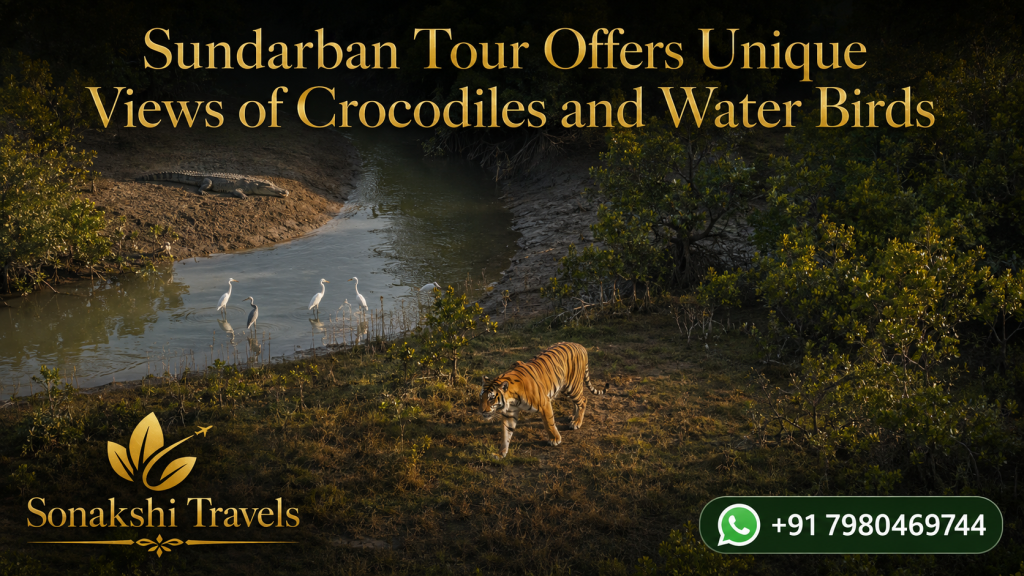
A well-planned Sundarban tour offers a rare opportunity to observe crocodiles and water birds within a living tidal landscape. These animals are not displayed in enclosed areas or gathered at fixed tourist points. They appear naturally along muddy riverbanks, mangrove edges, exposed sandbars, narrow creeks and open waterways. Their presence is closely connected with the movement of tides, the availability of food and the quiet character of the surrounding habitat.
Observing wildlife here requires patience. A crocodile may remain almost motionless on a sunlit bank before slipping silently into the river. A kingfisher may sit on an overhanging branch and disappear within seconds. Egrets, herons, cormorants and other water birds may gather around shallow sections where fish and small aquatic animals are easier to find. These brief but meaningful encounters help travellers understand why the Sundarban is best experienced through careful observation rather than hurried sightseeing.
The quality of such viewing depends greatly on how the journey is managed. Boat movement, noise levels, viewing distance, guide knowledge and timing within the permitted travel period can all influence the experience. A responsible tour does not chase animals or promise guaranteed sightings. It creates suitable conditions for travellers to watch the river and forest respectfully while allowing wildlife to continue its natural behaviour.
Why Crocodile and Water-Bird Views Make a Sundarban Tour Distinctive
The Sundarban is a river-based mangrove region where land and water continuously influence each other. Channels rise and fall with the tide, exposing mudflats at certain times and covering them again later. This changing environment creates useful feeding, resting and basking areas for many species. Crocodiles use quiet banks and exposed ground for resting, while water birds search shallow water, muddy edges and low branches for food.
This is different from wildlife tourism in a dry forest, where visitors generally travel by road. During a Sundarban tour, most observation takes place from a moving boat. Travellers view the habitat from the water while maintaining a safe and lawful distance from the forest. The boat therefore becomes more than a means of travel. It serves as the principal viewing platform for noticing animal movement, bird calls and changes along the riverbank.
The visual experience is often subtle. A crocodile can closely resemble a fallen log when it rests against dark mud. A bittern or pond heron may blend into reeds and low vegetation. Small birds may be noticed first through their calls, while larger birds can often be identified by their flight, posture or feeding method. This need for attention makes the journey engaging without requiring artificial activity.
The broader character of this environment is explained well in Sundarban Tour Brings You Face-to-Face with Riverine Wilderness. Riverine wilderness is central to crocodile and bird observation because every sighting is connected with water depth, tidal movement, forest cover and undisturbed space.
Understanding Crocodile Sightings in a Tidal Habitat
Estuarine crocodiles are among the most impressive reptiles associated with the Sundarban ecosystem. However, seeing one requires realistic expectations. They may rest on muddy slopes, remain partly submerged near the bank or move through the water with only a small portion of the head visible. Their colouring and stillness provide excellent camouflage, so inexperienced visitors can easily overlook them.
Lower water levels may reveal stretches of bank that offer suitable resting space, but tides do not operate according to tourist convenience. Even when conditions appear favourable, an animal may remain concealed. A knowledgeable guide or boat crew member can help passengers examine likely areas without presenting a sighting as certain. Their familiarity with shapes, tracks, movement and habitat improves the chance of noticing wildlife responsibly.
Why Safe Viewing Distance Matters
Crocodiles must always be observed from the boat and from a safe distance. Travellers should never attempt to approach a resting animal closely, attract its attention or encourage the boat operator to block its route to the water. A crocodile resting on a bank needs enough space to move naturally. Sudden noise, crowding or aggressive boat manoeuvring can cause stress and may create an avoidable safety risk.
Good observation is not measured by how close the boat can get. It is measured by whether passengers can see and understand the animal without disturbing it. Binoculars and camera lenses provide a much better solution than unsafe proximity. A careful Sundarban tour operator should instruct the crew to follow forest regulations, maintain reasonable distance and avoid competing with other boats for a closer position.
Reading the Riverbank Carefully
Travellers often expect crocodiles to be immediately visible, but useful observation begins with scanning the entire bank. Muddy openings, sloping edges, exposed roots and quiet corners deserve attention. The shape of the head, back and tail may gradually become clear only after the boat has slowed down. Reflections and shadows can make identification difficult, which is why patient viewing is important.
The guide should also explain the difference between confirmed observation and assumption. Mistaking wood or mud for an animal is common. Responsible interpretation protects the credibility of the experience. It is better to record one properly identified crocodile than to make several doubtful claims merely to make the tour appear more successful.
Water Birds Bring Movement and Colour to the Journey
Water birds often provide the most regular wildlife activity during a boat journey. They use different parts of the habitat according to their feeding behaviour. Kingfishers watch from branches before diving toward the water. Egrets and herons walk slowly through shallow areas. Cormorants swim, dive and later rest with their wings open. Sandpipers and other smaller birds search exposed mud for tiny organisms.
This variety makes bird observation suitable for both first-time visitors and experienced nature watchers. A traveller does not need advanced knowledge to appreciate the sight of a bird fishing, drying its wings or flying across a creek. At the same time, those with a stronger interest in birdlife can study differences in beak shape, body size, flight pattern, feeding technique and preferred habitat.
The number of birds visible at any moment can change. Some waterways may appear active, while others remain quiet. Boat traffic, tidal depth, food availability and natural movement all have an effect. A responsible guide explains these variations rather than treating an empty riverbank as a failure. Quiet sections remain valuable because they show the scale and natural rhythm of the mangrove environment.
Observation Is More Valuable Than a Long Species List
Many travellers judge birding only by the number of species recorded. However, the quality of observation is equally important. Watching a heron remain still before catching a fish can reveal more about its behaviour than briefly seeing several unidentified birds. Similarly, observing cormorants working in the water can help visitors understand how different birds use the same river system in different ways.
A good guide introduces common birds in simple language. Scientific detail can be useful, but it should not overwhelm families or casual travellers. The most helpful explanation connects the bird with its surroundings: where it feeds, why it uses a particular bank and how the tide affects its activity. This approach turns a sighting into ecological understanding.
Careful Planning Improves Wildlife Observation
The Sundarban cannot be managed like an ordinary city excursion. Forest entry permissions, regulated routes, boat services, crew coordination, meals and accommodation arrangements must work together. A delay or communication gap in one area can reduce the time and attention available for wildlife observation. For this reason, organisation is a practical part of the nature experience rather than a separate administrative matter.
A dependable Sundarban travel agency should provide clear information about what the journey can realistically offer. It should explain that crocodiles and birds are free-ranging animals, forest routes remain regulated, and sightings depend on natural conditions. This honest preparation helps visitors arrive with curiosity instead of fixed expectations.
Planning also affects passenger comfort. When meals, seating, drinking water, permits and boarding arrangements have been handled properly, travellers can concentrate on the landscape. Poor coordination creates repeated distractions and unnecessary movement. The relationship between organisation and meaningful mangrove tourism is explored further in Sundarban Tour Makes Mangrove Tourism Simple and Meaningful.
The Boat as a Wildlife-Viewing Space
The condition and management of the boat have a direct effect on the experience. Passengers need stable seating, sufficient space to observe the river, life jackets and a crew that understands safe navigation. People should not crowd one side suddenly when an animal appears. The guide or tour manager should control passenger movement so that everyone can view safely without affecting the balance of the vessel.
Engine noise and speed also matter. Boats must follow permitted routes and operational requirements, but unnecessary acceleration near a sighting should be avoided. A skilled operator slows down without obstructing other vessels or moving dangerously close to the bank. This creates time for observation while respecting both safety and wildlife.
Cleanliness is another important consideration. Food waste, plastic and other rubbish must never be thrown into the water. Such behaviour damages the habitat and weakens the purpose of nature-based tourism. A well-managed boat keeps waste in designated containers until it can be disposed of properly on land.
How Guides and Crew Improve the Quality of Sightings
Local knowledge is particularly valuable in a landscape where animals are often camouflaged. Experienced guides and crew members learn to examine river bends, muddy slopes, mangrove roots and open branches. They may detect a crocodile’s outline or recognise a bird call before passengers notice anything. Their role is not to manufacture excitement but to direct attention toward genuine signs of wildlife.
A good guide also manages expectations. If a sighting is distant, the guide should say so. If identification is uncertain, that uncertainty should be acknowledged. Clear and honest interpretation is more valuable than confident but inaccurate claims. It builds trust and encourages visitors to appreciate wildlife as part of a complex ecosystem.
Travellers selecting a Sundarban tour package should therefore consider the quality of field coordination, not only the list of included services. The presence of a responsible guide, trained boat crew and active tour manager can make observation safer and more informative. These people help connect practical travel arrangements with the educational value of the journey.
Comfort Helps Travellers Remain Attentive
Wildlife observation involves long periods of watching, listening and waiting. Basic comfort allows passengers to remain attentive. Suitable seating, clean food service, access to drinking water and orderly use of the boat reduce fatigue. Comfort in this context does not mean separating travellers from nature. It means supporting them so they can experience the river calmly and safely.
Meals should be served without creating clutter near viewing areas. The crew should keep passageways clear and organise service so that passengers do not need to move around repeatedly. Accommodation arrangements should also be dependable because adequate rest improves concentration during the next period on the water.
Some travellers choose a Sundarban private tour because a private boat allows observation to proceed at a pace suited to the group, within the permitted route and schedule. It may be easier to coordinate seating, photography and meal service when the vessel is reserved for one family or group. However, privacy does not permit departure from forest rules. Responsible distance, noise control and lawful navigation remain essential.
A Sundarban luxury tour package may provide upgraded accommodation and more personalised service, but its real value for wildlife viewing depends on disciplined coordination. Luxury should never be presented as a guarantee of more animals. It can improve rest, privacy and service quality, while the sightings themselves remain entirely natural.
Suitability for Families, Couples and Senior Travellers
A family Sundarban tour can introduce children to birds, reptiles, tides and mangrove habitats in a direct but controlled way. Adults should help children remain quiet when wildlife is visible and ensure they do not lean beyond safe parts of the boat. Short explanations from a patient guide can make the experience educational without turning it into a formal lesson.
Couples often appreciate the quiet character of the waterways and the slow pace of observation. Bird calls, open river views and the gradual discovery of wildlife create a thoughtful nature experience. The focus should remain on the habitat rather than staged entertainment. A private arrangement may offer greater personal space, especially for travellers who prefer calm and flexible meal coordination.
Senior citizens can also enjoy the journey when their mobility, seating and medical needs are considered in advance. They should have stable access during boarding, comfortable seats and protection from unnecessary crowding. The organiser must provide a truthful explanation of boat travel and basic physical conditions before booking. This allows the family to decide whether the arrangement is suitable.
An affordable Sundarban tour can still provide responsible wildlife viewing if essential safety and operational standards are maintained. Lower cost should never result in missing life jackets, overcrowding, poor hygiene or careless navigation. The important distinction is between optional comfort upgrades and non-negotiable safety requirements.
Photography Without Disturbing Crocodiles or Birds
Crocodiles and water birds are attractive photography subjects, but responsible conduct must come before the image. Passengers should avoid loud instructions, sudden movement and pressure on the boat crew to approach wildlife. Flash should not be used to provoke a reaction. Recorded bird calls should also not be played to draw birds closer, as this can disturb natural behaviour.
A camera with optical zoom or a pair of binoculars allows better observation from a suitable distance. Travellers using mobile phones should steady themselves and wait for a clear view instead of leaning outward. When several passengers want photographs, the tour manager can help them take turns and prevent crowding.
Environmental photographs are often more meaningful than tightly framed images. A crocodile resting against a broad muddy bank or a heron standing beside mangrove roots shows the relationship between the animal and its habitat. Such photographs communicate the true character of the Sundarban more clearly than an image that removes all ecological context.
Responsible Expectations Protect the Experience
No ethical organiser should guarantee crocodile, bird or tiger sightings. Wildlife moves freely, and visibility can change for reasons beyond human control. Promises of guaranteed sightings encourage unrealistic expectations and may place pressure on crews to behave irresponsibly. The correct approach is to offer a properly managed opportunity for observation.
This also means appreciating more than the largest or most famous animal. A distant crocodile, a kingfisher’s dive, a line of egrets leaving a mudflat or a cormorant surfacing beside the boat can each become an important part of the journey. The experience becomes richer when travellers observe behaviour and habitat instead of treating wildlife as a checklist.
Responsible tourism includes quiet conduct, proper waste management, respect for restricted areas and cooperation with the guide. Feeding animals, throwing food into the river or demanding entry into prohibited channels is unacceptable. The forest is a protected habitat, not a stage arranged for visitors.
The connection between local life, waterways and mangrove tourism is also important. Sundarban Tour Brings Authentic Bengal Beyond Regular Tourist Routes provides useful context for understanding why the region should not be reduced to a series of wildlife photographs. Its human and ecological systems remain closely connected.
Choosing the Right Arrangement for Wildlife Viewing
Before confirming a journey, travellers should ask how the boat, guide, permits, meals and safety arrangements will be coordinated. A responsible organiser should answer clearly and avoid vague promises. Travellers should also confirm whether the boat is shared or private, how passenger numbers are managed and whether life jackets are available for all members of the group.
Those planning a Sundarban tour from Kolkata should evaluate the complete coordination of the journey, even though wildlife observation begins only after entering the river system. An early organisational problem can create fatigue and reduce the group’s readiness to watch the waterways carefully. Clear communication between the traveller, transport team, boat crew and local manager therefore supports the final experience.
A Sundarban private tour package may suit families, photographers or small groups seeking controlled passenger numbers and personalised service. Travellers should still examine the actual operating standards rather than relying only on the word “private.” The arrangement should include lawful permissions, an appropriate boat, capable crew, safety equipment and realistic guidance about wildlife.
Similarly, the best Sundarban tour is not necessarily the one making the largest claims. It is the arrangement that communicates honestly, manages essential services correctly and respects the natural environment. Crocodile and bird sightings become more meaningful when the organiser allows enough attention for observation without turning the journey into a race between boats.
Useful Questions Before Booking
- Will a knowledgeable guide or responsible tour manager accompany the boat journey?
- Are life jackets available in suitable sizes for every passenger?
- How many travellers will use the boat, and is seating suitable for observation?
- How are forest permissions and regulated routes managed?
- What instructions are given about noise, waste and wildlife-viewing distance?
- How are meals served without interfering with safety or observation?
- Does the organiser clearly state that wildlife sightings cannot be guaranteed?
These questions help travellers assess service quality without becoming distracted by unnecessary claims. A reliable Sundarban travel provider should be able to explain its procedures in direct and simple language. Transparent answers generally indicate better preparation and a more responsible approach to nature tourism.
A Sundarban Tour Rewards Patient Observation
A carefully organised Sundarban tour offers distinctive views of crocodiles and water birds because it takes travellers through the animals’ natural tidal habitat. Crocodiles may rest on muddy banks or remain partly concealed in water. Kingfishers, herons, egrets, cormorants and other birds bring movement to creeks, river edges and exposed flats. None of these encounters should be treated as guaranteed or staged.
The value of the journey comes from patient observation, reliable coordination and respect for the protected environment. A suitable boat, responsible crew, informed guide, safe viewing distance and realistic expectations allow travellers to understand wildlife without interfering with it. Comfort and private service can support the experience, but they cannot control nature.
Travellers who approach the waterways calmly often notice more than those searching only for dramatic sightings. A small movement near the bank, a bird call from the mangroves or the outline of a crocodile against the mud can reveal how closely life in the Sundarban is tied to water and tide. This careful way of seeing is what gives a responsible Sundarban tour its lasting educational and ecological value.