The Sundarbans stand as one of the last great natural frontiers of the Indian subcontinent—an expansive labyrinth of mangrove forests, winding tidal creeks, and remote river channels shaped by the rhythmic pulse of the Bay of Bengal. A Sundarban Tour is not merely a journey into a protected forest; it is an immersion into a living delta where land and water coexist in constant negotiation. This region, spread across southern West Bengal and Bangladesh, represents the world’s largest mangrove ecosystem and remains one of the most ecologically complex landscapes on Earth.
Unlike conventional wildlife destinations defined by open grasslands or dense terrestrial forests, the Sundarbans are governed by tides, salinity gradients, and sediment flows. Every hour, the landscape subtly transforms as rivers swell and retreat, exposing mudflats, creek mouths, and mangrove roots. A carefully planned Sundarban Tour allows travelers to experience this transformation from close quarters—quietly cruising through waterways that have remained largely untouched by modern development.
Understanding the Geography of the Sundarbans Delta
The Sundarbans form the southernmost fringe of the vast Ganga–Brahmaputra–Meghna delta system. Here, freshwater rivers meet saline tidal flows, creating a brackish environment uniquely suited to mangrove vegetation. The delta is interlaced with hundreds of rivers and creeks such as the Matla, Bidyadhari, Raimangal, and Gosaba, which together sculpt the region’s tidal waterways.
What makes a Sundarban private tour distinct is the absence of fixed landscapes. Islands emerge and erode over decades, channels shift their courses, and forest boundaries are redrawn by nature itself. This dynamic geography ensures that no two journeys are ever identical, even along familiar routes.
The Role of Tidal Waterways
Tidal waterways are the lifeblood of the Sundarbans. They regulate nutrient flow, support aquatic life, and maintain the salinity balance essential for mangrove survival. During high tide, boats glide silently over submerged roots and mudbanks, while low tide reveals a starkly different terrain marked by crab burrows and exposed pneumatophores.
For travelers, navigating these waterways offers an intimate perspective of the ecosystem. The slow pace of a Sundarban Tour by boat encourages observation—of birds perched along creek edges, of ripples signaling fish movement, and of dense green corridors closing in from both sides.
Mangrove Forests: Nature’s Coastal Guardians
The mangrove forests of the Sundarbans are among the most specialized plant communities in the world. Species such as Sundari, Gewa, Goran, and Keora have evolved remarkable adaptations to survive saline soils, tidal inundation, and low oxygen levels. Their interlocking root systems stabilize sediment, reduce coastal erosion, and act as a natural barrier against cyclones and storm surges.
A Sundarban tour from Kolkata introduces visitors to these forests not as static greenery but as active engineers of the coastline. Scientific studies conducted by Indian environmental agencies highlight the critical role of mangroves in carbon sequestration and climate regulation, making the Sundarbans a globally significant ecological asset.
Forest Structure and Biodiversity Layers
The Sundarban mangroves are structured in layers, from submerged roots and mudflats to dense canopies overhead. This vertical complexity supports an extraordinary range of life forms—fish, crustaceans, reptiles, birds, and mammals—all intricately connected through food webs sustained by tidal cycles.
During a guided Sundarban Trip, travelers often observe how fallen leaves and organic debris become the foundation of the ecosystem, feeding microorganisms that, in turn, support higher trophic levels. This silent recycling system is fundamental to the forest’s productivity.
Wildlife of the Untouched Forests
The Sundarbans are globally renowned for their wildlife, particularly the Bengal tiger, which has adapted uniquely to a semi-aquatic mangrove environment. However, the region’s biodiversity extends far beyond this iconic predator. Spotted deer, wild boar, fishing cats, otters, and rhesus macaques inhabit various forest zones.
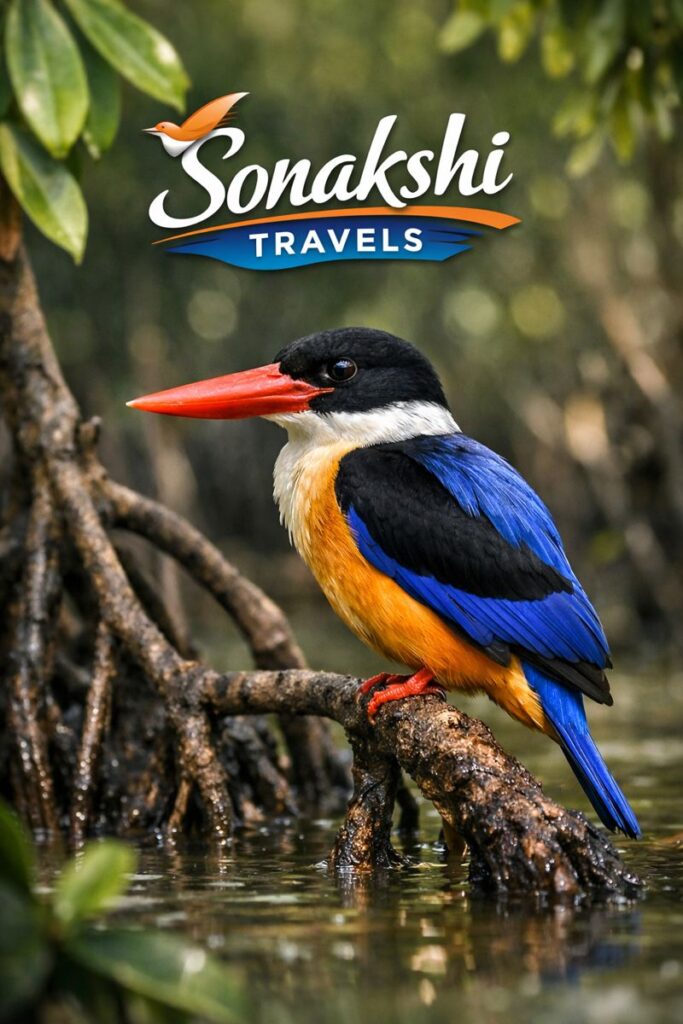
Avian diversity is equally impressive, with kingfishers, herons, egrets, storks, and migratory birds frequenting the waterways. A Sundarban Tour during winter months is especially rewarding for birdwatchers, as the region becomes a refuge for species traveling from Central Asia and beyond.
Aquatic Life and Estuarine Systems
The tidal rivers and creeks support a rich assemblage of aquatic life, including mudskippers, prawns, crabs, and numerous fish species that sustain both wildlife and local livelihoods. Estuarine dolphins occasionally surface in deeper channels, adding to the sense of wilderness that defines the experience.
These waterways function as nurseries for marine species, underscoring the Sundarbans’ importance not only as a forest but as a critical link between riverine and marine ecosystems.
Human Settlements at the Edge of Wilderness
Despite its wild reputation, the Sundarbans are also home to resilient human communities who have adapted to the challenges of living in a tide-dominated landscape. Villages are often located along embankments, with livelihoods centered around fishing, honey collection, agriculture, and eco-tourism.
A responsible Sundarban Tour offers insights into this delicate coexistence between people and nature. Traditional knowledge, shaped over generations, plays a vital role in resource management and survival in an environment where tides dictate daily routines.
Cultural Beliefs and Forest Ethics
Local folklore and spiritual practices reflect deep respect for the forest. Deities associated with protection and harmony symbolize the community’s understanding of nature as both provider and force to be respected. These cultural dimensions add depth to the travel experience, reminding visitors that the Sundarbans are as much a cultural landscape as an ecological one.
Conservation Significance and Global Recognition
The Sundarbans have received international recognition as a UNESCO World Heritage Site due to their outstanding universal value. Conservation efforts focus on habitat protection, wildlife monitoring, and sustainable tourism practices designed to minimize human impact.
Research institutions and conservation bodies continue to study the region’s response to climate change, sea-level rise, and increased cyclone frequency. A well-organized Sundarban Tour contributes to these efforts by promoting awareness and supporting local conservation-based livelihoods.
For a comprehensive overview of the Sundarbans’ global importance, readers may consult the detailed reference available on
Wikipedia’s Sundarbans article.
Climate Change and Future Challenges
Rising sea levels and increased salinity pose significant threats to mangrove health and freshwater availability. Conservation strategies increasingly emphasize mangrove restoration, adaptive embankment design, and community-based resilience planning.
Travelers choosing a Sundarban Tour become witnesses to these challenges and, through responsible travel choices, can support initiatives aimed at preserving this fragile ecosystem.
Experiencing the Sundarbans Through Slow Travel
Unlike fast-paced tourism destinations, the Sundarbans demand patience and attentiveness. Boat-based exploration encourages slow travel—allowing visitors to absorb subtle details such as changing water colors, shifting bird calls, and the interplay of light through mangrove canopies.
A thoughtfully designed Sundarban Tour prioritizes immersion over spectacle, emphasizing ecological understanding rather than checklist sightseeing. This approach aligns with global trends in sustainable and experiential tourism.
Seasonal Variations and Natural Rhythms
Each season offers a distinct perspective on the Sundarbans. Monsoon months highlight the raw power of tidal systems, while winter reveals calmer waters and increased wildlife visibility. Seasonal changes reinforce the sense that the forest is a living, breathing entity governed by natural rhythms.
Why a Sundarban Tour Remains Unmatched
A Sundarban Tour stands apart from conventional travel experiences because it leads into a realm where modern infrastructure gives way to elemental forces. Untouched forests stretch across shifting islands, while tidal waterways serve as silent corridors into one of the planet’s most intricate ecosystems.
This journey fosters a deeper appreciation for ecological balance, resilience, and the interdependence of life. It is a reminder that some landscapes cannot be fully controlled or conquered—only understood and respected.
Entering a Living Delta
To step into the Sundarbans is to enter a living delta shaped by water, roots, and time. A Sundarban Tour is not simply a passage through forests and rivers; it is a gateway to an untouched world where nature remains the dominant force.
For travelers seeking meaning beyond leisure, the Sundarbans offer perspective—on conservation, coexistence, and the enduring power of natural systems. In an age of rapid transformation, this tidal wilderness continues to stand as a testament to nature’s complexity and quiet strength.