Updated Date: 19 February 2026
15 Must-Know Tips for the Sundarban Hilsa Festival 2026
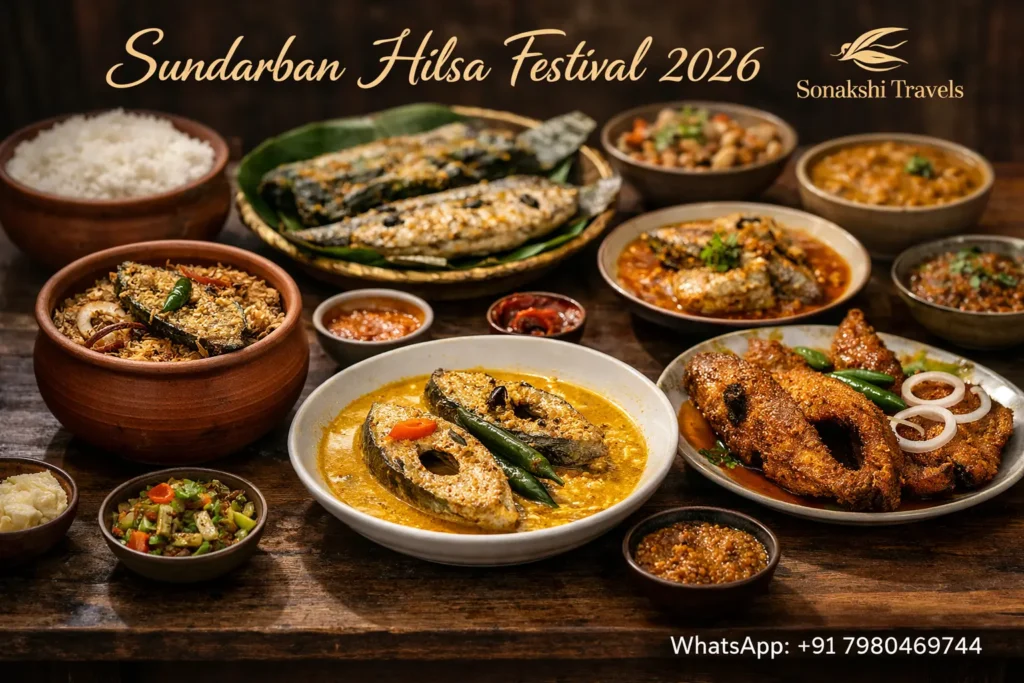
The Sundarban Hilsa Festival represents a rare convergence of ecology, gastronomy, and living river culture. It is not merely a culinary gathering centred on Bengal’s most celebrated fish; it is a seasonal moment shaped by tidal rhythms, regulated fishing cycles, community participation, and curated hospitality. Those who attend encounter a layered experience where food traditions intersect with conservation ethics and local livelihoods.
To participate meaningfully in this festival requires preparation that goes beyond enthusiasm. The following fifteen insights examine the operational, cultural, and experiential dimensions that define the event, ensuring that visitors engage with clarity, respect, and depth.
1. Secure Participation Early: Capacity Is Structurally Limited
The Hilsa Festival operates within a region governed by ecological regulation and permit-based entry systems. Accommodation units, licensed boats, culinary hosts, and cultural performers function under defined capacity thresholds. Unlike urban food festivals that expand through temporary infrastructure, this event remains geographically and environmentally constrained.
Advance confirmation ensures not only logistical certainty but also alignment with curated culinary sessions, community-hosted meals, and scheduled cultural evenings. Late decisions frequently result in limited choice, not because of marketing pressure, but due to ecological and administrative ceilings that cannot be exceeded.
2. Understand the Ecological Context of Hilsa
Hilsa (Tenualosa ilisha) is an anadromous species—migrating from the sea into freshwater rivers to spawn. Its availability is influenced by salinity gradients, sediment flow, and regulated fishing bans designed to protect breeding cycles. The festival period aligns with post-monsoon river conditions when legally harvested Hilsa enters regional markets.
Awareness of this ecological framework deepens appreciation. The fish served during the festival is not a commercial commodity detached from nature; it is part of a monitored system balancing demand with sustainability. Visitors who understand this context perceive each dish as part of a regulated seasonal rhythm rather than an isolated indulgence.
3. Verify Culinary Authenticity
Not all Hilsa preparations reflect traditional technique. Authentic Sundarban-style cooking relies on restrained spice profiles that allow the fish’s natural oil and aroma to dominate. Mustard paste, green chillies, minimal turmeric, and controlled steaming are typical foundations.
Signature Preparations to Observe
- Bhapa Ilish (steamed with mustard)
- Ilish Paturi (banana-leaf wrapped)
- Ilish Jhol (light broth-based curry)
- Smoked riverbank-style preparations
Engage with chefs about sourcing and method. Culinary conversations during the festival often reveal intergenerational techniques passed down within fishing families.
4. Carry Appropriate Identification for Permit Processing
Participation in the festival typically involves entry into protected forest-adjacent zones. Valid identification documents are essential for permit clearance. This is not a ceremonial requirement but a conservation protocol that regulates human presence in sensitive landscapes.
Ensuring documentation readiness prevents administrative delays and respects the governance structure that safeguards the region.
5. Pack with Functional Intent
Festival participation often includes boat-based dining experiences, riverside gatherings, and village courtyard performances. Clothing should prioritise mobility and comfort over ornamentation. Natural fabrics, breathable layers, and stable footwear are practical considerations.
This is an environment where practicality enhances participation. Ease of movement allows uninterrupted engagement with culinary demonstrations and community interactions.
6. Document with Dedicated Equipment
The festival offers visual complexity: glistening fish markets at dawn, mustard-coated fillets wrapped in banana leaves, brass utensils reflecting afternoon light, and musicians performing beside oil lamps. Dedicated photographic equipment captures tonal subtlety that mobile devices may not fully render.
For researchers, writers, or culinary documentarians, high-resolution documentation supports archival value beyond personal memory.
7. Maintain Cash Liquidity
Village artisans, small-scale vendors, and independent fish suppliers often operate outside digital payment ecosystems. Cash transactions ensure smoother exchanges and direct economic benefit to local participants.
Smaller denominations are advisable to facilitate transparent and convenient transactions.
8. Engage with Local Culinary Narratives
Hilsa in Bengal is not simply food; it is identity. Families associate specific recipes with monsoon memories, harvest celebrations, and seasonal rituals. Listening to these narratives enriches the experience beyond taste.
Many hosts recount distinctions between river-caught and estuarine Hilsa, texture variations, and subtle flavour differences influenced by salinity levels. These insights transform dining into cultural study.
9. Practice Responsible Waste Behaviour
Food-centric gatherings generate organic and non-organic waste. In a deltaic ecosystem, improper disposal carries amplified consequences. Participants should adhere strictly to designated disposal systems and avoid introducing non-biodegradable materials into open spaces.
Responsible conduct aligns the celebratory spirit of the festival with ecological stewardship.
10. Observe Ethical Bargaining in Local Markets
Artisanal goods—handwoven mats, pickled condiments, spice blends—often accompany festival marketplaces. Negotiation is culturally embedded, yet moderation reflects respect for labour-intensive craftsmanship.
Balanced exchange strengthens community relationships and sustains the micro-economies that support festival infrastructure.
11. Participate in Structured Boat-Based Dining Experiences
Certain festival sessions integrate curated meals aboard licensed boats navigating tidal channels. These experiences are carefully scheduled to align with safety regulations and controlled river movement.
Such settings allow guests to understand how riverine life shapes culinary identity. Dining while anchored amidst mangrove-lined waters reinforces the geographic authenticity of the meal.
12. Approach Cultural Performances as Contextual Extensions
Evening performances—Baul songs, Bon Bibi narratives, rhythmic drumming—are not entertainment add-ons. They contextualise Hilsa within broader delta folklore. Songs frequently reference rivers as maternal forces and fish as seasonal blessings.
Listening attentively connects culinary appreciation with oral tradition, creating a holistic interpretive framework.
13. Regulate Personal Consumption Pace
Hilsa is rich in natural oils and distinctive flavour density. Structured tastings often include multiple preparations across courses. Moderation allows sensory discernment between subtle variations in spice ratio, cooking duration, and fish maturity.
Approaching the meal analytically rather than indulgently ensures sustained enjoyment throughout the festival duration.
14. Respect Communal Dining Etiquette
Many sessions are hosted in shared settings where meals are served sequentially. Observing serving order, waiting for collective seating, and acknowledging hosts reflect cultural literacy.
Hospitality in the Sundarban carries ceremonial undertones. Participation with composure reinforces mutual respect between guests and hosts.
15. Preserve the Experience Through Reflective Engagement
Beyond photography and taste, reflection deepens retention. Documenting recipes, noting flavour distinctions, and recording conversations with fishers or cooks transforms attendance into informed appreciation.
The festival’s value lies not only in consumption but in comprehension—understanding how ecological cycles, regulated harvests, community labour, and culinary heritage converge in a single seasonal celebration.
Where Culinary Heritage Meets Ecological Consciousness
The Sundarban Hilsa Festival 2026 stands at the intersection of river science, cultural memory, and seasonal gastronomy. Its success depends equally on regulatory discipline and communal participation. Visitors who approach it with preparation, restraint, and intellectual curiosity discover more than a feast—they encounter a living system where food reflects geography and tradition mirrors tide.
To attend responsibly is to acknowledge that each silver fillet carries the imprint of migratory instinct, fisher resilience, and culinary continuity. In this deltaic celebration, taste becomes testimony—of river, community, and the enduring bond between Bengal and its most treasured fish.