A journey into the Sundarbans is not merely a conventional holiday; it is a profound encounter with one of the planet’s most complex and irreplaceable natural systems. A Sundarban Tour introduces travelers to a living landscape where land and water negotiate their boundaries daily, where forests breathe with the tides, and where survival itself is shaped by salinity, sediment, and seasonal change. This vast mangrove ecosystem stands as a testament to nature’s adaptability and resilience, offering visitors a rare opportunity to witness ecological processes that remain largely invisible in more familiar environments.
Spanning India and Bangladesh, it forms a natural shield along the Bay of Bengal while supporting extraordinary biodiversity. To step into this region is to experience an ecosystem that functions as both a biological sanctuary and a frontline defense against climate extremes. Every creek, island, and mudflat tells a story of coexistence between water, vegetation, wildlife, and human communities that have learned to adapt to its challenges over centuries.
Understanding the Sundarbans: A Global Ecological Rarity
The Sundarbans ecosystem is globally unique due to its sheer scale, dynamic hydrology, and species composition. Unlike terrestrial forests, mangroves exist in intertidal zones where freshwater from rivers mixes with saline seawater. This constant fluctuation creates conditions that few plant species can tolerate. Yet, the mangroves of the Sundarbans thrive precisely because of these extremes, forming dense forests that stabilize coastlines and nurture complex food webs.
Scientifically, the Sundarbans functions as a biogeochemical engine. Mangrove roots trap sediments carried by rivers like the Ganga, Brahmaputra, and Meghna, gradually forming new landmasses while preventing erosion. These processes also sequester large amounts of carbon, making the Sundarbans one of the most effective natural carbon sinks on Earth. Researchers increasingly recognize mangroves as critical allies in mitigating climate change, a role that elevates the global significance of this ecosystem.
For travelers, a Sundarban Tour transforms abstract ecological concepts into lived experience. Observing the interplay of tides, vegetation, and wildlife offers a deeper understanding of how ecosystems function beyond textbook descriptions.
Geographical Setting and Natural Dynamics
The Sundarbans lies at the delta formed by some of the world’s largest river systems. This deltaic geography ensures a constant influx of nutrients, sediments, and freshwater, all of which interact with tidal seawater from the Bay of Bengal. The result is a constantly evolving mosaic of islands, creeks, mudflats, and forests.
Tides dictate daily life in the Sundarbans. Twice each day, seawater advances deep into the forest, submerging roots and reshaping channels. As the tide recedes, nutrient-rich sediments are deposited, fueling plant growth and sustaining aquatic life. This rhythm governs everything from plant physiology to animal behavior, making tidal knowledge essential for both wildlife and human inhabitants.
The Role of Mangrove Vegetation
Mangrove trees are the architectural foundation of the Sundarbans ecosystem. Species such as Heritiera fomes (Sundari), Avicennia, and Rhizophora possess specialized adaptations, including stilt roots and pneumatophores, that allow them to survive in waterlogged, oxygen-poor soils. These structures not only anchor the trees but also create sheltered habitats for fish, crabs, and juvenile marine organisms.
From an ecological perspective, mangroves serve as nurseries for countless species. Many commercially important fish and crustaceans spend their early life stages among mangrove roots before migrating to open waters. Thus, the health of the Sundarbans directly influences fisheries across the northern Bay of Bengal.
Biodiversity of the Sundarbans: Life at the Edge
The Sundarbans is internationally renowned for its biodiversity, particularly its role as a stronghold for the iconic. Unlike their forest-dwelling counterparts elsewhere, these tigers are adept swimmers and have adapted to a semi-aquatic environment. Their presence symbolizes the ecological integrity of the region, as apex predators depend on healthy prey populations and intact habitats.
Beyond tigers, the Sundarbans hosts an impressive array of wildlife. Estuarine crocodiles patrol creeks, while spotted deer and wild boar forage along forest edges. The skies are animated by migratory and resident birds, making the region a haven for ornithologists. Reptiles, amphibians, and invertebrates contribute to a food web that is both intricate and resilient.
Aquatic and Avian Diversity
The intertidal waters of the Sundarbans are rich in plankton, fish, and crustaceans. Species such as mudskippers exemplify evolutionary innovation, capable of breathing through their skin and surviving both in water and on land. Dolphins, including the endangered Ganges river dolphin, navigate deeper channels, underscoring the ecological connectivity between riverine and marine systems.
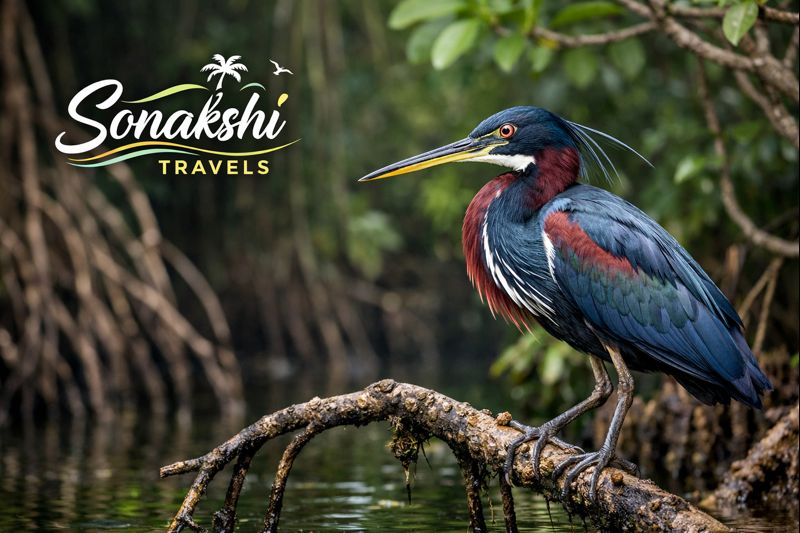
Birdlife adds another dimension to the Sundarbans experience. From kingfishers and herons to migratory waders, birds exploit the abundant food resources of mudflats and creeks. A Sundarban private tour during winter months often coincides with peak avian diversity, offering exceptional opportunities for observation and photography.
Human Communities and Traditional Knowledge
Human presence in the Sundarbans dates back centuries, with communities developing livelihoods intricately linked to the ecosystem. Fishing, honey collection, and small-scale agriculture remain central to local economies. These activities require an intimate understanding of tides, weather patterns, and wildlife behavior, knowledge passed down through generations.
Cultural practices in the Sundarbans often reflect reverence for nature. Folk traditions, rituals, and local deities symbolize respect for the forest’s power and unpredictability. This cultural dimension enriches the experience of visitors, revealing how human resilience mirrors ecological resilience.
Challenges of Coexistence
Living alongside a dynamic and sometimes dangerous ecosystem presents challenges. Human-wildlife conflict, particularly involving tigers, has shaped settlement patterns and safety practices. Conservation initiatives increasingly emphasize community participation, recognizing that sustainable protection of the Sundarbans depends on balancing ecological integrity with human well-being.
Climate Change and the Future of the Sundarbans
The Sundarbans stands on the frontline of climate change. Rising sea levels, increased salinity, and intensified cyclones pose significant threats to both ecosystems and communities. Scientific studies indicate that even modest sea-level rise could inundate large portions of low-lying islands, altering vegetation patterns and displacing wildlife.
Despite these challenges, the Sundarbans also demonstrates nature’s capacity for adaptation. Mangroves can migrate landward under favorable conditions, and their dense root systems dissipate wave energy during storms. Recognizing and enhancing these natural defenses is a key focus of contemporary conservation strategies.
Scientific Recognition and Global Importance
International recognition of the Sundarbans underscores its global value. As detailed in comprehensive references like Wikipedia’s overview of the Sundarbans, the region is acknowledged not only for its biodiversity but also for its role in climate regulation, fisheries support, and disaster mitigation.
Ongoing research in the Sundarbans spans disciplines such as ecology, climatology, and social sciences. Scientists study carbon sequestration rates, species adaptation, and human resilience to better inform conservation policy. For visitors, this research context adds intellectual depth to the sensory experience of traveling through the mangroves.
Experiencing the Sundarbans Through Responsible Tourism
A thoughtfully designed Sundarban Tour emphasizes education, conservation, and minimal ecological impact. Traveling by regulated boats, respecting wildlife habitats, and supporting local communities are essential components of responsible exploration.
Such tourism not only enriches visitors but also generates awareness and resources for conservation. By witnessing the fragility and grandeur of the Sundarbans firsthand, travelers often develop a deeper commitment to environmental stewardship that extends beyond the journey itself.
A Transformative Encounter with Nature
Ultimately, a Sundarban Trip from Kolkata offers more than scenic beauty. It is an immersive lesson in ecological balance, adaptation, and resilience. Standing amid tidal creeks and mangrove canopies, one gains a renewed appreciation for the delicate systems that sustain life on Earth.
In an era defined by environmental uncertainty, the Sundarbans reminds us of both nature’s vulnerability and its enduring strength. To encounter this rare ecosystem is to confront fundamental questions about coexistence, responsibility, and the future of our planet. Such an experience leaves an indelible impression, affirming that some landscapes are not merely destinations, but living classrooms that reshape how we understand the natural world.