Updated: March 18, 2026
Sundarban Tour in the Season of Hilsa
– When river and cuisine unite
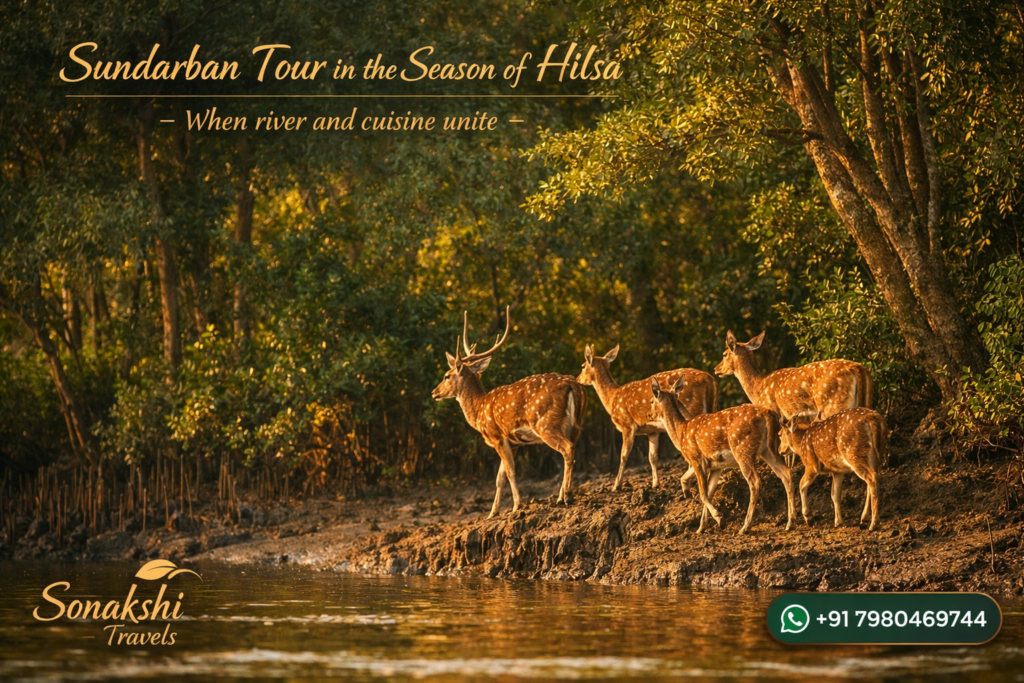
The meaning of a river landscape changes when food, memory, and ecology begin to speak in one language. That is what happens during a Sundarban hilsa festival. The journey is no longer limited to scenery, boat movement, or observation of mangrove edges. It becomes an encounter with a seasonal rhythm in which the river is tasted as well as seen. In this setting, a Sundarban tour takes on a deeper cultural meaning. The waterways are not only channels of transport. They are living sources of livelihood, appetite, tradition, and emotional belonging.
Hilsa has a special place in Bengal because it carries both delicacy and memory. Its arrival is linked with river life, family tables, regional pride, and a long culinary inheritance. In the Sundarbans, that meaning becomes even more powerful because the fish is not treated as an isolated dish. It is understood as part of a tidal world. The river feeds the kitchen. The kitchen returns respect to the river. During a seasonal journey shaped around Hilsa, the traveler begins to understand that cuisine in this landscape is not an accessory to the experience. It is one of the clearest ways of reading the place itself.
The river becomes more than a view
In many destinations, the river is admired from a distance. In the Sundarbans, it enters daily life with greater force. It shapes work, timing, appetite, silence, and movement. During the season of Hilsa, this truth becomes especially visible. The same waters that carry the boat also carry the story of the fish. The traveler does not merely move through a scenic delta. He enters a food ecology. That is why a Sundarban travel experience linked with Hilsa feels layered. The eye enjoys the wide channels and changing light, but the mind begins to connect those waters with taste, labor, and cultural meaning.
This unity of river and cuisine gives the journey a rare coherence. The landscape is not separate from the meal that is later served. One explains the other. The plate is not only delicious. It is interpretive. A simple serving of Hilsa in mustard, steam, light spice, or broth becomes a continuation of what was already seen outside: tidal motion, muddy richness, estuarine life, and the subtle fertility of river systems. Such continuity gives the journey unusual depth. It is not entertainment alone. It is a lesson in relation.
That is why many travelers feel that a seasonal Sundarban tour package built around Hilsa carries a more intimate character than a generic holiday. The journey gains texture because the senses are working together. Sight, smell, taste, and atmosphere support one another. Instead of moving through disconnected moments, the visitor experiences a complete pattern: river outside, fish at table, memory in conversation, and place held together by tide.
Hilsa as a cultural language of Bengal
To understand why this theme matters, one must understand the cultural weight of Hilsa in Bengali life. Hilsa is not just a prized fish because of flavor. It is cherished because it gathers emotion around it. It appears in family discussions, festive meals, seasonal desire, and inherited methods of cooking. It belongs to the grammar of Bengali taste. When that beloved fish is encountered in the river world of the Sundarbans, the experience becomes stronger because geography and culinary identity meet directly.
In this way, a Sundarban ilish utsav is not merely about eating multiple Hilsa dishes. It is about understanding the river through Bengali food memory. The fish represents a bridge between the emotional life of the household and the ecological life of the delta. The visitor is reminded that cuisine can preserve the history of water. Flavor can hold the memory of migration, tide, and region. A serious travel experience benefits from this kind of layered meaning because it allows the journey to remain rooted instead of becoming superficial.
In a modern world where travel is often reduced to photographs and rushed consumption, this form of seasonal attention has value. It slows perception. It invites respect. It encourages the traveler to think about food not as a commodity, but as a seasonal and ecological event. For that reason, a river-centered culinary journey can become one of the most thoughtful forms of Sundarban tourism. It joins appetite with understanding, and enjoyment with context.
The sensory unity of tide, aroma, and silence
One of the strongest qualities of this experience is sensory unity. The Sundarbans does not reveal itself through one dramatic note. It works through combined impressions. The wide river surface, the dark mangrove line, the smell of water, the quiet movement of the boat, the distant call of birds, and later the aroma of cooked Hilsa together create a single field of memory. Nothing feels isolated. This is why the experience lasts in the mind. It is not remembered as one event, but as an atmosphere.
The aroma of Hilsa, especially in classic Bengali preparation, carries both richness and restraint. It does not need excess. Its depth lies in balance. When enjoyed after hours spent on the river, the dish seems to complete a thought already started by the landscape. The oil, softness, and distinctive marine-river character of the fish make sense because the traveler has already seen the waters that nourish such life. In that moment, cuisine becomes geographic understanding.
This is where the journey becomes more than ordinary Sundarban eco tourism. The ecological world is not presented through lectures alone. It is felt through relationship. The traveler sees that a healthy river is not an abstract environmental idea. It affects the quality of food, the continuity of local culture, and the dignity of livelihoods connected to the delta. A meal of Hilsa, when placed inside this wider awareness, becomes almost educational in the best sense: direct, memorable, and humane.
Cuisine as a way of reading the delta
There are many ways to study a landscape. One may observe vegetation, water movement, settlement pattern, or animal behavior. In the Sundarbans, cuisine offers another serious method of reading the region. Food reveals which species matter, which seasons are important, which tastes define local belonging, and how communities respond to abundance and scarcity. During the Hilsa season, this becomes very clear. The fish is not separate from the social map of the region. It enters conversation, expectation, hospitality, and identity.
This makes the seasonal journey intellectually rich as well as emotionally satisfying. A traveler who pays attention will notice that the meal is never only about taste. It is also about method. Mustard, green chili, gentle steaming, light gravy, fried cuts, or traditional serving styles all express an older regional knowledge. The dish tells the story of preference shaped over generations. That continuity gives a refined depth to the overall Sundarban travel experience. The traveler is not only consuming food. He is encountering a regional intelligence built slowly through history.
Such an experience also reveals why the delta cannot be reduced to scenery. The Sundarbans is a cultural landscape as much as an ecological one. Riverbanks, kitchens, fishing traditions, and seasonal appetite all belong to the same living system. Therefore, a well-shaped Sundarban hilsa festival 2026 journey has interpretive power. It teaches the visitor to read the mangrove world not only through visual drama, but through nourishment, ritual, and community memory.
The emotional character of a Hilsa-season journey
Travel becomes memorable when it enters feeling without forcing sentiment. The Hilsa season in the Sundarbans does this quietly. It brings warmth to the journey because food creates intimacy. A wide river may inspire wonder, but a meal creates closeness. When the two meet, the experience becomes both expansive and personal. This is one reason many travelers describe such a journey as unusually complete. They do not feel like spectators. They feel received by the region.
The emotional effect comes from harmony. The river offers breadth. The cuisine offers depth. The mangrove silence calms the mind. The meal restores the body. Together, they create balance. In this setting, even a slow lunch can become one of the strongest moments of the day because it gathers what the journey has been saying all along: that this landscape feeds life in more ways than one.
For couples, families, and small groups who value atmosphere, this can give unusual beauty to a Sundarban private tour. A quieter travel format allows the seasonal cuisine to be appreciated without distraction. The focus stays on the unity of river, table, and reflection. In the same way, a thoughtfully arranged Sundarban luxury tour can deepen the experience not through excess, but through comfort, pace, and attention. The real luxury in such a journey is not display. It is the ability to absorb the season fully.
Ecological meaning behind the taste
The pleasure of Hilsa becomes more significant when one remembers that the fish belongs to a sensitive aquatic system. Estuarine ecologies depend on balance. Salinity, freshwater flow, river health, breeding cycles, and seasonal movement all matter. The Sundarbans exists as a delicate meeting zone of land and water, and its food culture is shaped by this complexity. Therefore, to enjoy Hilsa in this setting is also to become aware of ecological interdependence.
This awareness strengthens the seriousness of the journey. The meal is not detached from environmental reality. It depends on it. When travelers understand this, the idea of conservation becomes more concrete. Protecting the river is not simply about preserving scenic beauty. It also means safeguarding culinary heritage, local economies, and an entire knowledge system built around the estuary. In that sense, the Hilsa-centered journey can quietly support a more mature form of Sundarban exploration tour thinking, where observation and responsibility are held together.
The delta teaches interconnection with unusual clarity. Mudflats, currents, mangroves, fish, birds, and human food practices all reflect one another. That is why seasonal cuisine should not be treated as a side attraction. It belongs to the real grammar of the region. A traveler who understands this will return with more than pleasant memories. He will return with a more integrated view of place.
Why this theme feels unique in the Sundarbans
Many landscapes offer good food. Many river journeys offer beautiful views. What makes this experience distinctive is the depth of their union. In the Sundarbans, the river does not frame the cuisine from outside. It generates it. The meal is part of the same system that the traveler is moving through. This direct continuity gives the experience a rare authenticity. It does not feel arranged from outside. It feels native to the landscape itself.
That is why the title of this theme carries real meaning. When river and cuisine unite, the journey becomes multidimensional. The traveler sees the river, tastes its cultural extension, and understands the delta with more sympathy. Such a structure creates a stronger narrative than a generic holiday meal ever could. It transforms a simple outing into a season-specific interpretation of place.
For this reason, even those who have known the region before may find fresh meaning in a Hilsa-centered Sundarban tour packages experience. The familiar river appears newly alive when linked to culinary expectation. The meal, in turn, tastes richer when placed back into the setting from which it comes. Each completes the other.
The place of hospitality in the experience
Hospitality matters greatly in a journey shaped by cuisine. Food is never only prepared. It is offered. In the Sundarbans, that gesture has cultural warmth. Hilsa is served not merely as a menu item, but as something worthy of care. Such serving carries dignity because it reflects respect for both guest and tradition. This human element gives the journey further depth. The traveler feels not only fed, but welcomed into a seasonal mood that belongs deeply to Bengal.
That warmth also explains why a culinary journey through the delta often leaves a stronger aftertaste than more hurried forms of travel. The memory is not only of what was eaten, but of how it was placed within the day: after river observation, amid conversations about flavor, in a setting where silence and appetite do not compete with one another. Such memory is refined, calm, and lasting.
When handled with care, even a premium format such as a Sundarban luxury private tour can preserve this essential simplicity. What matters is not ornament but integrity. The best journeys allow the fish, the river, and the mood of the season to remain central. Comfort should support perception, not replace it. When that balance is maintained, the experience retains truth.
A journey where appetite becomes understanding
At its best, this kind of travel achieves something rare. It allows pleasure to become knowledge. The traveler begins with appetite and leaves with understanding. He enjoys Hilsa for its famous richness, but gradually sees that the fish is also a key to the delta’s cultural and ecological life. He enters the journey expecting beauty and receives meaning as well.
This is why the Hilsa season deserves serious attention in the context of Sundarban tourism. It reveals the region in a manner that is intimate, grounded, and deeply Bengali. It reminds us that landscapes are not known only by maps, routes, or visual spectacle. They are also known by what they nourish, what they inspire people to cook, and how they enter shared memory through taste.
In the end, a river journey during the Hilsa season offers more than a meal and more than a view. It offers a complete sentence about the Sundarbans. The first half is written in tide, mangrove shadow, and estuarine silence. The second half is written in mustard, aroma, and the unmistakable delicacy of Hilsa. Together they form a unified experience of place. That is why a seasonal Sundarban ilish utsav 2026 journey can feel so satisfying. It does not divide nature and culture. It lets them speak as one.
For travelers who value depth, this unity is the true reward. The river is not only crossed. It is understood. The cuisine is not only eaten. It is interpreted. And the Sundarbans, in that rare moment of seasonal harmony, is not merely visited. It is felt as a living bond between water, memory, and food.