Why a Sundarban Tour Feels Like a Journey into a Living World of Water, Forest Silence, Wild Beauty, and Deep Natural Balance
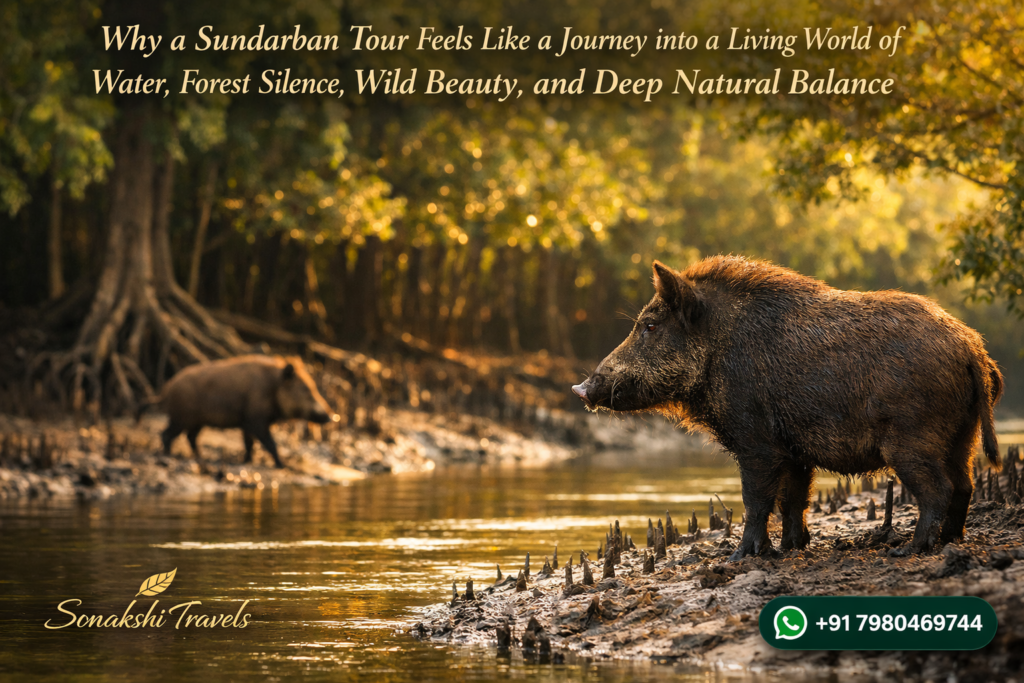
There are some places that people visit for quick fun, easy sightseeing, or a change from city life. Then there are places that ask for a slower mind and a more attentive eye. The Sundarban belongs to the second kind. It is not only a travel destination. It is a living delta where land shifts, rivers breathe with the tide, forests grow in mud and salt, and daily life moves in close contact with nature. A Sundarban tour becomes meaningful because it does not offer one single experience. It offers many layers at the same time.
In this landscape, the line between river and earth does not remain fixed. Water enters, retreats, and returns again. Forests do not stand like silent decorations. They survive through struggle, adjustment, and balance. Wildlife is not displayed in one open field for easy viewing. It remains hidden, alert, and deeply connected to this changing world. For travelers, this creates a rare feeling. The Sundarban is not a place to consume quickly. It is a place to observe with patience.
That is why so many travelers feel drawn toward the region. Some come for the river journey. Some come to see mangrove forests. Some want a peaceful escape away from traffic and noise. Others want to understand how one of the world’s most unusual ecological zones still survives. All of these reasons are valid, but together they reveal something larger. A Sundarban travel experience is really about entering a world where beauty, fragility, resilience, and silence all exist together.
A Landscape Where Land and Water Keep Rewriting Each Other
The first thing that makes the Sundarban special is the way its geography works. In many travel places, land gives a clear sense of direction. Roads guide movement. Buildings mark the center. Fixed borders make the place easy to understand. The Sundarban does not behave in that way. Here, river channels divide islands, muddy banks appear and disappear, and tides shape both travel and daily life. This is why the region feels so different from ordinary tourism spaces.
To understand the beauty of the area, one must understand this union of earth and water. The rivers are not simply routes for boats. They are part of the identity of the place itself. They carry light, mud, reflection, danger, food, silence, and movement. The forest does not begin after the river ends. Instead, both remain closely joined. This idea is captured well in the kind of journey suggested by exploring where land and water merge on a breathtaking Sundarban tour, because that merging is not a small visual detail. It is the foundation of the entire experience.
When a traveler moves by boat through wide rivers and narrow creeks, the landscape feels alive in a different way. The eye begins to notice gentle changes. Mudbanks hold the marks of birds and animals. Mangrove roots rise from the wet ground like a natural structure built for survival. Water reflects sky, forest, and changing light hour after hour. Even when no major wildlife sighting takes place, the journey remains deeply engaging because the land itself seems to be in motion.
This natural design gives the Sundarban a powerful visual and emotional force. It teaches the traveler that beauty does not always come from bright display or dramatic spectacle. Sometimes beauty appears through rhythm, patience, and change. A Sundarban river tour therefore becomes more than transport. It becomes a way of understanding how this delta lives.
Why the Sundarban Offers a Rare Kind of Peace
Modern travel often promises activity. People are told to collect views, complete checklists, and move quickly from one attraction to another. The Sundarban offers something very different. It gives peace, but not the empty kind of peace found in silence alone. It gives a fuller peace created by distance from noise, closeness to nature, and the slow movement of water. That is one reason why many people feel that a Sundarban trip is deeply restorative.
Peace in the Sundarban comes from many small elements working together. The boat moves without city pressure. The air feels open. The horizon is wider than in crowded towns. Sound itself changes. Instead of horns and engines, a traveler notices water touching wood, birds calling from a distance, leaves moving in the breeze, and human voices becoming softer in a quiet natural setting. This creates a strong emotional contrast with everyday urban life.
For travelers who are tired, mentally crowded, or emotionally overworked, this matters a great deal. The region is not peaceful because it is empty. It is peaceful because it follows another rhythm. The tides decide timing. Sunlight changes the mood of the rivers. The forest keeps its own silence. This is why the idea behind a Sundarban tour for travelers seeking wild, peaceful escapes feels so true. The escape is not only from the city. It is also an escape from speed, noise, and constant demand.
This peace does not reduce the excitement of the journey. Instead, it deepens it. When the mind becomes calmer, small details become more visible. A distant bird, a ripple in the water, a changing cloud pattern, or a stretch of mangrove edge begins to hold attention. The traveler starts to feel present. In that sense, the Sundarban offers not just relaxation, but a better quality of attention.
A Rare Ecosystem That Changes the Way Travelers See Nature
The Sundarban is important not only because it is beautiful, but also because it is unusual. It is one of those natural regions that reminds people how wide and complex the world really is. Many travelers arrive with a simple idea of forests, rivers, or wildlife zones. The Sundarban slowly shows them that ecosystems can be far more interconnected than expected. Here, salt water, silt, plants, tides, animals, weather, and human survival remain closely linked.
This is why a visit to the region can become educational in a very natural way. A traveler does not need a classroom to learn here. The environment itself teaches. Mangrove trees show how plant life adapts to difficult conditions. The changing tide shows how movement and access depend on natural cycles. The structure of the land shows how fragile and strong a place can be at the same time. Even the hidden nature of wildlife teaches an important lesson: in true wilderness, animals are not always visible on human demand.
The deeper value of the place lies in this ecological richness. It invites wonder, but also respect. The kind of journey suggested by a Sundarban tour that brings travelers close to one of Earth’s rare ecosystems speaks to that truth. The experience is not only scenic. It is interpretive. It allows a visitor to see how life continues under pressure, change, and uncertainty.
Why ecological understanding matters during the journey
When travelers understand the ecological character of the Sundarban, they begin to value the journey more deeply. They stop expecting it to behave like a zoo or a park built for easy viewing. Instead, they begin to appreciate what makes it real. A real mangrove world is muddy, tidal, layered, and partly hidden. That hidden quality is not a weakness. It is a sign that the ecosystem is still alive on its own terms.
This also shapes responsible travel. People become more careful with noise, waste, and careless behavior. They learn that the value of the place is not only in taking photographs. It is in allowing the region to remain healthy and undisturbed. In this way, a Sundarban wildlife tour becomes meaningful even when it is guided by restraint and respect.
Resilience, Survival, and the Quiet Strength of Nature
One of the strongest ideas connected to the Sundarban is resilience. This is not a soft or decorative form of beauty. It is beauty shaped by survival. The region faces strong tides, shifting mud, salty conditions, seasonal pressure, and the constant challenge of balance between human need and natural life. Yet it continues to exist with remarkable power. That reality gives the landscape a deeper emotional effect.
Many beautiful places impress the eye. The Sundarban does more than that. It also impresses the mind. It makes a traveler think about endurance. Mangrove roots hold unstable land together. Trees grow in conditions that many other plants cannot manage. Wildlife survives in a habitat that is both rich and demanding. Local communities have also learned to live with the risks and gifts of this watery world. Everything here speaks of adjustment and persistence.
This is why the wider meaning behind witnessing nature’s resilience and beauty on an exclusive Sundarban tour carries real depth. The beauty of the place cannot be separated from its struggle. The traveler is not only looking at pretty scenery. The traveler is seeing a living system that has learned how to survive.
Such a view changes the emotional tone of travel. The Sundarban does not encourage shallow admiration. It invites thoughtful admiration. A person begins to understand that natural beauty is often strongest where life must work hardest to continue. That awareness makes the journey more serious, more respectful, and in many ways more moving.
Untouched Forests, Tidal Waterways, and the Feeling of Entering Another World
A great travel experience often depends on atmosphere. Some places feel familiar from the moment of arrival. Others feel separate from ordinary life. The Sundarban belongs to the second category. It creates the feeling of entering a world that still follows natural law more than human design. That is why the region feels so powerful to travelers who long for something less controlled, less crowded, and less predictable.
The waterways are central to this feeling. Travel here is not built around highways or quick stops. Boats become the path into the landscape. This changes not only the route but also the mood. A river approach creates anticipation. Each bend suggests that something may appear ahead: a watchtower, an open channel, a line of mangroves, a mudbank filled with birdlife, or simply another long stretch of silence. The journey itself becomes part of the destination.
The forest, too, feels different from many other forest spaces. It is not a dry woodland that opens easily to view. It is humid, rooted in tide, partly hidden, and often seen from the edge of water. This gives it mystery. The idea present in a Sundarban tour as a gateway to untouched forests and tidal waterways reflects this sense of entry into a world that still protects much of its own character.
For travelers, this feeling of “another world” is very important. It gives depth to the memory of the journey. People do not return thinking only about one location or one activity. They remember a whole atmosphere: wide rivers under changing sky, green edges of mangrove life, a sense of distance from ordinary routine, and the rare experience of moving through a place that still feels governed by nature first.
Why a Sundarban Tour Leaves a Lasting Impression
The most memorable journeys are often those that combine outer beauty with inner response. The Sundarban does exactly that. It offers scenery, wildlife possibility, ecological meaning, quiet travel, and emotional distance from urban stress. But beyond all this, it also gives something harder to describe. It gives a sense of humility. The traveler begins to understand that human life is only one small part of a much wider natural order.
This feeling grows stronger because the Sundarban does not reveal itself all at once. It asks for patience. It asks the traveler to accept uncertainty, to value subtlety, and to appreciate a landscape that does not perform on command. This creates stronger memory. Quick entertainment is easy to forget. Slow discovery is not.
A Sundarban tour package or carefully planned private journey can certainly improve comfort and ease, but the true power of the experience comes from the place itself. The rivers, the tidal air, the mangrove silence, the hidden wildlife, and the resilient beauty of the delta work together to create something rare in modern travel. It is both peaceful and wild. It is both fragile and strong. It is both beautiful and instructive.
In the end, the Sundarban matters because it offers more than tourism. It offers perspective. It reminds travelers that nature is not only something to look at from a distance. It is something to enter carefully, observe humbly, and remember deeply. That is why the journey stays in the mind long after it ends. A true Sundarban tour is not only a visit to a destination. It is an encounter with a living world where water, forest, silence, struggle, and beauty remain closely joined.