Why a Sundarban Tour Becomes Most Meaningful When Wildlife, Privacy, Season, and Silence Come Together
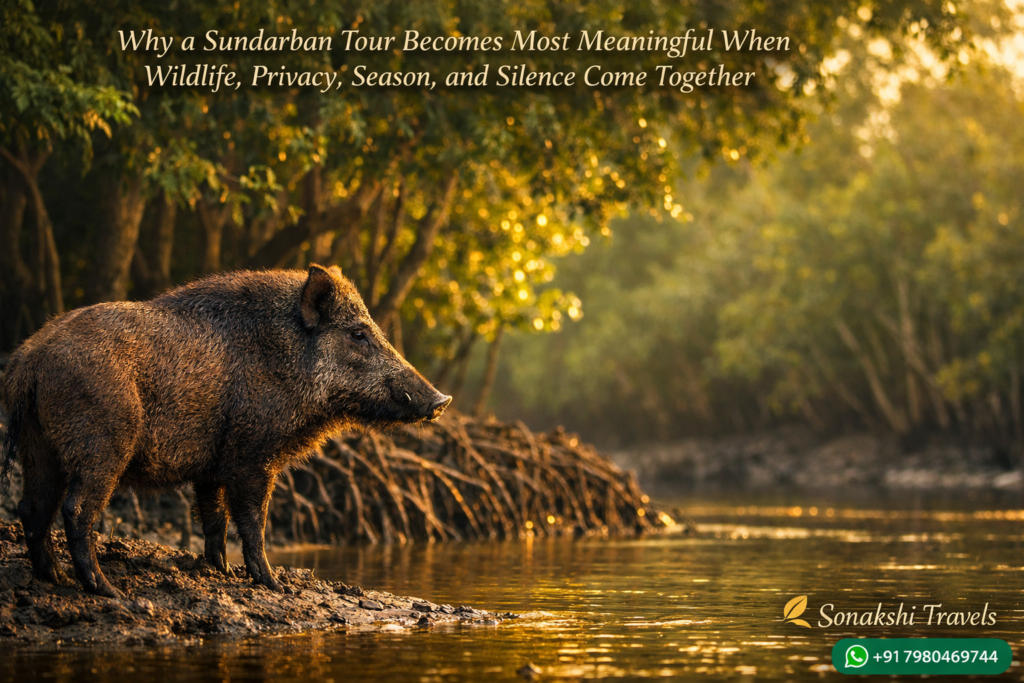
There are some journeys that are chosen for excitement, some for beauty, and some for rest. A Sundarban tour becomes remarkable because it holds all three, yet it does so in an unusual way. This is not a destination that reveals itself through speed, spectacle, or fixed expectations. It is a living tidal landscape where rivers widen and narrow with the light, where mangrove shadows shift through the day, where wildlife is sensed before it is seen, and where the mind often becomes quieter simply because the environment leaves no room for noise. For that reason, the real meaning of a journey into the delta cannot be understood through one single lens. It must be understood as an experience shaped by ecology, timing, movement, privacy, and emotion.
Many travelers first approach the region with one central expectation. Some are drawn by the mystery of the forest and the possibility of animal sightings. Others seek a comfortable escape from crowded tourism circuits. Some want a deeper encounter with nature, and some are simply looking for a place where life feels less enclosed and less hurried. The strength of the Sundarbans lies in the fact that it can answer all of these desires at once, but only when the journey is planned with sensitivity. A meaningful trip here is never just about reaching a destination. It is about understanding how to move through a fragile landscape without disturbing its rhythm, how to travel with comfort without breaking the feeling of wilderness, and how to choose the right time and format so the experience feels complete rather than rushed.
That is why the most rewarding interpretation of the delta is not limited to wildlife tourism, luxury travel, or seasonal planning alone. It emerges from the meeting of these elements. The traveler who understands the character of this region begins to see that a Sundarban private tour is not only a premium option, but often the most thoughtful way to experience a place where silence, observation, and space matter. In the same way, seasonality is not merely a practical concern about weather. It shapes water levels, light conditions, visibility, comfort, and even emotional tone. When these dimensions are held together, the Sundarbans becomes more than a trip. It becomes a carefully lived experience.
The Sundarbans Is Not a Landscape of Spectacle but a Landscape of Attention
The first truth about the region is that it resists superficial viewing. Unlike destinations built around monuments, crowds, or fixed attractions, the Sundarbans asks the traveler to slow down. Its beauty does not arrive all at once. It unfolds through details: the texture of exposed mangrove roots, the changing width of a creek, the echo of birds over tidal water, the soft tension of scanning a riverbank for movement, the stillness that falls over a boat when everyone notices the same silence at the same time. This is why the most insightful understanding of wildlife viewing in the delta depends less on luck and more on patience, reading the environment, and developing a disciplined style of observation. The spirit behind Sundarban tour wildlife viewing tips is not only practical but philosophical. It reminds the traveler that nature here is not staged for instant visibility.
That idea matters because many modern travelers are used to experiences that are designed for quick consumption. The delta offers the opposite. It asks for quiet eyes rather than noisy excitement. It teaches that wildlife is part of a larger ecological atmosphere, not a separate performance. A sighting, when it happens, feels meaningful precisely because it belongs to a wider world of mudbanks, forest edges, tide patterns, bird calls, and suspended anticipation. Even when the most famous animals remain hidden, the experience does not become empty. The traveler still witnesses the conditions of wildness itself. That is one of the rare strengths of the Sundarbans. The journey remains rewarding even when it remains incomplete. In fact, that incompleteness is part of its authenticity.
For this reason, anyone planning a serious visit should understand that the delta rewards presence more than impatience. The boat is not only transportation. It is the moving frame through which perception changes. Every bend in the river reveals a slightly different relationship between openness and concealment. A distant bird, a muddy track, a ripple near the bank, or a sudden hush among fellow travelers can become part of the emotional architecture of the day. The forest is not experienced only through what is clearly seen. It is experienced through what is suggested, withheld, and quietly felt.
Privacy Changes the Quality of Experience in a Water-Based Wilderness
The second important truth is that the structure of travel deeply influences what the traveler actually receives from the region. In many destinations, one can see the main highlights regardless of whether the journey is shared or private. The Sundarbans is different. Because it is experienced through boats, river routes, watchtowers, pauses, meals, and long intervals of observation, the social atmosphere around the traveler shapes the emotional quality of the trip. That is why interest in Sundarban tour packages with private boat services reflects more than a desire for exclusivity. It reflects a practical understanding that privacy can protect the essence of the journey.
A private boat introduces a different rhythm. It allows families, couples, photographers, senior travelers, and reflective travelers to experience the delta without the pressure of mismatched group energy. Conversations remain intimate. Silence becomes possible. Time feels less fragmented. Meals, seating, movement, and pauses become more natural. In a landscape where the emotional reward often lies in atmosphere rather than constant action, this difference is not minor. It can determine whether the trip feels restorative or merely busy.
Privacy also improves attentiveness. When the boat environment is calmer, it becomes easier to listen to the guide, notice bird movement, observe shorelines, and respond to changing conditions. There is less interruption and less performative behavior. One begins to sense the delta as a continuous environment rather than a sequence of touristic moments. This is particularly important for travelers who want more than a checklist. A Sundarban luxury tour or Sundarban luxury private tour becomes valuable not only because of comfort, but because comfort protects concentration. Good seating, better space, smoother coordination, and thoughtful pacing all help the traveler remain mentally available to the landscape.
In this sense, privacy is not opposed to nature. It can be the very condition that allows nature to be received more deeply. The quieter the arrangement, the more clearly the region speaks. A carefully designed boat journey does not separate the traveler from the wild. It reduces unnecessary friction so that the mind is free to observe what matters.
When the Heart Seeks Silence, the Delta Offers a Rare Form of Emotional Space
Not every journey begins with a practical reason. Sometimes the need is inward before it is outward. There are moments when fatigue is not dramatic but steady, when noise is not only external but psychological, and when ordinary breaks fail to restore attention. The deeper emotional current suggested by when your heart needs silence belongs naturally to the Sundarbans because this region offers a kind of quiet that is difficult to replicate elsewhere. It is not the silence of emptiness. It is the silence of living distance.
Rivers carry sound differently here. The absence of traffic, concrete, and constant urban interruption changes the body’s response to time. Long stretches of water, sparse settlement, open sky, and the restrained presence of the mangrove forest create a form of mental spaciousness. This is one reason why travelers often return from the delta speaking not only about animals or scenery, but about how the place made them feel. They describe a slower pulse, a deeper breath, a more patient mind. These reactions are not sentimental exaggerations. They arise from the structure of the environment itself.
Silence in the Sundarbans is never absolute. It contains engines in the distance, bird calls, water against the hull, wind moving through leaves, and the shifting sounds of life near the riverbanks. Yet precisely because this soundscape is organic, it feels restorative rather than draining. The traveler is not being entertained at every moment. Instead, the senses are being recalibrated. This is why the journey can become meaningful even for those who are not primarily wildlife enthusiasts. A person may arrive expecting scenery and leave remembering interior stillness.
For many contemporary travelers, this dimension is increasingly important. Holidays are often marketed as stimulation, luxury, and movement. The Sundarbans quietly proposes another value: recovery through attention. A well-planned Sundarban tour package can therefore function not just as an itinerary, but as a structured return to slowness. The beauty of the place is not merely visual. It is atmospheric and psychological. It allows the traveler to feel less enclosed by schedules, screens, and social noise.
Wildness Without Walls Is What Gives the Region Its Unforgettable Character
The phrase suggested by Sundarban tour wildness without walls captures something essential about the delta. Many wildlife destinations create a strong distinction between the visitor zone and the wild zone. In the Sundarbans, that separation feels less rigid. Of course there are regulations, routes, protected areas, and controlled modes of access, but the emotional feeling of the region is one of permeable boundaries. Water connects everything. The forest edge is never entirely distant. Human settlement and ecological tension exist in close relation. The traveler feels not that they are looking at wilderness from outside, but that they are moving carefully along its threshold.
This creates a powerful emotional atmosphere. There is beauty here, but there is also humility. The environment does not exist to reassure the visitor. It remains partly unknowable. That is why the Sundarbans feels so different from neatly contained nature tourism. The wild is present not as a single encounter but as a condition. It is felt in the openness of tidal channels, in the mangrove density beyond the banks, in the knowledge that life here depends on adaptation, and in the awareness that visibility is never total.
This sense of unboundedness changes the traveler’s relationship with comfort as well. Good planning and secure arrangements remain important, yet they do not erase the fact that one is entering a region governed by tide, terrain, and ecological complexity. This balance between safety and untamed presence gives the journey its rare texture. It allows comfort to exist without domesticating the landscape. A Sundarban private tour package at its best respects this balance. It offers order around the traveler while allowing the region itself to remain wild, layered, and emotionally open.
That is also why the delta often leaves a lasting impression on thoughtful visitors. They do not simply remember what they saw. They remember the sensation of moving near something larger than themselves. In an age of increasingly packaged experience, that feeling has become uncommon. The Sundarbans preserves it.
The Right Season Does More Than Improve Comfort; It Shapes the Entire Meaning of the Tour
No serious understanding of the region is complete without attention to timing. The practical logic behind what is the best time to plan a Sundarban tour is larger than weather preference alone. Season influences visibility, river mood, traveler comfort, boat experience, light quality, and the pace at which the landscape can be enjoyed. In the Sundarbans, timing is never a minor detail. It is part of the design of the journey.
Cooler and clearer periods generally support longer periods of observation, greater physical ease on boats, and a more relaxed engagement with the outdoors. When the air is more pleasant and the atmosphere less oppressive, travelers can spend more time looking, listening, photographing, and simply remaining present. This matters because a destination built around patient experience becomes far less rewarding if heat, discomfort, or unstable conditions constantly demand attention.
At the same time, each season changes not only comfort but character. Light falls differently across the river. The mood of the forest shifts. The emotional language of the landscape changes from one part of the year to another. A skilled planner therefore does not treat timing as a mechanical decision. It is a creative one. The chosen season should align with the traveler’s purpose. Those who seek the clearest possible overall experience may prioritize balance and visibility. Those drawn by mood, monsoon atmosphere, or a more intense sense of isolation may find other periods evocative, provided they accept the trade-offs.
For SEO and travel planning alike, this seasonal intelligence matters because user intent is rarely limited to “when should I go.” The deeper question is often, “What kind of experience do I want to have?” Do I want better comfort, stronger wildlife observation conditions, more silence, fewer disturbances, more privacy, softer weather, or a more dramatic atmosphere? The answer to the timing question depends on the answer to the emotional question. That is why the best travel writing about the Sundarbans does not treat seasonality as a simple checklist. It treats it as part of the region’s meaning.
A Truly Memorable Sundarban Journey Is Designed Around Harmony, Not Excess
When the different dimensions of the delta are brought together, a clearer idea emerges. The best journey is not the loudest, busiest, or most aggressively luxurious. It is the one in which all elements remain in balance. Wildlife viewing must be guided by patience rather than pressure. Comfort must support observation rather than distract from it. Privacy must create calm rather than separation. Timing must fit the desired mood of travel. Above all, the traveler must allow the delta to remain itself rather than forcing it into the shape of a standard holiday.
This is why the most successful Sundarban luxury tour package is often the one that feels least artificial. It offers quality without crowding the experience with excess. It understands that elegance in this landscape comes from good pacing, thoughtful route design, quiet hospitality, and the freedom to remain present. In the same way, the most successful wildlife journey is not the one that promises certainty, but the one that teaches the traveler how to see more, expect wisely, and value the full ecology of the place.
The Sundarbans rewards humility. It gives the most to those who arrive with openness, preparation, and respect for the pace of water and forest. It can hold family travel, private reflection, ecological curiosity, and refined comfort in the same journey, but only when the arrangement is built around the nature of the place itself. That is what makes it so rare. It does not ask the traveler to choose between wilderness and rest, between observation and privacy, or between beauty and inward quiet. Instead, it invites all of these into one experience.
In the end, a meaningful Sundarban tour is not defined by a single tiger sighting, one luxury detail, or one ideal month on the calendar. It is defined by harmony. When wildlife, boat design, emotional stillness, open wildness, and seasonal wisdom come together, the delta reveals its deepest character. The traveler returns not only with photographs or memories of riverbanks, but with a more enduring impression: that some landscapes do not need to overwhelm in order to transform. They simply need to be entered in the right way.